
Companion Plants
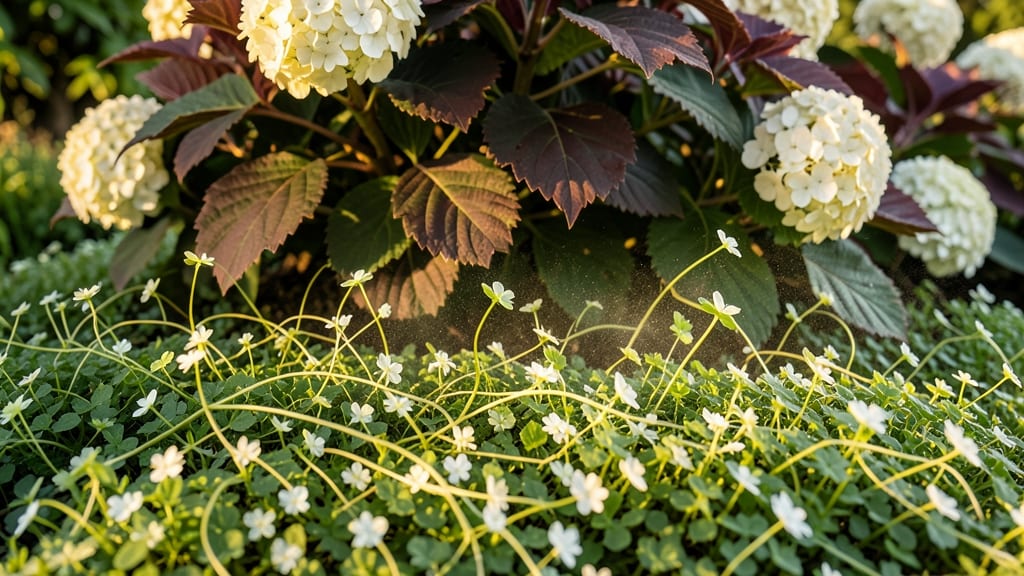
Oakleaf hydrangeas thrive with the right neighbors in your garden. These 10 companion plants enhance blooms, deter pests, improve soil, and create stunning visual contrasts while supporting your hydrangea's natural growth patterns.
Astilbe for Lush Shade and Pest Control
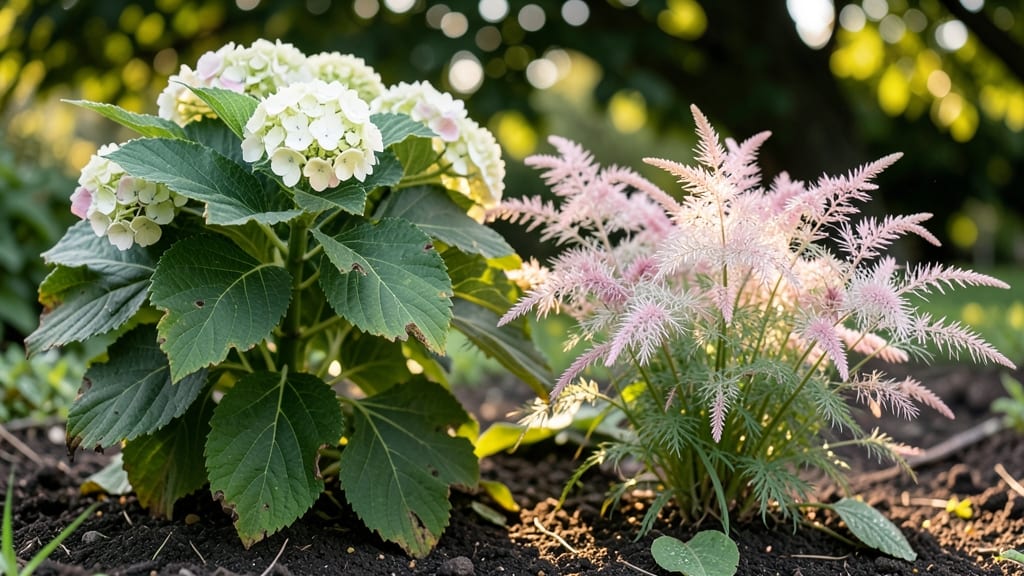
If your oakleaf hydrangea struggles with afternoon sunburn or aphid infestations, astilbe is the unsung hero you need. This delicate perennial thrives in shade while its feathery plumes act as a natural aphid deterrent, keeping pests away from your hydrangea's leaves.
Plant astilbe within 18-24 inches of your hydrangea to create a protective canopy that reduces soil temperature and moisture loss. Varieties like 'Fanal' (deep red) or 'Bridal Veil' (pure white) pair beautifully with hydrangea's burgundy foliage while blooming in late spring to early summer. Mulch around the base to maintain consistent moisture—astilbe loves rich, well-draining soil.
This combination is perfect for gardeners with shaded borders or woodland gardens. The airy texture of astilbe softens hydrangea's bold structure while creating a layered, romantic look that lasts all season. 🌷
Russian Sage to Repel Insects Naturally
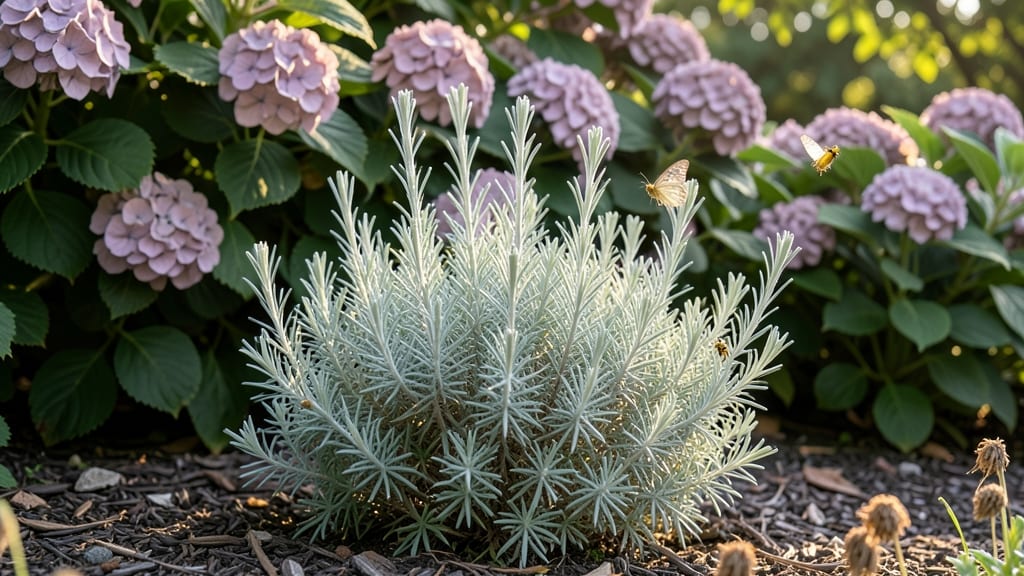
If you're battling Japanese beetles or want to add a drought-resistant star to your garden, Russian sage is the perfect hydrangea companion. Its aromatic foliage naturally deters pests while drawing in bees and butterflies, creating a mini pollinator paradise.
This drought-tolerant perennial thrives in full sun and well-drained soil, making it ideal for dry garden edges. Plant it 18-24 inches from your hydrangea to create a striking contrast—its silvery-blue foliage and lavender-blue spikes complement oakleaf hydrangea's deep green leaves beautifully.
Perfect for low-maintenance gardeners, Russian sage requires minimal water once established and blooms from mid-summer through fall. 🌿
Ferns for Moisture Retention and Elegance
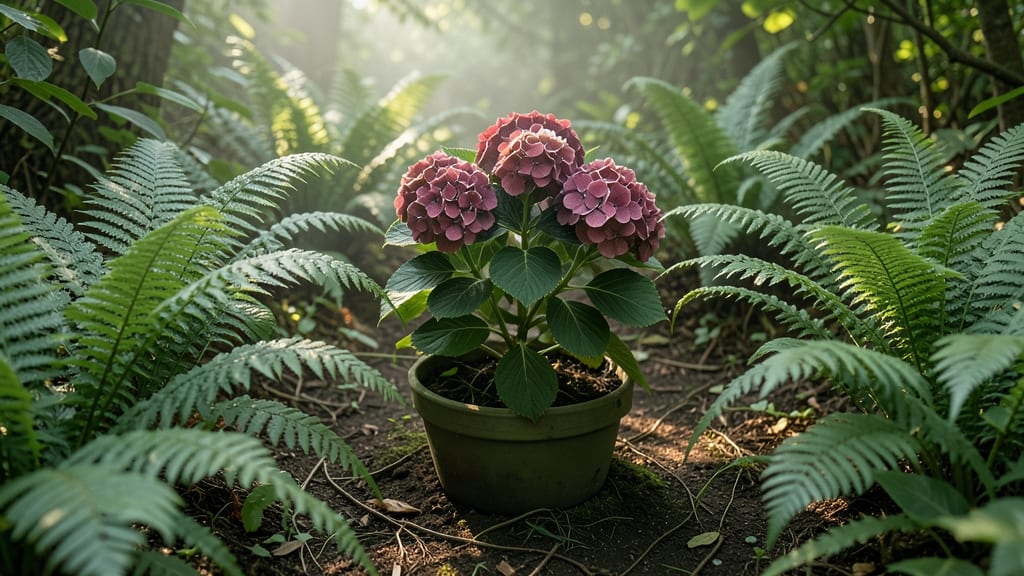
Transform your shady garden corner into a serene woodland retreat with ferns like maidenhair or ostrich. Their delicate fronds create a lush backdrop that highlights your oakleaf hydrangea's blooms while naturally retaining moisture around the roots—ideal for containers or shaded beds.
These ferns thrive in partial to full shade and prefer consistently moist soil, which mirrors hydrangea's needs perfectly. Plant them within 12-18 inches of your hydrangea to maximize moisture retention without competing for nutrients. Maidenhair ferns add fine texture, while ostrich ferns provide bold structure—both create a layered, natural look.
Perfect for urban gardeners with limited space or beginners seeking low-maintenance companions, ferns bring elegance and functionality to any hydrangea planting. 🌿
Coreopsis for Pollinator Support and Color
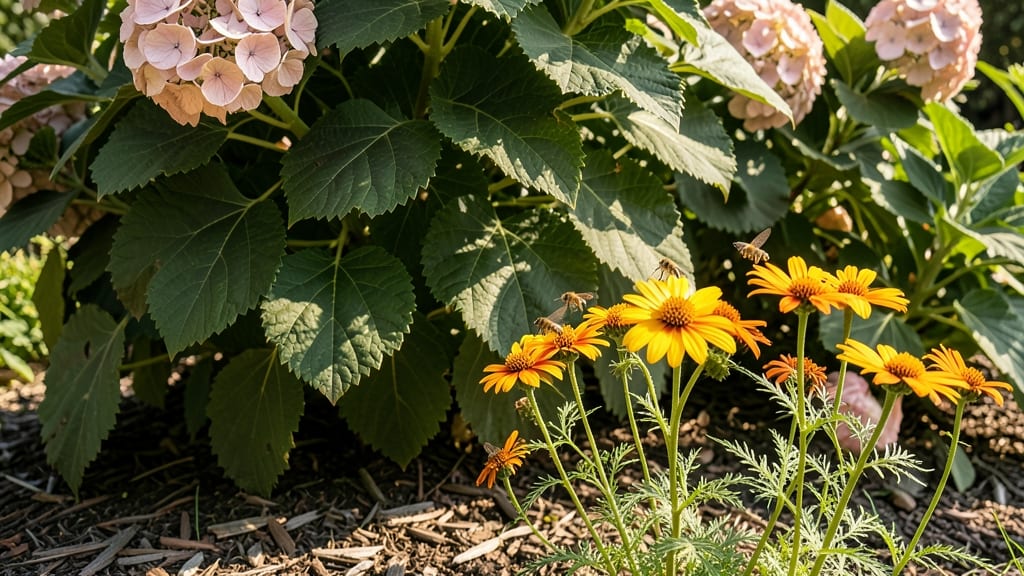
Want a garden that buzzes with life while keeping your oakleaf hydrangea happy? Coreopsis is the secret weapon you need—its bright blooms attract pollinators like bees and butterflies while adding a cheerful contrast to hydrangea's softer hues.
This low-maintenance annual thrives in full sun to partial shade, making it perfect for sunny borders or dappled garden spots. Plant it just 12-18 inches away from hydrangea stems to avoid competition, and enjoy its long bloom season from early summer through fall. The more coreopsis you plant, the more pollinators you'll invite—nature's way of boosting your hydrangea's health!
Perfect for beginners or busy gardeners, coreopsis requires minimal care but delivers maximum impact—both for your garden's ecosystem and its visual appeal. 🌻
Heuchera for Year-Round Color and Soil Health
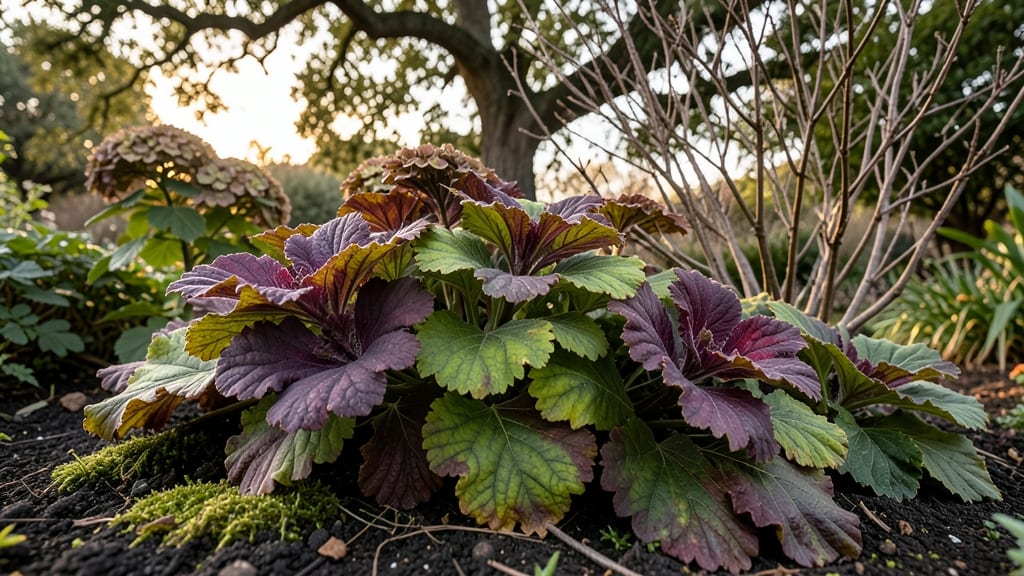
When your oakleaf hydrangea needs a year-round partner that thrives in shade and adds drama, heuchera is your secret weapon. This versatile perennial delivers bold foliage colors—from deep purple to lime green—that stay vibrant even when hydrangeas go dormant in winter.
Heuchera’s deep roots break up compacted soil, improving drainage and aeration for your hydrangea’s shallow roots. Its shade tolerance makes it perfect for planting beneath or beside hydrangeas, where it won’t compete for sunlight. Plus, varieties like 'Palace Purple' or 'Lime Rickey' create stunning contrasts with hydrangea’s burgundy or green leaves.
This low-maintenance plant is ideal for gardeners who want year-round interest with minimal effort—just keep the soil consistently moist and mulch to retain moisture. 💚
Lavender for Fragrance and Drought Resistance
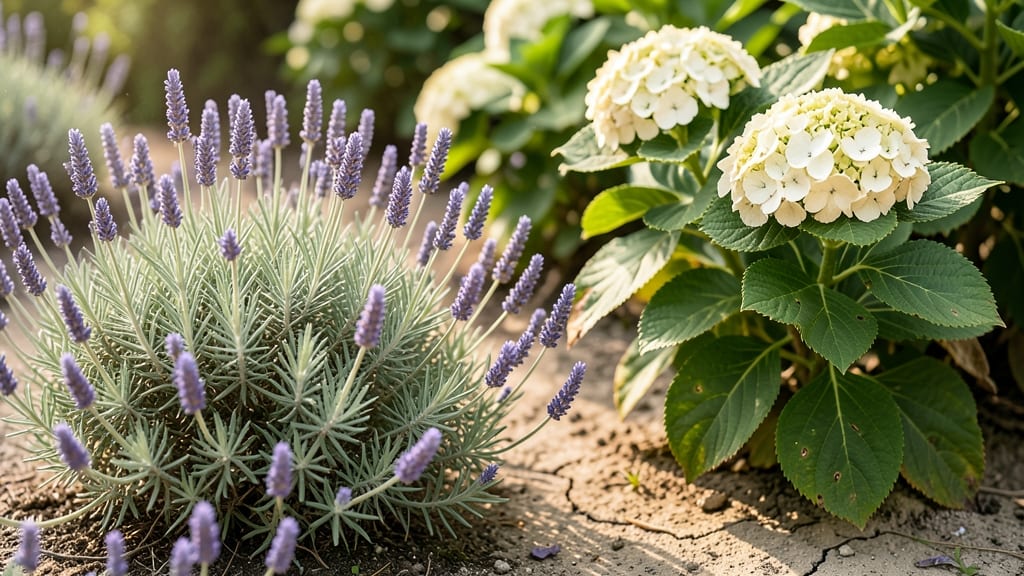
Struggling with pests nibbling at your hydrangea's edges? Lavender is the unsung hero for dry, exposed areas where slugs and rabbits love to snack. Its strong fragrance naturally deters these critters while adding a soothing scent to your garden.
This drought-tolerant perennial thrives in well-drained soil with 6 hours of sun daily, making it ideal for hydrangea's outer borders where moisture might be scarce. Plant lavender 18-24 inches away from hydrangea roots to avoid competition while creating a fragrant barrier.
Gardeners in hot, dry climates will appreciate how lavender reduces watering needs while keeping pests at bay. Its silvery foliage and purple blooms also add stunning contrast to hydrangea's lush green leaves. 🌷
Hostas for Shade-Loving Symbiosis
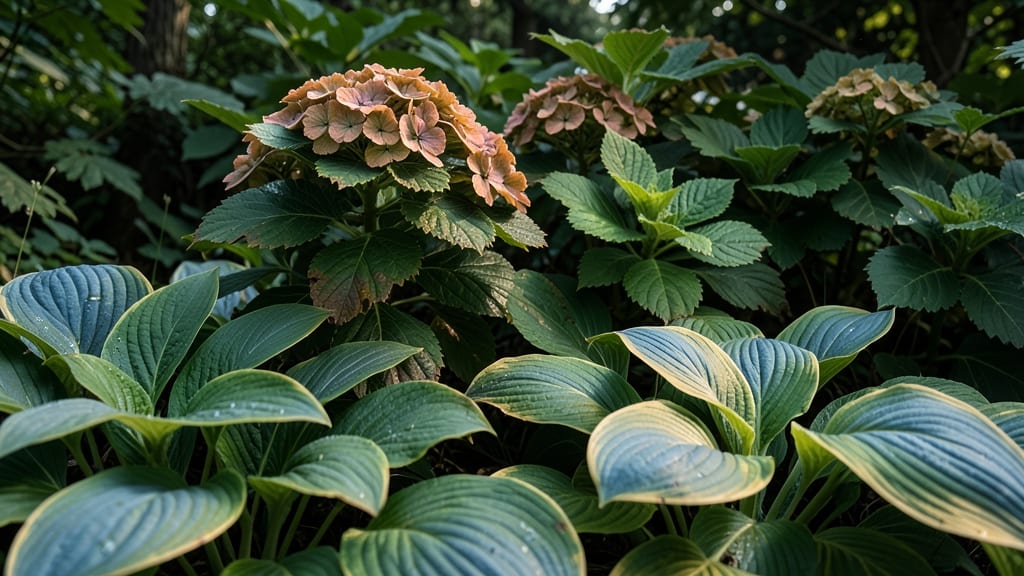
If your oakleaf hydrangea thrives in shade but you want to add drama without sacrificing its needs, hostas are the perfect partner. Their broad, lush foliage creates a cool, moist microclimate that hydrangeas adore, while their varied leaf textures—from blue-green to golden—soften the bold structure of hydrangea blooms.
Plant hostas with medium to large leaves (like 'Blue Angel' or 'Francee') around your hydrangea's base to maximize their moisture-retaining benefits. Their shallow roots also help suppress weeds, reducing competition for water. For visual harmony, choose hosta varieties with contrasting colors—silvery-blue hostas pair beautifully with burgundy oakleaf hydrangea foliage, while golden hostas brighten darker shades.
This duo is ideal for gardeners who love low-maintenance shade gardens or woodland-style plantings. The combination not only supports hydrangea health but also creates a layered, textured look that feels effortlessly natural. 💚
Catmint for Long-Blooming Beauty and Pest Deterrence
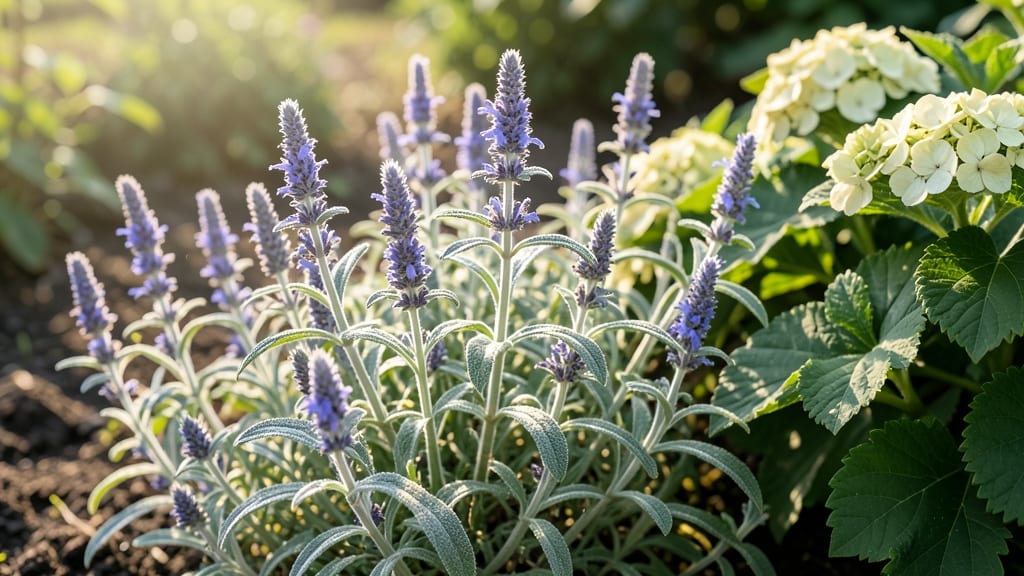
Looking for a low-maintenance plant that blooms all season while keeping pests at bay? Catmint is your answer—its catnip-like scent naturally deters mosquitoes, aphids, and even deer, making it a powerhouse companion for your oakleaf hydrangea.
This drought-tolerant perennial thrives in full sun to partial shade and produces lavender-blue flowers from early summer through fall. Its silvery foliage provides striking contrast to hydrangea’s bold leaves, while its long bloom season ensures continuous color. Simply plant catmint at the base of your hydrangea for a fragrant, pest-resistant duo.
Perfect for cottage gardens, pollinator-friendly beds, or even containers, catmint’s easy care and double-duty benefits make it a must-have for any hydrangea lover. 🌿
Japanese Forest Grass for Movement and Texture
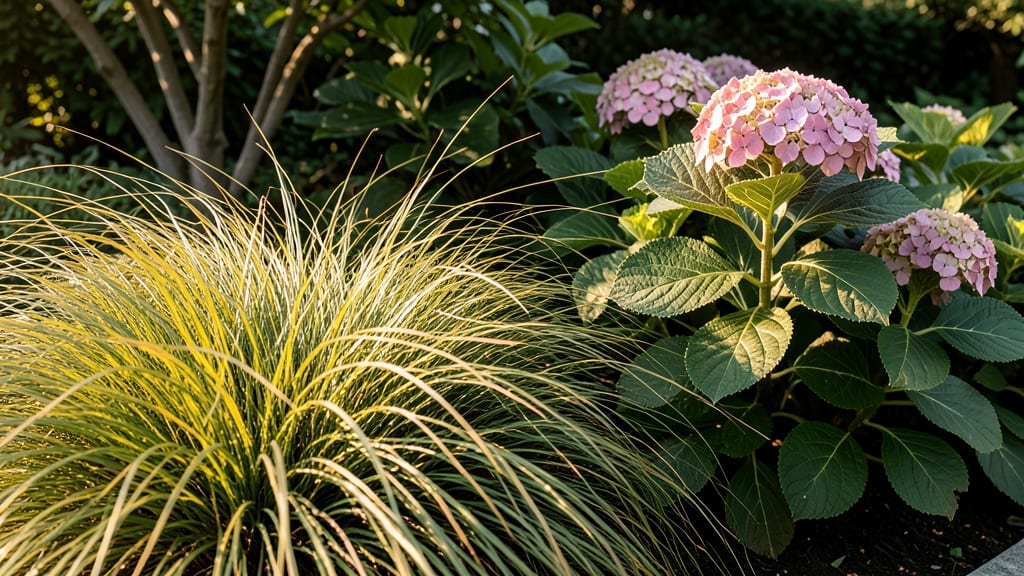
If your oakleaf hydrangea garden feels a little stiff, Japanese forest grass (Hakonechloa macra) is the answer. Its cascading, arching blades sway gently in the breeze, creating a soft contrast to hydrangea’s upright stems and adding a sense of movement to your garden.
This clumping ornamental grass thrives in partial shade and moist, well-drained soil—perfect for hydrangea’s preferred conditions. Its deep roots also loosen compacted soil, improving aeration and allowing hydrangea roots to breathe better. Plant it 18–24 inches away from hydrangea stems to let both showcase their textures.
Gardeners who love minimalist designs or woodland gardens will adore this pairing, as it adds height and seasonal interest without overwhelming hydrangea’s star power. 🌿
Sweet Woodruff for Ground Cover and Fragrance

If you crave a garden that smells as good as it looks, sweet woodruff is your secret weapon. This delicate ground cover spreads like a fragrant green blanket, releasing a vanilla-like scent when crushed—perfect for creating sensory-rich pathways near your oakleaf hydrangea.
Sweet woodruff thrives in partial shade, making it ideal for hydrangea’s preferred conditions, while its dense foliage smothers weeds and retains soil moisture. Plant it in clusters around your hydrangea’s base to create a textural contrast—its star-shaped leaves and airy growth habit complement hydrangea’s bold, rounded blooms beautifully.
This low-maintenance perennial is especially valuable for gardeners who want fragrance without flowers, as it stays lush and aromatic from spring through summer. It’s also deer-resistant, making it a practical choice for rural or suburban gardens alike. 🌿