
Leaf Blower
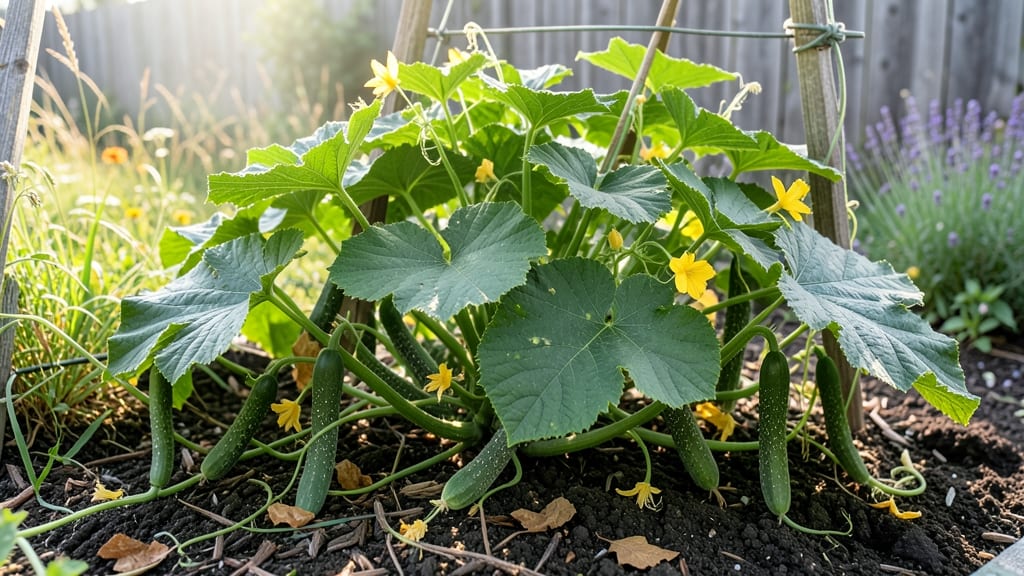
The shape of the cucumber leaf is broad with lobed, jagged edges that often resemble rough hand shapes. Healthy foliage remains deep green and glossy, while stress from disease or poor nutrition causes yellowing, curling, or misshapen growth patterns.
The cucumber leaf shape develops its distinctive hand-like lobes as it matures, with serrated edges that help maximize sunlight exposure and photosynthesis. 💫 The waxy coating on healthy leaves isn't just for show—it creates a protective barrier against moisture loss and some pests.
When you notice leaves developing irregular shapes or losing their vibrant color, it's often your plant's way of signaling nutrient deficiencies (like nitrogen or magnesium) or fungal infections. I've found that paying attention to these early warning signs can prevent small issues from becoming full-blown problems in your garden.
For example, powdery mildew creates a white, powdery coating that distorts leaf edges, while bacterial blight produces dark, water-soaked spots that eventually cause leaves to curl and drop. Understanding these patterns helps you take targeted action—whether that's adjusting your watering schedule, applying organic fungicides, or amending your soil with compost.
💡 In This Article
- How Cucumber Leaf Morphology Indicates Plant Health
- Common Cucumber Leaf Disorders and Their Visual Clues
How cucumber leaf morphology indicates plant health
The cucumber leaf's iconic hand-like shape develops through a process called palmatifid lobing, where the leaf blade divides into 3-5 irregular lobes. These lobes typically measure 3-6 inches wide on mature plants, with serrated edges that create 0.25-0.5 inch jagged teeth.
The primary veins form a distinct network that radiates outward from the central stem, creating a web-like pattern that enhances structural support while maximizing surface area for photosynthesis.
This intricate structure isn't just for aesthetics—the serrations actually help reduce water loss by creating micro-environments that slow air movement across the leaf surface. The waxy coating, which gives healthy leaves their glossy appearance, contains cutin, a fatty substance that repels water and prevents fungal spores from attaching.
When you see leaves losing this sheen, it often indicates either high humidity stress or early-stage fungal infection, where the cutin layer begins degrading.
The deep green color comes from high chlorophyll concentrations, particularly chlorophyll a and b, which absorb blue and red light wavelengths while reflecting green. When leaves start yellowing between veins (a condition called interveinal chlorosis), it typically signals magnesium deficiency.
This mineral is crucial for chlorophyll production, and its absence causes the plant to break down existing chlorophyll faster than it can produce new pigments. 🌱 I've noticed this most commonly in container-grown cucumbers where soil magnesium gets depleted after 4-6 weeks of heavy fruiting.
Leaf shape changes also reveal pest pressure. For instance, spider mites cause leaves to develop a silver-dotted appearance followed by upward curling, while aphids trigger puckering and stunted growth in new leaves.
The key is observing these changes early—when leaves first show 10-20% distortion from their normal shape, that's when intervention yields the best results. Regularly inspecting the undersides of leaves (where many pests hide) can give you a 3-5 day head start on treatment.
Temperature extremes also alter leaf morphology. When nighttime temperatures drop below 55°F, cucumber plants often produce smaller, more rounded leaves with less pronounced lobing—a survival mechanism to reduce heat loss.
Conversely, heat stress above 95°F causes leaves to develop a blue-green tint and become thicker as the plant tries to protect its internal tissues from dehydration.
The most telling health indicator is the leaf's growth rate and symmetry. Healthy cucumber leaves should emerge at a rate of 1-2 new leaves per week during active growth, with each new leaf being 5-10% larger than the previous one.
When you see leaves growing slower, becoming smaller, or developing asymmetrical shapes, it's often your plant's way of conserving energy for root or fruit development rather than foliage.