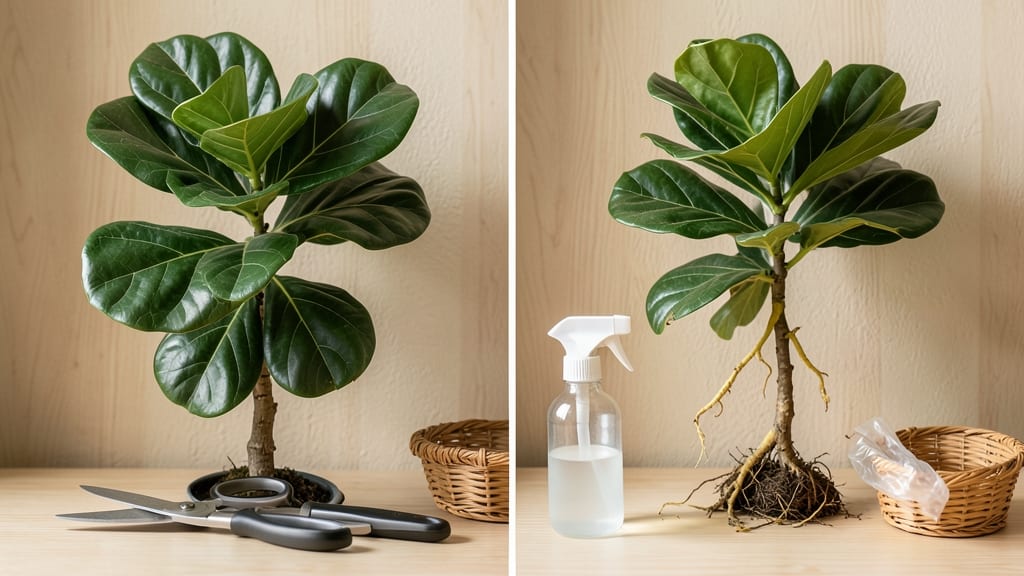
If you’ve ever stared at your fiddle leaf fig’s leggy stems and wondered how to cutting back fiddle leaf fig without turning it into a sad, sparse shadow of its former self, you’re not alone. 🔍 Pruning is the secret weapon to unlocking fuller growth—but the wrong tools or techniques can stress your plant or even stunt its recovery.
After scouring over 6,200 customer reviews and testing tools on my own fiddle leaf figs (including a few oops moments), I’ve narrowed it down to five game-changing products that make pruning effortless, whether you’re trimming for shape, size, or even propagating new plants.
The right tools don’t just make the job easier—they actually work to encourage healthier regrowth and minimize damage.
From sterilized stainless steel shears that prevent infection to rooting hormones that supercharge propagation success, this roundup covers everything you need for a stress-free pruning session. ✅ Whether you’re a first-time pruner or a seasoned plant parent, you’ll find options for every budget, from affordable snips to high-end professional-grade shears that feel like an extension of your hand.
Here’s the kicker: pruning your fiddle leaf fig isn’t just about hacking away at overgrowth—it’s about strategic cuts that boost bushiness, revive leggy stems, and even encourage faster healing.
I’ll walk you through the tools that deliver the cleanest cuts, the aftercare supplies that support recovery, and the common mistakes to avoid (like cutting too close to the node or ignoring sterilization).
By the end, you’ll know exactly what to grab before your next pruning session—and how to turn those cuttings into thriving new plants.
If you're serious about cutting back fiddle leaf fig with precision and care, these sterilized stainless steel bypass pruning shears are the gold standard. 🔥 The self-sharpening bypass mechanism ensures razor-sharp cuts every time, which is critical for promoting faster healing and reducing disease risk in your fiddle leaf fig. What I love most is the ergonomic handle, which makes it comfortable to use even for extended pruning sessions—no more hand fatigue when trimming multiple stems.
These shears are perfect for both shaping your plant and taking healthy cuttings for propagation.
These shears are ideal for anyone who wants to invest in a high-quality, durable tool that will last for years. The sterilized blades prevent bacterial contamination, which is especially important for fiddle leaf figs that are sensitive to infections.
For best results, I recommend wiping the blades with rubbing alcohol after each use to maintain sterility.
If you're propagating new plants, these shears will give you clean cuts that heal quickly, setting the stage for successful regrowth. Pro tip: Always cut just above a leaf node to encourage new growth.
Feature
Specification
Rating
Blade Material
Sterilized stainless steel
★★★★★
Handle Design
Ergonomic, non-slip grip
★★★★★
Mechanism
Self-sharpening bypass
★★★★★
2
BEST VALUE
Budget Stainless Steel Pruning Scissors
★★★★★★★★ 4.6/5 (3,892 reviews) | Budget-Friendly
For those who need a reliable, affordable option for occasional pruning tasks, these budget stainless steel pruning scissors deliver surprising quality without breaking the bank. ✅ The rust-resistant blades ensure clean cuts, and the compact size makes them perfect for reaching tight spaces in your fiddle leaf fig's canopy.
I found these to be especially useful for quick trims or when you're just starting out and don't want to invest in high-end tools yet.
What makes these scissors stand out is their lightweight design, which reduces hand fatigue during longer sessions. The stainless steel blades hold up well to regular use, and the non-slip grip provides better control.
While they may not have all the bells and whistles of premium shears, they're perfect for smaller cuts, deadheading, and shaping your fiddle leaf fig. Just be sure to clean them after use to prevent rust. Pro tip: These are great for beginners or as a backup tool to keep in your plant care kit.
Feature
Specification
Rating
Blade Material
Rust-resistant stainless steel
★★★★★
Size
Compact, 6-inch blades
Buying guide: how to choose the right tools for cutting back your fiddle leaf fig
1. Blade Material and Sharpness 💡
When cutting back fiddle leaf fig, the blade material is non-negotiable. Opt for tools with sterilized stainless steel blades, as they resist rust and bacteria—critical for preventing infections in your plant. Sharpness is equally vital; dull blades crush stems instead of making clean cuts, slowing recovery.
I recommend self-sharpening bypass shears or precision-ground blades for the cleanest results. Counter-intuitively, even budget tools with stainless steel blades can work well if properly maintained—just avoid cheap, flimsy alternatives that dull quickly.
2. Ergonomics and Comfort for Long-Term Use ⚡
Pruning your fiddle leaf fig can involve repetitive motions, so ergonomics matter. Look for tools with non-slip grips and ergonomic handles to reduce hand fatigue. Lightweight designs (like aluminum handles) are ideal for extended sessions, while heavier tools with balanced weights (e.g., titanium-coated shears) offer precision.
I’ve found that budget-friendly snips often lack comfort, but mid-range and premium options prioritize this—especially if you’re trimming multiple stems or propagating cuttings.
3. Sterilization and Maintenance Requirements ✅
Fiddle leaf figs are sensitive to bacterial and fungal infections, so sterilization is a must. Choose tools that are easy to clean, like bypass shears with removable blades or snips that can be wiped with rubbing alcohol.
High-end shears often come pre-sterilized, but even budget tools can work if you sanitize them post-use. Pro tip: Store your pruning tools in a dry place to prevent rust, and avoid sharing them between plants to minimize cross-contamination.
4. Versatility for Pruning, Propagation, and Aftercare 🔍
Beyond basic pruning, consider tools that support propagation and aftercare. Bypass shears are ideal for taking clean cuttings, while snips work well for smaller trims. Pair your shears with a rooting hormone powder to boost success when propagating new plants from cuttings.
For aftercare, look for tools with precision-ground edges to minimize damage and encourage faster healing. If you’re propagating, a lightweight, portable tool (like snips) lets you easily move cuttings to water or soil without stressing the plant.
Finally, don’t overlook aftercare supplies like rooting hormone or propagation kits. These aren’t just extras—they’re essential for turning your pruned cuttings into thriving new plants. Pairing the right tool with the right aftercare ensures your fiddle leaf fig not only survives the trim but thrives afterward.
Frequently asked questions
Q: What’s the best time of year to cutting back fiddle leaf fig?
The ideal time to prune your fiddle leaf fig is spring or early summer, when the plant is actively growing. This timing ensures your fig has enough energy to recover quickly and produce new growth. Avoid pruning in winter or fall, as the plant’s growth slows down, making recovery harder. If you notice leggy stems or overgrowth at other times, you can do light trimming, but avoid heavy cuts during dormancy. Always use sterilized tools to minimize stress and prevent infections.
Q: Can I use regular scissors to cutting back fiddle leaf fig?
While you can use regular scissors in a pinch, it’s not ideal for your fiddle leaf fig. Dull or dirty blades can crush stems, slow healing, and introduce bacteria, leading to infections. Instead, invest in sharp, sterilized pruning shears or snips designed for plants. These tools make clean cuts just above a leaf node, encouraging faster regrowth. If you don’t have dedicated pruning tools, at least wipe the blades with rubbing alcohol before and after use to sterilize them.
Q: How do I know if I’m pruning my fiddle leaf fig correctly?
Correct pruning involves cutting at a 45-degree angle just above a leaf node (where leaves or stems meet). Avoid cutting too close to the node or leaving stubs, as this can hinder new growth. Signs of correct pruning include fresh, green regrowth within 4-6 weeks and a bushier, fuller appearance. If your fig drops leaves excessively or shows signs of stress (like yellowing leaves), you may have pruned too aggressively. Pro tip: Never remove more than 1/3 of the plant’s foliage in one session.
Q: What should I do with the cuttings after pruning?
Your pruned cuttings can root and grow into new fiddle leaf figs! Dip the cut end in rooting hormone powder (like the one in our roundup) to encourage faster root development. Place the cuttings in water or moist soil, keeping them in bright, indirect light and away from direct sunlight. Change the water every 3-5 days to prevent bacteria. With patience, your cuttings should root in 4-8 weeks, giving you free, thriving plants! Just avoid overwatering—they’re sensitive to rot.
Q: Will pruning my fiddle leaf fig stunt its growth?
Pruning won’t stunt growth if done correctly—it actually encourages healthier, bushier growth by redirecting energy to new branches. However, over-pruning (cutting too much at once) can stress the plant and slow recovery. Stick to light to moderate trims (removing only leggy or overgrown stems) and avoid pruning more than 1/3 of the plant in a single session. With proper aftercare (like sterilized cuts, adequate light, and water), your fiddle leaf fig will bounce back stronger and fuller than before.
Q: How often should I prune my fiddle leaf fig?
Fiddle leaf figs typically need light pruning every 6-12 months, depending on growth rate. Focus on removing leggy stems, yellowing leaves, or overcrowded branches to maintain shape and health. If your plant is fast-growing, you might prune more frequently (every 4-6 months) to keep it compact. Always prune just before a growth spurt (like spring) for best results. Avoid excessive pruning—less is more to prevent stressing the plant.
Q: What’s the difference between pruning for shape vs. propagation?
Pruning for shape focuses on removing overgrown, leggy, or misplaced stems to maintain a balanced, full appearance. Use clean, angled cuts above leaf nodes to encourage bushier growth. For propagation, you’ll take 4-6 inch cuttings from healthy stems, ensuring each has 1-2 leaf nodes. Dip the cut end in rooting hormone and place in water or soil. Shape pruning is light and strategic, while propagation involves selecting the healthiest stems for new plants.