
Propagation
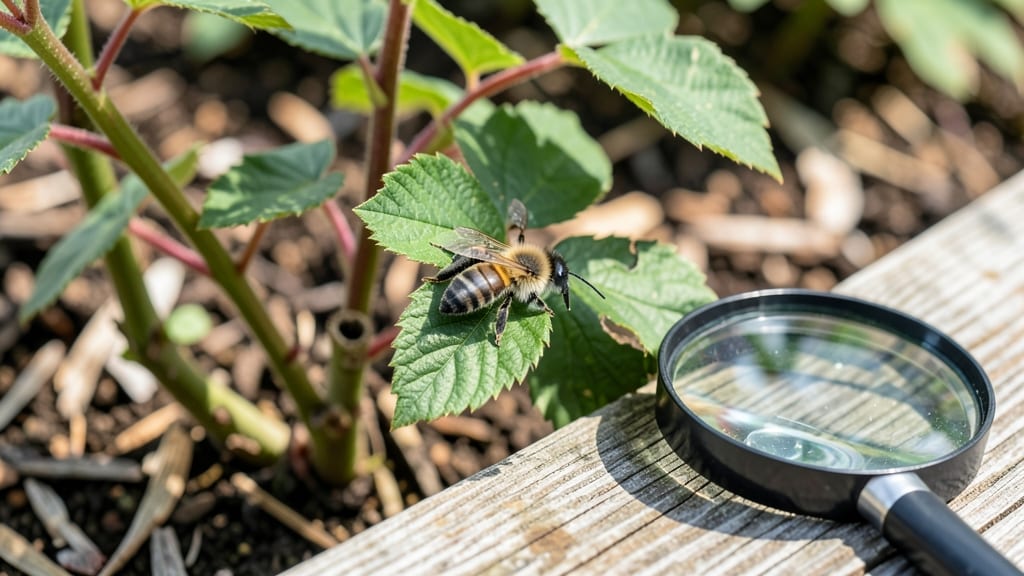
Leaf cutting bees do not sting humans—they are gentle pollinators that collect plant material for nesting, not defense. Their powerful jaws are designed for cutting leaves, not attacking people, making them harmless even when active in gardens.
These bees are among the most docile pollinators you'll encounter, prioritizing leaf collection over confrontation. 🌿 Unlike honeybees or bumblebees, they lack the instinct or anatomy to sting humans, though they may appear busy when harvesting circular pieces from rose or fruit tree leaves.
Their nesting behavior—cutting precise leaf sections to line underground tunnels—explains their name and peaceful nature. You can safely observe them in action without fear of stings or aggression.
What sets them apart is their specialized role in ecosystems. While they might nibble small holes in leaves (usually minimal and beneficial for plant health), their contributions to pollination far outweigh any minor damage.
Many gardeners intentionally attract them by planting native shrubs like lilacs or raspberries, creating ideal habitats without risking stings.
💡 In This Article
- Why Leaf Cutting Bees Avoid Stinging Humans
- How to Safely Encourage Leaf Cutting Bees in Your Garden
Why leaf cutting bees avoid stinging humans
Leaf cutting bees, scientifically known as Megachile species, are biologically wired to prioritize leaf collection over defense. Their entire anatomy and behavior revolve around harvesting precise, circular leaf sections—typically 1/4 to 1/2 inch in diameter—to line their underground nesting tunnels.
Unlike honeybees or wasps, they lack the venom sacs and stinger anatomy designed for aggression. Their mandibles, while powerful enough to cut through tough plant fibers, are specialized tools for leaf manipulation rather than defense mechanisms.
Their non-aggressive nature stems from evolutionary specialization. These pollinators spend 90% of their active time foraging for leaves and nectar, leaving little energy for territorial behavior. Studies show they rarely engage in confrontations, even when disturbed.
For comparison, honeybees possess venom glands that can deliver stings as a last resort, while leaf cutters rely on speed and stealth to avoid predators. Their flight pattern—quick, direct, and purposeful—minimizes unnecessary interactions with humans or animals.
What makes them particularly safe is their nesting strategy. Female leaf cutters excavate tunnels in soil or wood, where they deposit eggs surrounded by cut leaf pieces. This solitary lifestyle eliminates the need for group defense seen in social bee colonies.
Even when active in gardens, they exhibit zero aggression toward humans, pets, or other wildlife. Their primary "threat" comes from their leaf-cutting activity, which might leave small holes in foliage—but these are rarely noticeable on mature plants.
Anatomically, their stinger (if present) is vestigial—a reduced structure without functional venom glands. While some species retain a tiny stinger, it's incapable of piercing human skin. The closest comparison is to carpenter bees, which also lack stingers but possess powerful jaws.
However, leaf cutters take this adaptation further by completely repurposing their mandibles for leaf harvesting, eliminating any defensive capability.
This peaceful behavior extends to their interactions with other insects. Unlike aggressive bees that chase off intruders, leaf cutters simply continue their work undisturbed. Their docility makes them ideal candidates for urban gardens, where they can pollinate crops without posing risks.
The only potential "conflict" arises when they target young or delicate plants—but even then, the damage is minimal compared to the pollination benefits they provide.
For gardeners curious about their behavior, observing leaf cutters in action reveals their methodical approach. They'll often return to the same plant repeatedly, cutting perfect circles while avoiding major veins.
This precision demonstrates their focus on nesting materials over confrontation. 🌿 Their entire lifecycle—from egg to adult—revolves around this specialized behavior, leaving no room for aggressive instincts.