
Pests and Diseases
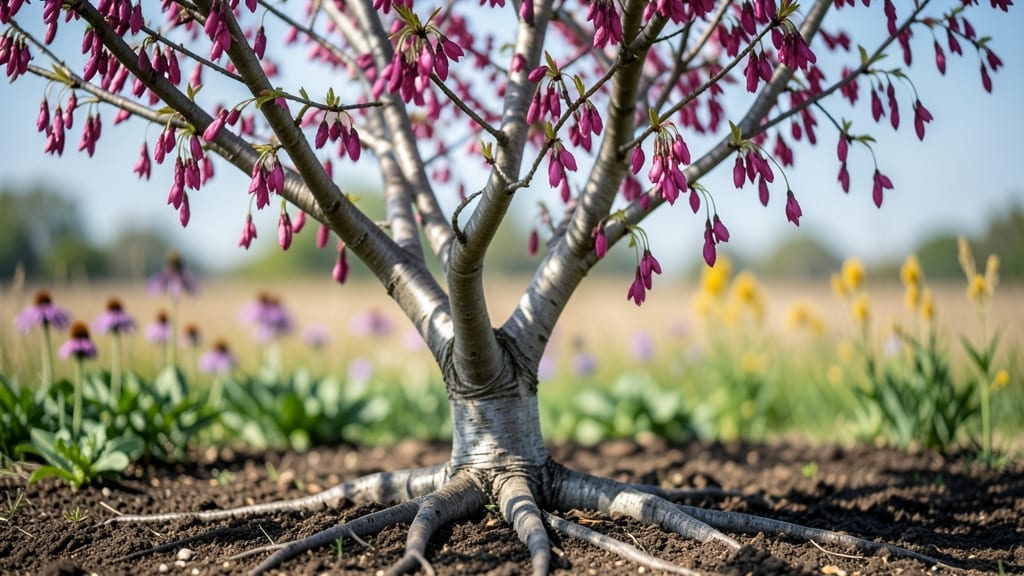
The eastern redbud leaf shape is what makes this tree instantly recognizable—those delicate, heart-shaped leaves that appear like nature’s own Valentine’s Day card. 💚 Each leaf is 2-5 inches long, with smooth, slightly wavy edges and a soft, velvety texture that feels like silk between your fingers.
What’s fascinating is how they emerge coppery-red in spring before turning deep green, then blaze orange-red again in fall—a seasonal transformation that never fails to impress.
These leaves grow alternately along the branches, creating a cascading effect that’s both elegant and practical for gardeners.
The way they catch morning light makes redbuds stand out in any landscape, while their compact size (typically 20-30 feet tall) makes them perfect for small yards or as a focal point in larger gardens.
I’ve found that pairing them with dwarf lilacs or Japanese maples enhances their natural beauty, creating a layered, textured display that feels like a living painting.
Understanding this leaf shape isn’t just for show—it’s your first line of defense against pests and diseases. Healthy redbud leaves should be free of holes, spots, or curled edges (early signs of leaf miner or powdery mildew).
When pruning, always look for three buds where you make your cut—this ensures the heart shape remains intact and the tree stays vigorous. A well-pruned redbud rewards you with prolonged blooms and stronger growth, making every season more rewarding.
For gardeners who love low-maintenance plants with high impact, eastern redbuds deliver—perfect for urban spaces, pollinator gardens, or as a striking specimen tree. The key is observing those leaves year-round; they tell you everything you need to know about your tree’s health without ever raising your voice.
Start by admiring their shape, then let that guide your care.
📚 In This Guide
- What you need
- Instructions
- Tips and common mistakes
- Wrapping up and next steps
What you need
- ● Pruning shears: Bypass pruners (for small branches, 1/4"–3/8" cutting capacity)
- ● Loppers: 6"–8" bypass loppers (for thicker branches, up to 1.5" diameter)
- ● Pruning saw: Curved-tooth saw (for branches 2" or larger)
- ● Gloves: Heavy-duty, cut-resistant gloves (e.g., Mechanix Wear)
- ● Disinfectant: 70% isopropyl alcohol or 10% bleach solution (to sterilize tools)
- ● Rubbing alcohol or hand sanitizer (for cleaning cuts on branches)
- ○ Pruning sealant (optional, for sealing large cuts 1" or wider)
- ● Extension pole: For hard-to-reach branches (e.g., 6–10 ft telescoping pole)
- ● Step stool or ladder: Non-slip, 4–6 ft height (for safety)
- ● Leaf blower or broom (to clear debris after pruning)
- ● Notebook & pen (to track pruning notes or leaf shape progress)
- ● Knowledge of Eastern redbud’s growth habits (e.g., spring blooms, heart-shaped leaves)
- ● Best pruning time: Late winter to early spring (before buds swell) or summer after flowering
- ● Weather check: Choose a dry day (avoid pruning when leaves are wet)
Instructions for pruning eastern redbuds to preserve heart-shaped leaves
Here’s how to prune your redbuds for that iconic heart-shaped silhouette—without sacrificing next year’s blooms.
✂️ Step 1: Time Your Prune for Maximum Leaf Health
Prune your eastern redbud (Cercis canadensis) immediately after it finishes flowering in late spring—around May to early June—when the leaves have fully unfurled but before new growth hardens. This timing ensures you remove dead wood while preserving the delicate leaf shape that makes redbuds so prized. Avoid pruning in fall or winter, as cold stress can weaken the plant’s ability to heal cuts.
Look for branches with mature, thick leaves—these indicate the plant has finished its primary growth phase. If you prune too early, you risk cutting off next year’s flower buds hidden in the leaf axils. If you wait too long, the plant may produce less vibrant foliage. The key is to act when new leaves feel firm but still pliable—like fresh basil leaves.
✂️ Step 2: Remove Dead, Diseased, or Crossing Branches First
Start by cutting out dead or diseased branches at the base, using clean, sharp pruners to make 45-degree angles just outside the branch collar. Diseased wood often appears blackened, shriveled, or covered in fungal growth—remove these immediately to prevent spread. For crossing branches, prioritize the one growing straight up to maintain an open canopy, which improves airflow and sunlight penetration for those signature heart-shaped leaves.
Don’t overthink this step—redbuds are forgiving. If two branches are competing for space, the thicker one usually wins. Thin out crowded areas by removing up to 25% of the canopy in one session. You’ll notice the remaining branches grow stronger with more space to develop those deeply notched, velvety leaves we all love.
✂️ Step 3: Shape for Optimal Leaf Display
Step back and visualize the plant’s natural form—redbuds grow in a rounded, multi-stemmed shape, so avoid heavy topping or shearing, which can distort the leaf shape. Instead, focus on light pruning to open the center, allowing sunlight to reach inner branches. Cut back overly long branches by one-third to encourage bushier growth and more uniform leaf development.
Pay special attention to water sprouts—those fast-growing, vertical shoots that steal energy from leaf production. Snip them back to a lateral bud or side branch. You’ll see the difference in 6-8 weeks when new leaves emerge with symmetrical lobes and that classic redbud texture. Avoid pruning in wet conditions—clean cuts heal faster in dry, mild weather.
🌿 Step 4: Post-Prune Care for Perfect Foliage
After pruning, apply a balanced, slow-release fertilizer (like 10-10-10) around the base to support new growth. Water deeply but avoid soaking the pruned areas—keep the soil evenly moist but not soggy for 2-3 weeks post-prune. This encourages strong, healthy regrowth with vibrant, heart-shaped leaves next season.
Monitor the plant for stress signs like yellowing leaves or stunted growth—these can indicate over-pruning. If you see new leaves emerging smaller or misshapen, you may have pruned too aggressively. Redbuds are resilient, but they reward gentle, strategic cuts with that iconic foliage we gardeners adore. Mulch lightly with 2-3 inches of organic mulch to retain moisture and protect roots.
Tips & tricks for perfect eastern redbud pruning
These insider secrets will help you achieve that coveted heart-shaped foliage while keeping your redbud thriving for years.
Timing is Everything: I can't stress this enough—prune in that narrow window between late spring and early June when leaves feel firm but still pliable. I learned this the hard way after pruning too early and losing next year's flower buds. The ideal time is when you can gently press a leaf and feel it resist slightly, like a ripe peach. This precise timing ensures you preserve both the delicate leaf shape and the plant's future blooms.
Tool Preparation Matters: Never use dull pruners—they crush branches instead of making clean cuts. I always sharpen my pruning shears with a file before the season, and I wipe them down with rubbing alcohol between cuts to prevent spreading disease. Clean tools make all the difference in how well your redbud recovers and develops those signature heart-shaped leaves.
Visualize the Natural Shape: Before making any cuts, step back and study your redbud's natural growth pattern. Redbuds naturally grow in a rounded, multi-stemmed form, so avoid the temptation to create a formal shape. Focus on opening the center by removing only the most obstructive branches—this creates the perfect conditions for sunlight to reach all those developing leaves and encourage that classic heart silhouette.
Post-Prune Recovery Strategy: After pruning, I apply a thin layer of organic mulch around the base to retain moisture and protect the roots. The key is to keep the soil evenly moist but not soggy for those crucial 2-3 weeks post-prune. This simple step helps the plant redirect its energy toward producing vibrant, heart-shaped foliage rather than struggling to recover from stress.
Pro Tips for Eastern Redbud Leaf Shape
- These insider secrets will help you achieve that coveted heart-shaped foliage while keeping your redbud thriving for years.
- Timing is Everything: I can't stress this enough—prune in that narrow window between late spring and early June when leaves feel firm but still pliable.
- Tool Preparation Matters: Never use dull pruners—they crush branches instead of making clean cuts.
Frequently asked questions
When is the best time to prune Eastern redbud for leaf shape?
The ideal time is late winter or early spring (before buds break) or right after flowering (late March–April). Pruning in summer can stimulate new growth that may not harden off before fall. Avoid heavy pruning in fall—it stresses the tree and invites pests. Pro tip: Light shaping prunes in late summer (August) can also work, but avoid cutting into old wood.
How do I fix misshapen leaves after pruning?
If leaves look lopsided or sparse, focus on selective thinning—remove only the innermost branches blocking light from the center. Avoid "topping" (cutting back to stubs), which encourages weak, bushy growth. For stubborn overgrowth, prune in stages over 2–3 years to avoid shocking the tree. Patience is key!
Can I prune Eastern redbud leaves in summer without harming the tree?
Yes, but lightly! Summer pruning (June–July) is best for corrective shaping or removing dead/diseased branches. Avoid heavy cuts—it can stress the tree and reduce next year’s flower production. If you must prune, water deeply afterward and monitor for pests (like aphids) that thrive on stressed trees.
What if my Eastern redbud’s leaves turn yellow after pruning?
Yellowing leaves often signal stress from over-pruning or nutrient loss. Check for:
- Overwatering (root rot risk)
- Underwatering (drought stress)
- Nutrient deficiency (apply balanced fertilizer in spring)
Are there alternatives to pruning for heart-shaped leaves?
If pruning feels overwhelming, try these low-maintenance options:
- Selective branch removal: Focus on one or two main branches per year to naturally open the canopy.
- Training young trees: Guide growth by tying branches to stakes for a natural heart shape.
- Natural thinning: Let the tree grow wild—Eastern redbuds often develop heart shapes on their own with age!
Wrapping up and next steps
The eastern redbud leaf shape is a stunning example of nature’s artistry, and with the right pruning techniques, you can enhance its beauty while keeping your tree healthy. 🌿 Remember, patience and precision are key—whether you’re shaping for aesthetics or managing pests, your efforts will pay off in vibrant, heart-shaped foliage.
Ready to take the next step? Grab your pruners and schedule a session during the tree’s dormant season for the best results!