
Pests and Diseases
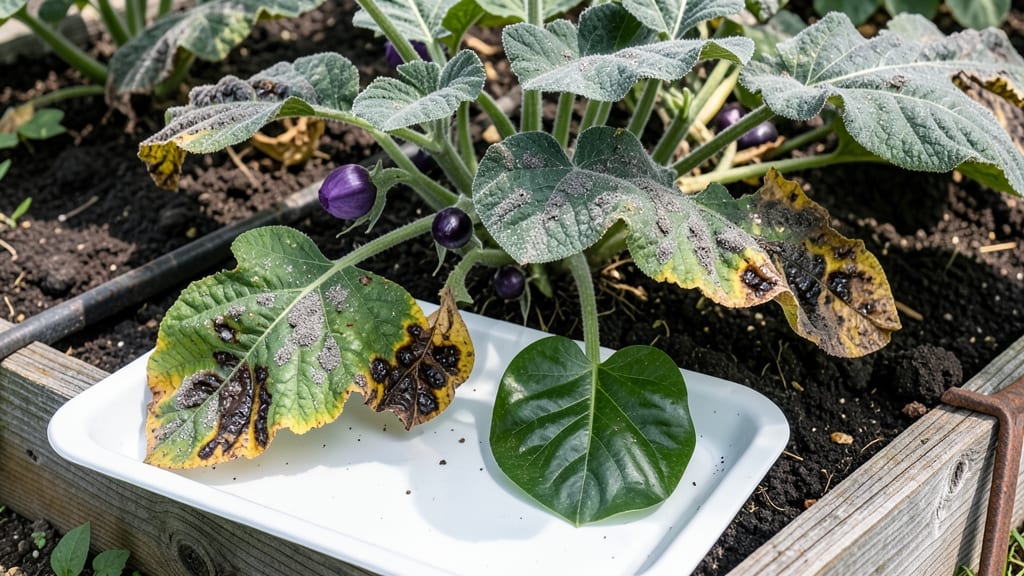
Those ugly brown spots on your eggplant leaves aren’t just cosmetic—they’re a sign of eggplant leaf disease, and your plants are screaming for help. 🌱 I’ve lost entire plants to fungal leaf spots, and the key to saving yours is acting fast with the right mix of cleanup, spacing, and treatments.
The moment you spot those first dark patches, your plant’s future depends on how quickly you respond.
Most fungal spots start with damp leaves and poor airflow—common in crowded eggplant beds or after heavy watering. The spots spread like wildfire when spores hitchhike on tools, rain, or even your gardening gloves.
My biggest mistake? Waiting until half the plant was covered before acting. By then, it was too late for some leaves, but proper sanitation and fungicides could still save the rest.
Here’s the game-changer: a 1% copper fungicide spray (organic option) or neem oil mix (for early stages) stops the spread in its tracks. Combine that with removing infected leaves immediately—don’t compost them—and you’ll see new growth within 7-10 days.
The secret weapon? Morning watering at the base (never overhead) to keep foliage dry all day.
Prevention is where it gets easy—3-foot spacing, pruning for airflow, and rotating crops every 3 years keeps fungal spots from becoming a yearly battle. Trust me, once you master this, your eggplants will look like they’ve been pampered by a pro. Let’s get those leaves healthy again.
Root Causes Of Leaf Damage
Eggplant leaves don’t just wilt or spot out of nowhere—there’s always a trigger. Understanding these underlying causes helps you spot warning signs early and take action before your plants are overwhelmed. Let’s break down the most common reasons why your eggplant’s leaves develop unsightly (and often harmful) symptoms.
Fungi are the #1 culprit behind eggplant leaf diseases, thriving in warm, humid conditions. These microscopic organisms release spores that land on leaves, where they germinate and spread. Some of the most aggressive fungal diseases affecting eggplants include:
- Early Blight (Alternaria solani): Starts as small, dark spots with concentric rings, often appearing on lower leaves first. The fungus spreads via wind, water splashes, and contaminated soil.
- Late Blight (Phytophthora infestans): Causes greasy, brown lesions that spread rapidly—especially in wet weather. This pathogen is notorious for devastating entire crops if left unchecked.
- Powdery Mildew (Oidium spp.): Creates a white, powdery coating on leaves, blocking sunlight and stunting growth. It loves high humidity but can also develop in dry conditions if leaves stay damp overnight.
Why it happens: Fungi need three things to thrive—moisture, warmth, and a susceptible host. Overhead watering, poor airflow between plants, and dense foliage create the perfect breeding ground. Even organic debris (like fallen leaves) can harbor fungal spores, waiting for the right conditions to strike.
Eggplants are tough, but they have limits. Extreme or inconsistent environmental factors can weaken leaves, making them vulnerable to diseases or physical damage. Common triggers include:
| Factor | How It Harms Leaves | Signs to Watch For |
|---|---|---|
| Temperature Swings | Sudden heat or cold shocks disrupt cellular function, leading to sun scorch (brown, crispy patches) or chilling injury (yellowing, water-soaked spots). | Leaf edges curling, discoloration, or a glassy appearance. |
| Poor Air Circulation | Stagnant air traps moisture, encouraging fungal growth. Dense plantings or overcrowded containers restrict airflow, creating a greenhouse effect. | White powdery mildew, yellowing between veins, or slow growth. |
| Excessive Moisture | Overwatering or soggy soil leads to root rot, which starves leaves of nutrients. Wet foliage also invites fungal spores to latch on. | Yellowing lower leaves, mushy stems, or a foul smell at the base. |
| Nutrient Deficiencies | Lack of key nutrients (like magnesium, potassium, or nitrogen) weakens leaves, making them prone to disease. For example, magnesium deficiency causes interveinal chlorosis (yellowing between veins). | Yellow patches, stunted growth, or purple undersides on leaves. |
Why it happens: Eggplants are native to warm climates and prefer consistent conditions. When stress factors pile up—like a heatwave after a rainy spell—their defenses drop, leaving them open to infections. Think of it like a person getting sick after a long night of poor sleep and eating junk food.
Pests don’t just eat leaves—they create entry points for diseases. When insects chew, pierce, or suck sap from eggplant foliage, they:
- Weaken the leaf’s protective cuticle, making it easier for fungi/bacteria to invade.
- Spread pathogens on their bodies (e.g., aphids transmit tobacco mosaic virus).
- Leave behind sticky honeydew, which fosters sooty mold (a black fungal growth).
Common pests to watch for:
- Aphids: Tiny green/black bugs that cluster on new growth, causing curled leaves and sticky residue.
- Spider Mites: Almost invisible until they spin webs and cause stippling (tiny white dots) on leaves.
- Flea Beetles: Jumping black beetles that create shot-hole patterns in leaves, increasing disease risk.
Why it happens: Pests thrive in stressed or neglected plants. For example, drought-stressed eggplants attract spider mites, which then damage leaves—opening the door for fungal infections like powdery mildew. It’s a vicious cycle.
Even the best gardeners make mistakes that inadvertently invite leaf problems. Here’s how you might be contributing:
- Overhead Irrigation: Watering leaves (instead of the soil) keeps foliage damp for hours, perfect for fungal spores. Splashing water can even hitchhike spores from the ground onto leaves.
- Ignoring Crop Rotation: Planting eggplants (or nightshades like tomatoes/peppers) in the same spot year after year leaves behind fungal pathogens in the soil.
- Using Contaminated Tools: Pruners, stakes, or even gloves can harbor Phytophthora or Alternaria spores if not sanitized between plants.
- Planting Too Early: Cool soils slow germination and weaken seedlings, making them susceptible to damping-off (a fungal disease that rots stems at the base).
Why it happens: These practices create opportunities for pathogens to take hold. For instance, Alternaria solani can survive in soil for years—if you replant eggplants in the same bed without treating the soil, you’re rolling the dice every season.
💡 Pro Tip: Keep a garden journal to track when symptoms appear, weather patterns, and your care routine. Patterns will reveal which stressors are most active in your growing conditions.
Fixing Fungal Foes on Eggplants
Now that you’ve spotted the trouble—whether it’s powdery mildew’s ghostly white film, bacterial spots’ ominous black marks, or early blight’s concentric rings—it’s time to act. The good news? Most leaf diseases are manageable with a mix of quick fixes and long-term prevention.
Below, we’ve mapped out cause-specific solutions, so you can target the problem like a pro. Grab your gloves and let’s restore your eggplants to their healthy, purple glory!
Cause: Fungal spores thrive in humid, shaded conditions, creating a chalky white coating on leaves.
🔥 Immediate Action: Clean Up and Disinfect
- Remove infected leaves 🍃: Snip off heavily affected foliage (don’t compost—trash it!) to stop spores from spreading.
- Wipe down leaves 🧽: Use a soapy water spray (1 tbsp mild dish soap + 1 gallon water) to physically remove mildew.
Do this in the early morning so leaves dry quickly. - Neem oil spray 🌿: Mix 1 tsp neem oil + 1 tsp baking soda + 1 tsp horticultural oil per quart of water. Spray every 7–10 days (especially undersides of leaves).
🌡️ Long-Term Prevention: Air and Light
- Space plants 18–24 inches apart ➡️ improves airflow.
- Prune for sunlight ☀️: Thin out crowded branches so leaves get 6+ hours of direct light daily.
- Water at the base 💧: Avoid overhead watering—morning is best to allow foliage to dry.
- Reflective mulch 🪞: Use white plastic or gravel mulch to bounce light onto leaves and deter spores.
Cause: Xanthomonas or Pseudomonas bacteria spread via water, tools, or contaminated seeds, creating water-soaked brown spots.
⚠️ Critical First Step: Sterilize Everything
- Disinfect pruners 🧴: Wipe tools with 70% rubbing alcohol or a 10% bleach solution between cuts.
- Remove and destroy infected plants 🚮: Bacterial diseases often can’t be cured—pull affected plants to prevent spread.
🛡️ Treatment: Copper-Based Fungicides
- Copper soap or hydroxide 🛡️: Apply every 7–14 days (follow label rates). Examples: Cueva, Champ, or Bonide Copper Fungicide.
- Baking soda spray 🍞: Mix 1 tbsp baking soda + 1 tsp dish soap + 1 gallon water.
Spray weekly to create an unfriendly environment for bacteria.
💡 Prevention Tips: Break the Cycle
- Rotate crops 🌱: Avoid planting nightshades (tomatoes, peppers, potatoes) in the same spot for 3+ years.
- Use drip irrigation 💦: Keep leaves dry—water only at the soil line.
- Sanitize hands and tools 🧤: Wash with soapy water after handling plants.
Cause: Alternaria solani fungus loves hot, humid weather and weakens plants with target-like brown spots.
🍳 Quick Fix: Fungicidal Sprays
- Preventative sprays 🛡️: Apply chlorothalonil (Daconil) or mancozeb (Manzate) every 7–10 days once you see first signs of spots.
- Organic option 🌿: Serenade ASO (a biological fungicide with Bacillus subtilis) works well for organic gardens.
👨🍳 Cultural Controls: Strengthen Your Plants
- Side-dress with compost 🌱: Boost plant health with balanced fertilizer (10-10-10) at transplanting and mid-season.
- Mulch heavily 🌿: Use 3–4 inches of straw or grass clippings to keep soil moist (but not soggy) and reduce spore splash.
- Remove lower leaves 🍃: Early blight often starts at the bottom—prune off the first 6 inches of foliage to improve airflow.
⏰ Timing Is Everything
- Start spraying at transplanting ⏳: Apply fungicide every 7–14 days until harvest to prevent outbreaks.
- Harvest promptly 🍆: Pick eggplants before signs of stress appear to avoid weakening the plant.
Cause: Viruses (like Tobacco Mosaic Virus) spread via infected seeds, sap, or insects—no cure exists, but you can contain and prevent them.
🚨 Emergency Measures
- Quarantine new plants 🏷️: Keep untested seedlings separate from your garden for 2–4 weeks to spot symptoms early.
- Remove infected plants immediately 🚫: Dig up and burn or trash (don’t compost) affected plants to stop spread.
🛡️ Prevention: Break the Virus Chain
- Control aphids and thrips 🐜: Use neem oil or insecticidal soap to reduce virus vectors.
- Wear gloves when pruning 🧤: Avoid open wounds on your hands—viruses can live on skin!
- Buy certified disease-free seeds 🌱: Look for seed packets labeled "virus-tested" from reputable suppliers.
- Rotate crops 🔄: Never plant eggplants (or other nightshades) in the same spot two years in a row.
- Test your soil 📊: Aim for a pH of 6.0–6.8—healthy soil = stronger plants.
- Monitor weather ☁️: High humidity + temps above 80°F = fungal feast.
Use a fan on hot days if needed. 4. Buy resistant varieties 🌟: Try ‘Black Beauty’ (early blight resistant) or ‘Ichiban’ (powdery mildew tolerant). 5. Clean up in fall 🍂: Remove all plant debris from your garden to starve overwintering pathogens.
Final Thought: Most leaf diseases are preventable with vigilance—but if they strike, act fast with the right tools. Your eggplants will bounce back with stronger leaves, bigger yields, and fewer fungal frowns! 🚀
Frequently asked questions about eggplant leaf diseases
What’s the difference between bacterial spots and fungal spots on eggplant leaves?
Bacterial spots appear as greasy, water-soaked brown marks that often have yellow halos, while fungal spots (like early blight) show up as dry, concentric-ringed lesions. Bacterial spots spread faster in wet conditions, while fungal spots thrive in heat and humidity. Always check leaf undersides—fungal spores love hiding there!
Can I still harvest eggplants if the leaves have diseases?
Yes, but only if the fruit itself is healthy and the disease hasn’t reached the stems. Remove all infected leaves immediately (don’t compost them!) and focus on treating the remaining plant. Harvest eggplants promptly to reduce stress on the plant—waiting too long weakens its defenses.
How often should I spray fungicides on my eggplants?
Start with a preventative spray every 7–14 days at transplanting, then increase to every 5–7 days during humid weather. For organic gardens, rotate between neem oil and baking soda spray to avoid resistance. Always spray in the early morning so leaves dry quickly.
Why does my eggplant have yellow leaves but no spots?
Yellowing without spots often signals nutrient deficiencies (like nitrogen or magnesium) or overwatering. Check the soil—if it’s soggy, reduce watering. For deficiencies, use a balanced fertilizer (10-10-10) or Epsom salt spray (1 tbsp per gallon) for magnesium. Poor drainage can also cause root rot, which starves leaves of nutrients.
Is it safe to compost eggplant leaves with diseases?
No! Fungal and bacterial spores survive composting and can reinfect your garden. Always trash infected leaves in sealed bags. For severe cases (like bacterial wilt), burn the debris if possible. This breaks the disease cycle and protects next year’s plants.