
Diseases
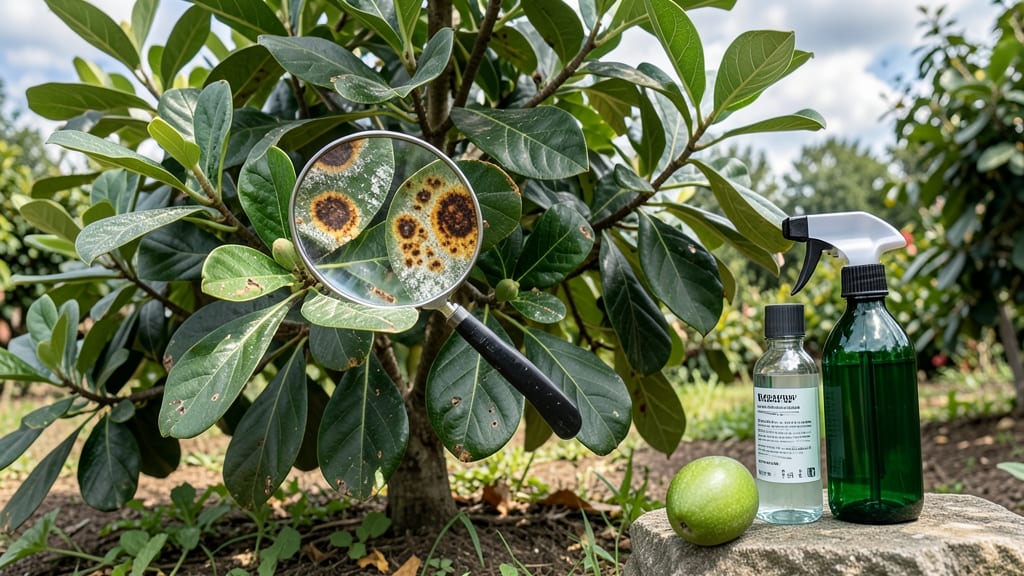
Feijoa leaf diseases turn your tropical treasure into a sad, spotted mess—unless you act fast. 🌿 I’ve watched my feijoa trees go from glossy green to sad and speckled, and the key to saving them is catching the problem early and knowing exactly what to do.
The most common culprits are fungal leaf spots and bacterial blight, both of which thrive in damp, humid conditions. Yellowing edges, black or brown spots, or oily-looking patches mean your feijoa is sending an SOS—don’t ignore it.
A simple copper fungicide spray or neem oil can often turn things around before the disease spreads. You’ll see new growth within weeks if you prune infected leaves and improve airflow.
The secret is prevention: water at the base, not the leaves, and space your trees so they get good circulation. A few minutes of care now saves hours of heartache later. Works for both backyard trees and container-grown feijoas. Let’s get those leaves healthy again!
Root Causes Of Leaf Troubles
Feijoa trees (Acca sellowiana) are prized for their fragrant fruit and lush foliage, but their leaves can become a battleground for fungal pathogens, bacterial invaders, and environmental stressors. Understanding why these issues arise is the first step to prevention and treatment.
Below, we break down the most common culprits behind feijoa leaf diseases, from microscopic invaders to garden management mistakes.
Fungi thrive in warm, moist conditions, making feijoa leaves a prime target. These pathogens often enter through wounds, stomata (leaf pores), or even healthy tissue if conditions are favorable.
- 🌡️ High Humidity & Poor Airflow Fungal spores—like those causing anthracnose or leaf spot—spread rapidly when humidity stays above 70% for prolonged periods. Stagnant air in dense plantings or shaded areas traps moisture, creating the perfect breeding ground. Actionable fix: Prune for airflow and avoid overhead watering.
- 💦 Overwatering or Wet Foliage Feijoa leaves retain moisture longer than many fruit trees, giving fungi like Phyllosticta (a common leaf spot pathogen) a foothold. Waterlogged soil or evening watering keeps leaves damp overnight, accelerating spore germination. Actionable fix: Water at the base in the early morning and ensure soil drains well.
- 🌱 Weakened Tree Defense Stressed trees—due to nutrient deficiencies (especially magnesium or zinc), drought, or root damage—are more susceptible to fungal attacks. Fungi exploit these weaknesses, leading to necrotic spots or premature leaf drop. Actionable fix: Conduct a soil test and amend with compost or organic fertilizers like fish emulsion.
Bacteria like Xanthomonas or Pseudomonas cause diseases such as bacterial leaf spot, which appear as water-soaked lesions that expand into dark, oily patches. Unlike fungi, bacteria multiply quickly in warm, wet conditions and can spread via splashing water or contaminated tools.
- 🌧️ Rain or Irrigation Splatter Heavy rain or overhead sprinklers can hurl bacterial cells onto leaves, infecting through natural openings. Once established, bacteria ooze out in a slimy exudate, signaling active infection. Actionable fix: Use drip irrigation and sterilize pruners with rubbing alcohol.
- 🍃 Physical Damage to Leaves Hail, insect feeding (e.g., mites or aphids), or rough handling create entry points for bacteria. A single wound can become a gateway for systemic infection. Actionable fix: Protect trees from mechanical damage and monitor for pests.
Not all leaf issues stem from pathogens. Environmental factors—often overlooked—can mimic disease symptoms or weaken the tree’s resilience.
- 🔥 Extreme Temperature Swings Feijoas prefer mild climates (USDA zones 8–11). Sudden heatwaves or late frosts disrupt cellular function, leading to sunscorch (brown, crispy leaf edges) or cold damage (blackened, waterlogged-looking spots). Actionable fix: Mulch to moderate soil temps and provide afternoon shade in hot zones.
- 🌬️ Windburn or Salt Stress Coastal growers may notice leaf tip burn from salt spray, while inland trees suffer from desiccating winds. Both conditions cause marginal browning and necrosis, often misdiagnosed as disease. Actionable fix: Use windbreaks or rinse leaves after salt exposure.
- 🍄 Soil-Borne Pathogens Compacted or waterlogged soil can harbor Phytophthora or Armillaria (root rot fungi), which starve the tree of nutrients. Yellowing leaves and wilting—even before visible leaf spots—can signal root stress. Actionable fix: Improve drainage with gypsum or organic matter.
Even the most resilient feijoa can fall prey to cultural blunders that invite disease.
- 🌱 Overcrowded Plantings Dense foliage reduces airflow, trapping humidity and spores. Feijoas need 15–20 feet of space to mature, but many growers plant them too closely. Actionable fix: Thin out trees or relocate young specimens.
- 🍂 Poor Sanitation Leaving infected leaves or debris on the ground allows spores to overwinter and reinfect next season. Actionable fix: Rake and compost fallen leaves (or bag them for disposal) after harvest.
- 🌿 Ignoring Nutrient Needs A deficiency in iron or manganese causes interveinal chlorosis (yellowing between veins), which can be mistaken for disease. Actionable fix: Apply chelated micronutrients or use foliar sprays like seaweed extract.
By addressing these root causes—whether fungal, bacterial, environmental, or cultural—you’ll not only treat existing leaf issues but also prevent future outbreaks. The key is proactive care: monitor humidity, inspect leaves regularly, and act at the first sign of stress. Your feijoa’s health (and fruit production!) will thank you.
Fixing Feijoa Leaf Problems Naturally
Feijoa leaf diseases can be frustrating, but with the right approach, you can restore your tree’s health—without harsh chemicals. Below are targeted solutions for common issues, paired with preventive tips to keep your feijoa thriving long-term.
Cause: Excess moisture, poor airflow, or weak plant immunity. Fix:
- Prune for airflow 🔪: Remove crowded branches and thin out foliage to improve circulation. Aim for 10–15% reduction in dense areas.
- Apply neem oil spray 🍳: Mix 1 tbsp neem oil + 1 tsp mild soap + 1 quart water. Spray early morning or evening (avoid direct sun) every 7–10 days until symptoms fade.
- Copper fungicide (organic option) 🛡️: Use baker’s copper fungicide (0.5–1 tsp per gallon of water) as a last resort for severe rust or blight.
Prevention: ✅ Water at the base (avoid wetting leaves) to reduce fungal spores. ✅ Space plants 6–8 feet apart for better airflow. ✅ Mulch with straw or wood chips to deter soil-borne fungi.
Cause: Weakened leaves attract sap-sucking pests, leading to yellowing or curling. Fix:
- Blast off pests with water 💦: Use a strong hose spray (10–15 psi) to dislodge mites/aphids from undersides of leaves.
- Introduce beneficial insects 🐞: Release ladybugs or lacewings (available at garden centers) to prey on pests naturally.
- Diatomaceous earth (DE) barrier 🏗️: Lightly dust food-grade DE on leaves (reapply after rain). Avoid overapplying—it can harm beneficial insects.
Prevention: ✅ Inspect leaves weekly (especially undersides) for early signs. ✅ Encourage predator plants like marigolds or basil nearby to attract pest-eating insects. ✅ Avoid over-fertilizing (nitrogen-heavy soils attract aphids).
Cause: Poor soil health, overwatering, or lack of key micronutrients. Fix:
- Test soil pH 📊: Feijoas prefer slightly acidic soil (pH 5.5–6.5). Adjust with sulfur (to lower pH) or lime (to raise pH) if needed.
- Feed with compost tea 🌱: Brew 1 cup worm castings + 5 gallons water, steep for 24 hours, and spray foliarly or pour at the base.
- Targeted micronutrients 💊:
- Yellow leaves? → Iron chelate (for chlorosis).
- Purple stems? → Potassium-rich fertilizer (like banana peel tea).
Prevention: ✅ Mulch annually with compost to replenish nutrients. ✅ Rotate crops if growing feijoas in containers (avoid nutrient depletion). ✅ Water deeply but infrequently (feijoas hate soggy roots).
Cause: Extreme conditions weaken leaves, making them prone to secondary diseases. Fix:
- Shade cloth for sunburn ☀️🛡️: Use 30–50% shade cloth during peak summer if leaves scorch.
- Protect from frost ❄️: Cover young trees with frost cloth or wrap trunks with burlap in cold snaps.
- Adjust watering 💧: Let top 2 inches of soil dry between waterings. Overwatering = root rot!
Prevention: ✅ Choose a sheltered spot (avoid windy or frost-prone areas). ✅ Drip irrigation (not overhead) to keep leaves dry. ✅ Avoid heavy clay soil—amend with sand or perlite for drainage.
- Sanitize pruners 🧼: Wipe with rubbing alcohol between cuts to prevent disease spread.
- Rotate organic sprays 🔄: Alternate neem oil, copper, and compost tea to avoid resistance.
- Monitor seasonally 📅: Check leaves spring (new growth) and fall (dormancy) for early signs.
Remember: Consistency is key! Most feijoa leaf issues improve within 4–6 weeks of targeted care. If problems persist, consult a local organic gardening expert for a soil test or tailored advice.
Frequently asked questions about feijoa leaf diseases
What do black spots on feijoa leaves mean?
Black spots are usually fungal leaf spot diseases like Phyllosticta or anthracnose. These appear as small, dark patches that expand with yellow halos. High humidity and wet foliage create perfect conditions for these fungi. Remove infected leaves immediately and apply neem oil or copper fungicide to stop spread.
Why are my feijoa leaves turning yellow?
Yellowing leaves can signal fungal infections, bacterial blight, or nutrient deficiencies (like iron or magnesium). Check for dark spots first—if none appear, test soil pH and amend with compost or chelated micronutrients. Overwatering or poor drainage can also cause yellowing by suffocating roots.
Can I save my feijoa tree if leaves are already dropping?
Yes, but act fast! Prune all infected/damaged leaves, improve airflow by spacing plants 6–8 feet apart, and apply a copper fungicide or neem oil spray. With proper care, new growth should appear within 4–6 weeks. Avoid fertilizing until the tree recovers—stressed trees are more vulnerable.
Is it safe to eat fruit from a diseased feijoa tree?
Only if the disease is limited to leaves (like leaf spot) and hasn’t reached the fruit. Fungal/bacterial leaf infections rarely spread to fruit, but avoid eating anything with visible spots, cracks, or oozing lesions. When in doubt, harvest only from healthy branches and discard infected fruit immediately.
How often should I spray my feijoa tree for disease prevention?
Apply preventive sprays like neem oil or copper fungicide every 2–4 weeks during growing season (spring to fall). For organic gardens, alternate between neem and baking soda spray (1 tbsp baking soda + 1 tsp soap + 1 gallon water) to avoid resistance. Stop sprays 2 weeks before harvest.