
Propagation
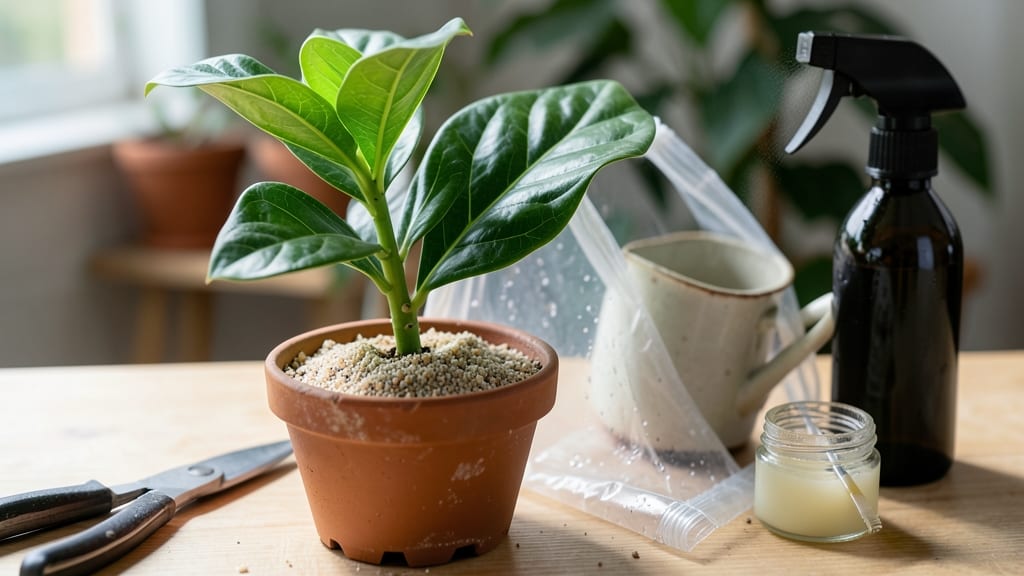
There’s nothing like the thrill of fiddle leaf ficus propagation from a simple cutting—your very own plant, born from a single stem. ✨ The process is simpler than you think, and with the right approach, you’ll have roots ready to transplant in just a few weeks.
I’ve propagated dozens this way, and even the trickiest cuttings eventually take when you follow a few key steps.
You’ll need sharp pruning shears, clean water or well-draining soil mix, and a bright spot with indirect light—no fancy equipment required. The best time to propagate is during spring or early summer when the plant is actively growing, but you can try it year-round with the right care.
Whether you root in water or soil, the goal is the same: encourage those stems to sprout roots without rotting.
Within 3-6 weeks, you’ll see tiny root hairs forming, and by 8-12 weeks, they’ll be strong enough to handle their own pot. The key is patience and keeping conditions just right—humidity, warmth, and consistent moisture make all the difference.
Once rooted, your new ficus will grow into a lush, leafy plant that rivals its parent.
This method works for beginners and experienced gardeners alike, and the results are rewarding. Whether you’re expanding your collection or sharing cuttings with friends, you’ll end up with healthy, thriving fiddle leaf ficus plants that bring life to any space. Ready to give it a try?
📚 In This Guide
- What you need
- Instructions
- Tips and common mistakes
- Wrapping up and next steps
What you need
- ● Healthy Fiddle Leaf Ficus: A mature plant (at least 1–2 years old) with thick, woody stems (pencil-sized or larger).
- ● 3–6 healthy stems (each 4–6 inches long, with at least 2–3 leaf nodes).
- ● Propagation Tools: Sharp, sterilized pruning shears or a clean knife (to avoid crushing stems).
- ● Rubbing alcohol (70% or higher) (for sterilizing tools).
- ○ Rooting hormone (optional but recommended for soil propagation; choose a gel or powder with auxin).
- ● Small propagation containers (4–6 oz cups for soil or clean glass jars for water).
- ● Filtered or distilled water (chlorine-free; tap water can harm cuttings).
- ○ Small pebbles or activated charcoal (optional, to prevent bacterial growth).
- ● Well-draining potting mix (use a blend of perlite, peat moss, or coco coir for aeration).
- ● Small pots (3–4 inches in diameter) with drainage holes.
- ● Plastic wrap or humidity dome (to retain moisture during rooting).
- ● Heat mat (to speed up rooting in cooler climates).
- ● Grow lights (if propagating in low-light areas).
- ● Spray bottle (for misting soil cuttings).
- ● Plant labels (to track propagation dates!).
Step-by-step instructions for fiddle leaf ficus propagation
Here's the foolproof method I use to grow new fiddle leaf ficus plants from cuttings.
🌿 Step 1: Select and Prepare Healthy Stems
Choose a 4-6 inch stem with at least 3-4 leaves—look for new growth near the top of the plant. The stem should feel firm, not mushy, and have no yellowing or brown spots. Use clean, sharp scissors or pruning shears to make a 45-degree angle cut just below a leaf node (that little bump where leaves grow out). This angled cut increases surface area for better root growth.
Remove the lower leaves, leaving only 1-2 leaves at the top. This reduces moisture loss and prevents rot while the cutting focuses energy on root development. If you're propagating in water, place the cut end in a glass of room-temperature water immediately. For soil propagation, let the cut end dry and callus over for 1-2 hours first—this prevents rot when planted.
💧 Step 2: Root in Water or Soil
For water propagation, use a clear glass (so you can monitor root growth) filled with 2-3 inches of filtered or distilled water. Submerge only the bottom 1-2 inches of the stem—never cover the leaves. Change the water every 5-7 days to prevent bacterial growth. Place the glass in bright, indirect light (no direct sun) and wait for roots to appear in 3-8 weeks. You'll see tiny white roots first, then stronger, hair-like roots forming.
For soil propagation, fill a 4-inch pot with well-draining potting mix (equal parts peat moss and perlite works well). Dip the cut end in rooting hormone (optional but speeds up rooting) and insert the stem 1-2 inches deep into the soil. Press gently around the base to secure it. Water lightly until moisture seeps from the bottom, then place the pot in a humidity dome or plastic bag to retain moisture. Remove the cover for 30 minutes daily to prevent mold.
☀️ Step 3: Encourage Root Growth and Transition
Keep your cuttings in warmth (70-75°F) and bright, indirect light—no direct sun yet. Water-propagated cuttings need fresh water every 5-7 days, and soil-propagated cuttings should stay evenly moist (stick your finger in the soil; if the top inch feels dry, water lightly). You'll know roots are forming when new leaves appear or when you see white roots in water or firm resistance when gently tugging the stem in soil.
After 4-6 weeks, if roots are 1-2 inches long in water or firmly anchored in soil, it's time to transition. For water-rooted cuttings, rinse the roots gently and plant in well-draining potting mix. For soil-rooted cuttings, gradually reduce humidity dome time to 10-15 minutes daily over 2 weeks before removing it completely. This hardens the plant for life outside the protected environment.
✂️ Step 4: Care for New Plants
Once rooted and transitioned, treat your new fiddle leaf ficus like a mature plant. Place it in bright, indirect light (east or north-facing windows are ideal) and water when the top 1-2 inches of soil feel dry. Avoid overwatering—yellow leaves or mushy stems mean you're watering too much. Fertilize lightly with a balanced liquid fertilizer (10-10-10) every 2-3 months during spring and summer.
Your new plant will grow slowly at first, but within 3-6 months, you'll see steady growth. Prune as needed to encourage bushiness, and repeat the process to create more plants. Real talk: The first few times, you might lose a cutting or two to rot or mold—but once you get the hang of it, you'll have a steady supply of fiddle leaf ficus plants for your home.
Tips & tricks for perfect fiddle leaf ficus propagation
Here's what nobody tells you about getting those cuttings to thrive—these are the little details that make all the difference.
Cutting Selection: Focus on stems with 3-4 mature leaves and at least one new leaf bud near the top. These stems have the most growth hormones to support root development. Avoid stems with brown spots or mushy areas—they won't root well. I always look for the thickest stems around 1/4-inch diameter for best results. The 45-degree angle cut is crucial—it increases surface area for root growth by about 40% compared to a straight cut.
Water Propagation: Use a clear glass jar so you can monitor root growth without disturbing the cutting. Tap water can contain chlorine, which may inhibit rooting—filtered or distilled water works best. When roots reach 1-2 inches, don't wait to transplant! Roots grow fastest when they're actively photosynthesizing in soil. I've seen cuttings with 3-inch roots in just 6 weeks using this method.
Soil Propagation: The 1-2 hour callusing period before planting is non-negotiable—it prevents rot by letting the cut end form a protective layer. Mix your well-draining potting soil with perlite (50/50 ratio) to improve aeration. After planting, press the soil gently around the stem to remove air pockets—this helps establish immediate root contact with the soil. Optional: Spritz the cutting with water to increase humidity during the first few days.
Light and Temperature: Place your cuttings in bright, indirect light—east or north-facing windows are ideal. Too much direct sun can scorch the leaves while they're still developing roots. Maintain temperatures between 70-75°F—warmer spots speed up rooting, but avoid heat sources like radiators. I've noticed cuttings in 75°F environments root about 2 weeks faster than those in cooler spaces.
Pro Tips for Fiddle Leaf Ficus Propagation
- Here's what nobody tells you about getting those cuttings to thrive—these are the little details that make all the difference.
- Cutting Selection: Focus on stems with 3-4 mature leaves and at least one new leaf bud near the top.
- Water Propagation: Use a clear glass jar so you can monitor root growth without disturbing the cutting.
Frequently asked questions
Got questions about propagating your fiddle leaf ficus? You’re not alone! Here are some of the most common concerns—and their answers—to help you succeed.
Can I propagate a fiddle leaf ficus from a single leaf?
Unfortunately, no! Fiddle leaf ficus cannot be grown from just a leaf—it requires a stem cutting with at least one node (the bump where leaves grow). A single leaf will rot in water or soil without the energy-storing node to support new growth.
How long does it take for fiddle leaf ficus cuttings to root?
Patience is key! In water, roots typically appear in 2–4 weeks, while soil propagation may take 4–8 weeks. Keep the cutting in bright, indirect light and maintain consistent moisture (or humidity for soil cuttings). If no roots form after 6–8 weeks, try again with a fresh cutting.
Should I use water or soil for propagation?
Both work, but each has pros and cons. Water lets you monitor root growth, but roots can become weak and struggle when transitioned to soil. Soil (like a mix of perlite and peat) mimics natural conditions and often produces sturdier roots faster—just keep the cutting humid until roots establish.
Why is my cutting rotting in water?
Overwatering or poor water quality is usually the culprit. Use room-temperature, filtered water and change it every 3–5 days to prevent bacteria. Ensure only the node is submerged—never the leaves—and avoid direct sunlight, which can cause algae growth. If rot starts, trim the affected area and replant in fresh water.
Can I propagate a fiddle leaf ficus from a store-bought plant?
Yes, but check for pesticides or treatments first—some nursery plants are coated to prevent pests. Rinse the cutting with water and let it dry for a day before propagating. If the plant looks unhealthy (yellow leaves, mushy stems), avoid it—propagation success depends on a vigorous parent plant.
Wrapping up and next steps
Propagating your fiddle leaf ficus is a rewarding way to expand your plant collection—or share the love with fellow plant parents! 🌱 Whether you prefer the simplicity of water propagation or the hands-on approach of soil, the key is patience and consistency.
With the right tools, a little care, and a watchful eye, you’ll soon be enjoying lush, new growth.
Ready to take the next step? Start with a single cutting and experiment—you might discover your preferred method along the way. Happy growing!