
How To
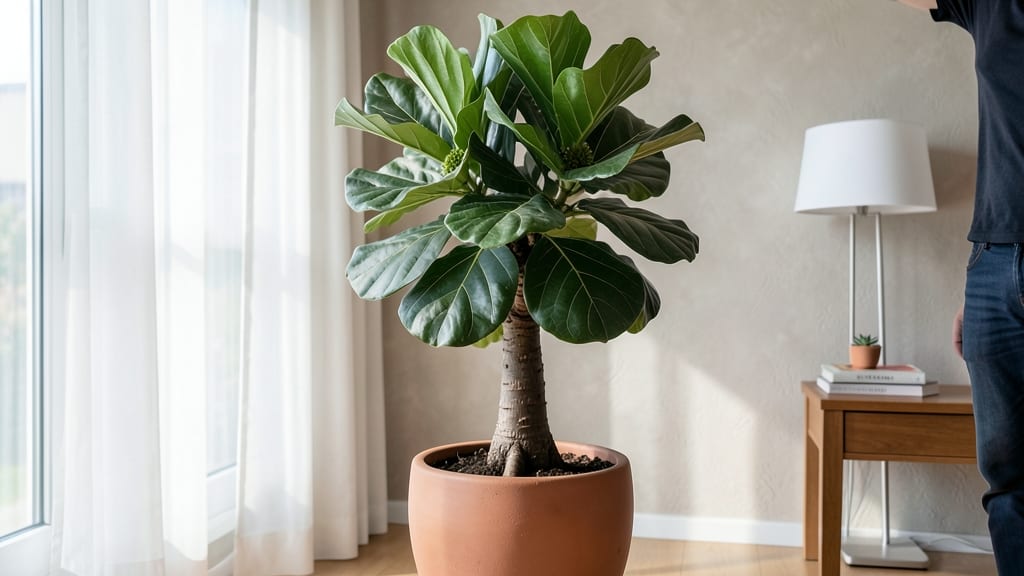
A fiddle leaf fig can grow up to 10 feet tall indoors—though many stay smaller with the right care. That’s right: your living room ceiling might not be tall enough for this tropical beauty if you let it go wild.
Picture this: a 6-foot-tall plant that once fit neatly on your shelf now blocks your doorway. The good news? With pruning and light control, you can keep it at a manageable 3-5 feet—or even smaller.
But first, you’ll need to know how fast it grows and what makes it stretch like a sleepy cat.
Outdoor fiddle leaf figs in USDA Zone 6 can hit those 10-foot heights faster, thanks to more sunlight and humidity. Indoors, though, growth slows unless you’re giving it the ideal bright, indirect light. That’s why so many end up lanky and leggy—especially if they’re tucked away in a dim corner.
In this guide, I’ll break down exactly how tall your fiddle leaf fig will get—whether you’re keeping it as a statement piece or a compact tabletop plant—and how to control its height without stressing the roots. Let’s get started.


Fiddle leaf fig height by growing environment: indoor vs outdoor limits
Your fiddle leaf fig (Ficus lyrata) can grow into a stunning statement piece—but its final height depends entirely on where you grow it. In indoor settings, these plants typically max out at 6-10 feet with proper care, while outdoor conditions can push them toward their natural 10-15 foot potential.
Understanding these differences helps you manage expectations and create the perfect growing environment for your plant.
The key factors influencing height are light exposure, humidity levels, and seasonal changes. Indoors, controlled environments limit growth, while outdoors, your fiddle leaf fig can stretch toward the sky with optimal conditions.
Let’s break down the specifics so you can plan for your plant’s future—whether you’re dreaming of a towering indoor tree or an outdoor focal point.
📊 Comparison Table: Fiddle Leaf Fig Height by Environment
| Factor | Indoor Growth | Outdoor Growth |
|---|---|---|
| Maximum Height | 6-10 feet | 10-15 feet |
| Growth Rate | 1-2 feet/year | 2-4 feet/year |
| Light Requirements | Bright indirect (6+ hrs) | Full sun to partial shade |
| Humidity Needs | 40-50% (supplement if dry) | 50-70% (naturally higher) |
| Seasonal Impact | Slow winter growth | Year-round growth (warmer climates) |
| Pruning Needs | Regular pruning for control | Less frequent (natural shape) |
Indoors, your fiddle leaf fig will grow more slowly due to limited light exposure and controlled humidity levels. Without proper care, it may only reach 4-6 feet in 3-5 years.
However, with ideal conditions—like a south-facing window or grow lights—you can encourage faster growth and reach the upper limit of 10 feet.
Outdoors, these plants thrive in USDA Zones 10-12, where they can grow 2-4 feet per year under full sun. In cooler climates, outdoor growth slows significantly, but they can still reach 8-10 feet with proper winter protection.
The key difference? Outdoor fiddle leaf figs experience natural seasonal changes and higher humidity, which fuels rapid growth during warm months.
If you’re growing your fiddle leaf fig indoors, focus on maximizing bright indirect light and maintaining consistent humidity. A humidifier or pebble tray can make a huge difference in growth rate.
For outdoor plants, ensure they’re protected from frost and strong winds, which can stunt growth or cause damage.
One common misconception is that fiddle leaf figs will always grow tall—they won’t without proper care. Neglecting pruning or fertilization can lead to leggy, weak growth. Regularly trimming back overgrown branches encourages bushier growth and prevents your plant from becoming a top-heavy tower.
Aim to prune in spring or early summer for the best results.
For those in cooler climates, consider growing your fiddle leaf fig as a seasonal outdoor plant. Move it indoors before the first frost (October 30 in most regions) to protect it from cold damage.
This approach lets you enjoy faster outdoor growth while ensuring your plant survives the winter. Just be sure to acclimate it gradually when transitioning back outdoors in spring.
Whether you’re dreaming of a 10-foot indoor giant or a sun-drenched outdoor specimen, understanding these growth limits helps you plan ahead. With the right care, your fiddle leaf fig can become the stunning centerpiece you’ve always wanted—just don’t forget to give it the space it needs to thrive! 🌿
How to control fiddle leaf fig growth height: pruning and care tips
If your fiddle leaf fig is reaching for the ceiling faster than you'd like, don't worry—you're not alone! These stunning plants can grow 6 to 10 feet tall indoors if left unchecked, but with the right techniques, you can keep them at your ideal height.
The key lies in strategic pruning, repotting, and environmental adjustments that encourage controlled growth rather than rapid vertical expansion.
Pruning isn't just about cutting back overgrowth—it's about shaping your plant's future. By removing the right branches at the right time, you can redirect energy toward fuller foliage and shorter stature.
Plus, pruning stimulates new growth, giving your fiddle leaf fig a healthier, bushier appearance while keeping it manageable for your space. Let's dive into the steps to tame your plant's height naturally.
- Step 1: Choose the right time – Prune in spring or early summer when your plant is actively growing. Avoid pruning in winter or fall when growth slows.
- Step 2: Identify the cut points – Look for leaf nodes (the bumps where leaves grow). Cut just above a leaf node to encourage new growth from that spot.
- Step 3: Use clean, sharp tools – Disinfect your pruning shears with rubbing alcohol to prevent disease. Make cuts at a 45-degree angle to avoid tearing the stem.
- Step 4: Prune selectively – Remove overly long stems or leggy branches first. Aim to cut back 1/3 of the plant's height if it's getting too tall.
- Step 5: Propagate cuttings – Place stem cuttings in water or moist soil to root. This gives you free new plants while controlling your original's height!
- Step 6: Repot for better control – If your plant is root-bound, repot into a slightly larger container (only 1-2 inches wider). This slows vertical growth while encouraging bushier growth.
- Step 7: Adjust light exposure – Move your fiddle leaf fig to a brighter spot (but avoid direct sun). Low light causes leggy growth, while optimal light promotes balanced, compact growth.
Another game-changer for height control is repotting. When your fiddle leaf fig becomes root-bound, it focuses energy on stretching upward rather than filling out. Repotting into a slightly larger pot (just 1-2 inches wider) gives roots more room to spread horizontally, which naturally slows vertical growth.
Always use a well-draining potting mix to prevent root rot, which can stress your plant and affect its growth pattern.
Don't forget about fertilizer timing—overfeeding can lead to rapid, unchecked growth. Use a balanced fertilizer (like 10-10-10) every 4-6 weeks during spring and summer, but reduce feeding in fall and winter.
This ensures your plant grows at a steady, manageable pace rather than shooting up overnight. Pair this with consistent watering (water when the top inch of soil is dry) to maintain healthy, controlled growth.
With these techniques, your fiddle leaf fig will stay at a height that fits your space—whether you prefer a compact tabletop plant or a taller statement piece. The key is patience and consistency.
Prune regularly, repot when needed, and adjust care based on your plant's response. Soon, you'll have a perfectly sized fiddle leaf fig that thrives without dominating your room! 🌿