
Watering
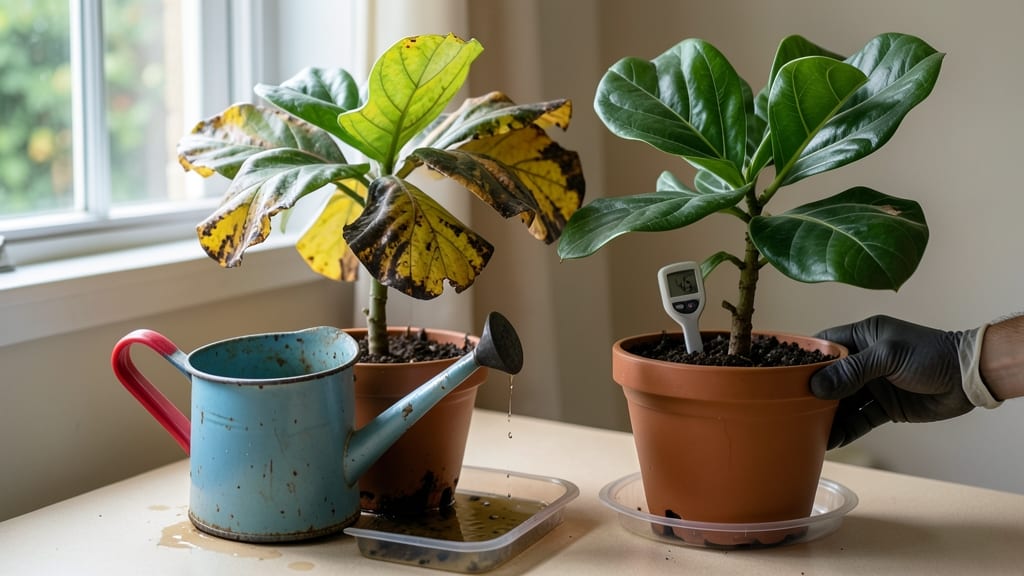
When your fiddle leaf fig overwatered leaves turn yellow and mushy, root rot is likely the culprit. 🌿 I've nursed back more than a few of these plants from overwatering disasters, and the good news is recovery is absolutely possible with these simple steps.
The problem usually starts with soggy soil that suffocates roots—too much water, poor drainage, or a pot without holes. You'll notice drooping leaves, yellowing foliage, and sometimes a foul smell from the soil. The key is acting fast before the rot spreads.
First, remove the plant from its pot and trim away any black, mushy roots with clean scissors. Repot in fresh, well-draining soil and choose a container with drainage holes. Then adjust your watering routine to let the top inch of soil dry out completely between waterings.
With proper care, your fiddle leaf fig can bounce back stronger than ever. The secret is patience and consistency—no more guessing when to water.
Overwatering Mistakes Explained
Fiddle leaf figs (Ficus lyrata) are stunning tropical plants, but their lush leaves can quickly turn yellow, droop, or even fall off if they’re overwatered. The problem often stems from well-meaning but misguided care habits.
Let’s break down the real reasons why this happens—and how to fix them before root rot takes hold.
Fiddle leaf figs thrive in well-draining soil, but many growers unintentionally suffocate their roots by using containers without proper drainage.
When water pools at the bottom of the pot, roots sit in anaerobic conditions (lack of oxygen), triggering root rot caused by fungi like Phytophthora or bacteria such as Pythium. These pathogens thrive in soggy soil, breaking down root cells and blocking nutrient uptake.
Why it’s a problem:
- Clay pots can trap moisture longer than porous materials like terracotta.
- Plastic pots don’t breathe—water evaporates slowly, keeping roots damp.
- No drainage holes = a recipe for waterlogging, even if you’re "lightly" watering.
Actionable fix: Always use pots with drainage holes and a cactus/succulent mix blended with perlite or orchid bark (20-30%) to improve aeration.
Many plant owners assume a fixed watering schedule (e.g., "every Tuesday") works for fiddle leaf figs. But these plants are sensitive to soil moisture levels, not calendars. Overwatering occurs when you ignore the plant’s actual needs—especially in cooler months when growth slows and roots absorb less water.
Why it’s a problem:
- Soil doesn’t dry at the same rate year-round. Winter = slower evaporation; roots stay wet longer.
- Humidity levels affect drying time. High humidity = slower-drying soil.
- New pots or fresh soil retain moisture longer, increasing rot risk.
Actionable fix: Use the finger test—stick your index finger 1-2 inches into the soil. If it’s damp, wait. If it’s dry, water thoroughly until it drains from the bottom.
Fiddle leaf figs prefer deep but infrequent watering. When you give them a shallow drink (e.g., a quick sprinkle that only wets the top inch), the plant drinks it up—but then you repeat the process too soon.
This creates a cycle of surface moisture, while deeper roots stay saturated, leading to partial root rot.
Why it’s a problem:
- Surface watering mimics a tropical downpour but doesn’t replicate natural dry spells.
- Roots don’t develop properly if they’re always in damp conditions.
- Over time, fungal hyphae spread faster in consistently moist soil.
Actionable fix: When watering, soak the soil until water runs out the drainage holes. Then, empty the saucer to prevent soggy bottoms. Wait until the top 3-4 inches are dry before repeating.
Fiddle leaf figs are tropical plants, meaning they hate cold water. Pouring chilly tap water (especially in winter) can shock the roots, slowing their ability to absorb oxygen and increasing susceptibility to rot.
Additionally, if your home is drafty or near AC vents, the temperature swing from warm leaves to cold soil stresses the plant.
Why it’s a problem:
- Cold water reduces root activity, making them less efficient at expelling excess moisture.
- Temperature drops (below 60°F) can cause physiological stress, weakening the plant’s defenses against pathogens.
- Roots in chilly soil are more prone to Erwinia bacterial infections.
Actionable fix: Always use room-temperature water (let tap water sit for 24 hours if it’s hard or cold). Keep your fiddle leaf fig away from drafts, AC, or heaters—aim for 65-75°F consistency.
Peat-heavy or compacted soils hold onto moisture like a sponge, never fully drying out between waterings. While these mixes are cheap, they’re a root rot waiting to happen for fiddle leaf figs, which need aerated, chunky soil to prevent waterlogging.
Why it’s a problem:
- Peat moss retains water for weeks, even after watering.
- Garden soil compacts easily, blocking oxygen flow to roots.
- Without permeable additives, water pools around roots instead of draining.
Actionable fix: Repot with a custom mix:
- 40% high-quality potting soil (look for "well-draining" labels)
- 30% perlite or pumice (for aeration)
- 20% orchid bark or coconut coir (for chunkiness)
- 10% worm castings (for nutrients without compacting)
Revive Your Fiddle Leaf Fig
Here’s your step-by-step guide to rescuing an overwatered fiddle leaf fig—whether it’s drooping, yellowing, or showing early signs of root rot. The key is acting fast and adjusting your care routine to prevent future mishaps. Let’s get your plant back to its vibrant best!
The first rule of thumb? Cut off the water until you’ve assessed the damage. Overwatering is often a habit, not a one-time mistake, so breaking the cycle starts now.
- Check the soil: Stick your finger 2-3 inches deep into the soil. If it’s still damp, wait another 3–5 days before checking again.
- No soggy bottoms: Ensure your pot has drainage holes—if not, repot your fiddle leaf fig into one with proper drainage ASAP.
> 💡 Pro Tip: If you’re unsure whether to water, err on the side of caution. A fiddle leaf fig would rather go thirsty for a week than drown in wet soil.
Root rot is the silent killer of overwatered fiddle leaf figs, but you can save your plant if you catch it early. Here’s how to check without causing more harm:
- Remove the plant from its pot carefully, tapping the roots to loosen excess soil.
- Inspect the roots: - Healthy roots are firm, white, or light tan. - Rotten roots are mushy, dark brown/black, and may smell foul.
- Trim the bad: Use sterilized scissors or pruners to snip away any mushy or discolored roots. Aim to keep as much healthy root as possible.
> ✨ Prevention Tip: Always sterilize your tools with rubbing alcohol to avoid introducing bacteria or fungi to fresh cuts.
Now that you’ve trimmed the damaged roots, it’s time to give your fiddle leaf fig a fresh start in the right conditions.
🔧 What You’ll Need:
- A clean pot (1–2 inches larger than the previous one) with drainage holes.
- Well-draining potting mix: A blend of peat-free potting soil, perlite, and orchid bark (or a cactus/succulent mix) works wonders.
Avoid heavy garden soil—it retains too much moisture. - Optional: A rooting hormone (like cinnamon powder) to help heal trimmed roots.
🌱 How to Repot:
- Rinse the roots (gently!) with room-temperature water to remove old soil.
- Add a layer of fresh soil to the bottom of the new pot.
- Place the plant in the pot, ensuring the base sits at the same level as before.
- Fill in with soil, pressing lightly to secure the plant (but don’t compact it too much).
- Water lightly—just enough to moisten the soil, not soak it.
> 🌡️ Temperature Check: Keep your repotted fiddle leaf fig in a warm, humid spot (like a bathroom or kitchen) for the first week to reduce stress.
Now that your plant is back in dry soil, watering smarter is critical. Follow this 3-step watering method to keep your fiddle leaf fig happy:
- Check the soil: Wait until the top 2–3 inches are completely dry before watering again. Use your finger or a moisture meter for accuracy.
- Water deeply but infrequently: When you do water, soak the soil thoroughly until water drains out the bottom.
Empty the saucer afterward to prevent soggy roots. 3. Adjust seasonally: - Spring/Summer: Water every 10–14 days (more if your home is very dry). - Fall/Winter: Reduce to every 3–4 weeks—growth slows, so less water is needed.
> 🎯 Golden Rule: If you’re unsure, underwater slightly. A fiddle leaf fig can bounce back from dry soil much faster than from rot.
Your fiddle leaf fig needs extra TLC to recover. Here’s how to support it:
- Humidity help: Fiddle leaf figs love humidity! Place the pot on a pebble tray with water or use a humidifier nearby. - Bright, indirect light: Move it back to its ideal spot (near a window with filtered light) once it’s stabilized.
Avoid direct sun, which can stress a weakened plant. - Fertilize lightly: Wait 4–6 weeks before resuming fertilizer. Use a balanced, diluted liquid fertilizer (half-strength) to avoid burning recovering roots.
Once your fiddle leaf fig is back on track, avoid overwatering mistakes with these habits:
- Use the "knuckle test": Before watering, press your knuckle into the soil. If it springs back, it’s dry enough. - Upgrade your pot: Terracotta pots wick away moisture—great for fiddle leaf figs.
Just watch for cracks! - Stick to a schedule: Set a reminder for watering days to break the habit of overdoing it. - Monitor leaves: Yellowing or drooping leaves? Act fast—it’s often the first sign of overwatering.
Your fiddle leaf fig can fully recover with patience and the right care. Follow these steps, and you’ll be rewarded with lush, glossy leaves in no time! 🌿✨
Frequently asked questions
How do I tell if my fiddle leaf fig has root rot from overwatering?
Check the roots by gently removing the plant from its pot. Healthy roots are firm and light-colored, while rotten roots are mushy, dark brown/black, and may smell foul. If you see these signs, trim away the damaged roots with sterilized scissors before repotting in fresh, well-draining soil.
Can I save my fiddle leaf fig if it’s completely wilted from overwatering?
Yes, but act fast! First, stop watering and let the soil dry out completely. Repot in fresh, chunky soil with perlite and place in bright, indirect light. If the leaves are crispy, prune them back to encourage new growth. Recovery takes time, but with proper care, your plant can bounce back.
Why does my fiddle leaf fig droop after watering, even when the soil feels dry?
This often happens when roots are damaged from previous overwatering. The plant struggles to absorb water efficiently. Try watering less frequently but deeply—soak the soil until water drains out the bottom, then wait until the top 3-4 inches are dry before watering again.
Is it better to underwater or overwater a fiddle leaf fig?
Underwatering is always safer! Fiddle leaf figs can recover from dry soil much faster than from root rot. Let the top 2-3 inches of soil dry out completely between waterings. If you’re unsure, wait an extra day—your plant will thank you with healthier growth.
How often should I fertilize my fiddle leaf fig after recovering from overwatering?
Wait 4-6 weeks after repotting before fertilizing. Once you resume, use a balanced, diluted liquid fertilizer (half-strength) every 4-6 weeks during spring and summer. Avoid fertilizing in fall/winter when growth slows.