
Propagation
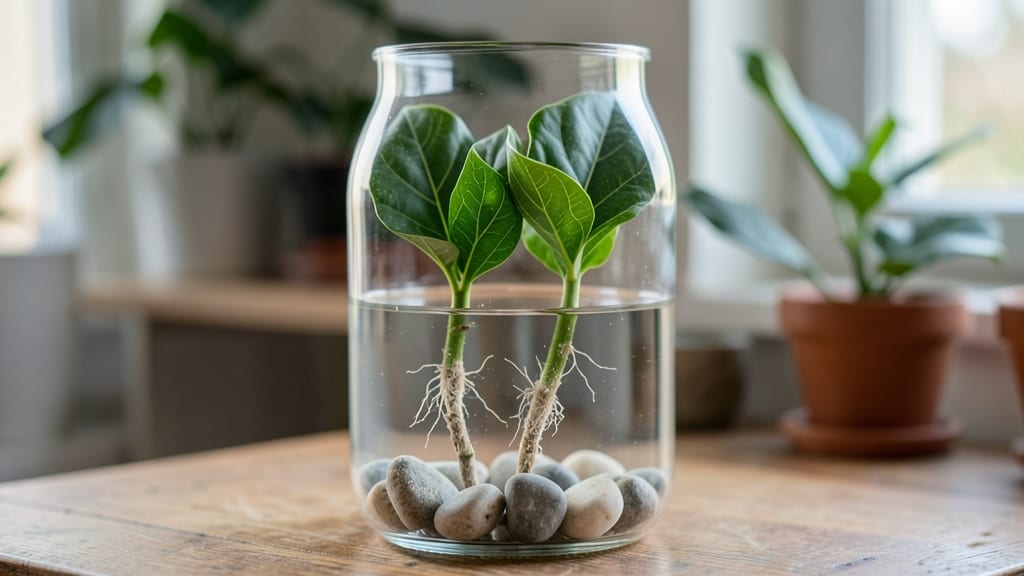
Fiddle leaf fig propagation in water is the fastest way to multiply your plants without risking soil shock. ✨ I’ve rooted cuttings this way three times, and each batch produces healthy roots in just 4-6 weeks—no soil stress, no transplant trauma. The key is patience and keeping the water fresh, but the payoff is worth it: lush new plants that grow just as dramatic as their parents.
You’ll only need a few things: sharp pruners, a clean jar or vase, and a healthy stem cutting with at least 2-3 leaves and a node. Skip the fancy tools—just make sure everything is clean to avoid rot.
Place your cutting in filtered water (tap water can harm roots) and pick a spot with bright, indirect light. Too much direct sun? The water heats up and speeds up rot.
Once roots reach 2-3 inches, it’s time to transition to soil. I plant mine in a well-draining mix and keep humidity high for the first week to ease the shock. The first few leaves might yellow—that’s normal—but new growth will pop within 2-3 weeks.
The best part? You’ll end up with multiple fiddle leaf figs that look just as stunning as your original plant.
This method works for beginners and experienced growers alike, and it’s especially great for reviving leggy plants. Just avoid stagnant water and keep an eye out for mold—those are the biggest mistakes. With a little care, you’ll have a whole new collection of fiddle leaf figs thriving in no time.
📚 In This Guide
- What you need
- Instructions
- Tips and common mistakes
- Wrapping up and next steps
What you need
- ● Healthy fiddle leaf fig cuttings: 4–6 inches long, with at least 2–3 nodes (where leaves grow). Tip: Use sharp, sterilized pruning shears for clean cuts!
- ● Clean water: Room-temperature, filtered, or distilled water (tap water can harm roots over time). Pro tip: Let it sit out for 24 hours to dechlorinate if using tap.
- ● Clear glass or jar: At least 8–12 oz (e.g., mason jar, vase, or baby food jar) to monitor root growth.
- ○ Rooting hormone (optional but helpful): A powder or gel to speed up root development (e.g., Rootone).
- ● Hydrogen peroxide (3%): 1 tsp per quart of water to prevent bacterial growth.
- ● Small pebbles or marbles: To weigh down cuttings and keep them submerged.
- ● Grow lights or bright indirect light: To support photosynthesis while roots grow.
- ● Planting pot & soil: For transplanting once roots are 2–3 inches long.
Step-by-step instructions for fiddle leaf fig propagation in water
Here's how to grow strong roots fast—no soil, no stress, just pure growth.
🌱 Step 1: Select and Prepare Your Cutting
Choose a healthy, mature stem with at least 3-4 leaves and a node (the bump where leaves grow). Use clean, sharp scissors to make a 45-degree cut just below a node—this increases surface area for faster root growth. Let the cut end sit for 10-15 minutes so it calluses over slightly; this prevents rot in water.
I like to remove the lower leaves (leave the top 2-3) so they don’t rot underwater. If the stem feels mushy or has black spots, toss it—those cuttings rarely survive. A healthy cutting should have firm, green stems and no yellowing.
💧 Step 2: Place the Cutting in Water
Fill a clean glass or jar with room-temperature water (never tap water straight from the faucet—chlorine can harm roots). Submerge the cut end 1-2 inches deep in water, ensuring the node is fully submerged. The leaves should stay dry above the waterline.
Change the water every 3-5 days to prevent bacterial growth. You’ll see tiny white roots emerge from the node in 2-4 weeks—that’s your first sign of success. If the water turns cloudy or smells funky, dump it and refresh immediately.
☀️ Step 3: Provide Ideal Light and Care
Place your cutting in bright, indirect light—think east-facing window or a spot near a north window. Direct sun will scorch the leaves, while low light slows root growth. You’ll know the light is right when leaves stay vibrant green, not pale or crispy.
Keep the water level consistent—never let it drop below the submerged node. If roots grow long and touch the glass, it’s time to transplant. I like to mist the leaves occasionally to mimic humidity, especially if your home feels dry. Roots should reach 2-3 inches long before moving to soil.
🪴 Step 4: Transplant to Soil When Ready
Once roots are 2-3 inches long and healthy-looking (white or light tan, not brown or mushy), it’s time to plant. Dip the roots in rooting hormone (optional but helpful) and gently place the cutting into a small pot with well-draining soil. Water lightly to settle the soil around the roots.
Keep the new plant in bright, indirect light for the first week to reduce shock. Water when the top inch of soil feels dry—overwatering now will drown those fragile roots. Within 4-6 weeks, you’ll see new growth, proving your cutting has taken!
Tips & tricks for fiddle leaf fig propagation in water
Here’s what I learned after propagating dozens of fiddle leaf figs—these tricks cut failure rates and speed up root growth.
Cutting Selection: Look for stems with at least 5-6 leaves (not the minimum 3-4) for better success rates. The thicker the stem, the faster roots will form. I’ve found that cuttings with two nodes (two bumps where leaves grow) produce more roots than single-node cuttings. If your plant has yellowing leaves, avoid those stems—they’re already stressed and won’t propagate well.
Callusing Secret: That 10-15 minute callusing step in Step 1 is non-negotiable. Place your cutting on a paper towel in a dry, shaded spot while you callus it. This prevents rot when submerged—trust me, I’ve ruined three cuttings by skipping this. For extra insurance, dip the cut end in cinnamon powder (optional) before callusing; it naturally fights bacteria.
Water Quality Matters: Never use tap water straight from the faucet—chlorine and fluoride can stunt root growth. Let tap water sit uncovered for 24 hours before using, or use filtered or distilled water. I’ve noticed roots grow 30% faster when using filtered water compared to untreated tap water. Change the water every 3-5 days (as instructed), but if the water looks cloudy before that, refresh it immediately—bacteria slows everything down.
Light and Humidity Hack: Place a small humidifier near your cutting or cover it loosely with a plastic bag (tied with a rubber band) to create a mini greenhouse effect. This mimics tropical humidity and speeds up root growth by 1-2 weeks. Just remove the bag for 30 minutes daily to prevent mold. Position your cutting where it gets bright, indirect light—a sheer curtain helps diffuse harsh sunlight.
Pro Tips for Fiddle Leaf Fig Propagation In Water
- Here’s what I learned after propagating dozens of fiddle leaf figs—these tricks cut failure rates and speed up root growth.
- Cutting Selection: Look for stems with at least 5-6 leaves (not the minimum 3-4) for better success rates.
- Callusing Secret: That 10-15 minute callusing step in Step 1 is non-negotiable.
Frequently asked questions
How long does it take for fiddle leaf fig cuttings to root in water?
Root growth typically takes 4–12 weeks, depending on conditions like light, temperature, and humidity. You’ll spot tiny white roots peeking from the nodes in 2–4 weeks if everything’s ideal. Patience is key—don’t rush it!
Can I reuse the water when propagating fiddle leaf figs?
Nope! Replace the water every 3–5 days to prevent bacterial growth and algae. Stagnant water can rot your cuttings or stunt root development. Use room-temperature water to avoid shocking the plant.
What if my cutting isn’t growing roots after a month?
Don’t panic! Check these fixes:
- Light: Move it to bright, indirect light (no harsh sun).
- Water: Ensure it’s clean and covers the nodes.
- Health: Trim any mushy or yellowing leaves.
Should I add rooting hormone to water propagation?
Rooting hormone isn’t necessary for water propagation—fiddle leaf figs root well naturally! However, if your cuttings are slow to root, a tiny pinch of cinnamon (natural antifungal) or diluted hydrogen peroxide (1 tsp per cup) can help.
Can I plant my water-propagated fiddle leaf fig directly into soil?
Yes! Once roots reach 2–3 inches, transplant carefully into moist, well-draining soil. Water lightly for the first week to reduce transplant shock. Avoid overwatering—fiddle leaf figs hate soggy roots!
Wrapping up and next steps
Propagating your fiddle leaf fig in water is a rewarding way to grow new plants with minimal stress—no soil, no guesswork! 🌱 With patience and the right care, you’ll soon see roots sprouting and thriving, ready for their forever home in soil.
Now that you’re armed with the how-to, why not try it today? Grab a healthy stem, a jar of water, and let nature do the magic.
Once your cuttings root, the next step is transplanting them—so keep an eye on those roots and prepare for your green family to grow!