
Leaf Blower
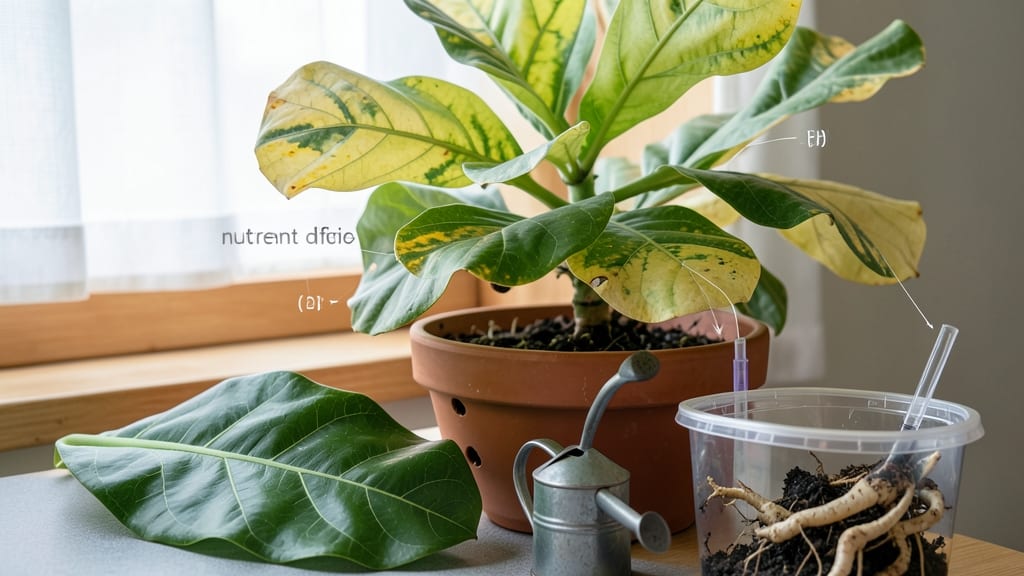
Fiddle leaf fig leaves turning yellow can be a heartbreaker—until you spot the coppery spots that give away fungal trouble. 🌿 I’ve nursed back more than my fair share of these plants, and the secret weapon?
A homemade copper spray that stops yellowing in its tracks while preventing further spread. The key is acting fast: once those spots appear, they’re already stealing nutrients from your plant’s leaves.
Start by checking the soil—it’s often the real culprit. Stick your finger in: if it’s soggy, you’re overwatering; if it’s bone-dry, you’re underwatering. Both stress the plant and invite fungal infections like leaf spot, which causes those telltale yellow patches.
Once you’ve adjusted your watering (aim for the top inch of soil to dry out between waterings), mix up the copper spray: just 1 teaspoon of copper sulfate per quart of water, with a drop of dish soap as a surfactant.
What you’ll see after treatment is dramatic: within 7-10 days, new growth emerges vibrant and green, while the yellowed leaves either recover or drop naturally (no drama). The copper spray doesn’t just mask the problem—it eradicates the fungus at its source, so your plant builds resistance.
Think of it as a shield against future infections, especially in humid climates where fiddle leaf figs love to thrive but also struggle.
For stubborn cases, repeat the spray every 10-14 days until you’ve seen two full cycles of healthy leaves. Pro tip: Wipe down leaves with a damp cloth before spraying to remove dust, which helps the solution absorb better.
Your plant will thank you with glossy, deep-green foliage that’s the envy of every indoor jungle.
Root Causes Behind Leaf Discoloration
Yellowing leaves on your fiddle leaf fig aren’t just a cosmetic issue—they’re a cry for help from your plant! Understanding the why behind the discoloration is the first step to restoring your fig’s lush, vibrant green.
Below, we break down the most common culprits, backed by science, so you can diagnose and fix the problem like a pro.
💦 Too much love (water) can drown your plant.
Fiddle leaf figs thrive in well-draining soil with a balanced moisture level. When roots sit in soggy conditions for too long, they struggle to absorb oxygen, leading to anaerobic stress.
This triggers a cascade of issues: - Root rot (fungal or bacterial) disrupts nutrient uptake, causing chlorophyll breakdown and yellowing. - Toxicity buildup: Excess water dilutes soil nutrients and flushes out essential minerals like magnesium and nitrogen, which are critical for leaf pigmentation. - Oxygen deprivation: Roots release ethylene gas as a distress signal, accelerating leaf senescence (aging) and yellowing.
🔍 How to spot it:
- Wilting despite damp soil.
- Yellowing from bottom to top (not just edges).
- A foul, mushy smell from the soil.
🌱 Yellow leaves can be your plant’s way of saying, “Feed me!”
Chlorophyll, the pigment responsible for green leaves, relies on three key nutrients:
- Nitrogen (N) – A deficiency causes general yellowing (chlorosis) starting with older leaves.
- Magnesium (Mg) – Critical for chlorophyll production; a lack of it leads to interveinal yellowing (veins stay green, areas between turn yellow).
- Iron (Fe) – Poor iron uptake (often in alkaline soils) causes young leaves to yellow first, a condition called iron chlorosis.
📊 Common deficiencies and their signs:
| Nutrient | Deficiency Signs | Quick Fix |
|---|---|---|
| Nitrogen | Overall pale yellow, stunted growth | Use a balanced fertilizer (e.g., 10-10-10) or compost tea. |
| Magnesium | Yellow patches between veins (older leaves) | Apply Epsom salt (1 tbsp per gallon of water, monthly). |
| Iron | Yellow new growth, green veins | Use chelated iron or adjust soil pH (aim for 6.0–6.5). |
🏜️ Dry soil can mimic nutrient issues, but the fix is simpler.
While overwatering is more common, chronic underwatering stresses your fiddle leaf fig, forcing it to conserve water at the expense of leaf health.
Here’s how it plays out: - Transpiration imbalance: Leaves lose moisture faster than roots can replenish it, leading to edge browning and yellowing. - Root shrinkage: Roots retract to protect the plant, reducing nutrient absorption and causing uniform yellowing (not just spots). - Osmotic stress: Cells lose turgor pressure, making leaves droop and yellow as they prioritize survival over aesthetics.
💡 Pro Tip:
- Stick your finger 1–2 inches into the soil—if it’s bone-dry, it’s time to water.
- Bottom-watering (placing the pot in a tray of water for 20–30 minutes) encourages even moisture absorption.
☀️ Your fiddle leaf fig is a diva when it comes to light.
These tropical beauties need bright, indirect light (think east or north-facing windows). Too much direct sun or insufficient light both trigger yellowing, but for different reasons:
- 🔥 Too much sun (sunburn):
- Leaves develop crispy, yellow-brown patches (often on the upper surface).
- Excess UV radiation breaks down chlorophyll and damages cell membranes.
- Solution: Move to a spot with filtered light or use a sheer curtain.
- 🌑 Too little light (etiolation):
- Leaves turn pale yellow or lime green as the plant stretches toward light.
- Weak stems and small, sparse leaves develop due to poor photosynthesis.
- Solution: Supplement with a grow light (12–14 hours/day) or rotate the plant weekly for even exposure.
🐜 Sap-sucking pests like spider mites and aphids don’t just weaken leaves—they cause yellowing too.
These pests inject toxins or starve leaves of nutrients by feeding on sap.
Their damage often appears as: - Yellow stippling (tiny yellow dots) on leaves. - Sticky residue (honeydew) on lower leaves (a sign of aphids or scale). - Webbing (spider mites) or black sooty mold (a fungal growth fed by honeydew).
🛡️ How to combat them:
- Isolate the plant to prevent spread.
- Wipe leaves with a neem oil solution (1 tsp neem oil + 1 quart water + a drop of dish soap).
- Rinse pests off with a strong stream of water (repeat weekly).
- Introduce beneficial insects (like ladybugs) for organic control.
🧪 Yes, even fiddle leaf figs need copper—and a lack of it can turn leaves yellow.
Copper is a trace mineral essential for enzyme function in plants. Without enough, your fig may show:
- Yellowing between veins (similar to magnesium deficiency but often with crinkled or distorted leaves).
- Weak stems and poor root development.
- Slow growth despite proper watering and light.
💊 How to supplement:
- Use a chelated copper spray (like copper sulfate solution, diluted to 0.25 tsp per gallon).
- Avoid overapplying—copper toxicity can cause brown leaf edges.
- Soil amendment: Mix copper-rich compost or greensand into the soil annually.
❄️🌡️ Drafts, AC vents, and sudden temperature swings stress your plant out.
Fiddle leaf figs thrive in 65–75°F (18–24°C) and 40–50% humidity.
When conditions stray too far: - Cold drafts (from windows or AC) cause yellowing and wilting as cells struggle to maintain turgor. - Low humidity leads to desiccated leaf edges (brown/yellow crispiness). - Heat stress (above 85°F/30°C) accelerates transpiration, draining nutrients and causing yellowing.
🌡️ How to stabilize conditions:
- Keep away from windows, doors, or vents.
- Use a humidifier or pebble tray to maintain moisture.
- Mist leaves in dry climates (but avoid soggy soil).
🌱 Even well-meaning repotting can trigger yellowing.
When you disturb roots—whether during a transplant, pruning, or overzealous watering—your fiddle leaf fig goes into survival mode.
This can lead to: - Temporary yellowing as the plant redirects energy to root regrowth. - Root pruning stress, which slows nutrient uptake and causes chlorosis. - Soil pH disruption if new soil isn’t properly amended.
🔄 Recovery tips:
- Repot only every 1–2 years (or when roots circle the pot).
- Use well-draining soil (a mix of peat, perlite, and orchid bark).
- Water lightly after repotting to avoid shocking the roots further.
Fixing Yellowing Fiddle Leaf Leaves
Yellow leaves on your fiddle leaf fig can be frustrating, but the good news is that most causes have straightforward fixes. Below, we’ve mapped out practical solutions for each common trigger—plus pro tips to keep your plant thriving long-term.
Fix it:
- Let the soil dry out completely between waterings. Stick your finger 1–2 inches into the soil—if it’s damp, wait.
- Repot if needed into a container with drainage holes and fresh, well-draining potting mix (like a blend of peat, perlite, and orchid bark).
- Adjust your watering routine: Water only when the top 2–3 inches of soil are bone-dry. Overwatering suffocates roots, leading to yellowing.
Prevention:
- Use a moisture meter to track soil conditions.
- Avoid sitting your plant in saucers of standing water.
- 💡 Pro Tip: If repotting, trim any mushy, black roots before replanting to prevent rot.
Fix it:
- Move your fiddle leaf fig to a spot with bright, indirect light (east or north-facing windows work best).
- Use sheer curtains to diffuse harsh afternoon sun if relocating isn’t an option.
- Rotate the plant weekly so all sides get even light exposure.
Prevention:
- Gradually acclimate your plant to brighter spots over 1–2 weeks to avoid sunburn shock.
- 🌡️ Pro Tip: If leaves turn crispy and yellow, it’s a sunburn signal—move it ASAP.
Fix it:
- Keep your fig in a stable environment (65–75°F during the day, no lower than 60°F at night).
- Avoid cold drafts from AC vents, open windows, or doors.
- Check for heat sources like radiators or lamps too close to the plant.
Prevention:
- Group plants together to create a microclimate.
- 🎯 Pro Tip: In winter, keep it away from glass doors/windows, which can get shockingly cold.
Fix it:
- Isolate the plant to prevent spreading spores.
- Trim infected leaves with clean scissors (sterilize with rubbing alcohol).
- Apply a copper-based fungicide spray (like the formula mentioned in this article) to affected areas. Follow the instructions for spot treatment.
- Improve air circulation by spacing plants apart and using a small fan (on low) nearby.
Prevention:
- Wipe leaves with a neem oil solution (1 tsp neem oil + 1 quart water) monthly as a preventive.
- 🔥 Pro Tip: Never let leaves stay wet overnight—water in the morning for quick drying.
Fix it:
- Fertilize with a balanced liquid fertilizer (diluted to half strength) every 4–6 weeks during spring/summer.
- For iron deficiency (chlorosis), use an iron chelate supplement or a foliar spray.
- For magnesium deficiency, add Epsom salt (1 tbsp per gallon of water) once a month.
Prevention:
- Test your soil’s pH (fiddle leaf figs prefer 6.1–6.5). Amend with sulfur if too alkaline.
- 💪 Pro Tip: Yellowing between veins? It’s likely iron. Yellowing with brown spots? Magnesium’s the culprit.
Fix it:
- Inspect leaves for webs, sticky residue, or tiny bugs. Shower the plant with water to dislodge pests.
- Wipe leaves with a soapy water solution (1 tsp mild dish soap + 1 quart water).
- Apply horticultural oil or insecticidal soap as a last resort, following package directions.
Prevention:
- Mist leaves regularly to deter spider mites.
- 🌿 Pro Tip: Introduce predatory mites or release ladybugs for natural pest control.
Fix it:
- Check the roots: If they’re circling the pot or growing through drainage holes, it’s time to repot.
- Use a slightly larger pot (1–2 inches wider) with fresh soil.
- Trim congested roots gently before replanting.
Prevention:
- Repot every 1–2 years or when roots fill the container.
- ✨ Pro Tip: Add a handful of orchid bark to the new soil mix for better aeration.
Final Reminder: Yellow leaves are often a warning sign, not a death sentence. Act fast, adjust one variable at a time, and your fiddle leaf fig will bounce back with lush, green foliage! 🌿💚
Frequently asked questions
Why do fiddle leaf fig leaves turn yellow in patches?
Patchy yellowing often signals fungal infections like leaf spot disease, which thrives in humid conditions. Check for coppery spots or dark lesions—these confirm fungal activity. The copper spray mentioned in this guide targets these spots directly while preventing further spread. Always improve air circulation to help leaves dry faster.
Can yellow leaves grow back green again?
Yes! If the yellowing is due to environmental stress (like underwatering or light issues), new growth will emerge green within 4-6 weeks once conditions improve. For fungal-related yellowing, treat with copper spray and remove severely infected leaves—healthy regrowth should appear in 7-10 days after treatment starts.
Is it safe to prune yellow leaves?
Pruning yellow leaves helps your fiddle leaf fig focus energy on new growth. Use clean scissors to cut at the base of the leaf stem. For fungal cases, sterilize your tools with rubbing alcohol between cuts. Never prune more than 25% of the plant at once to avoid shocking it.
How often should I fertilize if my leaves are yellow?
Hold off on fertilizer until you've addressed the root cause (like watering or light issues). Once stable, use a balanced liquid fertilizer (10-10-10) at half-strength every 6-8 weeks during spring/summer. Yellowing from over-fertilizing appears as brown tips, while deficiencies cause uniform yellowing—so adjust based on the pattern.
Will my fiddle leaf fig recover if I ignore the yellow leaves?
While your plant may survive, ignoring yellow leaves risks permanent damage. Fungal infections spread, nutrient deficiencies worsen, and stressed plants become vulnerable to pests. Act within 2-4 weeks of noticing yellowing—early intervention gives your fiddle leaf fig the best chance to rebound completely.