
Planting
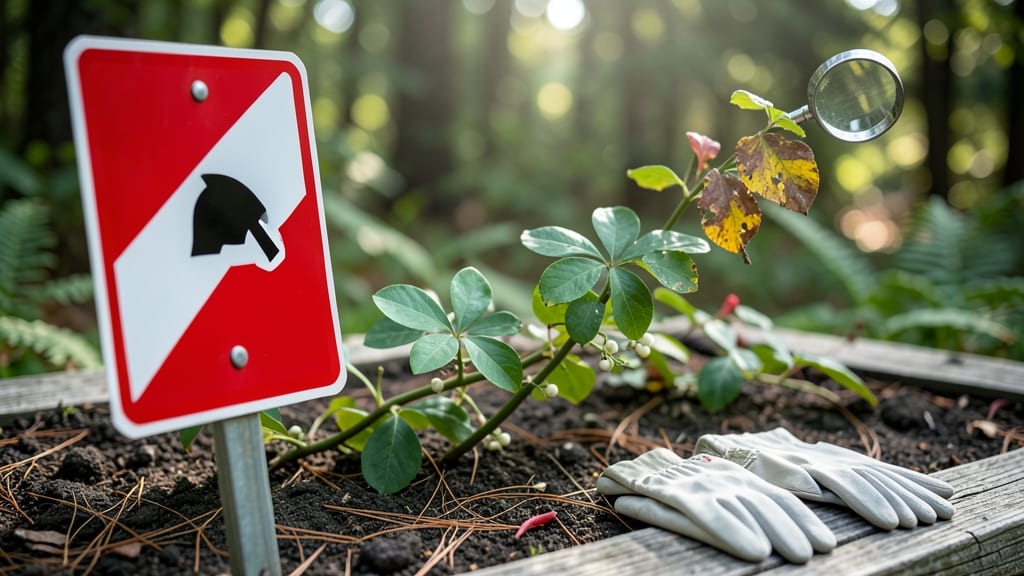
That five-leaf cluster could be poison ivy—and it’s not a plant you want in your yard. 🌿 I’ve spent too many summers treating rashes from accidental brushes, and I’ll never forget the first time I mistook a harmless vine for its toxic cousin.
The consequences of confusion are itchy, painful, and long-lasting.
Poison ivy thrives in shady spots, climbs trees like a green ladder, and sports those infamous three shiny leaves (or five, in some cases). Berries turn from white to pale yellow, and the vine itself leaves a telltale milky sap when broken.
The moment you see these signs, treat it like a ticking time bomb—because it is.
Removing it safely means gloves, long sleeves, and a plastic bag to seal the plant before disposal. Never burn it—those oils stay dangerous even in smoke. With the right precautions, you can clear it without triggering a rash, and your yard stays free of this sneaky invader.
If you’re unsure whether a vine is poison ivy, snap a photo and check the leaves: smooth edges, pointed tips, and that classic "leaves of three, let it be" rule (even if some varieties throw in a fifth leaf). Prevention is key—learn the look, and your skin will thank you.
📚 In This Guide
- What you need
- Instructions
- Tips and common mistakes
- Wrapping up and next steps
What you need
- ● Plants: 3–5 healthy Virginia Creeper or Skunk Vine seedlings (or other non-toxic lookalikes like Boston Ivy or Coral Vine). Choose locally adapted varieties for best results!
- ● Potting Soil: 1–2 bags of high-quality, well-draining potting mix (e.g., Miracle-Gro Garden Soil or Black Gold Natural & Organic).
- ● Fertilizer: Slow-release granular fertilizer (e.g., Osmocote Smart-Release Plant Food) or organic compost (1–2 cups per plant).
- ● Mulch: 2–3 inches of shredded bark or wood chips to retain moisture and suppress weeds.
- ● Garden Gloves: Heavy-duty work gloves (e.g., FrogToggs) for handling soil and plants.
- ● Trowel or Spade: 1 medium-sized hand trowel or a flat-edged spade for digging.
- ● Pruners: Bypass pruners (e.g., Felco F-2) for trimming or shaping plants.
- ● Watering Can or Hose: With a gentle spray nozzle for even watering.
- ● Measuring Tape: To mark planting spacing (aim for 3–5 feet apart for vines).
- ● Erosion Control Fabric: For slopes or areas prone to soil washout.
- ● Trellis or Arbor: If training vines vertically (e.g., Virginia Creeper on a pergola).
- ● Plant Support Stakes: For young plants in windy areas.
- ● Organic Pest Control: Neem oil or insecticidal soap to deter pests like aphids.
How to grow a safe, non-toxic five-leaf lookalike for landscaping
Here's how to cultivate a stunning, toxin-free alternative that mimics poison ivy's classic five-leaf pattern—perfect for safe garden borders or shady spots.
🌱 Step 1: Select the Right Non-Toxic Species
For a safe five-leaf lookalike, I recommend Virginia creeper (Parthenocissus quinquefolia) or boxwood (Buxus spp.)—both have that familiar leaf shape without the oils. Virginia creeper grows aggressively and turns brilliant red in fall, while boxwood stays compact and lush. Check your local nursery for disease-resistant varieties like 'Emerald Gaiety' boxwood, which has golden-edged leaves.
If you want a shrub form, five-leaf aralia (Fatsia japonica) is another excellent choice—its large, glossy leaves resemble poison ivy but are completely harmless. Just avoid touching any plant with a milky sap (like milkweed) or red berries (like bittersweet), as those can also cause skin irritation.
🪴 Step 2: Prepare the Planting Site
Both Virginia creeper and boxwood thrive in partial to full shade, making them ideal for under trees or north-facing yards. Amend the soil with 2-3 inches of compost to improve drainage—these plants hate soggy roots. For Virginia creeper, dig a hole twice as wide as the root ball but only as deep; boxwood prefers slightly raised soil to prevent water pooling.
If your soil is heavy clay, mix in 1 part perlite to 3 parts native soil before planting. You’ll know the site is ready when the soil crumbles easily between your fingers and holds moisture without staying wet for days. Test the pH too—Virginia creeper likes 6.0-7.0, while boxwood prefers 6.0-7.5. A simple soil test kit from the garden center works perfectly.
☀️ Step 3: Plant and Water for Establishment
Place the plant so the top of the root ball sits 1 inch below the soil line—this prevents stem rot. Spread the roots gently and backfill with native soil, pressing lightly to remove air pockets. For Virginia creeper, space plants 6-10 feet apart (it spreads aggressively), while boxwood needs 3-4 feet of space for mature size.
Water deeply right after planting, then again every 2-3 days until new growth appears. You’ll know it’s enough when water drains to 4 inches deep—stick your finger in the soil to check. Mulch with 2-3 inches of shredded bark to retain moisture and suppress weeds, but keep mulch 6 inches away from the stem to prevent rot.
✂️ Step 4: Prune for Shape and Health
Virginia creeper benefits from annual pruning in early spring to control its spread. Cut back one-third of the longest vines each year to encourage bushier growth. For boxwood, prune twice a year: a light trim after spring flush and a shaping cut in late summer before new growth hardens. Always use clean, sharp shears to avoid tearing leaves.
Watch for yellowing leaves—this usually means overwatering or poor drainage. If the soil stays wet for more than 48 hours, reduce watering and improve drainage with a layer of gravel beneath the plant. For Virginia creeper, you can also train vines onto a trellis or fence for a vertical garden effect, adding texture to your landscape.
Tips & tricks for growing a safe five-leaf lookalike
These practical tips will help you create a lush, poison-free garden that mimics nature's classic five-leaf pattern without the irritation.
Species Selection: Virginia creeper is your best bet for rapid coverage—its aggressive growth fills spaces quickly, but you'll need to prune regularly to keep it contained. For a more manicured look, boxwood offers elegant structure with its compact growth habit. I've found that 'Emerald Gaiety' boxwood adds a stunning golden contrast to shaded areas while maintaining that familiar leaf shape.
Soil Preparation: That 2-3 inch layer of compost isn't just for show—it creates the perfect balance of nutrients and drainage these plants crave. For clay-heavy soils, I've had great success using a 1:3 perlite-to-soil ratio. Test your soil's moisture retention by squeezing a handful—it should hold shape but crumble when you poke it. This simple test saves you from waterlogged roots that can kill your plants.
Planting Depth: The 1-inch-deep planting rule prevents stem rot by keeping the root crown slightly below soil level while allowing proper air circulation. I always use my finger to create a small well around the root ball before backfilling—this ensures no air pockets form. For Virginia creeper, consider planting near a fence where you can train vines upward for a dramatic vertical effect.
Watering Wisdom: Those 2-3 day intervals between waterings might seem frequent, but they're crucial during establishment. I check moisture by sticking my finger 4 inches deep—if it feels dry, it's time to water. For boxwood, you can extend to every 3-4 days once established, but Virginia creeper's shallow roots need more frequent attention. Mulch acts like a moisture blanket, so keep that 2-3 inch layer consistent but maintain the 6-inch clearance from stems.
Pro Tips for Five Leaf Poison Ivy Plant
- These practical tips will help you create a lush, poison-free garden that mimics nature's classic five-leaf pattern without the irritation.
- Species Selection: Virginia creeper is your best bet for rapid coverage—its aggressive growth fills spaces quickly, but you'll need to prune regularly to keep it contained.
- Soil Preparation: That 2-3 inch layer of compost isn't just for show—it creates the perfect balance of nutrients and drainage these plants crave.
Frequently asked questions
Got questions about five-leaf poison ivy lookalikes? You’re not alone! Here are the most common concerns—plus clear, practical answers to keep your landscaping (and skin) safe.
How can I tell if a plant is actually poison ivy or just a lookalike?
Use the three-leaf rule: poison ivy has three glossy leaves (rarely five), while the non-toxic Virginia creeper or boxelder has five leaflets. Scratch the stem—poison ivy’s milky sap causes rashes. When in doubt, snap a photo and check with a local nursery or extension service.
Can I grow a five-leaf poison ivy alternative in my yard without it spreading?
Opt for Virginia creeper (Parthenocissus quinquefolia)—it’s hardy, fast-growing, and stays contained with pruning. For ground cover, try boxelder (Acer negundo), but monitor its roots. Pro tip: Plant in well-drained soil and mulch to suppress weeds, reducing competition.
How long does it take for non-toxic lookalikes to mature and replace poison ivy?
Most alternatives mature in 1–3 years. Virginia creeper grows 10–15 feet per year if given full sun, while boxelder takes 2–4 years to reach full height. Start with young plants in spring for faster establishment. Patience pays off!
What should I do if I accidentally plant poison ivy instead of a lookalike?
Don’t panic! Remove it immediately with gloves, long sleeves, and a trash bag. Soak the plant in vinegar or a 10% bleach solution before disposal. Wash tools with rubbing alcohol. Warning: Avoid burning—smoke can cause rashes too!
Are there edible or medicinal plants that resemble poison ivy?
Not directly, but pokeweed (Phytolacca americana) has clusters of leaves and berries (toxic raw!) and grapevine (Vitis spp.) has palmate leaves. Stick to ornamental lookalikes for safety. When foraging, always confirm with an expert—when in doubt, throw it out!
Wrapping up and next steps
Identifying and avoiding five-leaf poison ivy is key to keeping your garden—and your skin—safe! 🌿 By learning its non-toxic lookalikes like Virginia creeper or boxelder, you can confidently design a stunning, irritation-free landscape.
Remember: when in doubt, use the "leaves of three, let it be" rule and double-check with a trusted plant guide.
Ready to transform your outdoor space? Start by auditing your current plants or visiting a local nursery to swap out any suspicious foliage. Happy—and safe—gardening! 🌱