
Leaf Blower
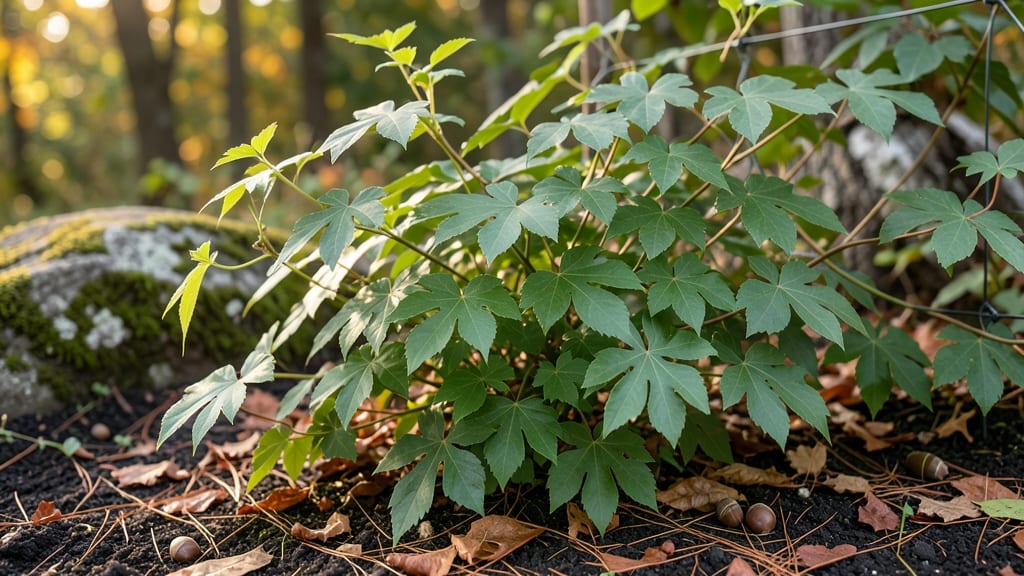
Growing a five-leaf vine with berries transforms any garden into a lush, evergreen spectacle—fast. 🌿 This dramatic climber, with its glossy leaves and striking berries, thrives in partial shade and spreads like wildfire once established, making it perfect for fences, trellises, or even ground cover.
I planted mine last spring, and by summer, it was already draping over my porch, its deep green leaves contrasting beautifully with the red berries that appear in fall and winter.
The secret to its rapid growth lies in rich, well-draining soil and consistent moisture, but it’s surprisingly low-maintenance. A handful of compost at planting time gives it the boost it needs, and once rooted, it tolerates drought better than most climbers.
Prune back leggy growth in early spring to encourage bushier foliage, and watch it rebound with even more vigor. This vine handles humidity and heat like a champ, making it ideal for shady corners where other plants struggle.
By late summer, you’ll be rewarded with clusters of bright red berries that persist through winter, adding year-round interest. The berries aren’t edible (they’re toxic, so keep pets and kids away), but their striking color makes them a showstopper.
Neighbors will ask how you got such a fast-growing, low-light-friendly plant—and you’ll know exactly what to say.
Works beautifully in containers too, if you’re short on space. Just give it something to climb, and it’ll do the rest—fast.
Behind The Berries Growth
The emergence of berries on your five-leaf vine (also known as Parthenocissus quinquefolia) isn’t just a random act of nature—it’s a response to specific environmental and biological triggers.
Understanding these causes can help you manage expectations, troubleshoot issues, and even encourage (or discourage) berry production if desired. Let’s break down the science behind why those clusters appear.
Five-leaf vines produce berries as part of their reproductive cycle, but unlike some plants, they’re not always dependent on cross-pollination. Here’s how it works:
- Self-Fertilization: Many Parthenocissus species, including the common five-leaf vine, can self-pollinate, meaning a single plant can produce berries without needing a second vine nearby.
This is why you might see berries even if your yard lacks other climbers. - Wind & Insects: While self-pollination is possible, wind and insects (like bees or flies) can still enhance berry formation by transferring pollen between flowers.
In urban or isolated gardens, this process may be less efficient, leading to fewer berries. - Berry Formation Timing: Berries typically develop 4–6 weeks after flowering (usually in late spring to early summer).
If you notice flowers but no berries, check for: - Poor weather during flowering (e.g., heavy rain can wash away pollen). - Pest interference (e.g., aphids feeding on flowers).
Actionable Tip: 🌡️ If you want more berries, hand-pollinate flowers with a soft brush on dry, sunny days to mimic natural pollen transfer.
Sometimes, berries appear as a stress response—your vine’s way of redirecting energy toward survival and reproduction. Common triggers include:
- Nutrient Imbalance: A sudden shift in soil nutrients, particularly phosphorus and potassium, can signal the vine to prioritize berry production over leaf growth.
This often happens when: - You’ve recently fertilized heavily (especially with high-phosphorus amendments like bone meal). - The soil is poor in nitrogen (berries are less "demanding" than leaves, so the vine compensates). - Water Stress: Drought or overwatering can stress the vine, prompting it to produce berries as a survival tactic.
Berries contain seeds, which the vine hopes will propagate even if the parent plant struggles. - Sunlight Changes: Vines exposed to more direct sunlight (especially in late summer) may produce berries as a way to maximize energy storage before winter. Shady vines, meanwhile, might focus on leaf growth instead.
Actionable Tip: 📊 If you’re growing this vine for foliage drama (not berries), maintain a balanced fertilizer (e.g., 10-10-10) and avoid phosphorus-heavy amendments. Mulch evenly to stabilize soil moisture.
Pests and diseases can indirectly trigger berry production by damaging the vine’s primary growth structures (leaves and stems). Here’s how:
- Aphid or Spider Mite Infestations: These pests sap nutrients from leaves, forcing the vine to redirect energy to reproductive structures (berries) to ensure genetic survival.
- Fungal Infections: Diseases like powdery mildew or leaf spot weaken the vine, often leading to premature berry development as a last-ditch effort to reproduce.
- Herbivore Damage: Deer, rabbits, or even overzealous pruning can stress the vine, prompting it to focus on berries for propagation.
Actionable Tip: ✨ Monitor your vine regularly for yellowing leaves, sticky residue (aphid honeydew), or unusual spots. Treat pests early with neem oil or insecticidal soap to prevent stress-induced berry production.
Not all five-leaf vines behave the same—age and cultivar play a role in berry production:
- Young Vines (1–3 Years): Typically focus on root and vine growth and produce few to no berries. Berries appear more reliably in mature vines (4+ years). - Cultivar Differences: Some varieties, like 'Engelmannii', are more prolific berry-producers than others.
If your vine is berry-heavy, it might be a naturally fertile cultivar. - Winter Hardiness: Vines that struggle with cold may produce berries earlier as a way to "gamble" on seed survival before winter sets in.
Actionable Tip: 🌱 If you’re growing this vine as a privacy screen or wall cover, choose a low-berry cultivar like 'Autumn Purple' or prune berry clusters in early summer to redirect energy to foliage.
Sometimes, human actions (or lack thereof) directly influence berry formation:
- Pruning Timing: Late-summer pruning (after flowering but before berry set) can stimulate berry production by removing competing growth.
Conversely, heavy pruning in early spring may reduce berries. - Hormonal Triggers: Some gardeners accidentally accelerate berry formation by using root stimulators or bloom boosters with high auxin content, which can signal the vine to shift to reproductive mode. - Transplant Shock: Recently transplanted vines may produce berries as a stress response, even if they’re not yet established.
Actionable Tip: ⏰ If you want to delay or prevent berries, avoid heavy pruning after mid-summer and use a balanced, low-auxin fertilizer.
Quick Fixes for Common Vine Issues
Got a five-leaf climber with berries that’s not living up to its potential?
Whether it’s struggling with pests, diseases, or just not thriving, these practical, step-by-step solutions will help you revive your vine and keep it lush year-round. 🌿✨ We’ll tackle the most common problems—from overgrowth to berry blight—with easy fixes and prevention tips to protect your garden drama.
If your vine is sprawling wildly or choking nearby plants, it’s time to train and prune like a pro.
How to Fix It:
- 🔪 Prune Strategically
- Trim back overly long vines in early spring (before new growth) or after flowering to encourage bushier, healthier growth.
- Use clean, sharp pruners to avoid tearing the stems, and cut just above a leaf node (where new shoots emerge).
- Remove dead or crossing branches to improve airflow and sunlight penetration.
- 🧵 Guide the Growth
- Install a strong trellis, arbor, or fence if your vine lacks support. Use soft plant ties (not wire!) to gently direct vines upward.
- For fast-growing varieties, prune weekly during peak growth to maintain control.
💡 Prevention Tip:
- Plant companion vines (like morning glories or clematis) to share the trellis and create a lush, layered look without overcrowding.
Tiny pests can sap your vine’s strength, causing yellowing leaves and stunted berries. Act fast with these non-toxic fixes.
How to Fix It:
- 🚿 Blast Off Pests
- Spray vines with a strong stream of water (early morning) to knock off aphids and spider mites. Repeat every 3–4 days for severe infestations.
- 🌿 Natural Repellents
- Neem oil spray: Mix 1 tsp neem oil + 1 tsp mild soap + 1 quart water. Spray under leaves (where pests hide) and repeat weekly.
- Insecticidal soap: Apply in the evening to avoid harming bees. Reapply after rain.
- 🐝 Encourage Predators
- Attract ladybugs and lacewings by planting dill, fennel, or marigolds nearby—they love munching on aphids!
💡 Prevention Tip:
- Mulch heavily around the base to retain moisture (pests love dry conditions) and inspect new plants before bringing them home.
Damp conditions + poor airflow = fungal nightmares. Here’s how to fight back and keep your vine healthy.
How to Fix It:
- 🌡️ Improve Airflow
- Space plants 3–4 feet apart and prune dense foliage to let sunlight and air circulate.
- Avoid overhead watering—use a soaker hose at the base instead.
- 🧴 Fungal Sprays
- Baking soda spray: Mix 1 tbsp baking soda + 1 tsp soap + 1 gallon water. Spray every 7–10 days until symptoms fade.
- Copper fungicide: For severe cases, apply per label instructions (safe for edible berries if used correctly).
- 🌱 Soil & Sanitation
- Remove infected leaves immediately and sterilize pruners with rubbing alcohol between cuts.
- Avoid watering at night to let foliage dry quickly.
💡 Prevention Tip:
- Plant in raised beds or well-draining soil to prevent waterlogging. If your vine is in a pot, ensure it has drainage holes!
Lackluster leaves or slow growth? Your vine might be nutrient-deficient, root-bound, or stressed.
How to Fix It:
- 🌿 Check the Soil
- Test pH: Five-leaf vines prefer slightly acidic to neutral soil (6.0–7.0). Amend with compost or peat moss if needed.
- Fertilize lightly: Use a balanced 10-10-10 fertilizer in spring, then switch to a low-nitrogen, high-phosphorus (like 5-10-10) when berries form.
- 🌱 Repot or Refresh Roots
- If potted, check for root circling—gently loosen roots and repot in fresh, well-draining soil.
- For in-ground vines, top-dress with compost annually to replenish nutrients.
- ☀️ Light & Water Balance
- Morning sun + afternoon shade works best. Too much direct sun can scorch leaves.
- Water deeply but infrequently—let the top 1–2 inches of soil dry out between waterings.
💡 Prevention Tip:
- Mulch with wood chips (2–3 inches) to retain moisture, regulate soil temp, and deter weeds.
Want bigger, brighter berries? Give your vine these simple boosts:
- 🍓 Prune after fruiting to redirect energy into next year’s berries.
- 💧 Water consistently—drought stress = fewer berries.
- 🌸 Deadhead spent flowers (if non-native) to encourage more blooms.
Final Thought: Most vine issues are easily reversible with a little TLC. Start with one fix at a time, monitor progress, and soon your five-leaf climber will be thriving with lush leaves and juicy berries! 🍇🌟
Frequently asked questions
Can I grow this vine in containers?
Five-leaf vines thrive in 15-gallon or larger containers with well-draining soil. Choose a pot with drainage holes and provide a sturdy trellis or cage for support. Water when the top 1–2 inches of soil dry out, and fertilize lightly in spring with a balanced 10-10-10 mix. Just be sure to overwinter potted vines in a protected spot if temperatures drop below 10°F.
Are the berries safe for birds or pets?
The berries on this vine are toxic to pets and humans, though birds can safely eat them. Keep pets and children away from the plant, especially if they’re prone to chewing leaves or berries. The berries may attract wildlife, so if you’re concerned, consider pruning them in late summer to redirect the vine’s energy.
How fast does this vine grow?
This vine is a fast grower, often climbing 6–10 feet per season with proper care. In ideal conditions (partial shade, rich soil, consistent moisture), it can cover a trellis or fence in just one growing season. Prune regularly to control its spread and encourage bushier growth.
What’s the best way to propagate this vine?
The easiest method is stem cuttings in spring or early summer. Take 4–6 inch cuttings just below a leaf node, dip in rooting hormone, and plant in moist potting mix. Keep the soil consistently damp and place in bright, indirect light. Roots should form in 4–6 weeks. You can also propagate from seed, but it may take longer for the plant to mature.
Why are my leaves turning yellow?
Yellowing leaves usually signal overwatering, nutrient deficiency, or fungal issues. Check the soil—it should be moist but not soggy. If the yellowing starts at the edges, it could be nutrient deficiency (try a balanced fertilizer). For fungal problems, improve airflow and spray with a baking soda solution (1 tbsp baking soda + 1 tsp soap + 1 gallon water).