
Trees
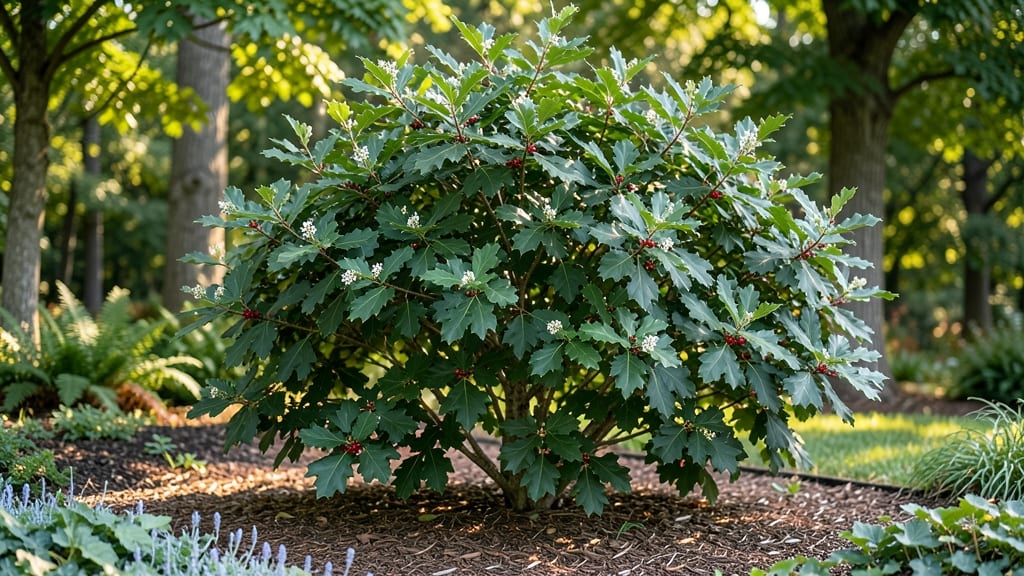
A full grown oak leaf holly 🌳 stands as a cold-hardy evergreen that brings year-round structure to any landscape, thriving even in shady spots where many plants struggle.
Picture this: a glossy, dark green shrub with striking red berries that last through winter, all while requiring less fuss than you’d expect. That’s the oak leaf holly’s superpower—it’s the go-to for gardeners who want beauty without the high-maintenance drama.
Whether you’re planting one as a privacy hedge, a foundation shrub, or a standalone specimen, its adaptability makes it a game-changer for zones like 6a and beyond.
Below, I’ll walk you through everything you need to know to keep your holly healthy, from soil prep to pruning secrets that keep it looking its best.
Ready to grow a holly that’s as tough as it is stunning? Let’s dive into the care tips that’ll have yours thriving for decades.
Key characteristics of mature oak leaf holly trees
The full grown oak leaf holly (Ilex × 'Nellie R. Stevens') is a stunning evergreen shrub that matures into a 10- to 20-foot-tall specimen with an equally impressive spread.
What makes it truly remarkable is its ability to thrive in shaded landscapes and cold climates, where many other plants struggle. This hardy plant combines the best traits of hollies with the elegant leaf shape of oak trees, creating a year-round focal point in any garden.
One of the most striking features of a mature oak leaf holly is its glossy, leathery foliage, which resembles oak leaves but retains the evergreen nature of hollies.
The leaves are a rich dark green color, providing a lush backdrop for the plant's bright red berries that appear in late fall and persist through winter. These berries add a pop of color and attract wildlife, making this plant both beautiful and ecologically beneficial.
Below is a detailed breakdown of the key characteristics that define a full grown oak leaf holly, including its growth habits, foliage, and seasonal changes that make it a standout in any landscape.
The height and spread of a mature oak leaf holly make it an excellent choice for creating natural privacy screens or defining garden borders. Its moderate growth rate means you won’t need to prune aggressively, but it will gradually fill in space over time.
This makes it perfect for low-maintenance landscaping where you want structure without constant upkeep.
What truly sets this holly apart is its foliage texture. The leaves are thick and leathery, resembling oak leaves but maintaining the evergreen habit of hollies. This unique combination gives the plant a distinctive, architectural look that stands out in any landscape.
The glossy finish on the leaves also reflects light beautifully, adding a touch of elegance to your garden.
Seasonal changes in a mature oak leaf holly are another highlight. While the foliage remains dark green year-round, the plant produces bright red berries in late fall that persist through winter.
These berries provide a vibrant splash of color when many other plants have faded, making this holly a winter garden staple. The berries also attract birds, adding an extra ecological benefit to your landscape.
This holly excels in shaded landscapes because it tolerates partial shade to full sun, though it prefers morning sun and afternoon shade in hotter climates. This flexibility makes it ideal for woodland gardens, under large trees, or along north-facing walls.
Its ability to thrive in cold climates (USDA Zones 6–9) means it can handle winter temperatures down to -10°F, making it a reliable choice for northern gardens.
If you're looking for a low-maintenance evergreen that adds year-round interest with minimal effort, the full grown oak leaf holly is an excellent investment.
Its height, spread, and seasonal berries create a stunning focal point, while its hardiness and shade tolerance ensure it will thrive in even the most challenging conditions.
For gardeners in cooler climates or shaded areas, this holly is a game-changer. It provides the structure and color of a traditional evergreen without the fuss of high-maintenance plants.
Whether you're planting it as a privacy screen, a hedge, or a specimen plant, the oak leaf holly will reward you with beauty and resilience for decades.
How to plant and care for oak leaf holly in shade
A full grown oak leaf holly thrives in shady spots with minimal fuss, but proper planting and care ensure its glossy foliage and red berries shine year-round. Unlike sun-loving shrubs, this evergreen adapts beautifully to low-light conditions, making it perfect for woodland gardens or north-facing yards.
The key lies in mimicking its natural understory habitat while providing consistent moisture and occasional pruning to maintain its compact, rounded shape.
When planting, focus on well-draining soil and proper spacing—crowding stresses roots and invites pests. For a mature oak leaf holly (10–20 feet tall), allow 6–8 feet of clearance from structures or other plants. Amend heavy clay with compost to improve aeration, and avoid soggy spots where roots rot.
Mulch generously to retain moisture and suppress weeds, but keep mulch 3 inches away from the trunk to prevent disease.
Steps to Plant & Maintain a Full Grown Oak Leaf Holly
- 1 Choose the right location: Select a spot with dappled shade (morning sun, afternoon shade) or full shade in hot climates. Avoid areas prone to waterlogging.
- 2 Dig a hole twice as wide as the root ball but no deeper. Loosen roots if pot-bound before planting to encourage outward growth.
- 3 Amend soil with peat moss or compost (20–30%) if your soil is sandy or clay-heavy. Oak leaf holly prefers slightly acidic soil (pH 5.0–6.0) for optimal berry production.
- 4 Water deeply after planting to settle soil, then mulch with 2–3 inches of shredded bark. Keep soil consistently moist (not soggy) for the first 6–8 weeks to reduce transplant shock.
- 5 Prune in late winter (February–March) to shape the mature oak leaf holly. Remove dead or crossing branches first, then thin out 10–20% of the oldest growth to encourage new shoots. Avoid heavy pruning—this shrub responds best to light shaping.
- 6 Fertilize annually in early spring with a balanced 10-10-10 fertilizer. Scatter 1 tablespoon per inch of trunk diameter around the root zone, then water thoroughly. Skip fertilizer in fall and winter to avoid encouraging late-season growth.
- 7 Protect from winter burn in USDA Zones 5–6 by wrapping young plants with burlap or applying anti-desiccant spray in late fall. Mature hollies (5+ years) usually handle cold well but benefit from deep mulch (4–6 inches) to insulate roots.
Once established, a full grown oak leaf holly requires minimal watering—just 1–1.5 inches per week during dry spells. Monitor for scale insects or spider mites, which thrive in dry conditions. Spray affected areas with neem oil or insecticidal soap early in the season to prevent infestations.
For hedge-like growth, prune twice yearly: lightly in summer to shape and heavily in late winter to remove old wood.
This shade-loving evergreen rewards patience with decades of low-maintenance beauty. With the right soil, spacing, and seasonal care, your oak leaf holly will become a year-round focal point, whether planted as a solitary specimen or a formal hedge. 🌿🪴