
Container Gardens
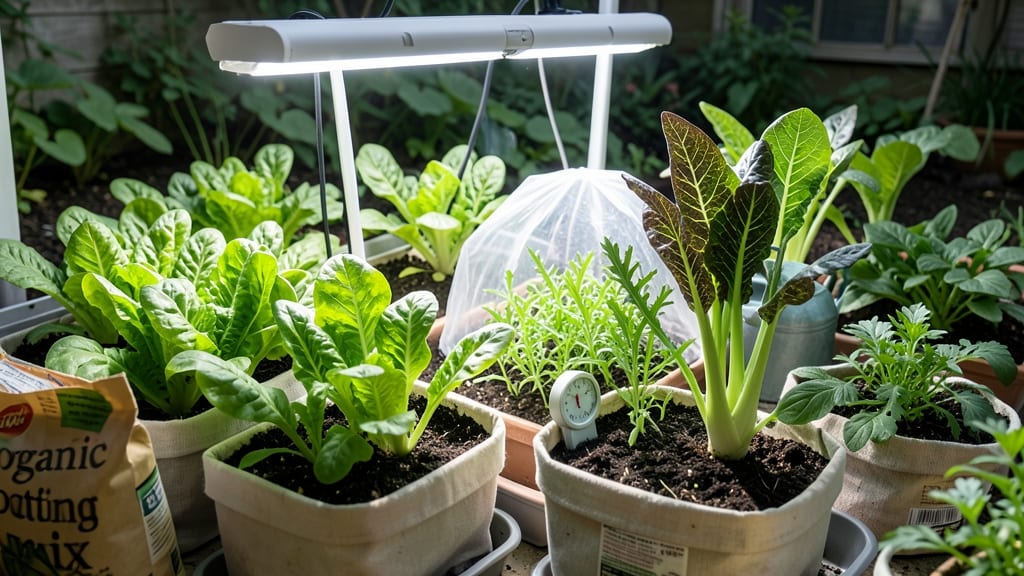
Growing leafy greens indoors isn't just possible—it's easier than you think. 🌱 I've turned my kitchen windowsill into a mini farm, harvesting crisp lettuce and peppery arugula even in winter when the garden's asleep.
The secret? Matching the right greens to your light situation, whether it's a sunny window or a basic grow light.
Start with fast-growing varieties like baby spinach or butter lettuce, which tolerate cooler indoor temps and thrive in shallow containers. A 5-inch pot with drainage holes and well-draining potting mix gives roots exactly what they need—no fancy equipment required.
Most beginners overwater, so stick your finger in the soil first: water when the top inch feels dry, not soggy.
Within 3-4 weeks, you'll be harvesting tender leaves without ever stepping outside. The flavor stays fresh, the nutrients stay high, and you skip the grocery store markup. My kale plants even rebloom after harvest, giving me three full harvests from a single planting.
This works for any indoor space—balconies, bathrooms with southern light, or even a basement with a grow light. The only rule? Consistency: same watering, same light, same love. Let's get those greens growing!
Understanding Indoor Green Struggles
Indoor leafy greens can be finicky, and even the most well-intentioned gardeners face challenges like stunted growth, yellowing leaves, or leggy stems. But why do these issues pop up? Let’s break down the science behind common problems and how to spot them before they derail your harvest.
🌱 What’s happening? Leafy greens like kale, spinach, and lettuce rely on photosynthesis, a process that converts light into energy. Without enough light—especially blue and red spectrum wavelengths—your plants stretch toward the nearest source (a phenomenon called etiolation).
This results in: - Long, weak stems (leggy growth) - Pale, sparse leaves - Slow or no harvestable growth
The science: Plants detect light through phytochromes and cryptochromes, pigments that trigger growth responses. Without sufficient light, they prioritize stem elongation over leaf production, leaving you with a sad, spindly plant.
Actionable fix:
- Use full-spectrum LED grow lights (12–16 hours/day) or position plants 6–12 inches from a strong window (south-facing is ideal).
- Rotate trays weekly to ensure even light exposure and prevent uneven growth.
💦 What’s happening? Leafy greens thrive in consistently moist (not soggy) soil.
Overwatering suffocates roots by: - Cutting off oxygen, leading to root rot (a fungal infection that turns roots brown and mushy). - Flushing out nutrients, causing nutrient deficiencies (e.g., yellowing between leaf veins, a classic sign of magnesium or iron deficiency). - Encouraging pests like gnats, which love damp, decaying organic matter.
The science: Roots need aeration to absorb water and nutrients efficiently. Overwatering creates anaerobic conditions, where harmful bacteria and fungi thrive.
Actionable fix:
- Use well-draining soil mixes (add perlite or coco coir for aeration).
- Water only when the top inch of soil is dry—stick your finger in to check!
- Ensure pots have drainage holes and empty saucers after watering.
🍃 What’s happening? Leafy greens are fast growers and deplete nutrients quickly.
Common signs of imbalance include: - Yellowing leaves (chlorosis) → Iron or nitrogen deficiency (often from overwatering or poor soil). - Purple stems/leaves → Phosphorus deficiency (critical for root and leaf development). - Brown leaf edges → Calcium deficiency (common in overwatered or overly compacted soil).
The science: Nutrients like nitrogen (N), phosphorus (P), and potassium (K) fuel growth, but micronutrients (iron, magnesium, zinc) act as catalysts for chlorophyll production. Without them, photosynthesis grinds to a halt.
Actionable fix:
- Start with a balanced liquid fertilizer (e.g., 5-5-5 or 10-10-10) and switch to a high-nitrogen formula (like fish emulsion) if growth stalls.
- Flush soil every 4–6 weeks with water to prevent salt buildup from fertilizers.
- Use compost tea or worm castings for a slow-release nutrient boost.
🌡️ What’s happening? Most leafy greens prefer cool temperatures (60–75°F) and moderate humidity (40–60%).
Deviations cause: - Wilting or crispy leaves → Low humidity (common in dry indoor air from HVAC systems). - Slow growth or bolted seeds → Heat stress (above 80°F triggers flowering in cool-season greens). - Powdery mildew or mold → High humidity + poor airflow (ideal conditions for fungal growth).
The science: Enzymes in plant cells function optimally within a specific temperature range. Too hot or cold slows metabolic processes, while humidity affects stomatal opening (how plants breathe and transpire).
Actionable fix:
- Place a humidifier nearby or use a pebble tray with water to increase moisture.
- Avoid placing plants near heat vents or drafty windows.
- Use a small fan on low to improve airflow without stressing delicate leaves.
🏺 What’s happening? Crowded roots or compacted soil lead to:
- Stunted growth (roots can’t absorb enough water/nutrients).
- Root-bound plants (roots circling the pot, restricting growth).
- Waterlogging (if soil doesn’t drain properly).
The science: Roots need oxygen, space to expand, and proper soil structure to function. Dense or waterlogged soil blocks root respiration, leading to suffocation.
Actionable fix:
- Repot every 4–6 weeks or when roots emerge from drainage holes.
- Use lightweight, airy mixes (e.g., 60% potting soil, 20% perlite, 20% compost).
- Choose shallow but wide containers (leafy greens have shallow root systems).
Fixing Common Indoor Green Growing Woes
Indoor gardening is rewarding, but even the hardiest leafy greens can hit snags—especially when sunlight, humidity, or pests throw a wrench in your plans. 🌱 The good news?
Most issues have simple, practical fixes. Below, we’ll tackle the most common problems with step-by-step solutions and prevention tips to keep your greens thriving year-round.
Cause: Overwatering, underwatering, or insufficient light zaps chlorophyll, turning leaves yellow. Fix It:
- Check the roots 🔍: Gently remove the plant from its pot. Healthy roots are firm and white; mushy or black roots mean overwatering. Trim damaged roots with sterilized scissors.
- Adjust watering 💧: Water only when the top inch of soil feels dry. Use a pot with drainage holes to prevent soggy soil.
- Boost light ☀️: Move your greens closer to a south-facing window or supplement with a full-spectrum LED grow light (12–16 hours/day). Rotate pots weekly for even growth.
Prevention Tips: ✔ Use well-draining soil (mix potting soil with perlite or coco coir). ✔ Fertilize lightly every 2–3 weeks with a balanced liquid fertilizer (e.g., 10-10-10 or fish emulsion). ✔ Avoid cold drafts—keep temps between 60–75°F.
Cause: Spider mites, aphids, or fungus gnats thrive in dry or overwatered indoor environments. Fix It:
- Isolate the plant 🛑: Quarantine affected greens immediately to stop the spread.
- Blast pests off 💦: Spray leaves with neem oil solution (1 tsp neem oil + 1 tsp mild soap per quart of water) or rinse with water.
- Trap fungus gnats 🪰: Place a small dish of apple cider vinegar + water near the pot—the gnats will drown in it.
Prevention Tips: ✔ Increase humidity with a pebble tray or humidifier (pests love dry air). ✔ Inspect new plants before bringing them indoors. ✔ Use sticky traps near soil to catch flying pests early.
Cause: Plants lean or grow tall and spindly when they’re not getting enough light. Fix It:
- Move to a brighter spot 🔦: South or west windows are ideal. If natural light is lacking, upgrade to a grow light (LED or fluorescent).
- Prune leggy stems ✂️: Snip the top 2–3 inches of overgrown stems to encourage bushier growth. Place cuttings in water to propagate new plants!
- Rotate pots daily 🌀: Ensures even light exposure so stems don’t bend toward one side.
Prevention Tips: ✔ Start with compact varieties like baby kale, arugula, or Swiss chard—they tolerate lower light better. ✔ Harvest outer leaves first to encourage denser growth. ✔ Use reflective surfaces (aluminum foil on walls) to bounce light around.
Cause: Low humidity or salt buildup from fertilizer burns the leaf edges. Fix It: - Mist leaves gently 🌧️: Use a spray bottle with room-temperature water 2–3 times a week (avoid soaking the soil). - Flush the soil 🚿: Run water through the pot for 1–2 minutes to leach out excess salts.
Let it drain completely. - Reduce fertilizer 🧪: If using liquid fertilizer, dilute it to half-strength and apply every 4 weeks instead of 2.
Prevention Tips: ✔ Group plants together to create a microclimate with higher humidity. ✔ Use a humidity dome (clear plastic cover) for seedlings until they’re established. ✔ Test your water—tap water with high chlorine or minerals can cause browning.
Cause: Roots circling the pot or lack of nutrients slows growth. Fix It:
- Repot if needed 🪴: If roots are poking through drainage holes, move to a 1–2 inch larger pot with fresh soil.
- Add compost or worm castings 🐛: Mix 10–20% into the soil for a nutrient boost.
- Try a seaweed fertilizer 🌊: Rich in growth hormones, it’s gentler than synthetic options.
Prevention Tips: ✔ Fertilize lightly but often—leafy greens prefer nitrogen-rich feeds (like fish emulsion). ✔ Rotate crops every 3–4 weeks to prevent soil depletion. ✔ Check pH levels (ideal: 6.0–7.0)—use a simple test kit if needed.
- Light is king—if your greens look sad, light is the #1 fix before anything else.
- Less is more with water and fertilizer—overdoing it is a fast track to problems.
- Harvest regularly—this encourages new growth and prevents bolting (flowering).
With these fixes, your indoor leafy greens will bounce back faster than you think. 🚀 Now, grab your shears and get growing—your kitchen’s freshest salad is just a few weeks away!
Frequently asked questions
What are the easiest leafy greens to grow indoors for beginners?
Start with baby spinach, butter lettuce, or arugula—they grow quickly (3-4 weeks) and tolerate cooler indoor temperatures. These varieties also handle lower light better than delicate types like romaine. For faster results, try microgreens (like radish or broccoli sprouts), which are ready in just 7-10 days!
Can I use regular potting soil from the garden center?
Yes, but mix it with 20% perlite or coco coir to improve drainage—leafy greens hate soggy roots! Avoid garden soil (too dense) or compost-heavy mixes (can burn tender seedlings). A simple blend of 60% potting soil + 20% perlite + 20% compost works perfectly for most greens.
How do I know if my indoor greens are getting enough light?
Check for leggy stems or pale leaves—these mean more light is needed. For windowsill setups, place plants 6-12 inches from a south-facing window. If using grow lights, 12-16 hours/day of full-spectrum LED light (12-15 inches above plants) mimics ideal sunlight.
Why are my leafy greens turning yellow?
Yellowing usually means overwatering (check for mushy roots) or nutrient deficiency (common after 4-6 weeks of growth). Try flushing the soil with water to remove excess salts, then fertilize lightly with a balanced liquid fertilizer (like 5-5-5). Yellow between veins? Add iron or switch to a nitrogen-rich feed.
Can I grow leafy greens indoors without natural sunlight?
Use a full-spectrum LED grow light (12-16 hours/day) placed 6-12 inches above plants. For best results, choose compact varieties like Swiss chard or kale, which tolerate lower light better than loose-leaf types. A simple $20-$30 LED clip light works wonders for small setups!