
Pests and Diseases
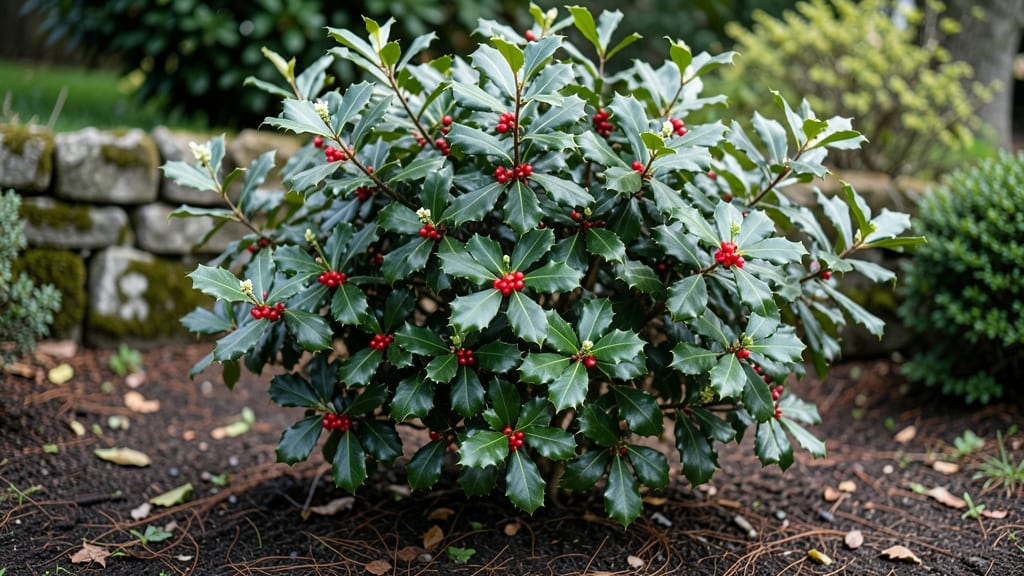
The holly leaf outline reveals sharp, serrated edges and a glossy, waxy surface that serve as key health indicators. Deformed or yellowing leaf edges often point to nutrient deficiencies or pest infestations like spider mites or scale insects.
A holly leaf's distinct shape isn't just decorative—it's a direct window into your plant's well-being. 🌿 The sharp, spiky edges and waxy coating protect against moisture loss and pests, while any irregularities in the outline (like uneven serrations or curled edges) can reveal underlying problems.
For example, jagged edges might signal fungal infections, while brown spots often indicate bacterial issues. Understanding these visual cues helps you act quickly before minor issues become major threats to your holly's health.
What's particularly interesting is how holly leaves respond to environmental stressors. If you notice the glossy finish dulling or the edges turning yellow, it could mean your plant isn't getting enough iron or nitrogen. 💛 These nutrients are essential for maintaining that signature waxy sheen and vibrant green color.
Regularly inspecting the leaf outline isn't just about aesthetics—it's a proactive way to catch potential problems before they spread.
💡 In This Article
- How Holly Leaf Shape Indicates Plant Health
- Identifying Pests and Diseases Through Leaf Damage
How holly leaf shape indicates plant health
The holly leaf's iconic outline—with its sharp, spiky serrations—isn't just for show. These 1-2 millimeter teeth along the edges help regulate water loss while deterring pests. The waxy coating, called a cuticle, creates a protective barrier that reflects sunlight and prevents dehydration.
When this outline becomes irregular, it's your plant's way of signaling distress. For instance, leaves with uneven or blunted serrations often indicate iron deficiency, where the plant can't maintain proper cell wall integrity.
Symmetry plays a crucial role too. Healthy holly leaves typically display perfect bilateral symmetry, with each side mirroring the other. When you see asymmetrical growth or leaves that appear "lopsided," it usually points to environmental stressors like inconsistent watering or extreme temperature fluctuations.
The glossy finish also fades under stress—dull leaves often mean the plant isn't getting enough light or is suffering from overwatering, which dilutes the waxy coating's effectiveness. 🌿
Color changes in the leaf outline are equally telling. Yellowing at the edges (a condition called chlorosis) usually means the plant is starving for nitrogen or magnesium. These nutrients are essential for chlorophyll production, and their absence turns the leaf margins pale.
Meanwhile, brown or black spots along the serrations often indicate fungal infections like anthracnose, which thrives in humid conditions. The key is to act quickly—once these spots spread beyond the edges, the infection moves inward, making treatment more difficult.
Temperature also affects leaf integrity. Holly leaves grown in below 50°F environments often develop curled or cupped edges as the plant conserves moisture. This curling can make the serrations appear more pronounced, creating a false alarm for pest issues.
Conversely, leaves exposed to above 90°F may develop scorched tips, where the edges turn crispy and brown. These heat-induced changes are different from pest damage but equally important to recognize.
What most gardeners miss is how leaf texture correlates with health. Run your fingers along a healthy holly leaf—you'll feel that firm, leathery surface. When leaves become soft or spongy, it's often a sign of bacterial soft rot, which starts at the leaf edges and spreads inward.
This condition is particularly common in holly varieties like English holly (Ilex aquifolium) when grown in poorly drained soil. The outline may appear normal at first, but the texture gives away the problem.
Here's what to watch for in your holly's leaf outline:
- Sharp, uniform serrations: Healthy, pest-free plant
- Blunted or missing teeth: Likely iron or zinc deficiency
- Yellow edges: Nitrogen or magnesium deficiency
- Brown spots along edges: Fungal infection (anthracnose)
- Curled or cupped edges: Temperature stress or dehydration
Regular inspection of these details can save your holly from more serious issues. The leaf outline is essentially your plant's early warning system—paying attention to these visual cues gives you the upper hand in maintaining a thriving, pest-resistant holly. 💛