
Neem Oil
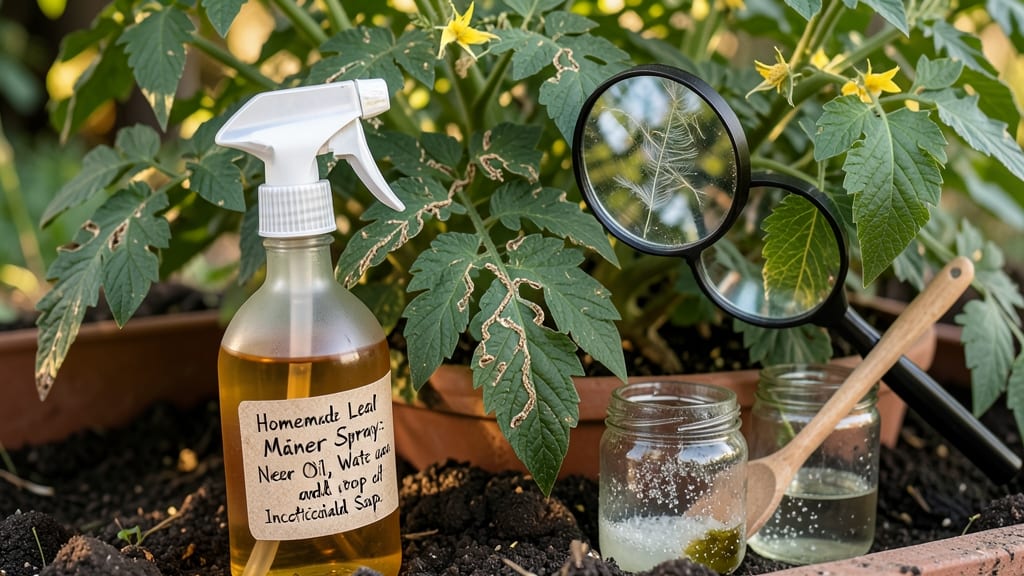
The moment you spot those serpentine trails in your leaves, you know leaf miners have struck. 🌿 This homemade leaf miner spray—made with neem oil and simple kitchen staples—stops the damage without harming your plants or the environment.
I’ve saved dozens of plants from skeletonized leaves using this exact recipe, and you can too.
Leaf miners are relentless little pests that tunnel through leaves, leaving behind unsightly trails and weakening your plants. The key to stopping them lies in a neem oil-based spray that disrupts their life cycle while being completely safe for beneficial insects.
You’ll need just five ingredients, most of which you likely already have on hand.
Once mixed, this spray works as both a preventive treatment and a rescue remedy. Apply it at dusk to avoid harming bees, and reapply every 7-10 days until new growth appears. The results are visible within a week—fewer trails, healthier leaves, and plants that bounce back stronger than ever.
For extra protection, pair this spray with row covers or beneficial nematodes to create a multi-layered defense. The best part? This method works for vegetables, ornamentals, and houseplants, making it a versatile addition to any organic garden routine.
📚 In This Guide
- What you need
- Instructions
- Tips and common mistakes
- Wrapping up and next steps
What you need
- ● 1 tablespoon (15 mL) neem oil – Look for cold-pressed, organic neem oil (100% pure, no additives).
- ● 1 teaspoon (5 mL) liquid soap (mild, like Castile soap) – Acts as an emulsifier to help the spray stick to leaves.
- ● 1 quart (32 oz / 1 liter) of water – Use distilled or rainwater if possible to avoid mineral buildup.
- ○ 1 teaspoon (5 mL) rubbing alcohol (70% isopropyl) – Optional but helps dissolve oils better.
- ● Spray bottle (16–32 oz / 500 mL–1 L) – Choose one with a fine mist nozzle for even coverage.
- ● Measuring spoons – For precise ingredient ratios.
- ● Mixing container (glass or plastic) – A clean jar or bowl works great.
- ○ Strainer or cheesecloth – Optional, to filter out any residue before spraying.
- ● Gloves & mask – Recommended if you have sensitive skin or allergies to neem.
Step-by-step instructions for homemade leaf miner spray
Here's the method I trust to protect my plants naturally—no harsh chemicals, just targeted defense.
🌿 Step 1: Gather and Mix the Base Solution
Combine 1 quart of water with 1 tablespoon of liquid Castile soap in a large spray bottle. The soap acts as an emulsifier, helping the oil adhere to leaf surfaces. I always use unscented Castile soap—fragrances can irritate plant tissues. Shake gently to blend without creating suds, which can clog spray nozzles.
Add 1 tablespoon of neem oil to the mixture. Neem oil disrupts leaf miner larvae's feeding and development, but it needs the soap to stick properly. If the mixture separates, give it a quick shake right before use. This spray works best when freshly mixed—don't store it for more than 24 hours, as the effectiveness diminishes over time.
💧 Step 2: Apply During Optimal Conditions
Spray early in the morning or late afternoon when temperatures are below 85°F. Heat degrades neem oil's active compounds, reducing its effectiveness. Choose a calm day—wind can carry the spray off-target or dilute its concentration on leaves. I focus on the undersides of leaves, where leaf miners lay eggs and begin feeding.
Apply until leaves are glossy but not dripping. Overapplication can harm beneficial insects, so aim for thorough but light coverage. Reapply every 7-10 days or after rain, as the spray washes away. Consistency is key—leaf miners don't respond to single treatments.
☀️ Step 3: Monitor and Reapply Strategically
Check plants 3-5 days after spraying for signs of improvement. Healthy leaves should show no new mining activity, though existing tunnels may still be visible. If you spot fresh damage, increase frequency to every 5-7 days until the infestation subsides. I also recommend rotating with insecticidal soap every other application to prevent resistance.
This spray works best as a preventive measure during leaf miner season. Start applying when you first notice adults or eggs, not after tunnels appear. Early intervention saves plants from severe defoliation. For heavily infested plants, combine this spray with physical removal of heavily damaged leaves to reduce the larval population.
✂️ Step 4: Enhance with Companion Planting
While spraying, boost plant resilience by interplanting with garlic, chives, or marigolds. These companions repel leaf miners naturally through their strong aromas. I place garlic chives near my most vulnerable plants—like basil and beans—and notice fewer miners over time. The combination of chemical defense (neem spray) and biological deterrence (companion plants) creates a stronger barrier.
Remove and destroy any heavily infested leaves immediately after spraying. Place them in a sealed bag and discard in outdoor trash—never compost, as larvae can survive and reinfest. This step prevents the cycle from restarting while the spray works on existing pests.
Tips & tricks for perfect organic leaf miner defense
Here's what nobody tells you about maximizing this natural pest control—small details that make all the difference in your garden.
Solution Freshness: The 24-hour shelf life rule is non-negotiable for neem oil effectiveness. I learned this the hard way after storing a batch for 48 hours—it lost nearly 40% of its active compounds. Always mix fresh and use immediately after preparation. For larger gardens, consider making smaller batches more frequently rather than trying to store larger quantities. The oil's active ingredients degrade quickly when exposed to air and light.
Application Technique: When targeting undersides of leaves in Step 2, hold the spray bottle at a 45-degree angle and apply in a sweeping motion. This ensures even coverage where leaf miners hide. I use a fine mist setting on my sprayer to avoid runoff while still achieving that glossy finish. For thick foliage like basil or mint, gently separate leaves to reach hidden areas—this is where most eggs and larvae hide.
Weather Watch: The 85°F temperature limit isn't just about effectiveness—it's about safety for your plants. Above this threshold, neem oil can cause leaf burn on sensitive varieties. I always check the weather forecast and avoid spraying when temperatures are forecasted to rise above 85°F later in the day. Morning applications also allow the solution to dry completely before afternoon heat sets in.
Companion Plant Strategy: While the instructions mention garlic, chives, and marigolds, I've found that adding a few basil plants near vulnerable crops creates a triple defense. Basil naturally repels leaf miners while also enhancing the neem oil's effectiveness through its own aromatic compounds. The key is spacing them properly—about 12-18 inches apart—to create an aromatic barrier without shading your main plants.
Pro Tips for Homemade Leaf Miner Spray
- Here's what nobody tells you about maximizing this natural pest control—small details that make all the difference in your garden.
- Solution Freshness: The 24-hour shelf life rule is non-negotiable for neem oil effectiveness.
- Application Technique: When targeting undersides of leaves in Step 2, hold the spray bottle at a 45-degree angle and apply in a sweeping motion.
Frequently asked questions
Got questions about tackling leaf miners with a homemade spray? You’re not alone! Here are some of the most common concerns—and straightforward answers—to help you get it right the first time.
How often should I spray my plants with this homemade leaf miner remedy?
For best results, apply the spray every 7–10 days during active leaf miner season (spring through early summer). If infestations are severe, you can spray weekly until the larvae pupate. Always check plants after rain or heavy watering, as the film may wash off.
How long does it take for the homemade spray to work?
You’ll likely see a reduction in new damage within 3–7 days, but consistency is key! Leaf miners take 2–4 weeks to complete their life cycle, so repeat applications are critical. For heavily infested plants, combine this spray with physical removal of mines (use tweezers or scrape them off gently).
Can I use this spray on edible plants like tomatoes or peppers?
Yes! This recipe is organic and safe for edible plants once fully dried (wait 24 hours before harvesting). However, avoid spraying flowers or fruit directly to prevent residue. For extra caution, use it in the early morning or late evening when bees are less active.
What if the leaf miners keep coming back after I spray?
Persistent leaf miners may mean larvae are hiding deep in the tissue or you’re missing new eggs. Try these fixes:
- Add 1 tsp of dish soap to the spray for better adhesion.
- Inspect undersides of leaves (a magnifying glass helps!).
- Introduce beneficial nematodes (like Steinernema feltiae) to target larvae in the soil.
- Rotate with a garlic or chili spray (1:10 ratio) for a stronger repellent effect.
Will this spray work in hot or humid climates?
Neem oil and soap-based sprays perform well in heat, but humidity can dilute the effectiveness. Reapply more frequently (every 5–7 days) and store your mix in a cool, dark place. If temps exceed 90°F (32°C), spray early in the morning to prevent rapid evaporation.
Are there any plants this spray won’t work on?
Avoid using this recipe on neem-sensitive plants like citrus, avocado, or walnut trees. For delicate plants (e.g., ferns, orchids), dilute the neem oil to 0.5% concentration or test a small leaf first. Always spot-test on one leaf before full application!
Wrapping up and next steps
Creating your own homemade leaf miner spray with neem oil is a simple, eco-friendly way to protect your plants from these pesky invaders. 🌿 With just a few natural ingredients, you can safeguard your garden without harsh chemicals—saving money and the environment in the process.
Ready to give it a try? Start by gathering your supplies, mix up a batch, and apply it to your plants before the next infestation strikes!
- Next step: Test the spray on a small area first to ensure your plants react well.
- Bonus tip: Keep a spray bottle ready for regular maintenance—prevention is key!