
Size
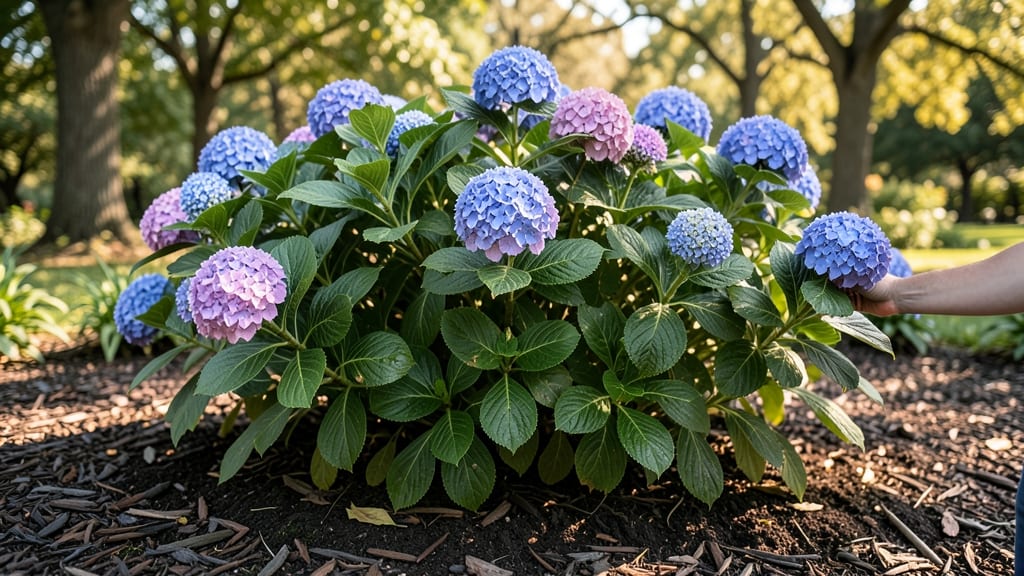
Big leaf hydrangeas can grow 6 to 12 feet tall—and that’s just the start of what makes them stunning. 🌿 I’ve watched mine climb trellises and spill over garden beds, their lush foliage creating a dramatic backdrop for any yard.
The key to managing their size lies in understanding their growth habits and how pruning shapes them over time.
These shrubs typically spread 4 to 8 feet wide, forming a dense, rounded shape that thrives in partial shade. Varieties like 'Nikko Blue' stay on the smaller side (6-8 feet), while others like 'Endless Summer' can stretch toward 12 feet if left unpruned.
The right spot—morning sun with afternoon shade—keeps them lush without stressing their roots.
With the right care, you’ll end up with showstopping blooms that last from summer through fall. Prune in late winter or early spring to encourage new growth, and your hydrangeas will reward you with vibrant, long-lasting flowers every season.
Container-grown hydrangeas stay smaller (3-5 feet), making them perfect for patios or balconies. Just ensure the pot is at least 15 gallons—smaller containers restrict root growth and limit size. Whether in the ground or a pot, these beauties deliver big impact with the right approach.
📚 In This Guide
- What you need
- Instructions
- Tips and common mistakes
- Wrapping up and next steps
What you need
- ● Big leaf hydrangea plant: 1 nursery-grown plant (choose a healthy specimen with vibrant foliage and buds).
- ● Pro tip: 💡 Opt for a container-grown plant (4-6 inches in pot) for easier transplanting than bare-root options.
- ● Gardening tools: 1 trowel (6-inch stainless steel for durability).
- ● 1 pruning shears (bypass-style, sharp for clean cuts).
- ● 1 garden fork (for loosening soil, 12-inch length).
- ● 1 watering can or hose with a gentle spray nozzle (1-2 gallons capacity).
- ● Soil & amendments: 5-10 gallons of well-draining potting mix (for containers) or 2-3 cubic feet of garden soil amended with compost (for in-ground planting).
- ● 1 part organic mulch (pine bark or shredded leaves, 2-3 inches thick).
- ○ Optional: Hydrangea-specific fertilizer (balanced 10-10-10 or acidic 8-3-9 blend).
- ● Location prerequisites: Full sun to partial shade (4-6 hours of sunlight daily).
- ● Space allowance: 6-12 feet wide and 6-8 feet tall at maturity (check variety-specific needs!).
- ● Proximity to a water source (hydrangeas love consistent moisture!).
- ● 1 garden glove (to protect hands from thorns or rough soil).
- ● 1 soil pH test kit (to monitor acidity for blue/pink flower color control).
- ● 1 support stake or trellis (if planting near a fence/wall for training).
- ● 1 slow-release fertilizer (like Osmocote, for seasonal feeding).
- ● 1 spray bottle with neem oil (for pest prevention).
Understanding big leaf hydrangea growth: what to expect at maturity
Here's how to plan your space and care for these stunning shrubs as they reach their full potential.
🌿 Step 1: Assess Your Space Based on Variety
Big leaf hydrangeas (Hydrangea macrophylla) typically mature between 6 to 12 feet tall, but their exact size depends on the specific cultivar. Dwarf varieties like 'Little Lime' stay compact at 3 to 4 feet, while standard types like 'Nikko Blue' reach 8 to 10 feet. Check your plant tag for exact dimensions—this determines where you'll place it for years to come.
Consider the mature spread too. Most big leaf hydrangeas grow 4 to 6 feet wide, so leave 8 to 10 feet of clearance around the shrub for airflow and future maintenance. I always sketch a rough outline on paper to visualize how the plant will fill the space—you'll avoid overcrowding later.
☀️ Step 2: Choose the Right Location for Optimal Growth
Big leaf hydrangeas thrive in partial shade, with morning sun and afternoon shade being ideal. In hot climates, they need protection from strong afternoon rays, which can scorch leaves and reduce blooms. Look for a spot with 4 to 6 hours of filtered light daily—this balances growth and flower production.
Test your location by observing how sunlight moves across your yard. If your space gets full sun all day, plant near a building or tall trees to provide natural shade. If it's too shady, supplement with a dappled light garden umbrella—hydrangeas won't bloom well in deep shade.
🪴 Step 3: Prepare the Soil for Healthy Growth
These shrubs prefer rich, moist, well-draining soil with a slightly acidic pH (5.2 to 6.0). Before planting, amend your soil with 3 inches of organic compost and a handful of hydrangea-specific fertilizer (high in phosphorus for blooms). Dig a hole twice as wide as the root ball to encourage root spread.
If your soil drains poorly, mix in pearlite or sand to improve aeration. I always water the hole thoroughly before planting—this removes air pockets and helps roots establish faster. After planting, mulch with 2 to 3 inches of wood chips, keeping it 6 inches away from the stem to prevent rot.
✂️ Step 4: Prune Strategically to Control Size and Shape
Prune big leaf hydrangeas after flowering in late summer or early fall (never in spring). Remove dead, weak, or crossing branches first, then trim back 1/3 of the oldest stems to encourage new growth. This keeps the shrub compact while maintaining vibrant blooms.
For larger varieties, I use loppers for thick branches and hand pruners for finer cuts. Always make clean cuts at a 45-degree angle just above a leaf node. Avoid heavy pruning in spring—you'll sacrifice that year's flowers. Watch for new growth at the base after pruning; this signals the plant is responding well.
💧 Step 5: Maintain Consistent Moisture for Peak Performance
Big leaf hydrangeas need consistent moisture, especially during their first year. Water deeply once a week, providing 1 to 1.5 inches of water per session. Let the top 2 inches of soil dry out between waterings—this prevents root rot while keeping the plant hydrated.
In hot weather, increase watering to every 3 to 4 days, checking soil moisture with your finger. Yellowing leaves often signal underwatering, while drooping or mushy stems indicate overwatering. Adjust your routine based on seasonal changes—hydrangeas are forgiving but need steady care to reach their full size.
Tips & tricks for perfect big leaf hydrangea growth
Here's what nobody tells you about maximizing your hydrangea's potential—these insights will help you avoid common pitfalls and get the most stunning blooms possible.
Variety-Specific Space Planning: When assessing your space in Step 1, remember that mature height isn't the only factor—consider how the plant's natural shape will fill your garden. For example, 'Nikko Blue' grows upright and narrow (6-8 feet tall, 4-5 feet wide), while 'Endless Summer' spreads more broadly (5-6 feet tall, 5-6 feet wide). I always sketch a rough circle with the plant's mature spread at the center to visualize how it will interact with surrounding plants and structures.
Light Balance Strategy: The 4-6 hours of filtered light mentioned in Step 2 is crucial, but timing matters just as much. In Step 2, when testing your location, pay special attention to how sunlight moves across your yard during the plant's growing season (spring to early fall). If your location gets intense afternoon sun, consider planting near a deciduous tree that will provide natural shade during summer months when hydrangeas are most vulnerable to leaf scorch.
Soil pH Precision: While Step 3 mentions the ideal pH range of 5.2-6.0, here's the secret: hydrangea flower color actually changes with soil pH! Blue flowers thrive in acidic soil (below 6.0), while pink flowers prefer slightly alkaline soil (above 6.5). If you want to experiment with color changes, test your soil pH with a kit and adjust with aluminum sulfate (to lower pH) or lime (to raise pH) as needed. The transition between colors can take 6-12 months, so be patient!
Pruning Timing Secret: The late summer/early fall pruning window in Step 4 is critical, but here's what most gardeners miss: the exact timing affects next year's blooms. For varieties that bloom on old wood (like 'Nikko Blue'), prune immediately after flowers fade. For varieties that bloom on new wood (like 'Endless Summer'), you can prune anytime after flowering. Watch for new growth at the base—this indicates the plant is responding well to your pruning.
Pro Tips for How Big Do Big Leaf Hydrangeas Get
- Here's what nobody tells you about maximizing your hydrangea's potential—these insights will help you avoid common pitfalls and get the most stunning blooms possible.
- Variety-Specific Space Planning: When assessing your space in Step 1, remember that mature height isn't the only factor—consider how the plant's natural shape will fill your garden.
- Light Balance Strategy: The 4-6 hours of filtered light mentioned in Step 2 is crucial, but timing matters just as much.
Frequently asked questions
Got questions about Big Leaf Hydrangeas?
You’re not alone! Here are some of the most common queries—plus quick, practical answers to help you plan your garden like a pro.
How fast do Big Leaf Hydrangeas grow?
Big Leaf Hydrangeas grow at a moderate pace, typically adding 12–24 inches per year under ideal conditions. With proper care (sunlight, water, and nutrients), they can reach their mature size in 3–5 years. Patience pays off—these beauties are worth the wait! Pro tip: Prune in late winter to encourage bushier, faster growth.
When do Big Leaf Hydrangeas reach their full size?
Most Big Leaf Hydrangeas hit their 6–12-foot mature height between ages 3 and 5, though some may take up to 7 years in cooler climates. Growth slows significantly after year 3, so don’t expect dramatic changes after that. Track their progress with a simple tape measure or garden stakes for reference!
Can I keep a Big Leaf Hydrangea smaller than 6 feet?
Use regular pruning to control height—cut back 1/3 of the oldest stems annually in late winter or early spring. For a compact look (3–5 feet), prune more aggressively and fertilize lightly. Just avoid heavy pruning in fall, as it can stunt blooms. Bonus: Smaller hydrangeas make stunning container plants!
What if my Big Leaf Hydrangea isn’t growing as expected?
Slow growth could signal poor soil, lack of sunlight, or overcrowding. Check these fixes:
- Soil: Amend with compost or organic matter for better drainage.
- Sunlight: Ensure partial shade (morning sun, afternoon shade).
- Water: Keep soil consistently moist (not soggy).
- Space: Give it 5–6 feet of clearance from other plants.
Do Big Leaf Hydrangeas get bigger in pots than in the ground?
Not significantly! While they can grow in containers, their size is naturally limited by root space. Expect 3–5 feet max in a large pot (15+ gallons). For full-size growth, plant them in the ground where roots can spread freely. Pro tip: Use a slow-release fertilizer to support potted hydrangeas.
Wrapping up and next steps
Big leaf hydrangeas are stunning additions to any garden, reaching 6 to 12 feet tall at maturity—perfect for creating lush, eye-catching focal points! Whether you’re planning a privacy screen, a colorful border, or a dramatic backdrop, their size and vibrant blooms make them a standout choice. 🌿✨
Now that you know their potential, it’s time to roll up your sleeves! Pick your planting spot, gather the right tools, and get ready to nurture these beauties into thriving giants. Check out our step-by-step guide to turn your hydrangea dreams into reality—your garden will thank you!