
Pruning
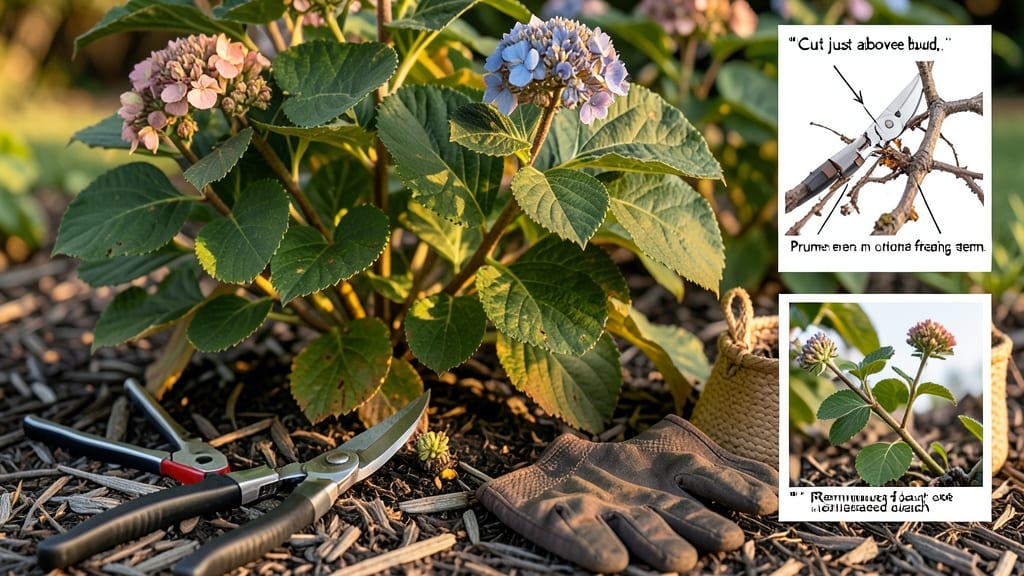
Pruning bigleaf hydrangeas in late winter unlocks their biggest blooms of the year. ✂️ I used to over-prune mine, ending up with sparse flowers—until I learned the dormant-season trick that transforms leggy bushes into lush, vibrant plants.
The key is timing: wait until the plant is fully asleep, then cut back just enough to shape without sacrificing next year's blooms.
You only need three things: sharp pruning shears, a clean bucket for clippings, and a sunny day. Start by removing any dead or crossing branches first—they rob energy from the plant.
Then, trim back last year's blooms to just above the first set of healthy leaves. This encourages fresh growth while preserving the flower buds forming at the tips of new stems.
After pruning, you'll notice new shoots emerging within weeks, with fuller blooms by summer. The plant stays compact, flowers last longer, and you avoid the common mistake of cutting too much—bigleaf hydrangeas bloom on old wood, so aggressive pruning means fewer flowers. Water deeply afterward to help it recover.
Works in zones 5-9, but adjust timing slightly for warmer climates—prune in early spring instead of late winter. The results? A bush that looks like it just came from a nursery, with abundant, long-lasting blooms from early summer through fall. Here's how to do it right the first time.
📚 In This Guide
- What you need
- Instructions
- Tips and common mistakes
- Wrapping up and next steps
What you need
- ● Pruning shears (bypass pruners): Sharp, high-quality shears (e.g., Felco F-2 or Gonicc T-109S) to make clean cuts on smaller stems (up to ½ inch thick).
- ● Loppers: For thicker stems (½ to 1½ inches), use bypass loppers (e.g., Felco 201) with long handles for leverage.
- ● Pruning saw: A curved-tooth pruning saw (e.g., Fiskars X27) for stems thicker than 1½ inches.
- ● Rubbing alcohol (70% isopropyl) or bleach solution: 1 part bleach to 9 parts water to disinfect tools between cuts and prevent disease spread.
- ● Garden gloves: Heavy-duty, cut-resistant gloves (e.g., Wright & McGill) to protect hands from thorns and sharp tools.
- ○ Disposable pruning bags or bucket: For collecting and disposing of pruned material (optional but helpful for cleanup).
- ● Garden twine or zip ties: To temporarily secure large branches if needed.
- ● Hand pruners with ratcheting mechanism: For stubborn cuts (e.g., Corona Tools Ratcheting Pruner).
- ● Ladder or step stool: If your hydrangea is taller than 6 feet, a sturdy fiberglass or aluminum ladder is a must for safety.
- ● Marking spray or paint: To tag stems for removal (e.g., white spray paint for visibility).
- ● Mulch (straw or shredded bark): To protect the base of the plant post-pruning (apply after cleanup).
- ● Safety goggles: If working near thorny or overgrown branches.
- ● Check the weather: Prune on a dry, calm day to avoid slipping or spreading disease.
- ● Wear closed-toe shoes and long sleeves to protect from scratches or thorns.
- ● Research your hydrangea’s variety and blooming type (mophead vs. lacecap) to avoid pruning mistakes!
- ● Have a first-aid kit handy for minor cuts or scrapes.
Step-by-step instructions for pruning bigleaf hydrangeas for winter
Here’s my foolproof method for winter pruning that keeps your bigleaf hydrangea blooming beautifully year after year.
✂️ Step 1: Time Your Prune for Late Winter or Early Spring
Wait until mid-to-late February or early March when the plant is still dormant. Pruning too early exposes tender growth to harsh winter freezes, while waiting too late risks cutting off next season’s flower buds. I always check the forecast for the first 50°F day—this is your cue to grab the shears.
Look for brown, leafless stems that feel dry to the touch. If you see any green shoots, wait another week. The goal is to prune before new growth begins, but after the worst winter cold has passed. This timing ensures you’re not sacrificing potential blooms.
✂️ Step 2: Identify and Remove Dead or Weak Growth
Start by scanning the plant for dead, broken, or crossing branches. Dead wood is easy to spot—it’s hollow when you tap it or has no green tissue inside. Cut these back to the main stem or ground level using clean, sharp pruners. I always disinfect my shears with rubbing alcohol between cuts to prevent disease spread.
Next, remove any stems that are thinner than a pencil or growing inward toward the center of the plant. These won’t produce strong blooms and compete with healthier growth. Focus on creating an open, airy shape that lets sunlight reach the center—this prevents fungal issues and encourages robust flowering.
✂️ Step 3: Thin Out Overcrowded Stems for Better Airflow
Bigleaf hydrangeas produce blooms on current year’s growth, so you don’t need to cut back old wood. Instead, aim to remove about 25-30% of the oldest stems to make room for new, vigorous growth. Start with the thinnest, weakest stems—these are the ones that won’t contribute much to next season’s display.
Make your cuts just above a bud or outward-facing leaf. Angle the cut slightly downward to prevent water from pooling on the wound. If you’re unsure which stems to remove, prioritize those that are smaller in diameter or growing in a tangled mess. This thinning step is what transforms a dense, unruly bush into a well-structured, blooming beauty.
✂️ Step 4: Shape the Plant for Even Growth and Bloom Distribution
Step back and assess the plant’s overall shape. Bigleaf hydrangeas respond well to light shaping, so aim for a rounded, slightly dome-like form. Cut back the longest stems by about one-third to encourage bushier growth. For stems that are too leggy or flopping, trim them back to a strong lateral branch or bud.
Pay special attention to the center of the plant—this is where airflow matters most. If you see stems growing straight up without branching, cut them back to a lower bud to encourage a fuller, more balanced shape. Avoid heavy pruning on just one side, as this can create an uneven silhouette. Your goal is to create a plant that looks as good from the front as it does from the back.
🌿 Step 5: Clean Up and Prepare for New Growth
After pruning, rake up and dispose of all clippings to reduce the risk of disease. I like to compost the healthy-looking trimmings, but avoid composting any branches that show signs of rot or pest damage. Next, give the plant a light application of balanced fertilizer (10-10-10) to support early spring growth.
Water the base thoroughly to help the plant recover from pruning stress. Keep an eye out for new shoots emerging within 3-4 weeks. If you notice any yellowing leaves or wilting, it could signal over-pruning or stress—just reduce watering slightly and let the plant adjust. With proper care, your hydrangea will reward you with lush foliage and stunning blooms by midsummer.
Tips & tricks for pruning bigleaf hydrangeas
These simple tricks will help you prune with confidence and keep your hydrangea thriving for years to come.
The Perfect Pruning Window: That first 50°F day in late winter is your golden opportunity. I've learned this the hard way—pruning too early when temps dip below freezing can shock new growth, while waiting too late risks cutting off next year's flower buds. Check the forecast for that 50°F threshold and mark your calendar. This timing ensures you're working with dormant but not yet vulnerable stems.
Tool Prep is Everything: Before you even touch the plant, disinfect your pruners with rubbing alcohol. I keep a small bottle in my gardening toolkit for this exact purpose—it prevents spreading disease between cuts. Also, make sure your shears are sharp! Dull blades crush stems instead of making clean cuts, which stresses the plant. A quick test: if you struggle to cut through a pencil-thick stem, your blades need sharpening.
Visual Cues Over Guessing: When deciding which stems to remove, focus on these visual clues: dead wood feels hollow when tapped, crossing branches create weak points, and stems thinner than a pencil won't contribute much. In Step 3, when you're thinning, look for stems growing straight up without branching—they're competing with healthier growth for nutrients. These are prime candidates for removal to create that open, airy shape that encourages robust blooms.
Post-Pruning Care: After you've finished shaping, don't forget the cleanup step. Rake up all clippings and dispose of them properly—compost only healthy-looking trimmings. I've seen fungal issues develop when diseased branches are composted. Then give your plant a light feeding with 10-10-10 fertilizer to support that critical 3-4 week recovery period before new growth appears.
Pro Tips for Prune Bigleaf Hydrangea For Winter
- These simple tricks will help you prune with confidence and keep your hydrangea thriving for years to come.
- The Perfect Pruning Window: That first 50°F day in late winter is your golden opportunity.
- Tool Prep is Everything: Before you even touch the plant, disinfect your pruners with rubbing alcohol.
Frequently asked questions
Got questions about pruning your bigleaf hydrangea for winter? You're not alone! Here are answers to the most common concerns—so you can tackle the task with confidence and keep your blooms thriving.
When is the best time to prune bigleaf hydrangeas for winter?
Prune after they bloom in late summer or early fall (August–September). This ensures you don’t cut off next year’s flower buds, which form on old wood. If you missed the window, a light trim in late winter (before new growth starts) is better than nothing—but avoid heavy cuts.
Should I prune bigleaf hydrangeas before the first frost?
No, wait until after the first frost but before hard freezes (Zone 5–9: late October–November). Pruning too early can stimulate new growth that won’t harden off before winter. If your area has mild winters, aim for early December. Always prune on a dry, frost-free day!
How much can I cut back bigleaf hydrangeas in winter?
Remove only dead, diseased, or crossing branches—never more than 1/3 of the plant. Bigleaf hydrangeas bloom on old wood, so aggressive pruning (like cutting back to the ground) will eliminate next year’s flowers. Think “light touch” to maintain shape and health.
What if my bigleaf hydrangea didn’t bloom this year?
Check your pruning timing—if you cut back before buds formed (late winter/early spring), you may have removed potential blooms. For next year, prune after flowers fade (late summer) and avoid heavy cuts. Also, ensure it gets morning sun and consistent moisture; stress can reduce blooms.
Can I prune bigleaf hydrangeas differently if they’re overgrown?
Yes! For severely overgrown plants, gradually thin out dense areas over 2–3 years to avoid shock. Focus on removing older, woody stems at the base (they’re less productive) and opening up the center for airflow. Mulch well after pruning to protect roots.
What do I do if I pruned at the wrong time?
Don’t panic! If you pruned too early (before buds set), your plant may still bloom—but expect fewer flowers. If you cut back too late (after buds swelled in spring), wait until next year’s blooms fade before pruning again. Hydrangeas are forgiving; focus on watering deeply and fertilizing lightly to recover.
Wrapping up and next steps
Pruning your bigleaf hydrangea for winter doesn’t have to be intimidating—it’s all about timing, technique, and a little patience! 🌿 By following these steps, you’ll not only protect your plant from harsh winters but also set the stage for stunning blooms next season.
Remember, the key is to prune in late winter or early spring, remove dead or weak stems, and shape with care.
Now that you’re armed with the know-how, grab those shears and get pruning! 🌸 Your hydrangea will thank you with vibrant, healthy growth. Ready for the next step? Check out our guide on fertilizing hydrangeas for spring blooms to keep your beauty thriving year-round.