
Blooming
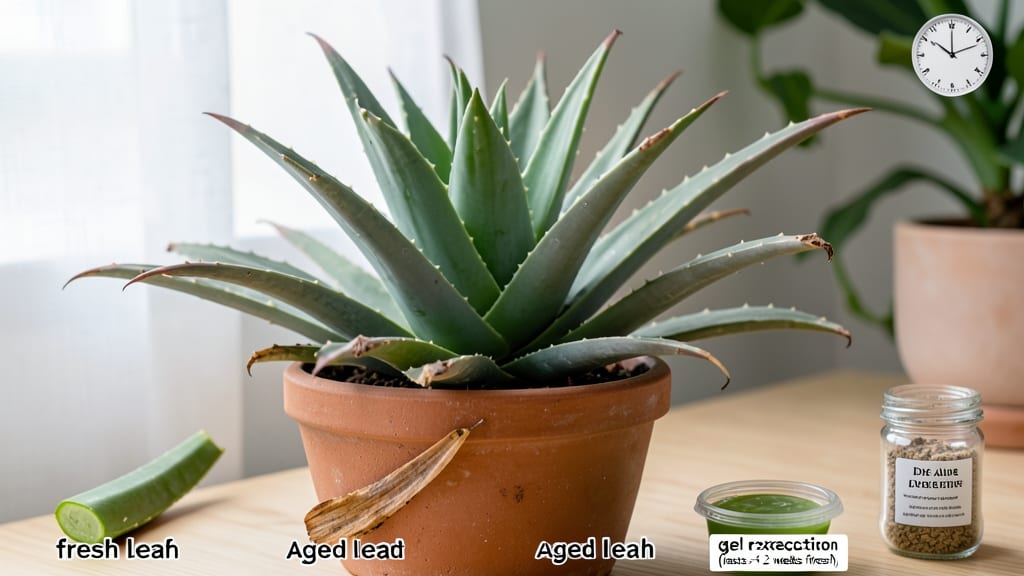
An uncut aloe leaf how long does aloe leaf last fresh for 3–5 days at room temperature when kept upright in a cool, dry spot. To maximize its lifespan, store the whole leaf in the fridge for up to 2 weeks or process the gel immediately for peak quality. Cutting too soon causes the gel to dry out and lose its soothing properties.
Aloe leaves degrade due to natural enzyme activity that breaks down their gel over time. 🌱 The longer you wait to harvest the gel, the more the beneficial compounds like vitamins and amino acids diminish.
I’ve noticed that leaves stored horizontally lose moisture faster than those kept upright, which is why vertical storage is key. For best results, refrigerate whole leaves in paper towels to absorb excess moisture and slow down spoilage.
If you’re planning to use the gel quickly, cutting the leaf right before application preserves its potency. The outer leaf acts as a natural barrier—once broken, the gel’s healing properties start degrading within hours.
For long-term storage, freeze the gel in ice cube trays for up to 6 months, though texture may change slightly after thawing.
💡 In This Article
- Why Aloe Leaf Freshness Declines Over Time
- Best Ways to Extend Aloe Leaf Shelf Life
Why aloe leaf freshness declines over time
The aloe leaf’s shelf life shrinks because of a chemical process called oxidation, where the gel’s enzymes react with oxygen in the air. Once you cut the leaf, the clear gel—rich in mucopolysaccharides—begins breaking down within 2-4 hours.
This is why whole leaves last longer: the outer skin acts as a protective barrier, sealing in moisture and nutrients. Without it, the gel’s beneficial compounds like aloesin (a key anti-inflammatory) degrade faster.
Temperature and humidity are the biggest spoilage accelerators. At 70°F or above, enzymes work twice as fast, turning the gel from a soothing gel into a dry, yellowish mass within 24 hours. In contrast, refrigeration (35-40°F) slows enzyme activity by up to 80%, extending freshness.
High humidity causes mold growth on the cut edges, while dry air makes the gel crystallize—both ruin its texture and healing properties.
Moisture loss is another critical factor. Aloe leaves store 95-99% water by weight, and when exposed to air, they dehydrate rapidly. This is why storing leaves upright (like a flower in a vase) preserves moisture better than laying them flat.
The gel’s natural pH (~4.5) also makes it prone to bacterial growth if not handled properly—always use sterile tools when cutting to prevent contamination.
What most people don’t realize is how storage affects the leaf’s medicinal potency. Fresh gel contains 75 active compounds, including vitamins A, C, E, and B12, but these diminish by 30-50% after just 3 days at room temperature.
Refrigeration preserves 70-80% of these compounds for up to 2 weeks, while freezing locks in 90% for months—though texture becomes slightly grainy after thawing.
Here’s what happens chemically: The gel’s polysaccharides (long-chain sugars) start cross-linking when exposed to air, creating a firmer, less spreadable consistency. This is why aloe gel from older leaves feels thicker and less effective.
For maximum benefit, always use gel within 48 hours of cutting—or better yet, store the whole leaf and harvest only when needed.
Pro tip: If you notice the gel turning yellow or developing a sour smell, it’s a sign of fermentation—the sugars have begun converting to alcohol. At this stage, the leaf is no longer safe for topical use. 🌿