
Planting
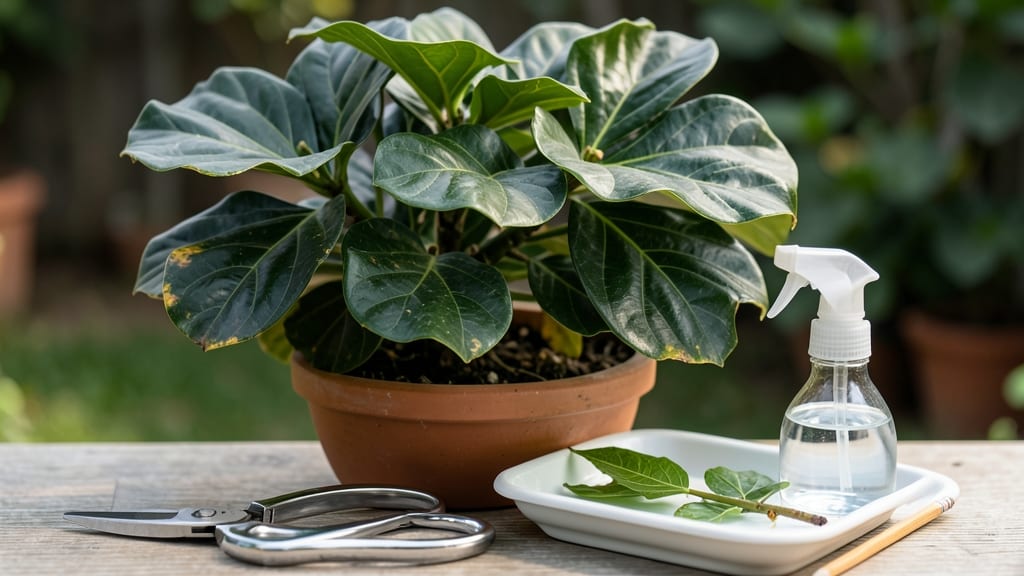
Cutting a fiddle leaf fig isn’t just pruning—it’s the secret to a fuller, healthier plant. ✂️ I’ve turned leggy, sparse stems into lush, bushy trees by mastering the right cuts, and you can too. The key? Timing, clean snips, and knowing exactly where to trim for maximum regrowth.
You’ll need sharp pruning shears, rubbing alcohol (to sterilize cuts), and a little patience. The best time to cut is spring or early summer when the plant’s energy is high.
Focus on removing dead leaves, overcrowded stems, or branches growing away from the center—these cuts encourage new growth where you want it most.
After trimming, wipe cuts with rubbing alcohol to prevent rot, then reduce watering for a week. Within weeks, you’ll see fresh leaves sprouting from the cut stems. That’s your plant’s way of saying “thank you” for giving it new direction.
This method works for shaping, propagation, or reviving a tired plant. Whether you’re trimming to fit a shelf or growing new plants from cuttings, the same principles apply. Let’s get those shears sharp and your fiddle leaf fig thriving!
Root Causes of Overgrowth
Understanding why your fiddle leaf fig (Ficus lyrata) needs a trim is half the battle. Overgrowth isn’t just about aesthetics—it’s often a sign that your plant is struggling to balance its energy, resources, or environment.
Below, we break down the scientific and environmental triggers that push your fiddle leaf fig to outgrow its space (or your patience).
When fiddle leaf figs don’t get enough bright, indirect light, they stretch their stems and leaves in a desperate bid for sunlight.
This phenomenon, called etiolation, causes: - Long, leggy stems (weak, sparse growth) - Smaller, paler leaves (chlorosis from insufficient photosynthesis) - Thinning canopy (energy diverted to reaching light)
Why it happens: Fiddle leaf figs are tropical plants that evolved under dappled canopy light (think forest understory). When deprived, they prioritize vertical growth over bushiness. Without intervention, the plant becomes top-heavy and structurally unstable.
Actionable clue: If new leaves are half the size of mature ones or stems are bare between nodes, light deprivation is likely the culprit.
While fiddle leaf figs love moisture, soggy soil triggers two major growth issues: 1. Root Rot (Phytophthora spp.) – Fungal/bacterial infections block nutrient uptake, forcing the plant to produce new, weak shoots to compensate.
- Oxygen Deprivation – Compacted or waterlogged soil starves roots of aeration, slowing growth and causing stunted, yellowing leaves.
Why it happens:
- Slow-draining pots trap excess water, creating anaerobic conditions.
- Overzealous watering (especially in winter) overwhelms the plant’s transpiration rate.
- Lack of drainage holes turns the pot into a swamp.
Actionable clue: If the soil smells musty, leaves feel mushy, or growth is spindly with yellow patches, root stress is likely the issue.
Fiddle leaf figs thrive in stable conditions (65–80°F / 18–27°C) with 40–60% humidity.
Deviations trigger defensive growth patterns: - Cold Drafts (below 55°F / 13°C) cause leaf drop and stunted shoots as the plant conserves energy. - Low Humidity (below 40%) leads to crispy leaf edges and slow growth—the plant diverts resources to plumping up leaves instead of branching. - Sudden Heat Spikes (above 90°F / 32°C) stress the plant, resulting in abnormal, fast but weak growth.
Why it happens:
- Heating/AC vents create microclimates that confuse the plant’s growth rhythm.
- Dry indoor air (common in winter) mimics drought, triggering stress-induced branching (but often poorly).
Actionable clue: If new growth is puckered, curled, or grows in one direction (toward a heat source), environmental stress is the likely cause.
Fiddle leaf figs are light feeders—too much fertilizer (especially nitrogen) causes:
- Rapid, weak growth (soft, pale stems prone to snapping).
- Leaf burn (brown tips from salt buildup in soil).
- Root burn (stunted growth as roots reject excess nutrients).
Why it happens:
- Over-fertilizing (more than every 4–6 weeks) overwhelms the plant’s ability to process nutrients.
- Poor-quality soil (lacking organic matter) forces the plant to grow aggressively to access nutrients, leading to unbalanced growth.
Actionable clue: If growth is explosive but floppy, or leaves have brown edges with yellow centers, you’re likely overfeeding.
When roots circle the pot or hit hard edges, they signal distress by:
- Producing long, bare stems (the plant stretches to escape the pot).
- Developing thin, wiry leaves (limited nutrient flow).
- Dropping lower leaves (root pressure disrupts water transport).
Why it happens:
- Underpotting (roots outgrow the container) restricts growth.
- Hard, non-breathable pots (like glazed ceramic) suffocate roots.
- Lack of repotting (every 2–3 years) leads to root-bound stress.
Actionable clue: If you see roots growing out of drainage holes or the plant leans heavily in one direction, it’s time to upgrade its home.
Hidden invaders like spider mites, mealybugs, or fungal leaf spot force fiddle leaf figs to divert energy to defense, resulting in:
- Stunted, deformed leaves (pests sap sap).
- Blackened stems (fungal infections block vascular flow).
- Abnormal growth patterns (e.g., leaves growing in clusters to protect damaged areas).
Why it happens:
- Dry air attracts spider mites, which inject toxins into leaves.
- Overwatering creates ideal conditions for fungal spores (like Cercospora).
- Weakened plants (from other stresses) are easier targets.
Actionable clue: Check undersides of leaves for webbing, cottony masses, or black spots—these are red flags for pests/pathogens.
Before trimming, identify the primary stressor by observing:
- Leaves: Size, color, texture (small/pale = light; crispy = humidity; yellow = overwatering).
- Stems: Length (leggy = light; bare = root-bound).
- Soil: Smell (musty = rot; dry = underwatering).
- Roots: Growth pattern (circling = pot-bound; mushy = rot).
Trim strategically: Cut to encourage bushiness (above leaf nodes) only after addressing the root cause—or you’ll just repeat the cycle!
Quick Fixes for Fiddle Leaf Fig Trimming
When your fiddle leaf fig (Ficus lyrata) needs a trim, acting fast can make all the difference between a sad, leggy plant and a lush, thriving beauty. Below, we’ve mapped out the most common issues—from yellowing leaves to overgrowth—and paired them with simple, step-by-step solutions.
Plus, we’ll share pro tips to keep your plant healthy long after the snips! 🌿✂️
Cause: Overwatering, underwatering, or disease (like root rot or fungal spots). Fix:
- Identify the culprit: Check the soil moisture (stick your finger in—if it’s soggy, you’re overwatering; if dry, it’s thirsty).
- Snip strategically:
- Yellow leaves? Cut them at the base with clean, sharp scissors or pruning shears.
- Brown, crispy edges? Trim the damaged leaf entirely—don’t leave stubs.
- Disinfect tools: Wipe blades with rubbing alcohol between cuts to prevent spreading disease.
Prevention Tips:
- Water wisely: Let the top 2 inches of soil dry out between waterings. 💧
- Boost airflow: Space plants apart to reduce humidity-related fungal risks.
- Fertilize lightly: Over-fertilizing burns roots—stick to a balanced liquid fertilizer every 6–8 weeks.
Cause: Lack of light, over-pruning, or not pinching back young stems. Fix:
- Find the “growth points”: Look for nodes (the bumps where leaves emerge). These are where new branches sprout!
- Make the cut:
- For leggy stems: Trim just above a node at a 45° angle to encourage branching. Aim for the lowest possible node to keep the plant compact.
- For sparse tops: Cut back the tallest stems by 1/3 to prompt bushier regrowth.
- Propagate cuttings: Place trimmings in water to root and grow new plants! (Bonus: free figs!)
Prevention Tips:
- Rotate your plant weekly to ensure even light exposure. ☀️
- Pinch early: When your fig is young (under 12 inches), pinch off the top 2 inches to encourage side shoots.
- Boost light: Move it near a bright, indirect window (no direct sun—it’ll scorch!).
Cause: Too many stems competing for nutrients or roots circling the pot. Fix:
- Assess the pot: If roots are peeking out or the plant looks cramped, it’s time to upgrade!
- Trim the thickest stems:
- Focus on the oldest, thickest stems—these take up the most space.
- Cut back to a healthy node, leaving at least 2–3 leaves per stem.
- Repot carefully:
- Choose a pot 2 inches wider than the current one.
- Loosen roots and trim any circling roots with sterilized shears.
Prevention Tips:
- Repot every 2–3 years or when roots fill the pot. 🏺
- Prune regularly: Trim 1–2 stems annually to maintain shape and airflow.
- Avoid over-potting: A pot that’s too big will hold excess moisture, risking root rot.
Cause: Stress from temperature changes, drafts, or sudden light shifts. Fix:
- Ease the transition: Move your plant gradually to its new spot (e.g., 1 hour more light per day over a week).
- Trim lightly:
- Remove only the most damaged leaves—don’t over-prune, as this adds stress.
- Focus on new growth to redirect energy.
- Monitor conditions:
- Keep temps between 65–85°F and away from AC vents or cold drafts.
Prevention Tips:
- Acclimate plants before big moves (e.g., test the new spot for a few days first).
- Use grow lights if natural light is lacking (LED bulbs work great!). 💡
- Mist leaves lightly to boost humidity (but avoid soggy soil).
Cause: Fiddle leaf figs “bleed” latex sap when cut—it’s normal but can attract pests. Fix:
- Wipe the cut: Use a damp paper towel to clean sap from the stem.
- Apply cinnamon powder (a natural fungicide) to the wound to prevent infection.
- Let it heal: Avoid watering the cut for 24 hours.
Prevention Tips:
- Trim in dry conditions (morning is best) to minimize sap exposure. 🌞
- Wear gloves if you’re sensitive to latex (it can irritate skin).
- Store cuttings upright in water to prevent sap from clogging new roots.
With these fixes, your fiddle leaf fig will bounce back stronger—and you’ll have the confidence to trim like a pro! Remember, the key is clean cuts, patience, and prevention. Happy pruning! ✨
Frequently asked questions
What’s the best time of year to trim my fiddle leaf fig?
Spring or early summer is ideal—this is when your plant has the most energy for new growth. Avoid trimming in winter when the plant is dormant, as it may struggle to recover. If you must trim in fall, do so lightly to minimize stress.
Can I propagate my fiddle leaf fig from cuttings?
After trimming, place cuttings in water with just the nodes submerged. Change the water every 3-5 days and keep them in bright, indirect light. Roots should appear in 2-4 weeks. Once rooted, transplant to soil.
How do I know if I’m cutting in the right place?
Look for the leaf nodes—those little bumps where leaves grow. Cut just above a node at a 45° angle to encourage new branches. Never cut below a node, or you’ll leave a bare stem that won’t regrow.
Why is my fiddle leaf fig bleeding sap after cutting?
This is normal—fiddle leaf figs produce latex sap when cut. Wipe it away with a damp cloth and apply cinnamon powder to the cut to prevent infection. The bleeding will stop within 10-15 minutes, and the wound will heal in a few days.
How much should I trim off my fiddle leaf fig?
For shaping, never remove more than 1/3 of the plant at once. If reviving a leggy fig, trim back to healthy nodes—this encourages bushier regrowth. Avoid heavy pruning unless absolutely necessary, as it stresses the plant.