
Pests and Diseases
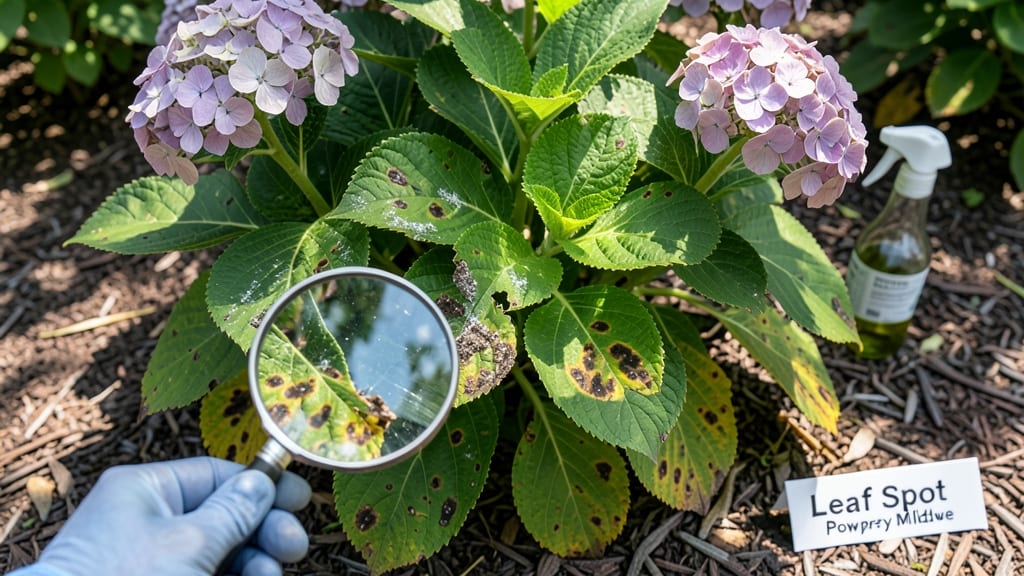
Hydrangea leaf disease turns vibrant blooms into a sad, spotted mess—unless you catch it early. 🌿 I’ve seen powdery mildew turn my blue hydrangeas into ghostly white ghosts, and leaf spot leave them looking like they’ve been peppered with rust.
The good news? Most of these diseases are preventable with the right care, and once you spot the signs, you can stop them before they ruin your bushes.
Diseases like powdery mildew start as white, powdery patches on leaves, while leaf spot shows up as brown or black spots with yellow halos. Bacterial infections often cause leaves to curl or ooze, and if ignored, they’ll spread to stems and flowers.
The causes? Too much moisture, poor airflow, or overwatering—common mistakes even experienced gardeners make.
You can treat mild cases with a mix of neem oil or baking soda spray, but severe infections might need fungicides. Prevention is easier: prune for airflow, water at the base (not overhead), and pick up fallen leaves. With these steps, your hydrangeas will stay lush and disease-free all season.
Whether you’re dealing with a single bush or a whole garden, early action is key. The sooner you act, the sooner your hydrangeas bounce back—ready to put on their best show next year.
Root Causes Behind Leaf Troubles
Hydrangeas are stunning, but their leaves can quickly turn from lush green to a sad, spotted mess—often due to hidden triggers lurking in your garden. Understanding why these diseases strike is the first step to stopping them.
Below, we break down the science behind the most common culprits, so you can address the real problem, not just the symptoms.
Fungi are the #1 cause of hydrangea leaf disease, thriving in moist, warm conditions. These microscopic organisms release spores that land on leaves, where they germinate and feed on plant tissue. Here’s how they exploit your hydrangeas:
- Excess Moisture: Fungi like Botrytis (gray mold) and Phytophthora (root rot) love damp leaves—especially when water sits on foliage for hours (like after rain or overhead watering). Pro tip: 🌡️ Aim for morning watering so leaves dry by evening.
- Poor Airflow: Dense hydrangea bushes block circulation, trapping humidity. Fungal spores spread faster in stagnant air. Action step: Prune to open up the center and space plants 3–4 feet apart.
- Stress from Overwatering: Soggy soil weakens roots, making hydrangeas more susceptible to Septoria leaf spot. Look for yellowing between veins—a classic sign.
🔍 How to spot it: Dark, irregular spots with yellow halos (early stages) or gray fuzzy growth (advanced).
Unlike fungi, bacteria multiply rapidly in wet conditions, often introduced via contaminated tools, splashing water, or even wounded leaves. The most common offender? Pseudomonas syringae, which causes:
- Water-Soaked Spots: Tiny, greasy-looking lesions that turn brown and ooze bacterial slime when wet. Warning: These spots can merge, killing entire leaves.
- Edge Burn: Leaves develop brown, crispy margins (like they’ve been scorched), a hallmark of bacterial infection.
- Systemic Spread: Bacteria can move into stems, causing wilting or dieback in severe cases.
💡 Key trigger: Overhead irrigation or rain splashing from lower leaves to upper ones. Fix: Use a soaker hose or drip system to keep foliage dry.
Pests like aphids, spider mites, and Japanese beetles don’t cause disease directly—but their feeding weakens leaves, making hydrangeas vulnerable to secondary infections. Here’s how:
- Aphids: Their sticky honeydew attracts sooty mold fungi, which coat leaves in black, powdery growth. Spot it: Curled leaves + white flies.
- Spider Mites: They puncture cells, causing stippling (tiny white/yellow dots). Stressed leaves can’t fight off powdery mildew afterward.
- Beetles/Chewing Insects: Ragged holes create entry points for bacteria and fungi. Solution: 🔪 Prune damaged leaves immediately and treat with neem oil.
🛡️ Prevention tip: Inspect undersides of leaves weekly—pests start there!
Hydrangeas are tough, but extreme conditions can trigger leaf diseases by weakening their defenses. Common stressors include:
| Stressor | Disease Link | How to Fix |
|---|---|---|
| Heatwaves (above 90°F) | Sun scorch mimics disease; leaves become crispy-edged and prone to fungal entry. | Provide afternoon shade with light fabric row covers. |
| Poor Drainage (compacted or clay soil) | Root rot (Phytophthora) spreads upward, causing yellowing and wilting. | Amend soil with compost + perlite; raise beds if needed. |
| Nutrient Deficiencies (lack of magnesium/iron) | Weakened leaves can’t resist powdery mildew or anthracnose. | Test soil and add Epsom salt (magnesium) or chelated iron. |
✨ Pro move: Mulch with 3 inches of pine bark to regulate soil temp and retain moisture without suffocating roots.
Now that you know the why, the next step is targeted fixes—but the best cure starts with cutting off the problem at its source. 🌿
Revive your hydrangeas fast
Reviving your hydrangeas starts with identifying the root cause of their leaf troubles—whether it’s fungal infections, pests, or environmental stress. Below are practical, step-by-step solutions tailored to the most common issues, plus prevention tips to keep your plants thriving. Let’s get those lush leaves back in action!
Fungal diseases thrive in damp, shaded conditions. Act fast to stop the spread!
🔥 Step 1: Prune Infected Leaves
- Use sterilized pruners (wipe with rubbing alcohol) to remove all yellow, brown, or spotted leaves.
- Dispose of them in the trash—do not compost—to prevent reinfection.
- Thin out dense foliage to improve airflow (fungi love crowded, humid spots).
🍳 Step 2: Apply Fungicide
Choose one of these options: - Store-bought fungicide: Use a copper-based or neem oil spray (follow label instructions).
Reapply every 7–10 days until new growth appears. - DIY baking soda spray: Mix 1 tsp baking soda + 1 tsp vegetable oil + 1 tsp mild soap + 1 gallon water.
Spray early in the morning (avoid direct sunlight—it can burn leaves). - Hydrogen peroxide spray: Combine 1 tbsp 3% hydrogen peroxide + 1 quart water. Spray every 5 days for 2–3 weeks.
🌡️ Step 3: Adjust Growing Conditions Fungi love moisture and shade.
Break the cycle with these tweaks: - Water in the morning (not at night) to allow leaves to dry quickly. - Space plants 2–3 feet apart for better airflow. - Avoid overhead watering—use a soaker hose or drip irrigation instead. - Prune nearby trees/shrubs to increase sunlight (hydrangeas need 4–6 hours of sun).
✨ Prevention Tip
- Mulch properly: Use 2–3 inches of organic mulch (like shredded bark) but keep it 6 inches away from the stem to prevent rot.
- Rotate fungicides if the problem persists—fungi can build resistance.
Pests like aphids, spider mites, or scale insects weaken hydrangeas, making them susceptible to secondary infections.
👨🍳 Step 1: Blast Off Pests with Water
- Aphids & spider mites: Spray leaves forcefully with water from a hose to knock them off. Repeat every 2–3 days for a week.
- Scale insects: Scrape them off with a soft brush dipped in soapy water.
🔪 Step 2: Use Insecticidal Soap or Neem Oil
- Mix: 1 tbsp insecticidal soap or neem oil + 1 quart water + a drop of dish soap (helps it stick).
- Spray thoroughly (top and bottom of leaves) every 5–7 days until pests are gone.
- Repeat if new pests appear.
🌿 Step 3: Introduce Beneficial Insects
- Ladybugs (eat aphids) or lacewings (devour spider mites) can be purchased online or from garden centers.
- Plant companion flowers like marigolds or alyssum to attract predatory insects.
🎯 Prevention Tip
- Inspect new plants before bringing them home—quarantine them for a week.
- Remove weeds (they harbor pests) and clean up fallen leaves regularly.
If leaves are crispy, wilted, or bleached, your hydrangea may be suffering from heat stress, overwatering, or nutrient deficiency.
💧 Step 1: Check Watering Habits
- Underwatering: Leaves turn crispy and brown at the edges. Water deeply (1–2 inches per week) and mulch to retain moisture.
- Overwatering: Leaves yellow and wilt. Let the top 1–2 inches of soil dry out before watering again.
📊 Step 2: Feed for Recovery
- Fertilize lightly with a balanced, slow-release fertilizer (10-10-10 or 20-20-20). Follow package instructions—too much can burn roots!
- For yellow leaves (nitrogen deficiency): Use a fish emulsion or compost tea for a gentle boost.
🌿 Step 3: Adjust Light & Shelter
- If in full sun: Provide afternoon shade (use a shade cloth if needed).
- If in shade: Gradually introduce more sunlight (hydrangeas need partial shade, not deep shade).
- Protect from wind: Use a windbreak (like a fence or burlap screen) if your garden is exposed.
🔥 Prevention Tip
- Test your soil (pH should be 5.2–6.0 for most hydrangeas). Use sulfur to lower pH or lime to raise it if needed.
Once your hydrangea is on the mend, keep it thriving with these easy maintenance habits:
- Prune in late winter/early spring (remove dead wood and shape the plant).
- Monitor regularly—catch issues early before they spread!
- Rotate crops if growing hydrangeas in containers (prevents soil-borne diseases).
Remember: Patience is key! Some diseases take 2–4 weeks to fully clear up. With the right care, your hydrangeas will bounce back—and next season, they’ll be disease-resistant superstars! 🌸💪
Frequently asked questions
What are the first signs my hydrangeas have a leaf disease?
Watch for white powdery patches (powdery mildew), dark spots with yellow halos (leaf spot), or greasy brown lesions that ooze (bacterial infections). Check both leaf surfaces and stems—early detection is key to stopping spread.
Can I save my hydrangeas if half the leaves are already infected?
Yes! Immediately prune all diseased leaves (sterilize tools first), then apply a fungicide like neem oil or copper spray. Adjust care by watering at the base and improving airflow. Severe cases may need 2-4 weeks of consistent treatment.
Why does my hydrangea get diseases every year?
Recurring issues usually stem from poor airflow (overcrowded plants), overhead watering, or compromised soil drainage. Prune for spacing, switch to soaker hoses, and test soil pH (5.2-6.0 ideal). Mulch properly to prevent fungal spores from overwintering.
Is it safe to use baking soda spray on hydrangeas?
Mix 1 tsp baking soda + 1 tsp oil + 1 tsp soap + 1 gallon water and spray early morning (avoid direct sun). It works best for powdery mildew and leaf spot. Reapply every 7-10 days until new growth appears. Test on a small area first.
How do I know if my hydrangea's problems are from disease or pests?
Diseases show as spots, powder, or mold, while pests leave holes, webbing, or sticky residue (honeydew). Check leaf undersides—pests like aphids or mites hide there. Use a magnifying glass if needed. Treat accordingly: fungicide for diseases, soapy water for pests.