
Pests and Diseases
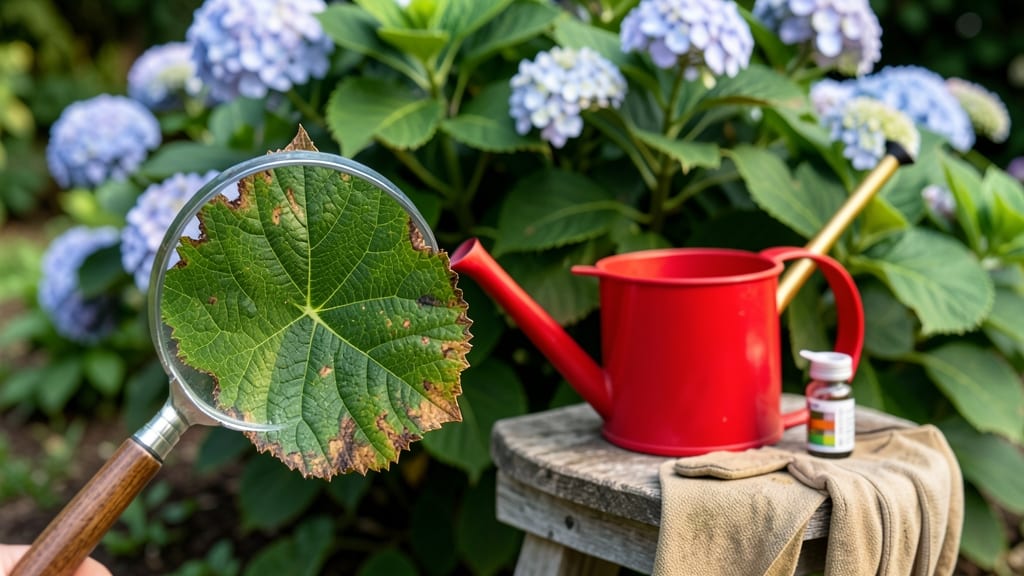
Your hydrangeas’ hydrangea leaf scorch—those crispy, brown-edged leaves—screams for help, but copper spray can revive them in just 72 hours. 🌿 I’ve nursed back more scorched hydrangeas than I’d like to admit, and this foolproof method works even when other treatments fail.
The key? Stopping the fungal spread while giving roots the right conditions to bounce back.
Leaf scorch usually starts with overwatering or hot, dry winds stressing plants, then a fungal infection moves in like a thief in the night. You’ll spot it as crispy edges on otherwise green leaves, often paired with blackened stems.
The good news? Copper spray (organic or fungicide-based) disrupts the fungus’s party while pruning dead growth gives your plant a fighting chance.
Within 72 hours, you’ll see new growth pushing through if you combine copper spray with morning watering (never overhead in heat) and a mulch layer to retain moisture.
The secret weapon? A second application 7 days later to lock in protection. Your hydrangeas won’t just survive—they’ll rebound with vibrant green leaves and those showstopping blooms you love.
Works for all hydrangea types, from bigleaf to panicle, and even saves struggling shrubs in containers. The trick is acting fast—once the fungus takes hold, it’s harder to reverse. Let’s get those leaves lush again!
Root Causes Of Leaf Damage
Hydrangeas are prized for their lush foliage and vibrant blooms, but leaf scorch can turn their leaves into crispy, brown-edged messes—often overnight. Understanding the why behind this distress is the first step to saving your plants. Below, we break down the primary culprits and the science behind their damage.
Hydrangeas thrive in moderate climates**, but sudden shifts—especially hot, dry winds or freezing nights—can trigger leaf scorch. Here’s how it works:
- Transpiration Overload: When temperatures soar during the day, hydrangeas lose moisture rapidly through their leaves. If roots can’t absorb water fast enough (due to dry soil or heat stress), cells plasmolyze—their membranes shrink away from cell walls, causing edges to brown and crisp.
- Cold Stress: Overnight freezes (<32°F/0°C) can rupture cell walls, leading to necrosis (dead tissue). This is especially true for Bigleaf hydrangeas (Hydrangea macrophylla), which are less cold-hardy.
- Windburn: Fast-moving air desiccates leaves by stripping their protective waxy cuticle. Think of it like sunburn for plants—the edges dry out first.
Pro Tip: 🌡️ Monitor your microclimate. Use a soil thermometer to track root-zone temps (ideal: 60–75°F/15–24°C) and mulch heavily (3–4 inches of shredded bark or straw) to insulate roots.
Hydrangeas are thirsty but hate soggy roots. Both extremes disrupt their osmotic balance, leading to scorch:
- Underwatering: When soil dries out, roots can’t supply water to leaves fast enough. Cells lose turgor pressure (become flaccid), and margins curl and brown from oxidative stress (a buildup of harmful free radicals).
- Overwatering: Compacted, waterlogged soil cuts off oxygen to roots, causing root rot (Pythium or Phytophthora). The plant can’t absorb nutrients or water, leading to chlorosis (yellowing) and scorch as leaves starve.
- Inconsistent Watering: Hydrangeas hate drought cycles. Even brief dry spells can disrupt their vascular system, causing xylem blockages that prevent water transport.
Actionable Fix: 💡 Water deeply 2–3 times per week (1–1.5 inches per session) and improve drainage with raised beds or perlite. Drip irrigation (not overhead sprinklers) keeps foliage dry and roots hydrated.
Hydrangeas are partial-shade lovers, and too much direct sun—especially in hot, dry climates—triggers photooxidative stress:
- UV Damage: Intense sunlight breaks down chlorophyll, causing bleaching and brown, papery edges. This is common in late afternoon sun, when temperatures peak.
- Heat Stress Proteins: Plants produce heat shock proteins (HSPs) to protect cells, but if the stress is prolonged, these proteins fail, leading to membrane damage and scorch.
- Reflective Heat: Light-colored surfaces (driveways, fences) can amplify heat, acting like a greenhouse and cooking leaves from below.
Shade Solutions: ✨ Provide afternoon shade (3–4 hours) with lattice screens or taller plants. For container hydrangeas, move them to dappled light spots during peak sun (10 AM–4 PM).
While leaf scorch is often environmental, pathogens can mimic its symptoms. The most common offenders:
| Pathogen | How It Causes Scorch | Key Differences |
|---|---|---|
| Cercospora Leaf Spot (Fungus) | Clogs stomata (leaf pores), reducing water uptake and causing brown, angular spots with yellow halos. | Spots spread inward; scorch starts at edges. |
| Pseudomonas Bacteria | Releases toxins that disrupt cell membranes, leading to water-soaked patches that turn brown and crispy. | Often oozes yellow/brown gunk; spreads rapidly in humid weather. |
| Root Rot (Pythium/Phytophthora) | Roots decay, starving the plant of water/nutrients, causing uniform browning from the bottom up. | Leaves wilt first; soil smells rotten. |
Prevention: 🔥 Remove infected leaves immediately and sterilize pruners with 70% alcohol. For fungal issues, apply copper fungicide (like the one in this article!) every 7–10 days during humid seasons.
Next Step: Now that you know the why, it’s time to diagnose your hydrangea’s specific stressor. Check for these red flags to pinpoint the exact issue before treating it.
Revive Your Hydrangeas Fast
Your hydrangeas are showing signs of stress—brown, crispy edges or entire leaves turning brittle? Don’t panic! With the right approach, you can nurse them back to health in just 72 hours. The key is identifying the root cause (or causes) and acting swiftly.
Below, we’ve mapped out practical fixes for the most common triggers of leaf scorch, plus prevention tips to keep your plants thriving.
If your hydrangeas are battling a pathogen like Botrytis or Pseudomonas, copper-based fungicides are your best friend. These sprays create a protective barrier while attacking the infection.
🍳 Step-by-Step Revival Plan
- Choose Your Weapon 🛡️
- Use a copper fungicide (like Copper Sulfate or Copper Hydroxide).
- Opt for a ready-to-spray formula (e.g., Bonide Copper Fungicide) for convenience.
- Timing Is Everything ⏰
- Apply the spray early in the morning or late afternoon to avoid leaf burn from direct sunlight.
- Spray every 7–10 days until the scorch stops spreading (usually 2–3 treatments).
- Cover All Bases 🌿
- Focus on both the tops and undersides of leaves, stems, and buds.
- If the soil is infected, consider a soil drench with copper fungicide (follow label instructions).
- Support Recovery 🌱
- Prune affected leaves (but avoid cutting into healthy tissue).
- Improve airflow by spacing plants 18–24 inches apart and removing debris.
💡 Pro Tip:
Mix it up! Alternate copper sprays with a neem oil solution (1 tsp neem oil + 1 quart water + a drop of dish soap) every other treatment to prevent resistance.
If your hydrangeas are wilting or scorching in hot, dry weather, they need immediate hydration and shade relief.
👨🍳 Quick Cool-Down Solutions
- Deep Watering 💦
- Water slowly and deeply (1–2 inches per week) to encourage root growth.
- Use drip irrigation or soaker hoses to avoid wetting leaves (which can worsen fungal risk).
- Mulch Like a Pro 🌿
- Apply 2–3 inches of organic mulch (shredded bark or straw) to retain moisture and cool roots.
- Shade Break 🌳
- Provide afternoon shade (1–3 PM) with a lightweight shade cloth (30–50% coverage).
- Move potted hydrangeas to a shadier spot temporarily.
- Foliar Spray Boost 💧
- Mist leaves lightly in the morning to raise humidity (but avoid evening misting to prevent fungal growth).
🎯 Prevention for Next Season
- Choose heat-tolerant varieties like ‘Endless Summer’ or ‘Limelight’.
- Plant in partial shade (morning sun, afternoon shade is ideal).
- Avoid overhead watering during peak sun hours.
Tiny pests like aphids or spider mites can suck the life out of hydrangea leaves, leaving them crispy and brown.
🔪 Pest Eradication Guide
- Blast Them Off 💦
- Spray leaves with a strong stream of water to knock off aphids and mites.
- Soap It Up 🧼
- Mix 1 tbsp mild castile soap + 1 quart water and spray directly on pests.
- Reapply every 3–5 days until gone.
- Introduce Beneficial Insects 🐞
- Release ladybugs or lacewings (available at garden centers) to eat the pests naturally.
- Neem Oil Barrier 🌿
- Spray a neem oil solution (1 tsp neem oil + 1 quart water + 1 tsp soap) to disrupt pest life cycles.
✨ Long-Term Pest Control
- Encourage natural predators by planting marigolds, dill, or fennel nearby.
- Inspect plants weekly during growing season for early signs of infestation.
Poor drainage or over/under-watering can lead to leaf scorch by stressing the plant.
💧 Soil & Water Fixes
- Test Your Soil 🌍
- Ensure pH is 5.2–6.0 (hydrangeas love slightly acidic soil).
- Amend with peat moss or sulfur if needed.
- Improve Drainage 🚿
- If soil is compacted, mix in perlite or compost to aerate.
- Avoid soggy soil—hydrangeas hate “wet feet.”
- Water Smartly 💧
- Water at the base (not leaves) to prevent fungal spread.
- Check soil moisture—stick your finger 1–2 inches deep; if dry, water thoroughly.
💪 Fertilizer Tweaks
- Avoid high-nitrogen fertilizers (they promote leafy growth at the expense of roots).
- Use a balanced formula (10-10-10) or hydrangea-specific food in early spring.
With these targeted fixes, your hydrangeas should show visible improvement within 72 hours—and with consistent care, they’ll bounce back stronger than ever. 🌸 Keep an eye on them, adjust as needed, and soon you’ll be admiring lush, scorch-free blooms!
Frequently asked questions about hydrangea leaf scorch
Why do hydrangea leaves turn crispy only at the edges?
This classic leaf scorch pattern happens when roots can't supply enough water to leaf edges during stress. Common triggers include hot winds, overwatering (which causes root rot), or salt buildup from poor-quality water. The center stays green because the plant prioritizes water to core tissues first.
Can I save my hydrangea if the scorch has spread to most leaves?
Yes, but act fast! Prune all crispy leaves back to healthy green tissue and apply copper fungicide immediately. For severe cases, combine with deep watering (1–2 inches per week) and afternoon shade. New growth should appear within 7–10 days if roots are healthy.
Is leaf scorch contagious to other plants?
Not usually—it's rarely contagious unless caused by fungal infections like Cercospora or bacterial leaf spot. To prevent spread, sterilize pruners with rubbing alcohol between plants, remove infected leaves immediately, and avoid overhead watering (which splashes spores).
How often should I apply copper spray for prevention?
For prevention, apply copper fungicide every 2–3 weeks during humid seasons (spring to fall). For active infections, spray weekly until new growth appears, then switch to monthly maintenance. Always apply in the early morning or evening to avoid leaf burn from sunlight.
Will pruning scorched leaves help my hydrangea recover faster?
Pruning removes dead tissue that can harbor pathogens and improves airflow. Cut back to the nearest healthy leaf node (where green tissue meets the stem) and dispose of clippings in the trash—not compost. This redirects the plant's energy to new growth.