
Pests and Diseases
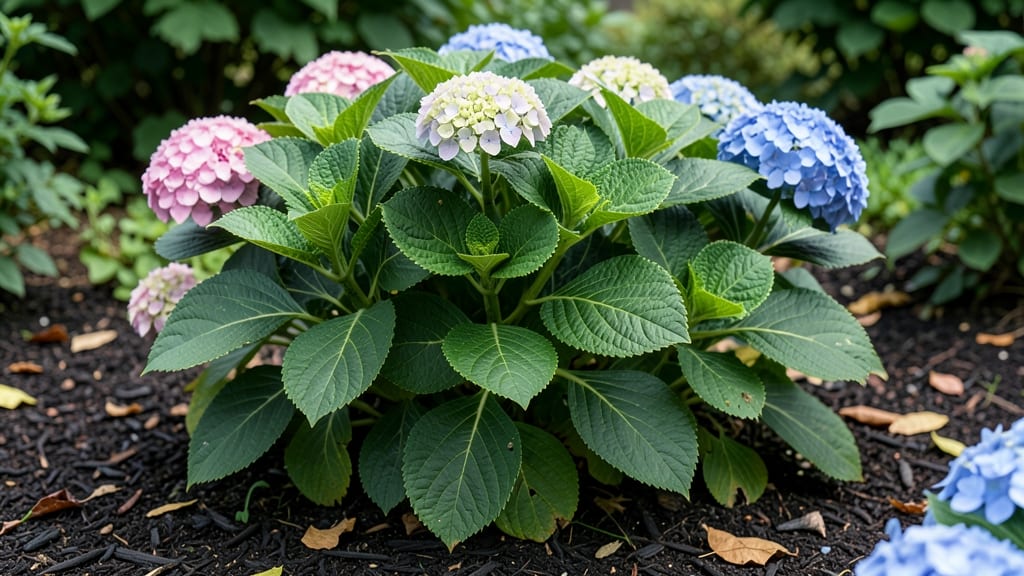
That first glimpse of a lush hydrangea bush can become a game of identifying hydrangea by leaf—especially when you're staring at nothing but the foliage. 🌿 I've spent years untangling hydrangea mysteries, and the leaf is where it all starts—shape, edges, and even the way it feels between your fingers tell you exactly which variety you're dealing with.
Start with the basics: bigleaf hydrangeas (Hydrangea macrophylla) have oval, slightly pointed leaves with serrated edges and a deep green hue that turns bronze in fall. Panicle hydrangeas (H. paniculata) show up with longer, lance-shaped leaves that feel almost papery to the touch.
The key? Hold the leaf up to the light—hydrangea veins are prominent but not chaotic, unlike oak leaves that look like they've been drawn by a child with a shaky hand.
You'll spot the differences in seconds once you know what to look for: bigleaf leaves are rounded with a heart shape, while panicle leaves stretch out like a football.
Even the leaf undersides give clues—bigleaf hydrangeas often have a slightly fuzzy texture, while panicle types stay smooth. That's how I tell them apart when the flowers haven't bloomed yet.
Seasonal changes throw a curveball, but the leaf structure stays true. Early spring leaves might look soft and pale, while summer brings that bold, glossy look gardeners love.
The edges stay serrated year-round, though, making them easy to spot even when the bush is dormant. Now you'll never second-guess your hydrangea again.
Understanding Leaf Variations
Hydrangea leaves can vary dramatically in shape, edge, and color—not just between species but even within the same plant due to environmental or biological factors. If you’re struggling to identify hydrangea by leaf, these differences often stem from specific causes rooted in science.
Below, we break down why your hydrangea’s foliage might look the way it does, helping you decode its true identity.
Hydrangeas belong to the Hydrangea genus, which includes over 70 species, each with distinct leaf traits. For example:
- Smooth hydrangea (H. arborescens): Leaves are elliptical with serrated edges and a matte texture, often turning a dull bronze in fall.
- Oakleaf hydrangea (H. quercifolia): Leaves are deeply lobed like oak leaves, with a shiny green top and fuzzy underside.
- Panicle hydrangea (H. paniculata): Leaves are oval with pointed tips and smooth edges, sometimes developing a reddish tint in autumn.
These variations are hardwired into their DNA. If your hydrangea’s leaves don’t match a common type, it could be a hybrid or a less common species like H. petiolaris (climbing hydrangea), whose leaves are small, heart-shaped, and glossy.
Leaves react to their surroundings like a mood ring. Extreme conditions can alter their appearance, making identification tricky. Here’s how:
| Factor | Leaf Reaction | How to Spot It |
|---|---|---|
| 🔥 Heat Stress | Leaves may curl, yellow, or develop brown edges due to water loss. | Check for crispy leaf margins or drooping—common in H. macrophylla (mophead) in summer. |
| ❄️ Cold Damage | Leaves can turn purple, black, or mushy if frost hits tender varieties. | Look for irregular brown patches or leathery texture (signs of winter burn). |
| ☀️ Sun Scorch | Leaves develop bleached or white patches on sun-exposed sides. | Common in H. paniculata planted in full sun without acclimation. |
| 💧 Over/Under Watering |
|
Check soil moisture—hydrangeas like H. macrophylla hate soggy roots. |
Pro Tip: 💡 If your hydrangea’s leaves look unusually distorted (e.g., puckered or stunted), it’s likely reacting to its environment—not its true species traits.
Diseases and insects can mimic natural leaf variations, leading to misidentification. Here’s how to tell the difference:
- 🐜 Hydrangea Sawfly (Larvae):
- Leaves develop chewed, lace-like holes or skeletonized edges.
- Look for green, worm-like larvae on undersides.
- 🍄 Powdery Mildew:
- Leaves get covered in white, powdery spots, often on H. macrophylla in humid climates.
- Undersides may appear grayish and velvety.
- 🟣 Leaf Spot Fungi:
- Dark spots with yellow halos (common in H. serrata).
- Leaves may prematurely drop.
- 🐛 Scale Insects:
- Leaves turn sticky (honeydew) with black sooty mold buildup.
- Check for small, brown bumps on stems/leaves.
Key Difference: 🎯 Pest/disease damage is usually uneven across the plant, while genetic traits are consistent. If only a few leaves are affected, it’s likely an infestation—not your hydrangea’s true identity.
By separating genetic traits from environmental or biological stressors, you’ll sharpen your ability to identify hydrangea by leaf with confidence. Next, we’ll explore how to cross-reference these clues with flower and stem characteristics for foolproof ID!
Quick Fixes for Leaf Troubles
When your hydrangea’s leaves start sending distress signals—whether through discoloration, spots, or strange shapes—acting fast can save your plant. Below are practical, step-by-step solutions tailored to common leaf issues, plus prevention tips to keep your hydrangeas thriving. No gardening degree required!
Cause: Too much water, poor drainage, or lack of essential nutrients (like iron or nitrogen). Fix It:
- 🔥 Check the Soil Stick your finger 2 inches into the soil. If it’s soggy, your hydrangea is drowning. Hydrangeas prefer moist but well-draining soil—amend heavy clay with compost or perlite.
- ⚡ Adjust Watering Habits
- Water deeply 1–2 times per week (depending on climate) instead of daily shallow watering.
- Ensure pots have drainage holes or plant in raised beds to prevent root rot.
- 💡 Boost Nutrients
- Iron deficiency? Sprinkle chelated iron or use an acidic fertilizer (like one for azaleas).
- Nitrogen deficiency? Apply a balanced 10-10-10 fertilizer in early spring.
Prevention Tip: 🌡️ Mulch around the base (2–3 inches of organic mulch) to retain moisture without suffocating roots. Test soil pH—hydrangeas love acidic soil (5.2–6.0).
Cause: Dry soil, fluoride/chlorine in tap water, or harsh winds. Fix It:
- 👨🍳 Hydrate Properly
- Water slowly at the base (avoid wetting leaves to prevent fungal issues).
- Morning watering is best—it reduces evaporation.
- 🌊 Filter or Collect Rainwater If using tap water, let it sit out for 24 hours to evaporate chlorine. For severe salt buildup, flush the soil with distilled water or rainwater.
- 🛡️ Shield from Wind Plant hydrangeas in sheltered spots or use burlap windbreaks if they’re exposed.
Prevention Tip: ✨ Avoid over-fertilizing—too much salt can scorch leaves. Stick to slow-release granules in spring.
Cause: Fungal infections from overhead watering, humidity, or old leaves. Fix It:
- 🔪 Prune Infected Leaves
- Snip off spotted leaves with sterilized pruners (wipe with rubbing alcohol between cuts).
- Remove fallen leaves from the base to stop spores from spreading.
- 🍄 Treat with Fungicide
- Preventative spray: Mix 1 tsp baking soda + 1 quart water + a drop of dish soap. Spray undersides of leaves weekly.
- For severe cases: Use a copper fungicide or neem oil (follow package instructions).
- 🌬️ Improve Airflow
- Space plants 3–4 feet apart to reduce humidity buildup.
- Avoid planting near dense shrubs that trap moisture.
Prevention Tip: 🎯 Water at the base and avoid late-day watering (wet leaves overnight = fungal paradise).
Cause: Hungry pests munching on tender leaves. Fix It:
- 🕵️♂️ Hunt for Culprits
- Slugs/snails? Look for silver slime trails at dawn.
- Caterpillars? Check undersides of leaves for tiny green worms.
- 🛡️ Set Traps or Barriers
- Beer traps: Bury a shallow dish filled with beer near the plant (slugs crawl in and drown).
- Copper tape: Wrap it around pots—slugs get a mild shock and avoid it.
- Handpick caterpillars and drop them in soapy water.
- 💦 Use Natural Repellents
- Diatomaceous earth (food-grade only)—sprinkle around the base (reapply after rain).
- Crushed eggshells or coffee grounds as a deterrent.
Prevention Tip: 🌙 Mulch with sharp materials (like cedar chips) to discourage slugs. Encourage predators like birds or ladybugs with a diverse garden.
Cause: Too much sun, spider mites, or aphids sucking sap. Fix It:
- 🌞 Provide Shade
- If leaves are bleached or curled, move the plant to partial shade (especially in hot afternoons).
- Use shade cloth (30–50%) if relocating isn’t an option.
- 🕸️ Check for Tiny Pests
- Spider mites? Look for fine webbing on undersides.
- Aphids? Spot sticky residue (honeydew) on leaves.
- Blast them off with a strong stream of water, then spray with insecticidal soap.
- 💦 Mist Leaves (Gently)
- Increase humidity with a pebble tray under the pot (fill with water and pebbles).
Prevention Tip: 💡 Prune for airflow—thin out crowded branches to reduce stress.
Final Pro Tip: 📝 Keep a garden journal! Note when issues arise (e.g., after rain, fertilizer, or moving the plant) to spot patterns and act faster next time. Happy hydrangea hunting! 🌿
Frequently asked questions
How do I tell the difference between bigleaf and panicle hydrangea leaves?
Bigleaf hydrangeas (H. macrophylla) have rounded, oval leaves with serrated edges and a slightly fuzzy texture on the underside. Panicle hydrangeas (H. paniculata) feature longer, lance-shaped leaves with smoother edges and a more papery feel. Hold them up to light—the veins in panicle types are more pronounced and parallel.
Can I identify hydrangeas in winter when there are no leaves?
Yes! Look for buds and stems. Bigleaf hydrangeas have plump, rounded buds that form in clusters, while panicle types show longer, cone-shaped buds. Oakleaf hydrangeas (H. quercifolia) have exfoliating bark that peels in papery layers. Check the leaf scars on stems—bigleaf types often have heart-shaped marks.
Why do some hydrangea leaves look different on the same plant?
This usually happens due to sun exposure or nutrient variations. Leaves in full sun may develop smaller, thicker shapes with darker green hues, while shaded leaves stay larger and lighter. Check for consistency in shape—if most leaves match but a few don’t, it’s likely environmental stress, not a different species.
What if my hydrangea leaves look like oak leaves?
That’s likely an oakleaf hydrangea (H. quercifolia)! Its leaves are deeply lobed like oaks but with shiny green tops and fuzzy undersides. Unlike true oak leaves, hydrangea leaves have smooth edges between lobes and prominent veins that don’t branch chaotically. Check the stem attachment—oakleaf hydrangeas have alternate leaf patterns.