
Trees
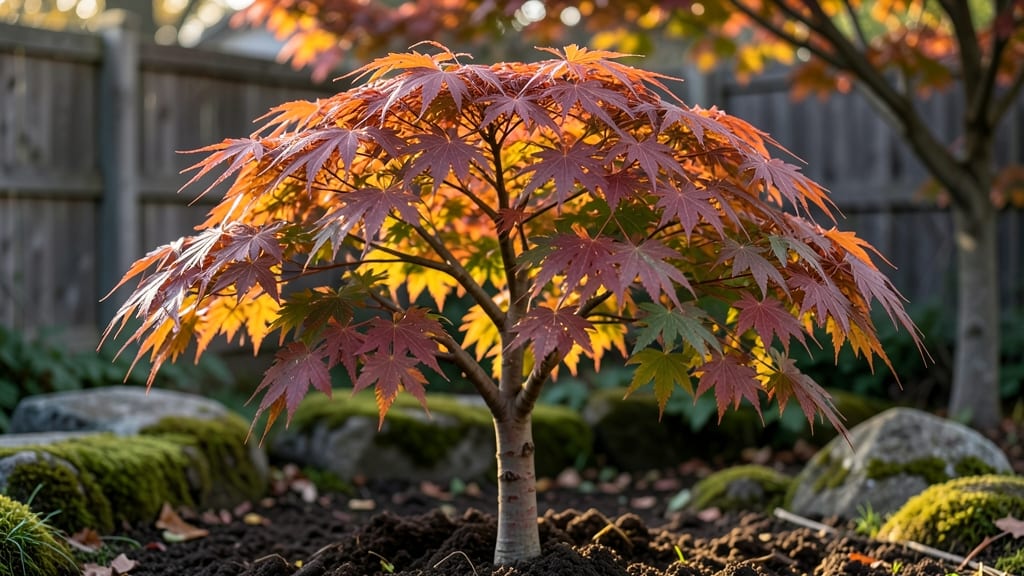
The Japanese maple leaf stands out for its stunning colors, intricate lobes, and delicate veining, with cultivars showcasing everything from deep burgundy to bright green. These trees are beloved for their decorative foliage, perfect for gardens and bonsai, and they thrive in partial shade with consistently moist, well-draining soil.
The Japanese maple leaf's beauty comes from its unique leaf structure and pigment chemistry. 🍁 The lobed edges and fine veins create a lace-like appearance, while anthocyanins (the same compounds in red cabbage) produce those vibrant fall colors.
Unlike many trees, Japanese maples maintain their color year-round—especially in cooler climates—making them a year-round garden star. I've seen 'Bloodgood' varieties stay deep red even in summer, while 'Emperor I' develops stunning orange and yellow hues in autumn.
These trees aren't just pretty—they're adaptable. While they prefer partial shade, they can handle morning sun if protected from harsh afternoon rays. 🌳 The key to keeping their leaves vibrant is consistent moisture; dry soil leads to leaf scorch.
For container growing, I recommend using a mix of 60% organic matter and 40% mineral soil to maintain that perfect moisture balance while preventing root rot.
💡 In This Article
- Japanese Maple Leaf Color Variations and Their Meanings
- Top Japanese Maple Tree Varieties for Home Gardens
Japanese maple leaf color variations and their meanings
The breathtaking colors of Japanese maple leaves—ranging from deep crimson to golden yellow—stem from a fascinating interplay of pigments. The primary players are anthocyanins (responsible for reds and purples) and chlorophyll (greens), with carotenoids (yellows and oranges) playing a supporting role.
Anthocyanins thrive in cooler temperatures, which is why you'll see vibrant reds in fall or during chilly summer days. In cultivars like 'Bloodgood', these pigments dominate year-round, creating that signature deep burgundy hue even in summer. 🔥
Sunlight exposure dramatically alters these colors. Japanese maples grown in full sun often develop more intense hues due to increased anthocyanin production, while those in deep shade may appear paler. The 'Emperor I' variety, for example, transforms from green to fiery orange in autumn when sunlight angles shift.
This seasonal shift occurs because shorter daylight hours trigger pigment changes—chlorophyll breaks down first, revealing the hidden yellows and reds beneath. Even within a single tree, leaf color can vary by branch due to differing light exposure.
The cultural symbolism behind these colors runs deep in Japanese gardens. Red maples represent passion and protection, while yellows symbolize joy and enlightenment. In traditional bonsai cultivation, growers carefully select cultivars based on seasonal color displays to create harmonious garden scenes.
For instance, pairing a 'Shishigashira' (with its striking white bark and green leaves) with a red-foliaged variety creates visual contrast that embodies the Japanese aesthetic of wabi-sabi—finding beauty in imperfection.
Temperature also plays a crucial role in color retention. Most Japanese maples tolerate temperatures down to -15°F, but extreme cold can cause leaf burn, particularly in tender new growth.
The 'Emperor I' variety, for example, maintains its vibrant colors even in Zone 5 winters, while others like 'Osakazuki' may require winter protection in colder climates. This temperature sensitivity explains why Japanese maples often display their most dramatic colors during transitional seasons when nights are cool but days remain mild.
What makes these trees truly special is their ability to maintain color year-round in cooler climates. Unlike deciduous trees that lose all leaves in winter, Japanese maples often keep their foliage—though it may fade slightly in harsh winters.
This persistence is due to their natural adaptation to Japan's humid subtropical climate, where they evolved to handle seasonal changes without complete dormancy. 💫
For gardeners, understanding these color dynamics helps in placement and cultivar selection. A 'Bloodgood' thrives as a focal point in partial shade, while 'Emperor I' shines in spots with morning sun for its autumnal display.
The key is matching the tree's natural tendencies with your climate—cool summers preserve those vibrant hues, while hot, dry conditions can lead to leaf scorch and color fading. This balance between science and art is what makes Japanese maples such prized garden specimens.