
Diseases
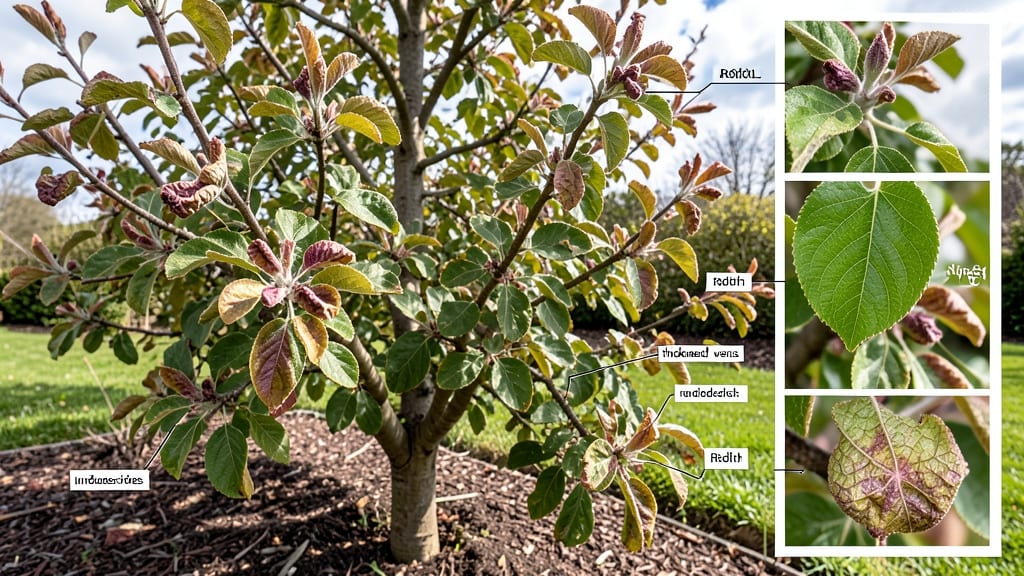
Your apple tree’s leaves curling into tight, crispy spirals isn’t just unsightly—it’s a cry for help. 🍎 Leaf curl diseases (like apple scab or cedar apple rust) twist foliage and weaken fruit production, but catching them early means you can still save your tree with the right treatment plan.
The problem usually starts with fungal spores hitching a ride on wind or rain, then thriving in damp spring weather. You’ll spot red-brown spots on undersides of leaves, distorted new growth, and premature leaf drop—all classic signs your tree is fighting an infection.
The good news? Organic sprays (like copper fungicide) and proper pruning can stop the spread before it ruins your harvest.
With consistent care—removing infected leaves, improving airflow, and applying preventive sprays in early spring—you’ll see healthy, smooth foliage by summer. The key is acting fast; once the disease sets in, it’s harder to reverse. Your tree can bounce back stronger than ever with the right approach.
This works for home orchards, backyard trees, and even container-grown apples. Let’s get your tree back to its lush, productive self before next season’s bloom.
Root Causes Of Apple Leaf Curl
Apple leaf curl is a frustrating but preventable disease that strikes when your tree’s defenses are weakened or environmental conditions align just right for fungal invaders. Understanding why it happens is the first step to stopping it in its tracks.
Below, we break down the key culprits—from sneaky pathogens to weather patterns—that turn your lush green foliage into crinkled, stunted messes. 🍃😬
Leaf curl is primarily caused by the fungus Venturia inaequalis, which thrives in moist, cool conditions. Here’s how it hijacks your apple tree:
- Spores spread like wildfire: The fungus releases spores in late summer or fall, which cling to buds, bark crevices, and even fallen leaves. When winter arrives, these spores overwinter (survive dormant) until spring, when they germinate as soon as buds swell.
- Perfect storm for infection: Spores need free moisture (like dew or rain) for 9–16 hours to germinate. If your tree is stressed or young, its resistance drops, and the fungus colonizes new tissue.
- Rapid multiplication: Once inside a bud, the fungus grows aggressively, distorting leaves into thick, curled shapes and blocking nutrient flow. Infected leaves may also develop olive-green to brown spots with dark margins.
Pro Tip: 💡 Venturia inaequalis can also infect fruit, leading to scabby lesions. If you’ve seen both leaf curl and discolored apples, you’re dealing with a full-blown fungal takeover.
Leaf curl doesn’t just appear—it’s often invited by Mother Nature. These weather patterns set the stage:
| Factor | How It Helps the Fungus |
|---|---|
| Cool, Wet Springs (50–60°F) | Spores germinate faster in damp, chilly air. A single 12-hour rain during bud swell can trigger a 90% infection rate. |
| High Humidity (70%+) | Fungal spores stick to buds better in humid air, increasing infection odds. Think of it like Velcro for disease. |
| Late-Fall Rains | Wet leaves in autumn wash spores into the soil or bark, where they hibernate until spring. No dry spell? More spores survive. |
| Sudden Temperature Swings | Fluctuations (e.g., 40°F to 70°F in a week) stress trees, weakening their immune response. Weak trees = easy fungal entry. |
Actionable Tip: ✨ Track your local leaf wetness duration (use a hygrometer or weather app). If buds are swollen and humidity stays high for >9 hours, treat preemptively with copper fungicide.
A healthy apple tree can resist leaf curl, but common management mistakes leave it vulnerable:
- Nutrient deficiencies: Low nitrogen (_N_) or potassium (_K_) weakens cell walls, making leaves easier targets. Yellowing leaves or stunted growth? Your tree’s defenses are down.
- Overwatering or drought stress: Too much water creates soggy soil (fungus loves it), while drought forces trees to prioritize survival over disease resistance.
- Physical damage: Pruning wounds, hail, or animal bites create entry points for spores. Always sterilize tools with 70% isopropyl alcohol to prevent spreading pathogens.
- Crowded or poorly spaced trees: Poor airflow = higher humidity near foliage. Aim for 12–15 feet between trees for better ventilation.
Pro Tip: 🌡️ Test your soil’s pH—leaf curl thrives in acidic soil (pH < 6.0). Amend with lime if needed to raise pH to 6.2–6.8.
Now that you know why leaf curl strikes, the next step is stopping it before it starts. But first—can you spot the early warning signs? 👀🍏
Quick Fixes for Apple Tree Leaf Curl
If your apple tree’s leaves are curling, puckering, or developing unsightly spots, don’t panic—there are practical steps to save your tree and prevent further damage. Below, we’ve mapped out targeted solutions for the most common causes of leaf curl in apple trees, from fungal infections to environmental stressors.
Each fix includes prevention tips to keep your tree healthy long-term.
Fungal leaf curl is the most notorious culprit behind distorted, spotted leaves. If you spot dark brown or black spots with yellow halos, here’s how to tackle it:
🔥 Step 1: Prune Infected Leaves & Branches
- Remove and destroy (do not compost) all severely curled or spotted leaves and small branches.
- When? Prune during dry weather (avoid wet conditions to prevent spore spread).
- Pro Tip: 💡 Use disinfected pruners (wipe with rubbing alcohol between cuts) to avoid cross-contamination.
🍳 Step 2: Apply Fungicide Treatments
- Copper-based fungicides (e.g., copper hydroxide) are organic and effective—spray when buds swell in early spring (before petals appear).
- Synthetic options: Products like Neem oil (for mild cases) or myclobutanil (for severe infections) work well.
- How to apply: Spray thoroughly, covering both leaf surfaces and branches.
Repeat every 10–14 days during wet seasons.
🌡️ Step 3: Improve Air Circulation
- Thin out dense branches to allow sunlight and airflow—fungi thrive in shady, humid conditions.
- Space trees properly (15–20 feet apart) if replanting.
✨ Prevention Tips for Next Year
- Plant resistant varieties (e.g., ‘Liberty,’ ‘Enterprise,’ or ‘Akane’).
- Rake and remove fallen leaves in autumn to eliminate fungal spores.
- Water at the base (avoid overhead sprinkling) to keep foliage dry.
If leaves curl without spots and the tree looks otherwise healthy, the issue might be environmental stress:
💧 Step 1: Adjust Watering Practices
- Deep watering (1–2 inches per week) is better than frequent shallow watering.
- Mulch around the base (2–3 inches of wood chips or straw) to retain moisture and regulate soil temperature.
- Signs of overwatering? Yellowing leaves or soggy soil—adjust immediately.
🌿 Step 2: Check for Nutrient Deficiencies
- Yellowing between veins? Likely iron or nitrogen deficiency.
- Apply iron chelate or composted manure in early spring.
- Purple-tinged leaves? Could be phosphorus deficiency—use a balanced 10-10-10 fertilizer.
- Test your soil (DIY kits from garden centers work) to pinpoint exact needs.
🌡️ Step 3: Protect from Extreme Heat
- Shade cloth (30–50% coverage) can help in scorching summers.
- Avoid pruning in peak heat—stress weakens the tree’s defenses.
🎯 Prevention Tips
- Monitor soil moisture with a moisture meter or finger test.
- Avoid heavy fertilizers in late summer—they encourage new growth vulnerable to frost damage.
- Group trees with similar water needs to simplify care.
Pests like aphids or spider mites can cause curling by sucking sap and injecting toxins. Here’s how to evict them:
🔪 Step 1: Blast Off Pests with Water
- Strong spray from a hose (early morning) dislodges many soft-bodied pests.
- Repeat every 3–4 days for severe infestations.
🍳 Step 2: Use Insecticidal Soap or Neem Oil
- Mix 1 tbsp mild dish soap + 1 tsp neem oil in 1 quart water—spray directly on pests (avoid flowering trees to protect pollinators).
- Reapply after rain (it washes off).
🕷️ Step 3: Introduce Beneficial Insects
- Ladybugs, lacewings, or parasitic wasps eat aphids naturally. Purchase from garden centers.
- Plant companion flowers (e.g., marigolds, dill) to attract them.
💡 Prevention Tips
- Inspect new plants before adding them to your garden.
- Remove weedy growth near the tree—pests hide there.
- Avoid broad-spectrum pesticides (they kill beneficial insects too).
| Action | Timeframe | Expected Result |
|---|---|---|
| Pruning & cleanup | Immediate | Stops spread of disease/pests |
| Fungicide application | 2–4 weeks | New growth appears healthy |
| Soil testing & amending | 4–6 weeks | Stronger root system, greener leaves |
| Pest control | 1–2 weeks | Reduced curling from infestations |
Final Reminder: 🌟 Act fast—early intervention prevents leaf curl from weakening your tree. Most apple trees recover fully with consistent care, so don’t lose hope! If symptoms persist after 2–3 months, consult a local arborist for a tailored plan.
Frequently asked questions
What’s the difference between apple leaf curl and apple scab?
Both are fungal diseases, but they look different. Leaf curl causes leaves to pucker and thicken, often with red-brown spots. Apple scab creates olive-green to black spots with yellow borders on both leaf surfaces. The key difference? Leaf curl attacks buds first (distorting new growth), while scab targets mature leaves and fruit.
Can I still harvest fruit from a tree with leaf curl?
Yes, but monitor closely. If only leaves are curled (no fruit spots), the apples are usually safe to eat. However, if you see scabby lesions on fruit, remove those apples immediately—they may harbor fungal spores. Always wash harvested fruit thoroughly before eating.
How often should I spray fungicide for prevention?
For organic control, apply copper fungicide 3 times: at bud swell (early spring), when petals appear, and after harvest. For chemical sprays like myclobutanil, follow label instructions—typically every 10–14 days during wet seasons. Always spray evening or early morning to reduce plant stress.
Will pruning alone fix leaf curl?
No—pruning removes infected parts but doesn’t stop spores from returning. Combine pruning with fungicide treatments and cultural fixes (like improving airflow). Focus on removing small branches with curled leaves first, then sterilize tools between cuts to prevent spreading spores to healthy tissue.
Are there apple tree varieties resistant to leaf curl?
Yes! Disease-resistant varieties like ‘Liberty,’ ‘Enterprise,’ or ‘Akane’ are bred to tolerate fungal infections. While no variety is 100% immune, these types require fewer fungicide applications and still produce high-quality fruit. Check with local nurseries for varieties suited to your climate.