
Watering
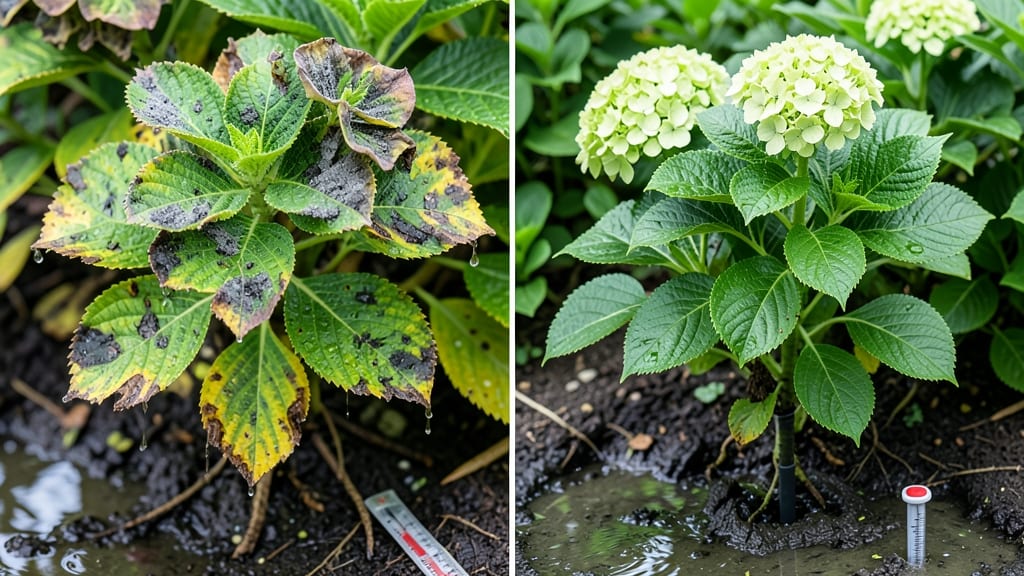
Your hydrangeas are drowning in too much water—check out these too much water pictures of hydrangea leaf problems to spot the issue.
The telltale signs of overwatering are unmistakable: limp, yellowing leaves that feel soggy to the touch, brown edges that crisp like autumn leaves, and stems that ooze when squeezed. I’ve seen this exact mess in my own garden after a week of heavy rain and well-meaning (but overzealous) watering.
The root of the problem? Hydrangeas hate soggy feet. Their roots need air as much as water, and when soil stays waterlogged for days, they suffocate. That’s when the leaves turn yellow, then brown, and the plant starts dropping blooms before they even open.
The good news? Most hydrangeas bounce back fast once you adjust their care.
Within 7-10 days of fixing drainage and watering, you’ll see new green growth pushing through. The key is cutting back on water, improving soil airflow, and pruning the worst-affected stems. Trust me—your hydrangeas will thank you with vibrant blooms by summer.
This works for bigleaf, panicle, and oakleaf varieties alike. Let’s turn those sad leaves into lush, thriving foliage before the season ends.
Root Causes Of Overwatered Hydrangeas
When your hydrangea’s leaves start looking sad—yellowing, wilting, or developing brown edges—it’s often a cry for help from roots drowning in excess moisture. Understanding why this happens is the first step to saving your plant. Let’s break down the science behind overwatering and how it sabotages your hydrangea’s health.
🌱 Poor Soil Drainage Traps Water
Hydrangeas thrive in moist but well-draining soil, but many gardeners unknowingly plant them in heavy clay or compacted soil that acts like a sponge—soaking up water and suffocating roots. When soil stays soggy for days, oxygen can’t reach the roots, leading to:
- Root rot: Fungal pathogens like Phytophthora or Pythium multiply in waterlogged conditions, rotting roots and blocking nutrient uptake. Symptom: Leaves turn yellow or brown, then wilt despite wet soil.
- Nutrient starvation: Roots can’t absorb essential nutrients (like nitrogen or iron) when oxygen is scarce, causing chlorosis (yellowing between leaf veins).
- Physiological stress: Hydrangeas are sensitive to anaerobic conditions (lack of oxygen), which triggers ethylene gas production—a plant distress signal that accelerates leaf drop.
💡 Pro Tip: Test your soil’s drainage by digging a 6-inch hole, filling it with water, and timing how long it takes to drain. If it’s slower than 4 hours, amend with perlite, sand, or compost to improve aeration.
💧 Overzealous Watering Routines
Hydrangeas don’t need daily drinks—most varieties (like macrophylla or paniculata) prefer 1–1.5 inches of water per week, including rainfall. Common mistakes include:
- Ignoring weather: Watering on rainy days or after storms keeps soil perpetually saturated.
- Shallow watering: Light sprinkles only wet the top inch of soil, encouraging roots to stay near the surface where they’re more prone to drying out and drowning in subsequent waterings.
- Using the wrong tools: Hose-end sprinklers or overhead watering can lead to leaf fungal diseases (like powdery mildew) while the soil remains waterlogged.
⏰ Actionable Fix: Switch to deep, infrequent watering—aim for the soil 2–3 inches down every 5–7 days (adjust for climate). Use a soaker hose or drip irrigation to deliver water directly to roots.
🏺 Container Plants Without Drainage Holes
Potted hydrangeas are especially vulnerable because containers have limited drainage and dry out faster at the edges while staying wet in the center. Problems arise when:
- Water pools at the bottom: Without drainage holes, excess water sits against roots, creating anaerobic zones that trigger rot.
- Potting mix compacts over time: Cheap mixes (like pure peat) break down, reducing aeration and trapping moisture.
- Overpotting: A container that’s too large holds more water than roots can absorb, leading to prolonged sogginess.
🔧 Quick Solution:
- Repot into containers with drainage holes and a mix of 50% potting soil + 30% perlite + 20% orchid bark.
- Add a 2-inch layer of gravel or broken pottery at the bottom to improve drainage.
- Water only when the top 1–2 inches of soil are dry—stick your finger in to check!
🌧️ Climate And Microclimate Factors
Not all gardens are created equal—hydrangeas in shady, low-lying areas or humid climates are at higher risk of overwatering because:
- Poor airflow: Dense shade slows evaporation, keeping soil damp longer. Solution: Space plants 3–4 feet apart for airflow.
- High humidity: In tropical or rainy regions, leaves stay wet longer, promoting fungal growth (e.g., botrytis blight), which mimics overwatering symptoms.
- Heavy rainfall + mulch: A thick mulch layer (over 3 inches) can suffocate roots if combined with frequent rain. Fix: Use 2–3 inches of mulch and keep it 2 inches away from the stem.
🌡️ Climate Hack: In humid areas, water early in the morning to allow foliage to dry before nightfall, reducing fungal risks.
Revive Your Hydrangeas Fast
Overwatering can turn your lush hydrangeas into a sad, soggy mess—but don’t worry! With the right steps, you can nurse them back to health and keep their leaves vibrant.
Below, we’ll match common hydrangea leaf problems (like yellowing, wilting, or brown edges) to practical fixes, plus tips to prevent future water woes.
Yellow leaves are a classic sign of too much water, which starves roots of oxygen and flushes away nutrients. Here’s how to turn things around:
🔥 Step 1: Stop Watering Immediately
- Let the soil dry out completely before watering again. Stick your finger 2–3 inches deep—if it’s damp, wait.
- Pro tip: 💡 If your hydrangea is in a pot, lift it to check weight.
A dry pot feels light; soggy soil feels heavy.
🍳 Step 2: Improve Drainage - For in-ground plants: Amend the soil with compost or perlite to loosen it up.
Aim for well-draining, slightly acidic soil (pH 5.2–6.0). - For potted hydrangeas: Repot into a container with drainage holes and use a moisture-wicking mix (50% potting soil, 30% perlite, 20% peat moss).
👨🍳 Step 3: Flush Out Excess Salts
Overwatering can leave behind salt buildup, which burns roots. Give your plant a gentle rinse:
- Place the pot in a sink or water the base thoroughly for 10–15 minutes.
- Let excess water drain completely.
🥘 Step 4: Fertilize Lightly (Once Recovered)
- Wait 2–3 weeks after recovery, then feed with a balanced, water-soluble fertilizer (like 10-10-10) diluted to half strength.
- Avoid high-nitrogen fertilizers—they encourage leafy growth but worsen root stress.
⏰ Prevention Tip:
- Water deeply but infrequently. Aim for 1–1.5 inches of water per week (including rain). Use a moisture meter for accuracy.
Wilting isn’t always about thirst—it can mean roots are suffocating from compacted, waterlogged soil. Try this:
🔥 Step 1: Check Root Health - Gently dig around the base (if possible) to see if roots are mushy or black (root rot).
If so, trim affected roots with sterilized scissors. - Pro tip: 🌡️ Healthy roots should be firm and white; rotten roots smell foul and feel slimy.
🍳 Step 2: Loosen Compacted Soil
- Use a garden fork to aerate the soil around the plant’s roots, creating channels for airflow.
- Mix in coarse sand or orchid bark to improve drainage.
👨🍳 Step 3: Adjust Watering Habits
- Water in the morning so excess moisture evaporates by night.
- Mulch around the base (but not touching the stem) with 2–3 inches of wood chips or straw to regulate soil moisture.
🥘 Step 4: Support the Plant Temporarily
- If wilting is severe, stake the hydrangea to prevent stems from snapping under the weight of heavy leaves.
⏰ Prevention Tip:
- Group hydrangeas with drought-tolerant plants to reduce overwatering temptation.
- Upgrade to self-watering pots if container gardening is your style.
Brown, papery edges often mean root stress + lack of calcium or magnesium. Here’s how to fix it:
🔥 Step 1: Test Soil pH
- Use a soil test kit—hydrangeas thrive in acidic soil (pH 5.2–6.0). If your soil is alkaline, add sulfur or peat moss to lower pH.
🍳 Step 2: Add Epsom Salt (For Magnesium)
- Dissolve 1 tablespoon of Epsom salt in 1 gallon of water and water the base monthly during growing season.
👨🍳 Step 3: Prune Damaged Leaves
- Snip off brown, crispy leaves with clean pruners to redirect energy to new growth.
🥘 Step 4: Water at the Base, Not the Leaves
- Avoid overhead watering, which can cause fungal issues (like powdery mildew) that worsen browning.
⏰ Prevention Tip:
- Rotate pots every few weeks so all sides get even sunlight and airflow.
- Use a drip irrigation system for precise, root-level watering.
If your hydrangea is completely limp or blackened, try this last-resort fix:
- Remove the plant from the ground or pot.
- Trim all black/mushy roots and sterilize cuts with hydrogen peroxide (3%).
- Repot in fresh, sterile soil and place in bright, indirect light.
- Water lightly (only when the top 1 inch of soil is dry).
Final Thought: Hydrangeas are dramatic divas—they’ll throw a fit if overwatered, but they bounce back fast with the right care! 🌸 Monitor soil moisture, improve drainage, and fertilize smartly to keep those leaves perky and problem-free.
Frequently asked questions
What do hydrangea leaves look like when overwatered?
Overwatered hydrangea leaves typically appear yellow and mushy, with brown or black edges that feel crispy to the touch. They may also wilt despite soggy soil, and stems can ooze when gently squeezed. Check for root rot by lifting the plant—healthy roots should be firm, while rotted roots smell foul and feel slimy.
Can I save my hydrangea if the leaves are completely black?
Yes, but act fast! Trim all blackened leaves and stems, then repot in fresh, well-draining soil with perlite or sand to improve aeration. Water lightly only when the top 1 inch of soil is dry, and place in bright, indirect light. If roots are severely rotted, prune them back to healthy tissue before replanting.
How often should I water my hydrangea to avoid overwatering?
Hydrangeas need 1–1.5 inches of water per week, including rainfall. Water deeply but infrequently—aim for the soil 2–3 inches down every 5–7 days. Use a moisture meter or stick your finger in the soil; if it’s damp below the surface, wait before watering again.
What’s the best potting mix for container hydrangeas to prevent overwatering?
Use a blend of 50% potting soil, 30% perlite, and 20% orchid bark for optimal drainage. Add a 2-inch gravel layer at the bottom of the pot to prevent water pooling. Always choose containers with drainage holes, and water only when the top 1–2 inches of soil are dry.
Will Epsom salt help hydrangeas with brown edges from overwatering?
Yes! Dissolve 1 tablespoon of Epsom salt in 1 gallon of water and apply monthly during the growing season to replenish magnesium. However, first address drainage issues—brown edges often signal root stress from soggy soil. Combine this with proper watering habits for best results.