
Companion Plants
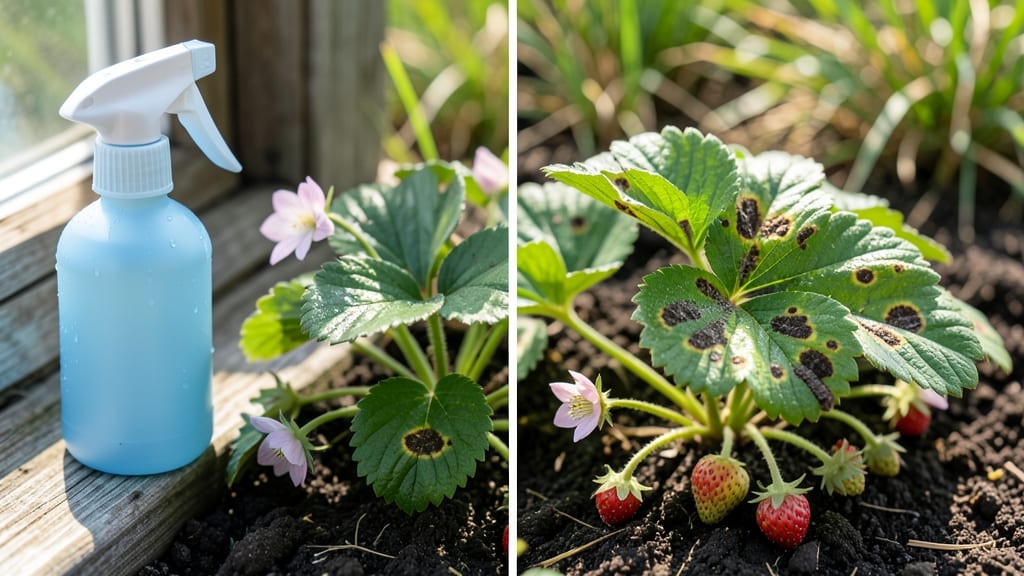
Leaf spot on strawberry plants ruins harvests faster than you can say "berry season." 🌱 The telltale signs—tiny black or brown spots with yellow halos—spread like wildfire in humid weather, turning lush foliage into a crinkled mess.
I’ve lost entire beds to this fungal invader, but copper spray changed everything within two applications. This isn’t just about spraying copper—it’s about timing, coverage, and cutting off the disease’s lifeline.
You’ll need baking soda, neem oil, or a pre-mixed copper fungicide, applied when leaves are dry and conditions are damp. The key? Preventative sprays every 7-10 days during peak fungal activity (spring and fall).
By midseason, your plants will push out new, spot-free growth, and the berries will stay clean. The copper blocks spores before they latch on, and the extra care forces the plant to redirect energy into fruit instead of repair. No more wasted harvests—just bold, healthy berries from now on.
Works for home gardens, containers, or raised beds. The technique scales easily, and once you see the difference, you’ll never ignore those early spots again. Let’s get those plants fighting back.
The hidden triggers behind strawberry leaf spots
Strawberry leaf spot isn’t just a random nuisance—it’s the result of a perfect storm of environmental conditions, pathogen pressure, and plant stress. Understanding these triggers is the first step to stopping the spread.
Let’s break down the science behind why your strawberries develop those unsightly (and harmful) spots.
🌡️ Warm, Damp Weather: The Ideal Fungal Buffet
Leaf spot fungi—primarily Colletotrichum and Mycosphaerella species—thrive in warm, humid conditions. Here’s why:
- Temperature sweet spot: Fungi germinate best between 60–85°F (15–30°C). If your strawberries are planted in a microclimate that stays in this range (like a greenhouse or shaded bed), spores explode in activity.
- Moisture magnet: Fungal spores need free water on leaf surfaces to germinate. Heavy dew, overhead irrigation, or even morning condensation can turn your plants into a fungal smorgasbord. 10+ hours of leaf wetness per day is the danger zone.
- Slow drying = more damage: If leaves stay damp overnight (e.g., in low-ventilation areas), spores have 24–48 hours to infect before drying out.
Actionable fix: Space plants for airflow, water early in the day (so leaves dry by evening), and avoid mulching too thickly near the crown.
🍄 Fungal Spores in the Air: The Invisible Invaders
Leaf spot doesn’t just appear out of nowhere—it’s already lurking. Here’s how spores spread:
- Windborne spores: Fungal spores can travel miles on wind currents, especially in strawberry-growing regions where the disease is endemic.
- Contaminated tools/soil: Pruners, trellises, or even compost from infected plants can harbor spores. One infected plant can contaminate an entire bed in a season.
- Surviving overwinter: Fungi like Mycosphaerella fragariae produce pseudothecia (spore-producing structures) in fallen leaves or mulch, ready to launch new infections when conditions warm up.
Actionable fix: Rotate crops (don’t plant strawberries in the same spot yearly), sterilize tools with 10% bleach solution, and remove all debris after harvest.
🌱 Plant Stress: When Strawberries Get Weak
Stressed strawberries are far more susceptible to leaf spot. Common stressors include:
| Stress Factor | Why It Matters | How to Fix It |
|---|---|---|
| Nutrient deficiencies (especially potassium or calcium) | Weak cell walls = easier fungal entry. Potassium strengthens cell membranes, while calcium prevents tissue breakdown. | Test soil and amend with greensand (potassium) or crushed eggshells (calcium). |
| Overcrowding (poor airflow) | Humidity builds up, and spores can’t dry out. Tight clusters = fungal hotspots. | Space plants 12–18 inches apart and prune runners aggressively. |
| Waterlogged soil | Root stress reduces nutrient uptake, making leaves soft targets for fungi. | Improve drainage with organic matter or raised beds. |
| Pests (e.g., slugs, aphids) | Physical damage creates entry points for fungi. | Use copper tape or diatomaceous earth for slugs; blast aphids with soapy water. |
🌿 Companion Plants Gone Wrong: The Bad Neighbors
Not all companions help—some worsen leaf spot by:
- Increasing humidity: Dense plants like raspberries or blackberries can trap moisture near strawberries.
- Hosting fungal spores: Some herbs (e.g., mint) or weeds (e.g., chickweed) may harbor similar pathogens.
- Competing for nutrients: Overly aggressive companions (like comfrey) can weaken strawberries, making them more vulnerable.
Actionable fix: Stick to approved companions like thyme, borage, or marigolds, which repel pests and improve airflow.
Pro Tip: 💡 Monitor your microclimate—use a hygrometer to track humidity near plants. If it’s consistently above 80%, it’s time to intervene with copper sprays or fungicidal soaps.
Quick Fixes for Fungal Leaf Spots
Fungal leaf spots on strawberries can feel like a losing battle, but with the right approach, you can turn things around fast! The key is acting early, combining targeted treatments, and adjusting your garden habits to prevent a comeback.
Below, we’ve mapped out practical, step-by-step solutions based on the most common causes—fungal infections, environmental stress, or poor airflow—plus prevention tips to keep your plants thriving.
If leaf spots are caused by Colletotrichum, Mycosphaerella, or other fungi, copper-based sprays are your best defense. These disrupt fungal cell walls without harming your plants (when used correctly).
🍳 Step 1: Apply Copper Fungicide
- When: At the first sign of spots (morning or evening to avoid leaf burn).
- How: Mix 1 tablespoon of copper fungicide (like copper sulfate or copper hydroxide) per gallon of water.
Add a dish soap drop to help it stick. - Spray: Coat both sides of leaves, stems, and soil around the base (fungi lurk there too!). Reapply every 7–10 days or after rain.
👨🍳 Step 2: Boost Plant Immunity
- Neem oil spray: Mix 1 teaspoon neem oil + 1 teaspoon baking soda + 1 drop dish soap in a quart of water.
Spray weekly to prevent spores from germinating. - Baking soda spray: For mild cases, try 1 tablespoon baking soda + 1 teaspoon oil + 1 gallon water (reduces pH, making leaves less hospitable to fungi).
🌡️ Pro Tip:
💡 Avoid copper if your soil is already copper-rich (test first). Overuse can harm soil microbes.
Leaf spots often flare up when strawberries are overcrowded, waterlogged, or stressed. Fix these conditions to starve fungi of their favorite growing conditions.
🔪 Step 1: Prune & Space Plants
- Remove infected leaves (don’t compost them—bag and toss).
- Thin plants so they’re 6–8 inches apart (better airflow = less humidity for fungi).
- Top strawberries (cut off old leaves) to redirect energy to fruit and new growth.
⏰ Step 2: Adjust Watering Habits
- Water at the base (avoid wetting leaves—this spreads spores).
- Water early in the day so foliage dries by evening.
- Use drip irrigation or soaker hoses to keep soil moist but leaves dry.
🎯 Pro Tip:
✨ Mulch with straw (not wood chips)—it keeps soil moist without trapping humidity around leaves.
Once you’ve treated the current outbreak, break the fungal cycle with these habits:
- Rotate crops: Don’t plant strawberries in the same spot for 3+ years (fungi linger in soil).
- Choose resistant varieties: Look for ‘Albion’, ‘Seascape’, or ‘Fort Laramie’—they tolerate disease better.
- Companion plants: Interplant with garlic, thyme, or chives—their antifungal properties deter fungi.
- Clean up debris: Remove old plant material after harvest to eliminate fungal overwintering spots.
If 50%+ of leaves are infected, consider:
- Removing the entire plant (if it’s a small patch) to stop spread.
- Solarizing the soil: Cover beds with clear plastic for 4–6 weeks in summer to kill fungi.
- Switching to raised beds with fresh, sterile soil if your garden is chronically fungal-prone.
Remember: Consistency is key! Fungi are persistent, but with copper sprays, airflow fixes, and smart watering, you’ll regain control—and your strawberries will reward you with juicy, blemish-free fruit. 🍓✨
Frequently asked questions
Can I still harvest strawberries if leaf spots appear?
Yes, but with caution! Remove any berries that touch infected leaves or soil where spores may lurk. The fungus doesn't spread to fruit directly, but contaminated leaves can harbor spores. Focus on harvesting from healthy plants first, and discard any berries near heavily spotted foliage to prevent cross-contamination.
How do I know if my strawberry spots are leaf spot or just sunburn?
Leaf spot shows up as dark brown/black spots with yellow halos on leaf edges, while sunburn appears as bleached, crispy patches on leaf surfaces. Check the undersides of leaves—leaf spot often starts there, while sunburn affects upper surfaces. Also, leaf spot spreads in humid conditions, while sunburn occurs in hot, dry weather.
Will copper spray harm bees or beneficial insects?
When used correctly, copper fungicides are low-toxicity to bees and pollinators if applied after 10 AM when flowers aren't open. Avoid spraying in bloom, and choose copper hydroxide over copper sulfate (less harmful to soil microbes). For extra safety, apply neem oil instead—it's bee-friendly and still effective against fungal spores.
How long until I see results from copper treatments?
You may notice slowed spread within 3–5 days, but full recovery takes 2–3 weeks of consistent applications. New growth will emerge spot-free if you catch it early. The key is preventative sprays every 7–10 days during peak fungal seasons (spring/fall). If spots persist, combine copper with baking soda sprays for better results.
Can I use the same copper spray on other plants?
Yes, but with caution! Copper fungicides work on tomatoes, peppers, and grapes, but avoid using it on blueberries, azaleas, or rhododendrons—they're sensitive to copper. Always dilute to half-strength for vegetables and test a small leaf first. For broad-spectrum use, neem oil or potassium bicarbonate sprays are safer alternatives for mixed gardens.