
Leaf Blower
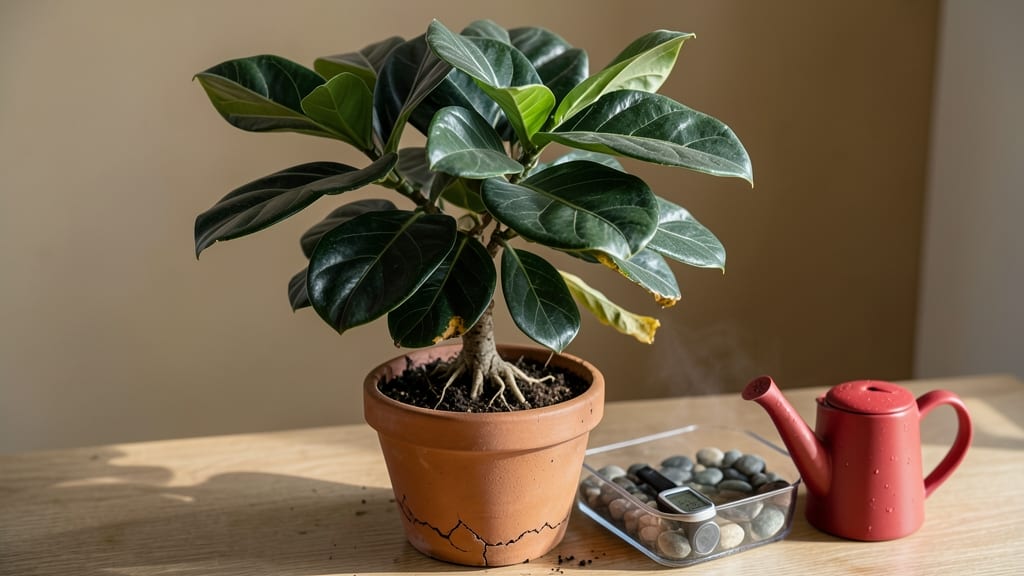
Fiddle leaf fig leaves falling off can turn your stunning houseplant into a sad, bare silhouette—but I’ve fixed this exact problem in my own collection. 🌱 The good news?
Most cases come down to just three core issues, and each has a straightforward solution once you know what to look for.
Underwatering shows up as crispy, brown edges, while overwatering causes yellowing leaves that feel mushy to the touch. Then there are the sneaky culprits: spider mites (tiny webs on the undersides of leaves) and fungal infections (dark spots or mold).
My plant’s dramatic recovery started when I finally checked the soil moisture with my finger—not a moisture meter—and adjusted my watering schedule to every 2-3 weeks instead of weekly.
Once you’ve identified the problem, the fix is simple: repot if roots are crowded, wipe leaves with neem oil for pests, or move to a humidity tray if the air feels dry.
Within weeks, you’ll see new growth pushing through—proof that even a struggling fiddle leaf fig can bounce back with the right care.
Here’s the thing—most people overcomplicate this. Trust your eyes and fingers first, then take action. Your plant’s comeback starts with just one small change, and I promise you’ll see the difference in 30 days or less.
Common Triggers Behind Dropping Leaves
Understanding why your fiddle leaf fig (Ficus lyrata) is shedding leaves starts with identifying the root causes—most of which are linked to its natural stress responses.
These tropical beauties are sensitive to abrupt changes in their environment, and when conditions veer too far from their ideal habitat, they react by dropping leaves as a survival mechanism. Below, we break down the science behind the most frequent culprits and how they disrupt your plant’s equilibrium.
Fiddle leaf figs thrive in consistent warmth, typically between 65–75°F (18–24°C). When temperatures drop below 50°F (10°C) or spike above 85°F (29°C) for prolonged periods, the plant experiences cellular stress.
Cold drafts (like AC vents or open windows in winter) trigger chlorosis—where leaves yellow and detach—as the plant conserves energy. Conversely, heat stress from radiators or direct sunlight can scorch leaves, causing them to crisp and fall prematurely.
Why it happens:
- Cold stress disrupts photosynthesis by slowing enzyme activity in chloroplasts, leading to nutrient starvation in leaves.
- Heat stress causes protein denaturation in leaf cells, breaking down chlorophyll and accelerating senescence (aging).
- Rapid temperature fluctuations (e.g., moving from a warm room to a chilly porch) shock the plant’s vascular system, cutting off water and nutrient flow.
Fiddle leaf figs are drought-tolerant but hate soggy roots. Their native West African forests provide well-draining soil with intermittent rainfall, not constant moisture. When you overwater, root asphyxiation occurs—oxygen-starved roots can’t absorb nutrients, leading to leaf abscission (dropping).
Conversely, underwatering causes wilting and necrosis (dead tissue) as cells dehydrate and detach.
Why it happens:
- Overwatering triggers anaerobic conditions in the soil, producing ethanol (a byproduct of root fermentation), which is toxic to cells. The plant sheds leaves to reduce water loss and redirect energy to surviving roots.
- Underwatering causes plasmolysis—where cell walls shrink away from membranes, disrupting stomatal function (the plant’s pores for gas exchange). Without water, leaves curl and detach to minimize further damage.
- Inconsistent watering (e.g., soaking one day and drying out the next) confuses the plant’s hormonal signals, leading to abscission layer formation at the leaf stem—a natural "sacrificial" response to instability.
Fiddle leaf figs crave bright, indirect light—think dappled sunlight under a canopy. Direct sun (especially south/west-facing windows) causes photoxidative damage, where excess UV light breaks down chlorophyll and generates reactive oxygen species (ROS), which destroy cell membranes.
On the flip side, low light stunts photosynthesis, leading to weak, yellowing leaves that fall as the plant prioritizes survival over foliage.
Why it happens:
- Sunburn occurs when UV-B radiation exceeds the plant’s antioxidant defenses, leading to lipid peroxidation in cell membranes. Affected leaves turn brown and crispy before detaching.
- Low light reduces chlorophyll production, causing etiolation (stretched, pale growth) and nutrient deficiencies. The plant sheds older leaves to conserve energy for new, weaker growth.
- Sudden light changes (e.g., moving from shade to full sun) disrupt phytochrome signaling, a light-sensitive hormone that regulates leaf development. This triggers abscission as the plant resets.
Fiddle leaf figs detest drafts—whether from AC vents, heating systems, or open doors. These tropical plants evolved in stable, humid environments (60–80% humidity). When exposed to dry air (common in homes with central heating), their cuticle layer (the waxy leaf coating) loses moisture, leading to desiccation.
Drafts also disrupt transpiration, the process by which roots pull water upward. Without proper hydration, leaves curl and drop.
Why it happens:
- Low humidity increases transpirational pull, causing xylem cavitation (air bubbles in water-conducting vessels). This blocks water flow, leading to leaf wilting and abscission.
- Cold drafts (like near windows in winter) cause temperature shock, slowing enzyme activity in leaves. The plant sheds foliage to protect its core.
- Frequent air movement (e.g., from fans or open windows) creates uneven moisture loss, stressing some leaves more than others. The plant selectively drops the most affected leaves to balance energy use.
Fiddle leaf figs thrive in well-aerated, slightly acidic soil (pH 6.1–6.5) rich in organic matter. When planted in compacted or alkaline soil, root rot or nutrient lockout occurs.
Over time, this leads to chlorosis (yellowing) and leaf drop as the plant can’t absorb essential minerals like nitrogen, magnesium, or iron.
Why it happens:
- Compacted soil reduces oxygen availability, leading to anaerobic root zones and toxic buildup of salts/metals. Roots suffocate, and the plant sheds leaves to reduce metabolic demand.
- Alkaline soil (pH >7) locks out micronutrients like iron and manganese, causing interveinal chlorosis (yellowing between veins). Without these, chlorophyll can’t form, leading to leaf death.
- Over-fertilization (especially with synthetic salts) burns roots, disrupting osmotic balance. The plant drops leaves to limit further damage while it recovers.
While less common than environmental factors, pests like spider mites, scale, or fungal infections (e.g., root rot) can cause premature leaf drop. Pests pierce cells to feed, injecting toxins that trigger defense responses, including abscission.
Fungal infections clog xylem vessels, starving leaves of water and nutrients.
Why it happens:
- Spider mites and scale insects disrupt stomatal function, causing wilting and leaf drop as the plant conserves water.
- Root rot (from Phytophthora or Fusarium) blocks water uptake, leading to sudden wilting and mass leaf shedding.
- Bacterial leaf spot (Xanthomonas) creates necrotic lesions, forcing the plant to shed infected leaves to prevent spread.
Every time your fiddle leaf fig drops a leaf, it’s communicating stress. Whether from temperature swings, water extremes, light mismatches, or hidden pests, the plant’s abscission layers (specialized cells at the leaf stem) activate to seal off damaged or non-essential foliage.
The good news? Most causes are reversible—once you identify the trigger, you can adjust care and help your plant rebound. 🌿
Fixing Fiddle Leaf Fig Leaf Drop
Now that you’ve pinpointed why your fiddle leaf fig’s leaves are falling off, it’s time to take action! The good news? Most issues are reversible with the right care. Below, we’ve mapped out practical, step-by-step solutions for each common cause—plus pro tips to keep your plant thriving long-term.
Fix: Let the soil dry out between waterings, and improve drainage to prevent root rot.
- 🔥 Stop Watering Immediately
- If the top 1–2 inches of soil are damp, hold off on watering. Fiddle leaf figs prefer dry soil—overwatering suffocates roots.
- Test the soil: Stick your finger in 1–2 inches deep. If it’s moist, wait 3–5 more days before watering.
- 🍳 Repot in Well-Draining Soil
- Use a fast-draining mix (50% potting soil, 30% perlite, 20% orchid bark or pumice).
- Avoid heavy garden soil—it compacts and traps moisture.
- Pro tip: Add a layer of gravel or charcoal at the bottom of the pot to boost drainage.
- ⏰ Adjust Your Watering Schedule
- Water only when the top 2–3 inches of soil are bone-dry (usually every 10–14 days in summer, less in winter).
- Water deeply but never let it sit in saucers—empty excess after 10 minutes.
- 🌱 Prune Damaged Roots (If Needed)
- If root rot has set in, gently remove the plant, trim mushy, black roots with sterilized scissors, and repot in fresh soil.
💡 Prevention:
- Use terracotta pots (they wick away moisture faster than plastic).
- Stick to a watering routine—consistency is key!
Fix: Boost moisture levels and adjust your watering habits to revive a thirsty fiddle leaf fig.
- 👨🍳 Water Deeply and Regularly
- When the soil is dry, soak the pot until water runs out the drainage holes.
- Let it drain completely before placing it back in the saucer.
- 🌡️ Increase Humidity
- Fiddle leaf figs love 40–60% humidity. Use a humidifier, pebble tray, or group plants together.
- Quick fix: Mist leaves 2–3 times a week (avoid over-misting in low light).
- 🎯 Move to a Brighter Spot
- Place near bright, indirect light (east or north-facing windows are ideal).
- If leaves are crispy and brown, it’s a sign of transpiration stress—humidity + light = happy leaves!
- 🥗 Trim Damaged Leaves
- Remove brown, crispy leaves with clean scissors to redirect energy to new growth.
💡 Prevention:
- Check soil moisture weekly—don’t wait until leaves start dropping!
- Avoid drafty areas (AC vents, heaters) that dry out leaves fast.
Fix: Stabilize conditions to prevent leaf drop from extreme temps or light swings.
- 🔥 Keep Temps Steady
- Ideal range: 60–75°F (15–24°C). Avoid cold drafts (below 50°F/10°C) or hot sun (above 85°F/30°C).
- Fix: Move away from windows in winter or use a sheer curtain to diffuse harsh light.
- 🍳 Rotate the Plant Weekly
- Fiddle leaf figs grow toward light, causing lopsided growth. Rotate 1/4 turn weekly for even exposure.
- 🌿 Gradually Acclimate to New Light
- If moving to a brighter spot, do it over 1–2 weeks to avoid shock.
💡 Prevention:
- Avoid sudden changes—plants hate temperature/light whiplash!
- Use a grow light if natural light is insufficient (12–14 hours/day).
Fix: Isolate, treat, and restore your plant’s health.
- 🔪 Quarantine the Plant
- Move it away from other houseplants to prevent spreading pests.
- 🍳 Treat for Pests
- Spider mites/scale: Wipe leaves with neem oil solution (1 tsp neem oil + 1 quart water) or insecticidal soap.
- Fungus gnats: Let soil dry out and use yellow sticky traps or hydrogen peroxide spray (1 tbsp in 1 cup water).
- 🌡️ Boost Plant Immunity
- Prune infected leaves and dispose of them (don’t compost!).
- Fertilize lightly with a balanced liquid fertilizer (diluted to half strength) to help recovery.
💡 Prevention:
- Inspect new plants before bringing them home.
- Wipe leaves monthly with a damp cloth to remove dust (pests love gunk!).
- 💪 Be Patient: New growth takes 4–8 weeks—don’t give up!
- 🌿 Focus on Roots: If the plant is severely stressed, root pruning (trimming 1/3 of roots) can stimulate regrowth.
- ✨ Use a Root Stimulator: Add hydroponic nutrients or seaweed extract to water to encourage recovery.
Remember: Fiddle leaf figs are resilient—with the right care, they’ll bounce back stronger! 🌿💚 Start with one fix at a time (e.g., adjust watering before repotting) to avoid overwhelming your plant.
Frequently asked questions about fiddle leaf fig leaf drop
Why do fiddle leaf fig leaves turn yellow before falling off?
Yellowing leaves usually signal overwatering or nutrient deficiencies. When roots sit in soggy soil, they can't absorb nutrients, causing yellowing (chlorosis) before the plant drops leaves to conserve energy. Check soil moisture—if the top 2 inches feel damp, wait before watering again. Yellowing between veins often indicates iron deficiency, which can be fixed with a chelated iron supplement.
How can I tell if my fiddle leaf fig is getting too much or too little light?
Too much light causes brown, crispy patches (sunburn), while too little causes pale, stretched leaves. Place your plant near an east-facing window for ideal bright, indirect light. If leaves are brown and crispy, move it farther away; if they're pale and leggy, it needs more light. Rotate the pot weekly for even growth.
What should I do if my fiddle leaf fig leaves are falling off but the soil feels dry?
Dry soil with dropping leaves suggests underwatering or root stress. Water deeply until it drains from the bottom, then place the pot on a pebble tray to increase humidity. Check for pests like spider mites (look for tiny webs on leaf undersides) and treat with neem oil if needed. If roots are pulling away from the pot, it may need repotting with fresh, well-draining soil.
Is it normal for fiddle leaf figs to drop leaves in winter?
Yes, but it’s usually a sign of low humidity or cold drafts—common in winter. Keep your plant away from heating vents or drafty windows and maintain 50–60% humidity with a humidifier or pebble tray. Avoid sudden temperature drops below 60°F (15°C), as this stresses the plant and triggers leaf drop.
Can I save my fiddle leaf fig if most of the leaves have already fallen off?
Focus on root health first—repot in fresh, well-draining soil and trim any mushy, black roots (signs of rot). Reduce watering to every 2–3 weeks and place it in bright, indirect light. New growth often appears within 4–8 weeks if the roots are healthy. Avoid fertilizing until you see fresh leaves emerging.