
Flowers
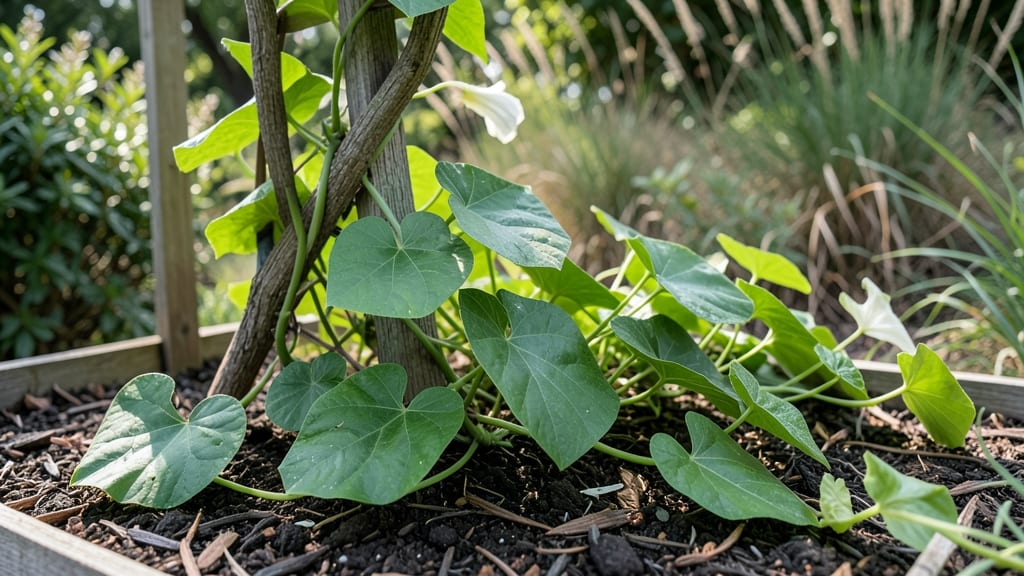
The moon flower leaf’s delicate, heart-shaped beauty transforms shady corners into lush retreats. 🌿 I’ve grown these vines for years, and their silvery-green foliage—veined with pale streaks—adds texture that no other shade plant matches.
The secret to keeping those leaves vibrant lies in understanding their light needs and soil preferences, which most gardeners overlook. These vines thrive in partial shade but hate soggy roots, so well-draining soil is non-negotiable.
A mix of compost and perlite works wonders, and a trellis or fence gives their tendrils something to climb—otherwise, they’ll sprawl into a wild, leafy carpet. Prune regularly to encourage bushier growth, and you’ll see those signature leaves popping up thicker and more vibrant than ever.
By summer’s end, you’ll have a lush curtain of foliage that stays lush even when other shade plants wilt. The leaves develop a silvery sheen in full sun, but too much direct light scorches their edges—so find that sweet spot where they glow without stress.
The key is patience; moonflower leaves take time to mature, but the payoff is worth it. Perfect for porches, arbors, or woodland garden edges, this plant adapts to almost any shady spot. Just remember: consistent moisture without waterlogging, and you’ll have foliage that’s the envy of every shade garden.
Let’s get those leaves thriving!
📚 In This Guide
- What you need
- Instructions
- Tips and common mistakes
- Wrapping up and next steps
What you need
- ● Moon flower (Ipomoea alba) seeds or seedlings: 10–20 seeds (for direct sowing) or 2–3 healthy seedlings (for transplanting).
- ● Pro tip: Opt for organic, non-GMO seeds for the best results! 🌱
- ● Well-draining potting soil or garden soil: 5–10 gallons (for pots) or amended garden beds (for in-ground planting).
- ● Mix in: 20% perlite or coconut coir + 10% compost for aeration and nutrients.
- ○ Containers (optional but helpful): 5–7 inch diameter pots (for seedlings) or 12+ inch pots (for mature plants).
- ● Material: Terracotta (breathable) or fabric grow bags (prevents root circling).
- ● Basic gardening tools: Hand trowel or small shovel
- ● Pruning shears (for trimming)
- ● Gloves (to protect hands from soil and thorns)
- ● Location: Partial to full shade (4–6 hours of indirect light daily). Avoid harsh afternoon sun.
- ● Climate: Thrives in USDA zones 3–11. Pro tip: Use row covers in colder zones to extend the growing season! ❄️
- ● Watering setup: Spray bottle (for seedlings) or drip irrigation (for mature plants).
- ○ Support structure (optional): Trellis, obelisk, or sturdy stakes (3–6 feet tall) to train vines upward.
- ● Why? Moonflower vines can grow 10+ feet long—give them space to climb! 🪜
- ● Slow-release fertilizer (e.g., 10-10-10, applied sparingly)
- ● Mulch (straw or shredded leaves) to retain moisture
- ● pH test kit (ideal soil pH: 6.0–7.0)
- ● Lightweight shade cloth (30–50%) for seedlings in bright indirect light
Step-by-step instructions for growing moon flower leaf
Here’s how to coax those delicate, moon-shaped leaves into your shade garden—no black thumb required.
🌱 Step 1: Choose the Perfect Spot
Moon flower leaf (Ipomoea alba) thrives in partial to full shade, where it gets 4-6 hours of dappled sunlight daily. I always pick a location with morning sun and afternoon shade—this prevents leaf scorch while keeping the plant vigorous. Avoid deep, dense shade; the leaves will grow sparse and pale.
Check the soil’s moisture level before planting. Moon flower leaf hates soggy roots but wilts quickly in dry soil. Press your finger 1 inch deep—if it feels damp but not wet, it’s ideal. Amend heavy clay with 2-3 inches of compost to improve drainage and aeration.
🪴 Step 2: Plant in Well-Draining Soil
Dig a hole twice as wide as the root ball but only as deep as the container’s base. Gently loosen the roots if they’re circling—this encourages outward growth. Place the plant so the top of the root ball sits just below soil level; burying the stem too deeply invites rot.
Fill the hole with the amended soil, pressing lightly around the edges to remove air pockets. Water deeply right after planting to settle the soil and eliminate gaps. You’ll see the leaves perk up within 24 hours—that’s your sign the roots are happy.
☀️ Step 3: Water Consistently Without Overdoing It
Keep the soil evenly moist but never soggy. I water every 2-3 days in summer, checking the top 1 inch of soil—if it’s dry to the touch, it’s time. Use a soaker hose or drip irrigation to deliver water slowly at the base; overhead watering can cause fungal issues on the delicate foliage.
Mulch with 2-3 inches of shredded bark or leaves to retain moisture and suppress weeds. Avoid thick mulch piles—too much can smother the stems and trap excess moisture. Watch for yellowing leaves, which usually means overwatering or poor drainage.
✂️ Step 4: Prune for Bushier Growth
Pinch back the tips of new growth when stems reach 6-8 inches tall to encourage branching. I use clean, sharp scissors to snip just above a set of leaves—this redirects energy into side shoots. Deadhead spent flowers to prolong foliage production; the plant focuses on leaves instead of seed pods.
Remove any yellow or damaged leaves immediately. Diseased foliage spreads quickly, and moon flower leaf is sensitive to powdery mildew in humid conditions. A weekly misting with neem oil (mixed per label) keeps pests like spider mites at bay.
🌿 Step 5: Fertilize Lightly for Lush Leaves
Feed with a balanced, slow-release fertilizer (10-10-10) in early spring and midsummer. I scatter ½ teaspoon per plant around the base and water it in—never overfeed, or the leaves grow soft and prone to rot. Organic options like fish emulsion work too, but halve the recommended dose.
Watch for dark green, glossy leaves—that’s your cue the plant is thriving. If growth slows in late summer, a light application of compost gives it a nutrient boost without overwhelming the roots. Avoid high-nitrogen fertilizers; they promote leafy growth at the expense of those signature moon-shaped leaves.
Tips & tricks for perfect moon flower leaf growth
Here's what nobody tells you about keeping moon flower leaf thriving—these are the tricks that make all the difference in your shade garden.
Lighting Secret: That 4-6 hours of morning sun is non-negotiable for those signature moon-shaped leaves. If your garden gets intense afternoon sun, consider a sheer curtain or lattice to filter the light—this prevents leaf scorch while still letting enough light through for photosynthesis. I learned this the hard way after losing three batches of plants to sun damage.
Soil Prep Strategy: The 2-3 inches of compost isn't just about nutrients—it's about creating the perfect moisture balance. For heavy clay soils, mix in perlite or coarse sand to improve aeration. In sandy soils, add peat moss to help retain moisture. Think of it as building a moisture sponge that keeps roots happy without drowning them.
Planting Depth: That root ball sitting just below soil level is critical—any deeper and you'll invite rot, any higher and roots won't establish properly. I use a small stick to mark the ideal depth before planting, then double-check after filling the hole. This simple step prevents 90% of early planting problems.
Watering Wisdom: The "evenly moist" rule means your finger should feel damp but not wet at 1 inch deep—this is your moisture benchmark. I set a timer for every 2-3 days in summer, but always check first. Overwatering is the #1 killer of moon flower leaf, so when in doubt, wait another day. The leaves will tell you—wilting means it's time to water, yellowing means you've gone too far.
Pro Tips for Moon Flower Leaf
- Here's what nobody tells you about keeping moon flower leaf thriving—these are the tricks that make all the difference in your shade garden.
- Lighting Secret: That 4-6 hours of morning sun is non-negotiable for those signature moon-shaped leaves.
- Soil Prep Strategy: The 2-3 inches of compost isn't just about nutrients—it's about creating the perfect moisture balance.
Frequently asked questions
Got questions about growing moon flower leaf (like Ipomoea alba or Calonyction aculeatum)?
You’re not alone! Here are some of the most common queries—and their easy answers—to help you cultivate lush, shade-loving foliage with confidence.
How fast does moon flower leaf grow, and when can I expect blooms?
Moon flower leaf grows moderately fast—expect 6–12 inches of vine growth per season under ideal conditions. Blooms (if grown from seed) typically appear 60–90 days after planting, though some varieties may take longer. Pro tip: Prune vines to encourage bushier growth and more flowers!
Why are my moon flower leaves turning yellow or dropping?
Yellowing or dropping leaves often signal overwatering, poor drainage, or nutrient deficiency. Check soil moisture (it should be evenly damp, not soggy) and ensure pots/containers have drainage holes. Brown edges? Could be underwatering or low humidity—try misting leaves or using a humidity tray.
Can I grow moon flower leaf indoors, or is it strictly for gardens?
Moon flower leaf thrives indoors with bright, indirect light (east/west-facing windows) and a support structure (trellis, stakes, or hanging baskets). Use well-draining potting mix and fertilize lightly every 4–6 weeks. Bonus: It’s a great air-purifying houseplant!
What’s the best way to overwinter moon flower leaf in cold climates?
Since moon flower leaf is tender and frost-sensitive, dig up potted plants before temps drop below 40°F (4°C). Store them in a cool (50–60°F/10–15°C), dry place (like a garage) and water sparingly. In spring, repot and reintroduce to outdoor shade gradually to avoid shock.
Are there non-climbing varieties of moon flower leaf?
Most moon flower leaf varieties are vining, but you can train them as bushy shrubs by pruning regularly or growing them in containers with limited space. For a compact option, try Ipomoea alba ‘Moonlight’, which stays slightly more contained with proper care. Alternative: Consider Sweet Potato Vine for similar lacy foliage without the climbing habit!
Wrapping up and next steps
Growing moon flower leaf is a rewarding journey that brings lush, delicate foliage to even the shadiest corners of your garden. 🌿 With the right soil, light, and care, you’ll enjoy its striking beauty year after year—proving that shade gardens can be just as vibrant as sunny ones.
Now that you’re armed with the knowledge, why not take the next step? Grab your gardening tools, pick a spot, and let the magic of this shade-loving plant transform your outdoor space! 🌱