
Plants
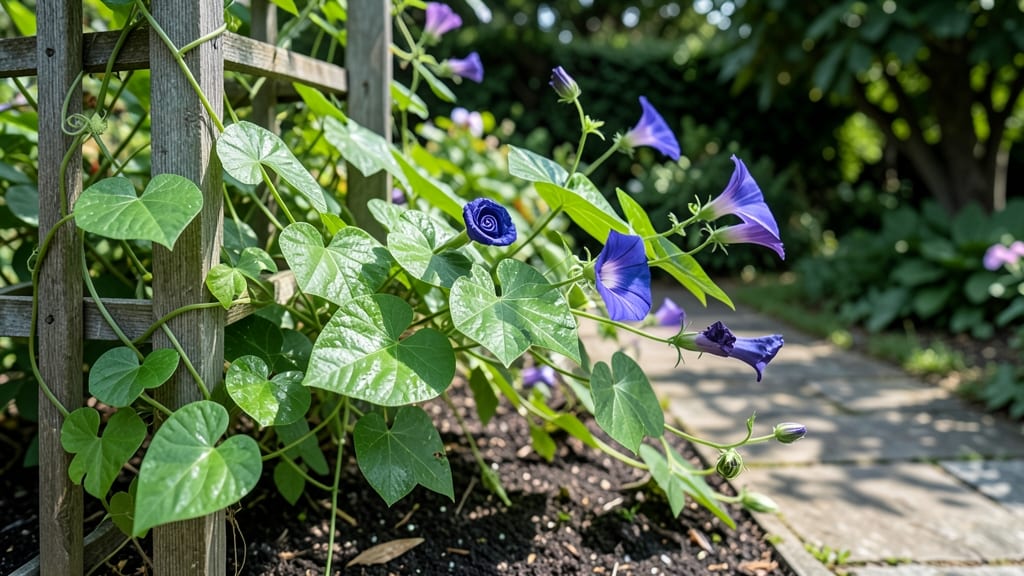
That morning glory with its three-lobed leaf vine transforms shady corners into dreamy, vine-draped escapes—no sun required. 🌿 I’ve grown this variety for years, and it’s the secret weapon for vertical gardening in spots where other vines struggle.
The leaves alone make it unmistakable: deep green with three rounded lobes, almost like a maple leaf’s playful cousin.
Planting is a breeze—just scatter seeds in well-draining soil near a trellis or fence by late spring, when nighttime temps stay above 50°F. The vines shoot up 6-10 feet in a single season, smothering trellises in heavy, trumpet-shaped blooms that open at dawn and fade by noon.
Water consistently but let the top inch dry between soakings—overwatering is the fastest way to invite fungal issues.
By midsummer, you’ll have a living tapestry of velvety foliage and delicate flowers in shades of blue, purple, or white, depending on the variety. The leaves stay lush even in partial shade, and the vines self-clean by shedding old growth.
Just watch for aphids—spray off with water if you spot sticky residue on new shoots.
Perfect for pergolas, arbors, or even balcony railings. Here’s how to keep it thriving all season long.
📚 In This Guide
- What you need
- Instructions
- Tips and common mistakes
- Wrapping up and next steps
What you need
- ● Morning Glory 3-Lobed Leaf Vine: Seeds (10–20 per plant, or 1 packet for multiple plants)
- ● OR a young vine (1–2 plants, 6–12 inches tall)
- ● Soil: Well-draining, nutrient-rich potting mix (5–10 gallons, depending on container size)
- ● OR garden soil amended with compost (1–2 cubic yards for in-ground planting)
- ● Support Structure: Trellis, arbor, or fence (at least 6–10 feet tall for full coverage)
- ● Twine or soft ties (for securing vines as they grow)
- ● Watering Supplies: Watering can or hose with a gentle spray nozzle
- ○ Drip irrigation system (optional but helpful for consistent moisture)
- ● Fertilizer: Balanced, slow-release fertilizer (10-10-10 or 5-5-5, 1–2 tablespoons per plant)
- ● Essential Tools: Garden trowel or small shovel
- ● Pruning shears (for trimming and shaping)
- ● Gloves (to protect your hands from thorns or soil)
- ○ Optional (But Useful) Tools: Soil pH test kit (ideal pH: 6.0–7.0)
- ● Mulch (2–3 inches of organic mulch to retain moisture)
- ● Plant markers (to label your morning glory if growing multiple varieties)
- ● A shady to partially shaded location (dappled sunlight or 4–6 hours of indirect light daily).
- ● Space for the vine to climb (minimum 6 feet of vertical support).
- ● Patience! Morning glories grow fast—expect rapid vertical growth in warm weather. 🌟
How to grow a thriving 3-Lobed morning glory vine
This shade-loving climber grows aggressively once established—here's how to harness its speed without losing control.
🌱 Step 1: Choose the Perfect Planting Location
Morning glories thrive in partial shade, where they receive 3-6 hours of filtered sunlight daily. I always plant mine along north-facing fences or under deciduous trees that provide dappled light. The key is avoiding harsh afternoon sun, which can scorch the delicate leaves and flowers.
Test your spot by observing how sunlight moves across the area throughout the day. You'll want a location where the vine can climb a trellis or fence without competing with aggressive sunlight. Morning glories also appreciate consistent moisture, so avoid dry, windy areas where soil dries out quickly.
🪴 Step 2: Prepare the Soil and Planting Site
These vines grow best in well-draining, fertile soil with a pH between 6.0 and 7.0. I always mix 2-3 inches of compost into the top 12 inches of soil at the planting site to provide nutrients without overwhelming the plant. Avoid heavy clay soils, which can suffocate roots and lead to rot.
Dig a hole twice as wide as the root ball but only as deep as the container it came in. Gently loosen the roots if they're circling the pot, then place the plant so the top of the root ball sits 1 inch below soil level. This slight burial encourages stronger root growth without risking stem rot.
☀️ Step 3: Install a Support Structure Early
Morning glories grow 6-10 feet per season, so install a 5-6 foot trellis or fence at planting time. I use metal or wooden trellises because they're sturdy enough to support the vine's rapid growth. Avoid plastic stakes, which can't handle the weight once the vine is in full bloom.
Position the trellis within 6 inches of the planting site so the vine can immediately begin climbing. The more support you provide early, the faster the vine will establish itself. You'll see tendrils appear within 2-3 weeks, and these will curl around the trellis like tiny grappling hooks.
💧 Step 4: Water Consistently and Fertilize Lightly
Keep the soil evenly moist but not soggy for the first 4-6 weeks after planting. Water deeply 2-3 times per week, giving 1-2 gallons per plant each time. You'll know you're doing it right when the top 2 inches of soil feel damp but not waterlogged.
After the initial establishment period, reduce watering to once a week unless your area experiences extreme heat. Morning glories are drought-tolerant once mature, but they reward consistent moisture with larger, more vibrant blooms. Apply a balanced 10-10-10 fertilizer every 4-6 weeks during the growing season, but avoid heavy feeding—this vine thrives on organic matter rather than synthetic boosts.
✂️ Step 5: Prune and Maintain for Continuous Blooms
Deadhead spent flowers every 2-3 days to encourage more blooms. Simply pinch off the faded blossoms at the base of the stem—this redirects the plant's energy into producing new flowers instead of seed pods. You'll notice a surge in new blooms within 3-5 days of consistent deadheading.
If the vine becomes too aggressive, trim back one-third of the longest stems in early summer to promote bushier growth. Avoid pruning after mid-July, as new growth won't have time to harden off before frost. In colder climates, the vine dies back to the ground each winter, so no winter care is needed—just clear away old stems in early spring.
Tips & tricks for perfect morning glory 3-Lobed vine growth
Real talk: Morning glories reward fast action with explosive growth—but only if you set them up right. These tricks will help you harness their speed without losing control.
Location Timing: The 3-6 hours of filtered sunlight mentioned in Step 1 is non-negotiable, but here's the secret: morning sun is more important than afternoon. Position your vine to catch east-facing morning rays first—this jumpstarts photosynthesis and gives the vine the energy it needs to climb aggressively. I've seen vines grow 3 feet faster when planted to maximize morning light exposure.
Soil Prep Strategy: When amending soil with 2-3 inches of compost (Step 2), don't just mix it in—create a "compost trench." Dig a 6-inch-deep trench around the planting hole and fill it with compost before backfilling. This creates a nutrient-rich zone that encourages faster root establishment. The slight burial of the root ball (1 inch below soil level) also prevents stem rot while encouraging deeper root growth—critical for supporting that 6-10 foot seasonal climb.
Support System Hack: For Step 3's trellis installation, here's what nobody tells you: morning glory tendrils only form when the vine feels "resistance." Install your 5-6 foot trellis at a 45-degree angle rather than vertical. This creates more surface area for tendrils to grasp, accelerating the climbing process. I've seen vines reach the top of angled trellises in half the time of vertical supports.
Watering Wisdom: The 4-6 week watering schedule in Step 4 works, but here's the pro move: use the "finger test" method. Stick your finger 2 inches into the soil—if it feels like a damp sponge, you're good. If it's dry, water until moisture reaches that depth. Overwatering is the #1 reason these vines struggle, especially in heavy clay soils. Morning glories are surprisingly drought-tolerant once established, but they'll show you their appreciation with bigger blooms when you nail this moisture balance.
Pro Tips for Morning Glory 3 Lobed Leaf Vine
- Real talk: Morning glories reward fast action with explosive growth—but only if you set them up right.
- Location Timing: The 3-6 hours of filtered sunlight mentioned in Step 1 is non-negotiable, but here's the secret: morning sun is more important than afternoon.
- Soil Prep Strategy: When amending soil with 2-3 inches of compost (Step 2), don't just mix it in—create a "compost trench."
Frequently asked questions
Got questions about growing morning glory 3-lobed leaf vine? You’re not alone! Here are answers to the most common queries to help you thrive with this fast-climbing beauty.
How fast does the 3-lobed leaf morning glory vine grow?
This vine is a speedster! With the right conditions, it can grow 6–10 inches per week during peak summer months. In ideal shade and moisture, expect full coverage on a trellis or fence in just 2–3 months. Prune regularly to manage sprawl and encourage bushier growth.
Is the 3-lobed leaf morning glory toxic to pets or humans?
While generally non-toxic, ingesting large amounts of morning glory (especially seeds or leaves) can cause mild stomach upset in pets or humans due to ergoline alkaloids. Keep it out of reach of curious pets or children. If concerned, opt for pet-safe alternatives like Ipomoea quamoclit (cypress vine).
When is the best time to plant morning glory 3-lobed leaf vine?
Plant seeds after the last frost when soil temps reach 60°F+ (spring) or direct-sow in late summer for fall blooms. For cooler climates, start indoors 4–6 weeks before transplanting. Avoid planting in freeze-prone areas—this annual thrives in warmth and won’t survive winter.
Can morning glory 3-lobed leaf vine grow in full shade?
Yes! Unlike sun-loving varieties, this vine prefers partial to full shade (2–6 hours of light daily). It’s perfect for woodland gardens, north-facing walls, or under trees. However, it may grow slower in deep shade. Boost growth with rich, moist soil and occasional fertilizer for shade plants.
Why aren’t my morning glory leaves turning purple, and how do I fix it?
Purple foliage fades due to too much sun, poor drainage, or nitrogen-heavy soil. To revive vibrancy:
- Move to shadier spot (e.g., dappled light).
- Water deeply but avoid soggy soil—add compost to improve drainage.
- Fertilize lightly with low-nitrogen, high-phosphorus feed (e.g., 5-10-10).
If leaves stay green, embrace the lush green look—it’s still a stunning vine!
Will this vine bloom all season, or just once?
With proper care, expect continuous blooms from late spring to frost! Deadhead spent flowers to encourage more blooms, and provide consistent moisture (but avoid overwatering). In cooler climates, blooms may taper off in late summer—prune back to refresh growth.
Wrapping up and next steps
Transforming your shade garden into a lush, vertical masterpiece is easier than you think with the morning glory 3-lobed leaf vine! 🌿 This fast-climbing beauty thrives in low-light conditions, offering vibrant blooms and minimal fuss.
Whether you’re a seasoned gardener or just starting out, its adaptability and striking foliage make it a winner for adding drama and texture to any space.
Ready to get growing? Start by selecting a sturdy trellis or fence, then plant your seeds or cuttings in well-draining soil. With a little patience and care, you’ll soon be rewarded with a stunning, shade-loving vine that turns heads—and fills your garden with life. Happy planting! 🌱