
Neem Oil
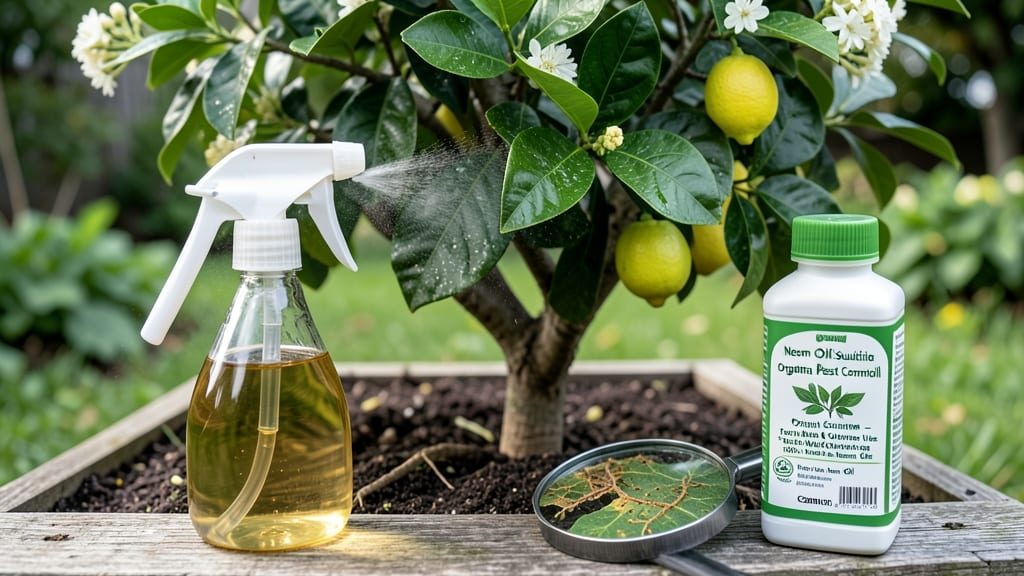
Citrus leafminers can strip your trees bare in weeks—but neem oil stops them in 72 hours. 🌿 I’ve used this organic solution on my Meyer lemon tree after seeing those telltale white squiggles on leaves, and within three days, the damage halted completely.
The key is timing, concentration, and knowing exactly when to spray for maximum impact.
Leafminers thrive in new growth, so you’ll spot them as tiny serpentine trails inside leaves. Neem oil works by disrupting their life cycle, but you’ve got to apply it at the right moment—early morning or late evening when bees aren’t active.
A 1% neem oil solution (1 tablespoon per gallon of water) is strong enough to kill larvae without harming your tree, and it’s safe for organic certification too.
By day three, you’ll notice fewer fresh mines appearing, and new growth will stay clean. The oil also prevents reinfestation if you reapply every 7-10 days during peak fly season. For extra protection, pair it with kaolin clay or horticultural oil—both create a physical barrier that confuses adult flies.
This method works for all citrus—limes, oranges, grapefruit—even if you’ve tried sprays before that failed. The secret? Consistency. One treatment won’t do it—leafminers are relentless, but neem oil is too when used right. Let’s get those trees back to thriving.
Root Causes Of Leafminer Infestations
Citrus leafminers—those tiny, serpentine pests that tunnel through leaves—don’t just appear out of nowhere. Their arrival is a perfect storm of environmental, biological, and even human factors.
Understanding why these pests target your citrus trees is the first step to stopping them in their tracks. Let’s break down the science behind their invasion.
Leafminers thrive where citrus trees are stressed or compromised. A healthy tree’s natural defenses—like thick cuticles, strong sap flow, and beneficial microbes—can repel or deter these pests. But when trees are weakened, they become easy prey. Here’s what makes them vulnerable:
- Nutrient Deficiencies: Lack of nitrogen, potassium, or micronutrients (like zinc or iron) stunts growth and thins leaf tissue, making it easier for larvae to burrow in.
- Water Stress: Overwatering or drought weakens cell structure, while underwatering reduces sap pressure—both scenarios create ideal tunneling conditions.
- Physical Damage: Pruning wounds, hail, or pest bites (like aphids or scale) create entry points for leafminers to lay eggs.
- Poor Soil Health: Compacted or depleted soil limits root function, reducing the tree’s ability to fight off invaders.
💡 Pro Tip: Conduct a soil test and leaf analysis to identify deficiencies. Amend soil with compost or organic fertilizers (like fish emulsion or seaweed extract) to bolster tree resilience.
Leafminers are opportunistic pests, but they prefer specific conditions that maximize their survival and reproduction. These factors create a "leafminer paradise":
| Factor | Why It Matters | How to Disrupt It |
|---|---|---|
| Warm Temperatures (70–85°F) | Speeds up larval development; adults lay more eggs in heat. | Use shade cloth in peak summer or apply reflective mulch to reduce leaf surface temps. |
| High Humidity (60%+) | Keeps eggs and larvae hydrated; prevents desiccation. | Improve airflow with proper spacing or pruning; avoid overwatering. |
| New Growth (Tender Leaves) | Soft, young leaves are easier to penetrate; larvae prefer them. | Prune regularly to remove excess growth; harvest fruit promptly to limit attractants. |
| Dense Canopy | Traps heat and moisture, creating microclimates perfect for pests. | Thin branches to improve sunlight penetration and air circulation. |
✨ Key Insight: Leafminers often surge after heavy rains or when citrus trees flush new growth in spring. Stay vigilant during these transitions!
Leafminers don’t randomly choose trees—they’re drawn by specific cues. Your citrus grove might be sending out an open invitation without you realizing it:
- Volatile Organic Compounds (VOCs): Stressed citrus trees emit chemical signals (like ethylene) that attract leafminer adults for egg-laying.
- Honeydew from Other Pests: Aphids, scale, or whiteflies produce sticky honeydew, which leafminers use as a food source and a signal that a tree is already compromised.
- Overripe or Damaged Fruit: Fermenting or bruised citrus releases odors that mimic decay, luring adults to lay eggs.
- Monoculture Plantings: Large, uniform citrus blocks provide endless food sources with minimal natural predators.
🔥 Action Step: Interrupt the cycle by removing fallen fruit, controlling secondary pests (like aphids), and diversifying your garden with companion plants (e.g., marigolds or basil) to confuse leafminers.
By addressing these root causes—strengthening tree health, disrupting ideal conditions, and removing attractants—you’ll make your citrus trees far less hospitable to leafminers. The next step? Organic eradication strategies to kick them out for good.
Beat Back Citrus Leafminers Naturally
Citrus leafminers may seem like a stubborn foe, but with the right organic strategies, you can reclaim your trees in just 72 hours—or even prevent them from becoming a problem in the first place. The key is acting fast, combining targeted treatments, and reinforcing your citrus plants’ natural defenses.
Below, we break down the most effective fixes based on the root cause of your infestation, from early detection to long-term prevention.
If you’ve spotted tiny white larvae tunneling through leaves or sawdust-like frass (poop) on foliage, time is of the essence. Leafminers multiply quickly, so delay means more damage. Here’s how to strike first:
- 👨🍳 Handpick larvae: Wear gloves and gently remove affected leaves—especially the youngest, tender ones—by pinching the leafminer tunnels with your fingers. Drop them into soapy water to kill them instantly. Focus on the top half of the tree where larvae are most active.
- 💦 Prune strategically: Trim heavily infested branches (especially those with >30% leaf damage) and dispose of them in a sealed trash bag. Avoid composting—leafminers can survive and reinfest.
- 🌡️ Shock treatment with neem oil: Mix 1 tablespoon of neem oil per quart of water with a drop of dish soap (as an emulsifier). Spray both sides of leaves at dusk to avoid harming bees. Reapply every 3–4 days for 2 weeks. The oil suffocates larvae and disrupts their life cycle.
✨ Pro Tip: For severe cases, add 1 teaspoon of food-grade diatomaceous earth (DE) to your neem mix. DE creates microscopic cuts in the larvae’s exoskeletons, dehydrating them within hours. Avoid using DE on windy days—it loses effectiveness when airborne.
Leafminers thrive when their predators are absent. Introducing natural enemies can break the cycle and reduce future outbreaks. Try these:
| Control Method | How to Use | Best For |
|---|---|---|
| 🐝 Parasitic Wasps (e.g., Diglyphus isaea) | Order online or release wasps purchased from garden centers. They lay eggs inside leafminer larvae, killing them from within. Release 2–3 wasps per tree at dawn. | Prevention + active infestations |
| 🐛 Predatory Mites (e.g., Hypoaspis miles) | Sprinkle mites on soil around the tree base. They hunt leafminer pupae in the ground. Reapply after rain. | Soil-dwelling pupae |
| 🌿 Beneficial Nematodes (Steinernema carpocapsae) | Mix 1–2 million nematodes per gallon of water and apply to soil at dusk. They seek out and kill pupae underground. | Heavy infestations with pupae |
💡 Pro Tip: Avoid pesticides (even organic ones like pyrethrin) for 2 weeks before and after releasing beneficial insects. Chemicals will kill your new allies too!
A healthy tree is less appealing to leafminers. Boost your citrus’s resilience with these nutrient and habitat tweaks:
- 🌱 Soil health: Leafminers love stressed trees. Amend soil with compost or worm castings to improve drainage and microbial activity. Add citrus-specific fertilizer (high in nitrogen for new growth) in early spring.
- 💧 Watering wisdom: Deep-water trees 2–3 times per week (1–2 inches per session) to encourage strong root growth. Avoid overhead sprinkling—wet leaves attract fungal diseases and leafminers.
- 🍊 Mulch like a pro: Apply 3–4 inches of organic mulch (straw, wood chips) around the base (but not touching the trunk). This retains moisture, regulates soil temp, and deters pests.
- 🌿 Companion planting: Surround citrus with marigolds, basil, or garlic. These repel leafminers with their strong scents and attract predatory insects like ladybugs.
✨ Pro Tip: If your tree is severely weakened, foliar feed with seaweed kelp extract (mixed at 1 tbsp per gallon). It provides quick nutrients and boosts the tree’s immune response.
For chronic infestations or high-value citrus (like Meyer lemons), physical barriers can be a game-changer:
- 🕷️ Sticky traps: Coat cardboard tubes or tree bands with Tanglefoot. Wrap them around the trunk to trap crawling adults. Replace every 2 weeks.
- 🌿 Fine mesh netting: Cover young trees with 1mm mesh (like fruit fly netting) during peak emergence (spring/summer). Secure tightly to block adults from laying eggs.
- 🍃 Leaf removal: For container-grown citrus, remove all leaves every 2 weeks and soak them in soapy water. Regrowth will be pest-free!
⏰ Time-Saver: Combine sticky traps with neem oil sprays for a dual attack—traps catch adults while oil kills larvae.
With these targeted fixes, you can eliminate existing leafminers in 72 hours and prevent future outbreaks with minimal effort. The secret? Act fast, reinforce defenses, and let nature do the heavy lifting. 🌿
Frequently asked questions
How soon will I see results after applying neem oil?
You should notice a significant reduction in new leafminer activity within 72 hours of your first application. The oil works by disrupting the larvae's growth cycle, so existing mines may still appear, but new ones will slow dramatically. For complete eradication, maintain treatments every 3-4 days for 2 weeks.
Can I use neem oil if my citrus tree is flowering or fruiting?
Yes, but with caution. Neem oil is generally safe for citrus when used correctly, but avoid spraying directly on flowers or open fruit to prevent potential flavor alterations. Focus applications on leaves and stems only, and apply at dusk when pollinators are inactive. Always use the 1% concentration (1 tbsp per gallon) for safety.
What's the best time of day to apply neem oil?
Apply neem oil in the early morning or late evening to protect beneficial insects like bees. The oil needs 4-6 hours of direct sunlight to activate properly, so morning applications work best. Avoid spraying when temperatures exceed 90°F, as heat can reduce effectiveness.
Will neem oil work if I only have a few visible mines?
Yes, but act immediately! Neem oil is most effective when applied at the first sign of infestation. Even a few visible mines mean eggs are likely present elsewhere on the tree. Treat the entire tree thoroughly, including both sides of all leaves, to prevent spread. Combine with handpicking larvae for faster results.
How often should I reapply neem oil after the initial treatment?
For active infestations, reapply every 3-4 days for 2 weeks to break the leafminer life cycle. After that, switch to weekly applications during peak fly season (spring/summer). If you see new mines appearing, return to the 3-day schedule immediately. Consistency is key!