
Trees
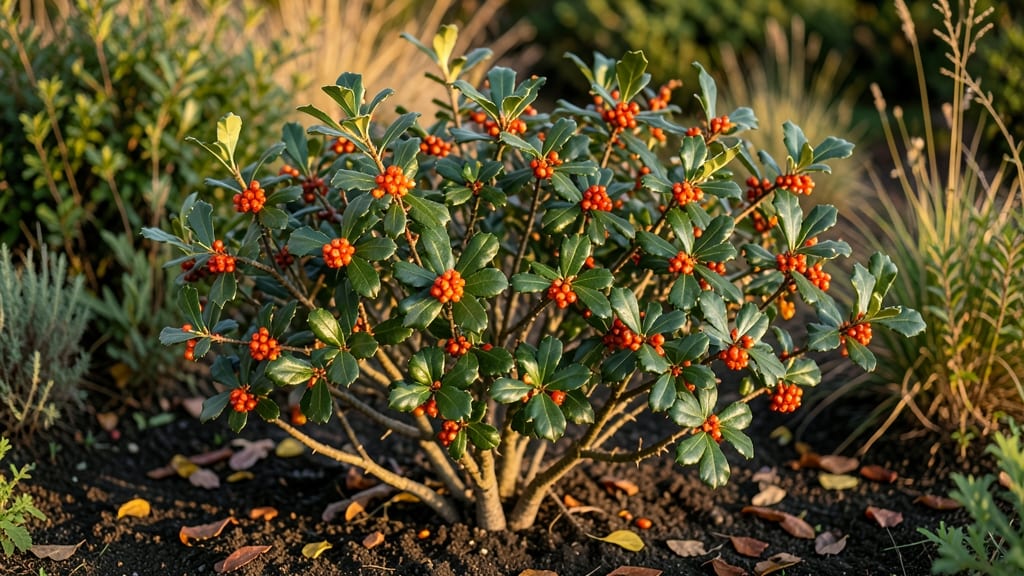
The oak leaf bush delivers year-round interest with its glossy foliage, dramatic fall colors, and berries that persist into winter. 🌿 I planted mine three years ago after admiring its ability to stay striking through every season—no dead branches, no boring green monotony.
You’ll need a sunny spot with well-draining soil (amend with compost if yours is heavy clay), and patience for its slow but steady growth.
The real magic happens in late winter pruning, when you shape it for dense foliage and next year’s blooms—think of it as sculpting a living work of art.
By summer, your bush will be a lush, 6- to 10-foot statement piece with vibrant new growth and clusters of tiny white flowers. The berries that follow? They’re edible for birds (and some humans), adding another layer of seasonal drama.
This plant thrives in zones 6-9 and handles drought once established—perfect for low-maintenance gardeners who still want high-impact results. Let’s get yours growing!
📚 In This Guide
- What you need
- Instructions
- Tips and common mistakes
- Wrapping up and next steps
What you need
- ● Oak leaf bush saplings: 1–3 healthy, disease-free plants (choose based on desired bush size and spacing).
- ● Well-draining soil: Mix of native soil, compost (30%), and perlite/sand (20%) for aeration.
- ● Organic mulch: 2–3 inches of wood chips or shredded bark to retain moisture and suppress weeds.
- ● Watering can or hose with a gentle spray nozzle: For deep, consistent watering.
- ● Fertilizer (balanced or oak-specific): Slow-release 10-10-10 or organic options like composted manure.
- ● Garden gloves: Heavy-duty to protect hands during planting and pruning.
- ● Trowel or shovel: For digging planting holes (1.5x wider than the root ball).
- ● Pruning shears: Sharp, bypass-style shears (sterilized with rubbing alcohol).
- ● Measuring tape: To ensure proper spacing (10–15 ft apart for mature bushes).
- ○ Stakes and twine (optional but helpful): For young saplings in windy areas.
- ● Soil pH test kit: Oak leaf bushes prefer slightly acidic soil (pH 5.0–6.5).
- ● Drip irrigation system: For automated, consistent watering.
- ● Epsom salt (magnesium sulfate): 1 tbsp per plant annually for vibrant foliage.
- ● Landscape fabric: To block weeds under mulch.
- ● Safety glasses: For pruning larger branches.
Step-by-Step instructions for growing oak leaf bushes
Here's how to cultivate these stunning shrubs with bold foliage and minimal fuss.
🌱 Step 1: Select the Perfect Planting Site
Oak leaf bushes thrive in full sun to partial shade, with at least 6 hours of direct sunlight daily. Choose a location with well-draining soil—they hate soggy roots. I always test soil moisture by squeezing a handful: if it stays clumped, it's too dense. Amend heavy clay with 2-3 inches of compost to improve drainage.
These shrubs grow 6-10 feet wide at maturity, so space them 8-10 feet apart for full growth potential. If planting near structures, leave 5 feet of clearance to prevent overcrowding and allow airflow. This prevents fungal diseases that can yellow leaves and stunt growth.
🌿 Step 2: Plant with Proper Technique
Dig a hole twice as wide as the root ball but only as deep as the container. Gently remove the plant from its pot and loosen any circling roots with your fingers. This encourages outward growth instead of root-bound stress. Place the shrub in the hole so the top of the root ball sits 1 inch above ground level—settling soil can bury the stem over time.
Backfill with native soil mixed with compost or aged manure to enrich the planting area. Water deeply to eliminate air pockets, then add 2-3 inches of mulch around the base, keeping it 3 inches away from the stem. This protects roots from temperature swings and retains moisture without suffocating the plant.
✂️ Step 3: Prune for Shape and Health
Prune oak leaf bushes in late winter or early spring before new growth begins. Remove any dead, diseased, or crossing branches first—these compete for energy and weaken the plant. Cut back to a healthy bud or lateral branch to encourage fuller regrowth. I always sterilize my pruners with rubbing alcohol between cuts to prevent spreading bacteria.
For shaping, reduce the previous year's growth by one-third to maintain a natural, open form. Avoid heavy pruning in fall, as new growth won't harden off before winter. Watch for water sprouts (vertical shoots) and remove them immediately—they drain energy from the main structure. A well-pruned bush develops dense foliage and fewer weak branches.
💧 Step 4: Water and Fertilize Strategically
Water deeply once a week during the first growing season to establish roots. After establishment, oak leaf bushes tolerate drought once mature, but young plants need consistent moisture. Check soil moisture by pushing your finger 2 inches deep—if it's dry, water thoroughly. Overwatering causes root rot, so always let the top 1-2 inches of soil dry out between waterings.
Fertilize in early spring with a balanced 10-10-10 fertilizer or slow-release granules. Apply ½ cup per foot of shrub height around the drip line, then water deeply to activate the nutrients. Avoid fertilizing in fall—new growth won't have time to harden off before winter. Yellowing leaves often signal over-fertilization, so reduce amounts if you see this happen.
☀️ Step 5: Maintain Year-Round Care
In summer, monitor for pests like spider mites or scale, which thrive in dry conditions. Spray leaves with water weekly to deter mites, or apply neem oil as a preventive treatment. Oak leaf bushes are generally low-maintenance, but remove any diseased leaves immediately to prevent spread. Bag and dispose of them—don't compost.
In winter, mulch again with 2-3 inches of organic mulch to insulate roots from freezing temperatures. These shrubs are hardy, but young plants benefit from extra protection. Prune lightly in late winter to shape and remove any dead wood. With proper care, oak leaf bushes provide year-round interest, from spring blooms to vibrant fall foliage.
Tips & tricks for perfect oak leaf bush cultivation
These simple strategies will help you avoid common pitfalls and grow oak leaf bushes that thrive year after year.
Soil Prep Secret: Before planting, I always mix a handful of compost or aged manure directly into the bottom of the planting hole. This creates a nutrient-rich zone right where roots will grow most actively. The 2-3 inches of compost mentioned in Step 1 is perfect—just don't overdo it, as too much can cause root burn. A soil test kit (available at garden centers) can help you determine if your native soil needs additional amendments beyond the standard recommendation.
Root Ball Placement: When positioning your oak leaf bush in Step 2, use a level to ensure the top of the root ball sits exactly 1 inch above ground level. Many gardeners bury the stem too deeply, which can lead to stem rot. I mark the depth on my shovel handle as a visual reminder—this simple trick prevents one of the most common planting mistakes that stunts growth.
Pruning Precision: In Step 3, when you're reducing last year's growth by one-third, focus on removing branches that grow inward or cross each other. These compete for sunlight and nutrients, weakening the overall structure. I always make cuts just above a healthy bud or lateral branch—this encourages fuller regrowth. For larger branches, use clean, sharp pruners and make the cut at a slight angle to prevent water from pooling on the cut surface.
Watering Wisdom: The once-a-week watering in Step 4 works perfectly for most climates, but adjust based on rainfall and temperature. In extreme heat, you might need to water every 4-5 days instead. I check soil moisture by pushing my finger 2 inches deep—if it feels dry, that's your cue to water. For container-grown oak leaf bushes, watering may be needed more frequently, sometimes every 2-3 days, as potted soil dries out faster.
Pro Tips for Oak Leaf Bush
- These simple strategies will help you avoid common pitfalls and grow oak leaf bushes that thrive year after year.
- Soil Prep Secret: Before planting, I always mix a handful of compost or aged manure directly into the bottom of the planting hole.
- Root Ball Placement: When positioning your oak leaf bush in Step 2, use a level to ensure the top of the root ball sits exactly 1 inch above ground level.
Frequently asked questions
Got questions about your oak leaf bush? You’re not alone!
Whether you're troubleshooting growth or planning your next pruning session, here are answers to the most common queries to keep your plant thriving year-round.
How often should I prune my oak leaf bush?
Prune your oak leaf bush twice a year: once in late winter or early spring (before new growth starts) and again in summer (after flowering). Light shaping prunes can be done throughout the year, but avoid heavy cuts in fall—this can stress the plant before winter. Pro tip: Use sharp, sterilized shears to prevent disease!
Can oak leaf bushes survive winter in cold climates?
Yes! Most oak leaf bushes (like Quercus ilex or Pyracantha) are hardy to USDA Zones 7-9, but colder regions (Zones 5-6) may need protection. Mulch the base with 3-4 inches of organic mulch and wrap young plants in burlap during extreme cold snaps. Avoid pruning in late fall—wait until early spring to encourage new growth.
Why are my oak leaf bush leaves turning yellow or brown?
Yellowing leaves often signal overwatering or fungal issues, while brown edges can mean underwatering or salt buildup (from tap water). Check soil moisture—oak leaf bushes prefer well-draining soil and water only when the top 2 inches are dry. If fungal spots appear, treat with neem oil or copper fungicide. Need pest help?
What’s the best alternative if my oak leaf bush isn’t thriving?
If your oak leaf bush struggles with your climate or soil, consider these low-maintenance alternatives:
- Holly (Ilex): Similar evergreen structure, drought-tolerant.
- Boxwood (Buxus): Dense, formal hedges with year-round color.
- Abelia (Abelia x grandiflora): Blooms summer-fall, thrives in partial shade.
- Dwarf Gardenia (Gardenia jasminoides): Fragrant, glossy leaves, loves shade.
How long does it take for an oak leaf bush to mature?
Oak leaf bushes grow slow to moderate, reaching mature size (6-10 feet tall) in 5-10 years, depending on species and growing conditions. For faster results, plant container-grown bushes (1-2 years old) instead of bare-root seedlings. Pro tip: Fertilize lightly in spring with balanced 10-10-10 for accelerated growth!
Wrapping up and next steps
Growing an oak leaf bush is a rewarding journey that blends beauty with precision—whether you’re drawn to its bold foliage or the art of sculpting its shape.
Remember, patience and consistent care are key: from selecting the right variety to mastering pruning techniques, every step shapes your bush into a stunning year-round centerpiece. 🌿
Ready to take the next step? Start small—grab a single cutting or sapling, and let your green thumb guide the process. Before you know it, your oak leaf bush will be the star of your garden, offering drama and elegance with minimal fuss. Happy pruning! ✂️