
Trees
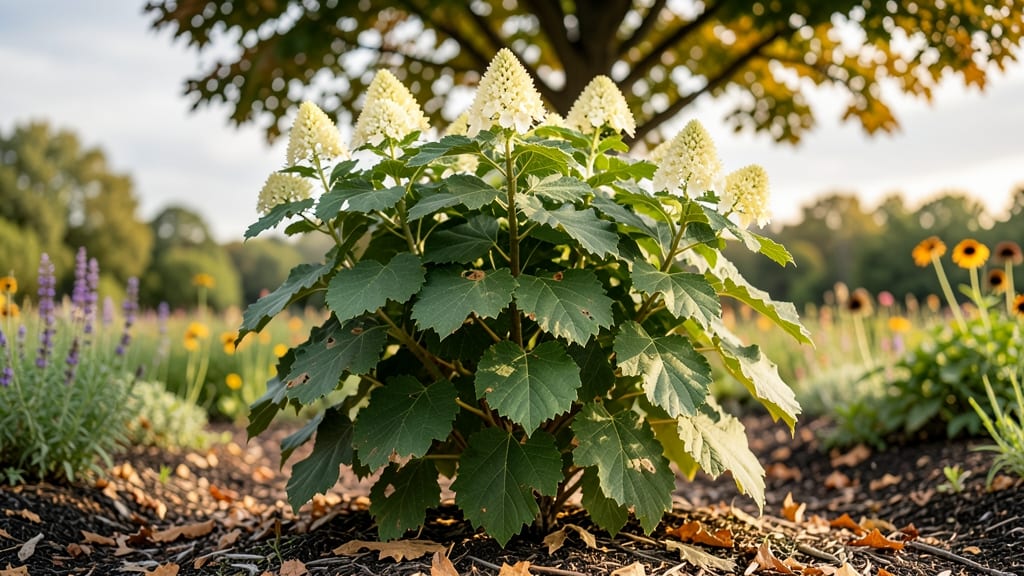
Growing oak leaf hydrangeas transforms your garden into a four-season showpiece with their glossy, oak-like foliage and dramatic seasonal color shifts. 🌿 I’ve grown these stunners for years, and they’ve become my go-to for shade-to-sun transition spots—no fuss, just stunning results.
Their deep green leaves turn fiery red in fall, and the cone-shaped blooms add texture all summer long.
The secret to their success? Morning sun and afternoon shade—they handle heat better than other hydrangeas but still appreciate some afternoon relief. Well-draining, slightly acidic soil keeps them thriving, and once established, they’re drought-tolerant enough to handle a few missed waterings.
Perfect for garden beds or large containers where you can appreciate their bold, architectural form.
With minimal pruning in late winter, you’ll encourage even more of those signature blooms and lush foliage. They’re tougher than they look—resistant to most pests and diseases—so once planted, they’ll reward you with decades of drama with almost no maintenance.
Imagine that deep red foliage glowing against a winter backdrop—it’s worth every minute of setup.
Whether you’re planting in a mixed border, as a standalone specimen, or even in a large pot, oak leaf hydrangeas deliver year-round interest with almost no effort. Here’s how to get started—and keep them looking their best through every season.
📚 In This Guide
- What you need
- Instructions
- Tips and common mistakes
- Wrapping up and next steps
What you need
- ● Oak leaf hydrangea (Hydrangea quercifolia): 1–3 nursery-grown plants (3–5 ft tall for mature specimens)
- ● OR seeds (if starting from scratch—germination can be slow!)
- ● Planting site: Well-draining, slightly acidic soil (pH 5.0–6.0)
- ● Partial shade to full sun (6+ hours of sunlight daily, with afternoon shade in hot climates)
- ● Space: 10–15 ft apart (they grow wide!)
- ● Tools: Garden trowel or shovel
- ● Pruning shears (sterilized with rubbing alcohol)
- ● Garden gloves (to protect from thorns and rough foliage)
- ● Watering can or hose with a gentle spray nozzle
- ● Mulch (2–3 inches of pine bark or shredded leaves)
- ● Fertilizer: Balanced, slow-release fertilizer (10-10-10 or 20-20-20, 1–2 tbsp per plant)
- ○ Optional: Acid-loving plant fertilizer (e.g., Miracle-Gro Azalea, Camellia & Rhododendron)
- ● Soil amendments: Peat moss or compost (to improve drainage and acidity)
- ● Sulfur or aluminum sulfate (if soil pH is too high)
- ● Support stakes (for young plants in windy areas)
- ● Drip irrigation system (for consistent moisture)
- ● Plant tags or markers (to track varieties and care notes)
Step-by-Step guide to planting and caring for oak leaf hydrangeas
This sun-loving shrub thrives with minimal fuss once you nail placement and soil prep.
🪴 Step 1: Choose the Perfect Planting Spot
Oak leaf hydrangeas demand full sun—at least 6-8 hours daily—for their signature deep green, glossy foliage and vibrant blooms. I always scout locations with morning sun and afternoon shade if your climate runs hot, since afternoon sun can scorch leaves in summer's peak. The spot should also offer shelter from strong winds, which can damage tender new growth.
Dig a hole twice as wide as the root ball but only as deep. The top of the root ball should sit 1-2 inches above ground level—this prevents waterlogging and encourages strong root establishment. If your soil drains poorly, amend the hole with a mix of native soil and compost (about 25% compost by volume) to improve aeration without overwhelming the plant.
🌱 Step 2: Plant with Proper Spacing and Soil Prep
Space oak leaf hydrangeas 6-8 feet apart—they spread wider than they grow tall, creating a lush, rounded canopy. For 4 plants, you’ll need about 20-25 square feet of garden space. Before planting, loosen the root ball gently if roots are circling—this encourages outward growth rather than root-bound stress.
Backfill the hole with the amended soil, pressing lightly to eliminate air pockets but avoiding compaction. Water deeply to settle the soil around roots, then add a 2-inch layer of mulch (like pine straw or shredded bark) to retain moisture and regulate soil temperature. Keep mulch 6 inches away from the stem to prevent rot.
☀️ Step 3: Water and Fertilize for Strong Establishment
Water deeply 2-3 times per week for the first month, ensuring the soil stays moist but not soggy. Oak leaf hydrangeas are drought-tolerant once established, but young plants need consistent moisture to develop robust roots. You’ll know it’s right when the top 2 inches of soil feel damp but not waterlogged.
Fertilize lightly in early spring with a balanced, slow-release fertilizer (10-10-10 or similar). Avoid high-nitrogen feeds—these promote leafy growth at the expense of blooms. I use about ½ cup per plant spread evenly around the root zone, then water again to activate the granules. Skip fall fertilization to encourage dormancy.
✂️ Step 4: Prune for Shape and Bloom Health
Prune late winter or early spring (before buds swell) to remove dead, crossing, or weak branches. Cut just above a bud or lateral branch to encourage outward growth. I never prune more than 1/3 of the plant in a single season—this shrub blooms on old wood, so aggressive cuts reduce next year’s flowers.
Watch for yellowing leaves or stunted growth—these often signal over-fertilization or poor drainage. If you notice brown leaf edges, your plant may need more humidity. Grouping hydrangeas with other plants or using a mulch ring helps retain moisture and improve microclimate conditions.
🌿 Step 5: Maintain Year-Round for Long-Term Beauty
In summer, water during dry spells but reduce frequency as temperatures rise. Oak leaf hydrangeas handle heat better than most, but wilting leaves mean it’s time to water. Avoid wetting foliage when watering—this reduces fungal risks like powdery mildew.
In fall, remove any dead or diseased branches and add a fresh 1-inch layer of mulch to insulate roots through winter. These shrubs are hardy to USDA Zone 5, but younger plants may need winter protection (like burlap wraps) in colder regions. You’ll know it’s thriving when new growth appears in early spring—that’s your cue to step up care for the blooming season ahead.
Tips & tricks for perfect oak leaf hydrangeas
These sun-loving beauties reward attention to detail—here's how to avoid common pitfalls and maximize their stunning foliage.
Sunlight Strategy: The 6-8 hours of daily sun requirement in Step 1 is non-negotiable for that signature glossy foliage. If your location gets intense afternoon sun, consider planting near a structure that provides afternoon shade—this prevents leaf scorch while still giving them morning sun exposure. I've seen dramatic differences in leaf quality between plants getting full sun versus those with afternoon shade protection.
Root Zone Mastery: When planting, that 2-inch elevation of the root ball above ground level (Step 1) isn't just about drainage—it's about preventing crown rot. The stem should remain above soil level to avoid moisture buildup. If your soil drains poorly, mix in that 25% compost by volume as specified, but don't overdo it—too much organic matter can actually suffocate roots by breaking down too quickly.
Watering Wisdom: The deep watering 2-3 times per week for the first month (Step 3) should be done slowly to encourage roots to spread outward rather than staying concentrated near the surface. I use a soaker hose for this initial period—it delivers water right at the root zone without disturbing the soil. After establishment, let the top 2 inches dry out between waterings to prevent fungal issues.
Pruning Precision: That late winter/early spring pruning window in Step 4 is critical because these blooms form on old wood. I always make my cuts just above a bud or lateral branch—this creates a natural growth point. Never remove more than 1/3 of the plant at once, or you'll sacrifice next year's blooms. Think of pruning as sculpting rather than trimming.
Pro Tips for Oak Leaf Hydrangeas
- These sun-loving beauties reward attention to detail—here's how to avoid common pitfalls and maximize their stunning foliage.
- Sunlight Strategy: The 6-8 hours of daily sun requirement in Step 1 is non-negotiable for that signature glossy foliage.
- Root Zone Mastery: When planting, that 2-inch elevation of the root ball above ground level (Step 1) isn't just about drainage—it's about preventing crown rot.
Frequently asked questions
Got questions about growing and caring for oak leaf hydrangeas? You’re not alone! Here are some of the most common queries—plus quick, practical answers to help you keep your sun-loving stunner thriving.
How fast do oak leaf hydrangeas grow, and how big do they get?
Oak leaf hydrangeas are moderate growers, typically adding 12–24 inches per year under ideal conditions. Mature plants reach 6–10 feet tall and wide, making them perfect for hedges, borders, or focal points. Prune annually in late winter to control size and shape!
When is the best time to plant oak leaf hydrangeas?
Plant them in early spring or fall when soil temps are cool (50–70°F). Avoid extreme heat or frost, as roots need time to establish. If planting in summer, water deeply and mulch to retain moisture—these beauties hate drought stress!
Can oak leaf hydrangeas survive in full sun? I’ve heard they prefer shade.
While they tolerate partial shade, oak leaf hydrangeas thrive in full sun—especially in cooler climates (Zones 5–9). In hot, dry areas, provide afternoon shade and consistent watering. Their glossy foliage will thank you with vibrant color year-round!
Why are my oak leaf hydrangea leaves turning yellow or brown?
Yellowing leaves often signal overwatering or poor drainage. Brown edges? Likely underwatering or salt buildup from tap water. Check soil moisture (top 1–2 inches should be dry), and ensure pots/drainage beds aren’t waterlogged. Mulch helps!
Are there drought-tolerant alternatives to oak leaf hydrangeas?
If you need low-maintenance, sun-loving shrubs, try:
Pro tip: Group plants with similar water needs to simplify care!
Wrapping up and next steps
Oak leaf hydrangeas are the ultimate sun-loving stunner for gardeners who crave year-round beauty and low-maintenance charm! 🌿 Their glossy foliage and stunning blooms make them a standout choice, whether you're a beginner or a seasoned pro.
With the right care—like well-draining soil, ample sunlight, and occasional pruning—you’ll be rewarded with a showstopping centerpiece that thrives for decades.
Ready to transform your outdoor space? Start by choosing your spot, gathering your tools, and planting with confidence. Soon, you’ll be admiring your lush, vibrant oak leaf hydrangea and sharing the joy with neighbors (and maybe even winning a few garden awards!). 🌸