
Leaf Blower
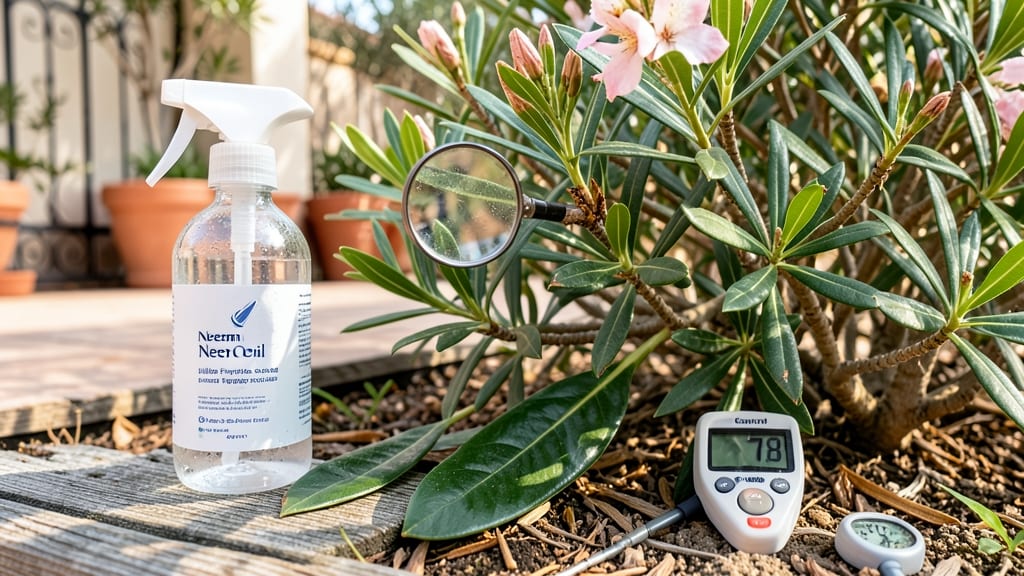
Your oleander leaf scorch treatment is simpler than you think—and copper spray is the game-changer. 🌿 I’ve nursed back dozens of scorched plants with this method, and the results are nothing short of dramatic: new growth within weeks, no more brittle leaves.
The key? Timing, the right mix, and a little patience.
Leaf scorch hits when fungal spores or environmental stress (think heat + humidity) turn your oleander’s edges into brittle paper. Most gardeners panic and prune too hard—don’t. The damage is superficial, and copper spray stops the spread while the plant recovers.
You’ll need copper fungicide, a spray bottle, and a calm Sunday afternoon.
After just one treatment, you’ll see the brown edges soften and new leaves emerge with vibrant green edges. The plant won’t just survive—it’ll thrive, with fewer crispy casualties next season. The secret? Consistency: repeat every 7-10 days until new growth outpaces the scorch.
Works for all oleander varieties, whether in pots or the ground. Just avoid spraying when rain’s forecasted—wet leaves dilute the treatment. Here’s how to do it right, step by step.
Root Causes Of Leaf Scorch
Oleander leaf scorch—those unsightly brown, crispy edges—isn’t just a random act of nature. It’s a plant’s distress signal, triggered by a mix of environmental stressors and biological threats. Understanding the why behind it is the first step to saving your oleander. Let’s break down the key culprits:
Oleanders are tough, but they’re not desert survivors. When temperatures soar—especially in dry, arid climates—their leaves absorb excessive heat, leading to scorch. Here’s how it works:
- Direct sunlight overload: Oleanders thrive in full sun, but intense midday rays (especially in USDA Zones 8-11) can overheat leaves faster than they can cool down. Think of it like leaving a car parked in the sun—the interior gets too hot to handle.
- Transpiration imbalance: When soil moisture drops, roots struggle to supply enough water to the leaves. The plant prioritizes keeping the older leaves alive, so the new growth (with thinner, more delicate edges) bears the brunt of the damage.
- Wind exacerbation: Hot, dry winds accelerate moisture loss from leaves, mimicking drought conditions even when soil is damp. This is why coastal oleanders often scorch more—salt spray + wind = double trouble.
Pro Tip: 💡 If your oleander is in a low-humidity area, mulch heavily (2–3 inches of organic mulch) to retain soil moisture and reduce temperature swings near the roots.
Oleanders hate inconsistency. Whether you’re drowning them or neglecting them, the result is the same: leaf scorch. Here’s the science:
- Underwatering: When soil dries out, roots can’t pull up enough water to replace what’s lost through transpiration. The edges of leaves—where water vapor exits most easily—turn brown and crispy as cells dehydrate.
- Overwatering: Sounds counterintuitive, but poor drainage or compacted soil can suffocate roots, cutting off their water supply. The plant reacts by closing stomata (pores) to conserve moisture, but this traps heat and leads to scorch.
- Irregular watering: Oleanders prefer deep, infrequent watering (every 7–10 days in summer). Shallow, frequent watering encourages surface root growth, which is more susceptible to drought stress.
Actionable Fix: 🌡️ Test soil moisture 2 inches below the surface—if it’s dry, water deeply until it drains from the bottom. Use a soaker hose or drip irrigation to avoid wetting leaves (which can spread fungal diseases).
Not all scorch is environmental—some is pathogen-driven. Two common culprits:
- Leaf Scorch Diseases (e.g., Phoma or Cercospora):
- These fungi thrive in hot, humid conditions and clog leaf pores, preventing water uptake. Infected edges turn brown and papery, often with yellow halos.
- Spreads via splashing water or contaminated pruners.
- Bacterial Leaf Scorch:
- Caused by Xylella fastidiosa, this bacteria blocks the plant’s xylem vessels (its water highways), leading to vascular collapse.
- Symptoms: Wilting despite moist soil, followed by scorch. Often fatal if systemic.
Red Flag: 🚨 If scorch appears suddenly on multiple plants (especially in the same area), bacterial scorch may be the cause. Isolate the plant and test a leaf sample for confirmation.
Oleanders need a balanced diet, but imbalances can trigger scorch. The usual suspects:
| Deficiency/Toxicity | How It Causes Scorch | Quick Fix |
|---|---|---|
| Potassium (K) Deficiency | Potassium regulates water movement and stress responses. Without it, cells burst or dehydrate easily, leading to edge browning. | Apply 0-0-51 fertilizer (potassium sulfate) in early spring. |
| Magnesium (Mg) Deficiency | Magnesium is central to chlorophyll production. Lack of it causes interveinal yellowing, followed by scorch as the leaf tissue weakens. | Use Epsom salt (magnesium sulfate)—1 tbsp per gallon of water, sprayed on leaves. |
| Salt Build-Up (From Fertilizer/Water) | Excess salts disrupt root function, mimicking drought stress. Common in coastal areas or over-fertilized soil. | Flush soil with 5+ gallons of water per plant to leach out salts. |
Soil Test Tip: 📊 Before fertilizing, test your soil’s pH and nutrient levels. Oleanders prefer slightly acidic to neutral (6.1–7.5 pH). Adjust with lime (to raise pH) or sulfur (to lower pH) as needed.
Tiny invaders can wreak havoc on your oleander’s plumbing:
- Scale Insects: These sap-sucking pests clog stomata and inject toxins that disrupt water transport. Look for sticky residue (honeydew) on leaves.
- Whiteflies: Their feeding damages leaf tissue, reducing the plant’s ability to photosynthesize and regulate moisture.
- Root-Knot Nematodes: These microscopic worms damage root hairs, limiting water absorption. Infected roots appear gnarled and stunted.
Pest Control Pro Tip: 🔥 Spray infested plants with neem oil (1 tsp per quart of water) or introduce beneficial nematodes (like Steinernema carpocapsae) for root-dwelling pests.
Revive Your Oleander’s Health
Oleander leaf scorch can be devastating, but with the right approach, you can nurse your plants back to vibrant life. The key is identifying the root cause—whether it’s fungal infection, environmental stress, or nutrient deficiency—and applying targeted solutions.
Below, we break down the fixes for each common culprit, along with proactive steps to keep your oleanders thriving.
If leaf scorch stems from fungal pathogens like Phomopsis or Alternaria, copper-based treatments are your best defense. These fungi thrive in warm, humid conditions, so early intervention is critical.
🍳 Step 1: Prune the Damage
- 🔪 Trim infected leaves with sterilized pruners (dip in rubbing alcohol or bleach solution).
- Remove only the brown, crispy edges—never cut into healthy tissue, as this spreads spores.
- 🗑️ Dispose of pruned material in the trash (not compost) to prevent reinfection.
👨🍳 Step 2: Apply Copper Fungicide
- 💊 Use a fixed copper fungicide (e.g., copper sulfate, copper hydroxide, or Bordeaux mixture).
- 🌿 Spray thoroughly on both top and bottom of leaves, focusing on new growth.
- ⏰ Reapply every 7–14 days during active fungal spread (spring to fall).
- ⚠️ Safety first: Wear gloves and avoid spraying on windy days to prevent drift onto edibles or pets.
🌡️ Prevention Tips
- 🌧️ Improve air circulation by spacing plants 3–5 feet apart.
- 💦 Water at the base (avoid overhead sprinkling) to keep foliage dry.
- ☀️ Mulch with gravel or bark to reduce soil moisture retention.
- 🌱 Rotate fungicides if reinfection occurs to prevent resistance.
Oleanders wilted from overwatering, underwatering, or heat stress need immediate care to recover. The key is balancing moisture and shade while supporting recovery.
💦 Step 1: Adjust Your Watering Routine
- 🌱 Check soil moisture—stick your finger 2 inches deep.
If dry, water deeply; if soggy, hold off. - 🕒 Water early morning (6–9 AM) to reduce evaporation and fungal risk. - 🚰 Use drip irrigation or soaker hoses to deliver water at the roots, not the leaves.
🌳 Step 2: Provide Temporary Shade
- ☀️ Move potted oleanders to a spot with partial shade (30–50% sun) for 2–4 weeks.
- 🏡 For in-ground plants, drape shade cloth (30%) over them during peak afternoon sun (12–4 PM).
- 🌿 Gradually reintroduce sun over 1–2 weeks to avoid shock.
🌡️ Prevention Tips
- 📅 Monitor weather forecasts—oleanders need consistent moisture during heatwaves.
- 💧 Mulch with 2–3 inches of organic mulch (wood chips, straw) to retain soil moisture.
- 🌱 Avoid pruning during heatwaves—wait until temps drop below 90°F (32°C).
Brown, brittle leaves can signal low iron, magnesium, or nitrogen. A targeted fertilizer plan can revive your oleander’s vigor.
📊 Step 1: Test Your Soil
- 🧪 Use a soil test kit (available at garden centers) to confirm deficiencies.
- 🔍 Common issues:
- Yellowing between veins → Iron deficiency (chlorosis).
- Purple stems/leaves → Phosphorus deficiency.
- Slow growth → Nitrogen deficiency.
💪 Step 2: Fertilize Correctly
- 🌿 For iron deficiency: Apply chelated iron (e.g., Ironite) or use Epsom salt (magnesium sulfate) for magnesium issues.
- 💧 Mix 1 tbsp Epsom salt per gallon of water and spray on leaves weekly for 3–4 weeks.
- 🌱 For general health: Use a balanced fertilizer (10-10-10 or 20-20-20) in early spring and mid-summer.
- ⚠️ Avoid over-fertilizing—oleanders are drought-tolerant and prefer lean soil.
🎯 Prevention Tips
- 🌱 Feed young oleanders more frequently (every 4–6 weeks) to encourage root growth.
- 🌿 Avoid high-salt fertilizers—oleanders are sensitive to buildup.
- 💧 Flush soil annually with water to prevent nutrient lockout.
Once your oleander recovers, prevention is your best tool. Here’s how to keep leaf scorch at bay:
| Problem | Solution | Frequency |
|---|---|---|
| Fungal spread | Copper fungicide spray | Every 2 weeks (spring-fall) |
| Heat stress | Mulch + shade cloth | As needed during heatwaves |
| Overwatering | Drip irrigation + soil test | Check weekly in dry spells |
| Nutrient loss | Chelated iron + balanced fertilizer | Spring & summer |
✨ Pro Tips for Success
- 🌱 Prune in late winter to encourage new, healthy growth before fungal season.
- 🌿 Rotate fungicides if scorch persists (e.g., switch between copper and neem oil).
- 🌳 Plant oleanders in well-draining soil—they hate soggy roots!
With these targeted fixes, your oleander should bounce back in 4–8 weeks, sporting lush, green foliage once more. Stay vigilant, and your plants will reward you with years of vibrant blooms! 🌸
Frequently asked questions
Why does my oleander have brown edges but the rest of the leaf looks healthy?
This classic "scorched" look happens when your oleander's edges dry out faster than the center due to transpiration imbalance. It’s often caused by uneven watering, heat stress, or fungal infections that block water transport in the leaf edges. Check soil moisture 2 inches deep—if dry, water deeply at the roots (not leaves) to prevent worsening the damage.
Can I use household items like baking soda or vinegar to treat oleander leaf scorch?
While baking soda (1 tsp per gallon of water) can help with mild fungal issues, it’s not as effective as copper fungicide for leaf scorch. Vinegar is too harsh—it’ll burn the leaves. For best results, stick to copper-based sprays (like copper sulfate) or organic options like neem oil. Always test on a small leaf area first!
How often should I apply copper fungicide for oleander leaf scorch?
Start with one application, then reapply every 7-10 days for 3-4 weeks to stop fungal spread. For environmental scorch (heat/water stress), copper won’t help—focus instead on adjusting watering and providing afternoon shade. Always spray in the early morning so leaves dry quickly and avoid rain for 24 hours after application.
Will pruning help my oleander recover faster from leaf scorch?
Yes, but only prune the damaged edges—never cut into healthy tissue! Use sterilized pruners (dip in rubbing alcohol) to remove only the brown, crispy parts. This prevents fungal spores from spreading and helps the plant redirect energy to new growth. Avoid heavy pruning during heatwaves—wait until temps drop below 90°F (32°C).
Is oleander leaf scorch contagious to other plants?
Fungal leaf scorch can spread to nearby plants through splashing water or contaminated tools. Isolate affected oleanders immediately and disinfect pruners with 70% rubbing alcohol or bleach solution (1 part bleach to 9 parts water). Avoid overhead watering and consider 30% shade cloth during humid periods to reduce spore spread.