
Pests and Diseases
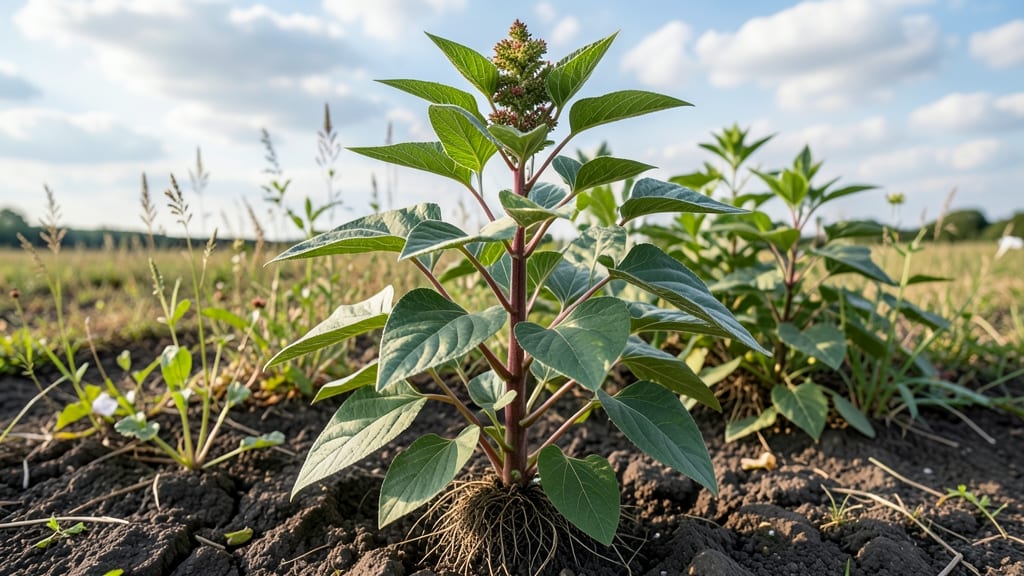
Identifying Palmer amaranth leaf means looking for its distinctive lance-shaped leaves with jagged edges and a sharp point, growing in dense clusters along thick, watery stems. This fast-growing weed can shoot up to 6 feet tall in warm climates if not controlled.
Palmer amaranth leaves stand out because of their rough, sandpaper-like texture and prominent central vein running down the middle. 🌱 Unlike other weeds, these leaves grow in a whorled pattern around the stem, creating a dense canopy that blocks sunlight from reaching your plants.
I've seen it spread rapidly in fields and gardens, making early identification crucial for preventing it from taking over.
This weed's aggressive growth isn't just about size—it also produces thousands of seeds per plant, which can remain dormant in the soil for years. That's why many gardeners and farmers consider it one of the most challenging weeds to eradicate once established.
The key to managing it effectively starts with recognizing these unique leaf characteristics before it becomes a full-blown infestation.
💡 In This Article
- Key Botanical Traits of Palmer Amaranth Leaves
- Effective Palmer Amaranth Control Methods for Gardens
Key botanical traits of Palmer amaranth leaves
The lance-shaped leaves of Palmer amaranth are its most distinctive feature, measuring 2-6 inches long and 0.5-2 inches wide at their broadest point. These leaves have a rough, sandpaper-like texture caused by tiny hair-like structures called trichomes, which create a gritty sensation when touched.
This texture helps distinguish it from smooth-leaved weeds like lambsquarters, which feel almost silky in comparison.
The edges of these leaves are deeply serrated, with sharp, irregular teeth pointing outward. The prominent central vein (midrib) runs straight down the middle, with 5-7 secondary veins branching out at angles, creating a network that's easily visible when held up to light.
This vein pattern gives the leaf its characteristic "lance" shape, tapering to a sharp point at the tip. 🌿 The leaves grow in a whorled arrangement—typically 3-5 leaves per node—creating a dense, overlapping canopy that blocks sunlight from reaching soil.
Palmer amaranth stems are another key identifier, growing thick and watery (up to 1 inch in diameter) with a reddish-purple tint when exposed to sunlight. This thickness helps the plant transport water and nutrients efficiently, supporting its rapid growth rate of 1-2 inches per day under ideal conditions.
The stems also have a slightly ribbed texture, which differentiates them from the smoother stems of pigweed species.
When comparing Palmer amaranth to similar weeds like pigweed or waterhemp, the leaf arrangement is the most telling difference. Pigweed leaves grow oppositely (in pairs), while waterhemp leaves are more oval-shaped with smoother edges.
Palmer amaranth's whorled leaf pattern and serrated edges make it instantly recognizable to trained eyes. The plant's rapid seed production—up to 1 million seeds per plant—also sets it apart from slower-reproducing weeds.
One fascinating botanical detail is how Palmer amaranth's leaves change color as they mature. Young leaves start a light green hue but develop darker green veins and purplish stems as the plant ages.
This color shift is triggered by higher concentrations of anthocyanins, pigments that also help the plant protect itself from UV radiation. 🌱 These pigments are the same compounds that give red wine and blueberries their color, but in Palmer amaranth, they serve a survival function rather than a culinary one.
The plant's growth habit is equally distinctive. Palmer amaranth grows in a bushy, upright pattern, often reaching 6 feet tall in a single growing season.
Its branching habit creates a dense structure that can shade out competing plants, while its deep root system (up to 4 feet deep) allows it to access water and nutrients that shallow-rooted crops can't reach.