
Pests and Diseases
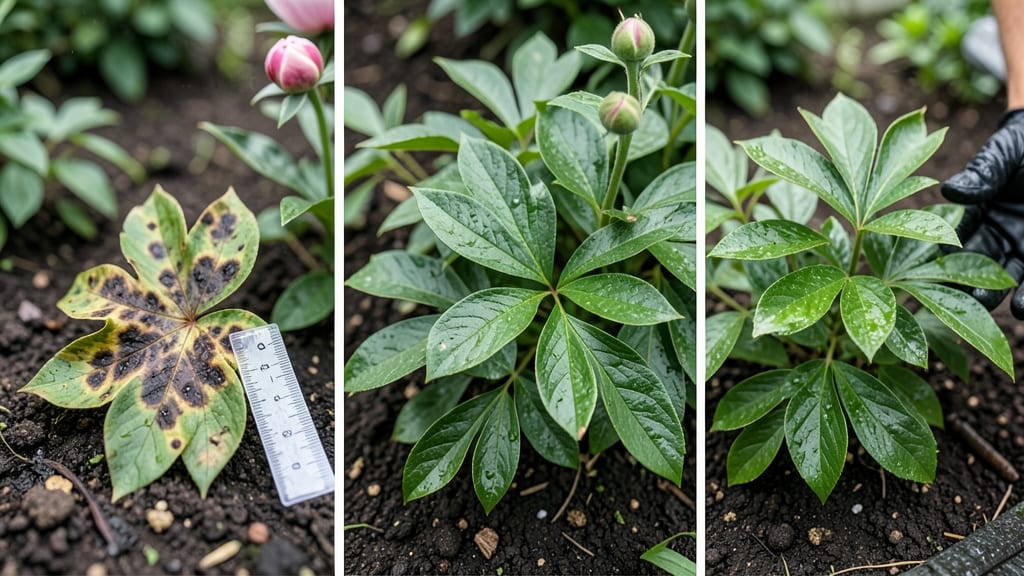
Those dark, spreading leaf blotch spots on your peony leaves? That’s peony leaf blotch, and copper spray is your fastest cure. 🌿 I’ve battled this fungal nightmare for years, and the key is acting before it ruins your blooms—once it takes hold, recovery gets messy.
The problem starts with wet foliage and poor airflow, giving the fungus a foothold. Copper fungicide disrupts its life cycle, but timing matters: apply it at first sign of spots, then every 10-14 days until new growth appears. No need for fancy tools—just a sprayer and consistent coverage.
Within 2-3 weeks, you’ll see fresh, spot-free leaves pushing through. The blooms stay vibrant, and next season starts stronger. This isn’t just damage control; it’s a reset for your peonies’ health. Works for organic gardens too—just swap the chemical copper for a homemade baking soda mix.
Here’s how to make it work fast.
Root Causes Of Leaf Spots
Peony leaf blotch isn’t just a random blemish—it’s a fungal party crashers 🎭, and understanding its triggers is key to stopping the spread. The disease, caused by the pathogen Ramularia paeoniae, thrives when conditions align like a perfect storm.
Let’s break down the why behind those unsightly blotches so you can outsmart the fungus.
The fungus loves moisture—think of it as a sponge that soaks up dampness to multiply. When peony leaves stay wet for prolonged periods (thanks to overhead sprinklers, rain, or soggy soil), spores germinate and infect foliage.
- Why it happens: Water droplets linger on leaves, creating a perfect fungal buffet. Poor drainage keeps roots waterlogged, weakening plants and making them vulnerable.
- Science in action: The fungus Ramularia releases enzymes that break down leaf cuticles, allowing it to invade cells. Humidity above 75% for 12+ hours accelerates spore production.
- Actionable fix:
- Water at the base of plants (not overhead) to keep foliage dry.
- Improve soil drainage with compost or sand mixes—aim for soil that drains within 24 hours of watering.
- Avoid late-day watering to allow leaves to dry overnight.
Fungal spores are patient—they can survive in soil, plant debris, or even on tools for years 🕰️. If last year’s infected leaves weren’t cleaned up, this year’s peonies are rolling out the welcome mat.
- Why it happens: Spores overwinter in organic matter (like old foliage) and hitchhike on wind, water, or garden tools to new hosts. Once conditions are right (moisture + warm temps), they explode into action.
- Science in action: The fungus produces conidia (asexual spores) that disperse via splashing water or airflow. A single infected leaf can release thousands of spores.
- Actionable fix:
- Remove and dispose of all infected leaves/debris immediately—don’t compost them! Seal in a trash bag.
- Sterilize pruners with 70% rubbing alcohol or a 10% bleach solution between cuts.
- Rotate crops—don’t plant peonies in the same spot for 3+ years to break the fungal cycle.
Peony leaf blotch adores summer’s sauna-like conditions—think 75–85°F (24–29°C) with high humidity. These are the golden hours for fungal growth 🌞💦.
- Why it happens: Warm temps speed up fungal metabolism, while humidity keeps spores plump and ready to infect. Coastal or shaded gardens are especially risky.
- Science in action: The fungus’s optimal growth range is 68–86°F (20–30°C). Spores germinate within 4–6 hours of leaf wetness in these conditions.
- Actionable fix:
- Space peonies for airflow—aim for 2–3 feet between plants to reduce humidity near foliage.
- Prune for sun exposure: Thin out crowded stems to let light and air circulate.
- Use mulch (like straw) to regulate soil temp and reduce splashing water.
Stressed peonies are like open doors for fungi 🚪. Poor nutrition, transplant shock, or pest damage leave plants defenseless against infections.
- Why it happens: Peonies need balanced nutrients (especially phosphorus and potassium) to build cellulose-rich leaves that repel pathogens. Weak plants can’t produce phytoalexins—natural antifungal compounds.
- Science in action: Fungal enzymes like cellulases and pectinases break down plant cell walls when defenses are low. Root damage (from overwatering or pests) also starves the plant of energy.
- Actionable fix:
- Fertilize with a balanced 10-10-10 or 5-10-10 formula in early spring to boost root and leaf health.
- Avoid nitrogen-heavy fertilizers (like lawn food), which promote soft, fungal-loving growth.
- Test soil pH—aim for 6.5–7.0. Acidic soil (pH < 6.0) weakens peonies.
Pro Tip: 💡 Monitor your peonies weekly during peak fungal season (late spring to early summer). Catch tiny yellow spots (early signs) and act fast—copper sprays work best before blotches expand!
Fixing Fungal Foliar Fungus Now
Fungal leaf diseases like peony leaf blotch can be frustrating, but with the right approach, you can restore your plants to vibrant health. Below are targeted solutions based on the root causes—whether it’s poor airflow, excess moisture, or a lack of preventive care.
Start with the fixes that match your garden’s specific issues, then layer in prevention to keep your peonies thriving.
Why it works: Fungal spores spread like wildfire on damp foliage. Cutting off the source stops the infection in its tracks.
How to do it:
- 👨🍳 Snip and toss: Use clean, sharp pruners to remove all blotchy, yellowed, or spotted leaves. Don’t leave them on the soil—this spreads spores.
- 🗑️ Dispose properly: Seal infected leaves in a plastic bag (not your compost bin) and trash them. If possible, burn them to eliminate spores entirely.
- 🌿 Sterilize tools: Wipe pruners with 70% isopropyl alcohol or a 10% bleach solution (1 part bleach to 9 parts water) before and after use.
Pro tip: 💡 If the disease is severe, remove entire affected stems down to healthy tissue. Better to sacrifice a few leaves than lose the whole plant!
Why it works: Copper disrupts fungal cell walls, stopping the spread while being safe for edible gardens (once residues dry).
How to do it:
- 🛒 Choose your copper: Use copper fungicide sprays (like Bonide Copper Fungicide or Garden Safe Brand) or copper sulfate (mix 1 tsp per gallon of water).
- 🌧️ Timing is key: Spray early morning or late evening when humidity is high but leaves are dry. Avoid spraying if rain is forecast within 24 hours.
- 🔄 Reapply as needed: Spray every 7–10 days until new leaves emerge without spots. For bad outbreaks, add a second spray 3 days later for extra protection.
Pro tip: 🌡️ Mix copper with 1 tsp baking soda per gallon for a free, DIY boost. The baking soda raises the pH slightly, making it harder for fungi to latch on.
Why it works: Fungi love stagnant, soggy conditions. Better airflow and drainage dry out leaves faster, preventing spore germination.
How to do it:
- 🌿 Prune for space: Thin out crowded peony stems so air circulates freely. Aim for 3–4 inches of space between plants.
- 💧 Fix watering habits:
- Water at the base (not overhead) to keep foliage dry.
- Use drip irrigation or soaker hoses to avoid wetting leaves.
- Water early in the day so leaves dry by nightfall.
- 🏗️ Upgrade soil: Amend heavy clay soil with compost or perlite to improve drainage. Peonies hate “wet feet”—ensure they’re planted on a slightly raised mound if your garden stays soggy.
Pro tip: ✨ Add 1–2 inches of mulch (straw or pine needles) around plants to reduce soil splashing onto leaves during watering.
Why it works: Over-fertilizing or neglecting basic hygiene can invite fungal infections.
How to do it:
- 🌱 Fertilize lightly: Too much nitrogen = lush, weak growth = fungal buffet. Use a balanced 10-10-10 fertilizer sparingly (once in early spring).
- 🧼 Clean up debris: Remove fallen leaves and stems after blooming season. Fungal spores overwinter in organic matter.
- 🔄 Rotate treatments: If you’ve used the same fungicide yearly, switch to a different active ingredient (like neem oil or potassium bicarbonate) to prevent resistance.
Pro tip: 🎯 Prevent recurrence by spraying copper fungicide preventatively in early spring (before buds form) and after rain storms.
Once your peonies are healthy, lock in their defense with these habits:
- 🌧️ Rainy season? Add fungicidal soap (like Safer Brand) to your copper spray routine.
- 🌱 Plant spacing: Keep peonies 2–3 feet apart to reduce humidity pockets.
- 🌿 Crop rotation: If you grow peonies in containers, sterilize pots annually with bleach solution.
- 🐞 Beneficial allies: Encourage ladybugs and lacewings—they munch on fungal spores too!
Final note: Patience is key! Some severely infected plants may take 2–3 weeks to show full recovery. Stick with the plan, and your peonies will bounce back stronger than ever. 🌸
Frequently asked questions
What are the first signs of peony leaf blotch I should watch for?
Look for tiny yellow spots (about 1/8-inch wide) on peony leaves, often with a halo effect around them. These spots will darken and develop grayish centers as the disease progresses. Check the undersides of leaves first—the fungus often starts there before spreading to the top.
Can I still save my peonies if the blotches are already large and spreading?
Yes, but act fast! Remove all infected leaves immediately and apply a copper fungicide spray (or baking soda mix) every 7-10 days for 4-6 weeks. Severe cases may require removing entire stems, but healthy roots will often regrow new foliage. For next season, improve airflow and drainage to prevent recurrence.
Is copper spray safe to use around beneficial insects like bees?
Copper fungicides are generally safe for bees when used as directed, but avoid spraying during peak bloom times (when bees are most active). For extra protection, apply in early morning or evening when bees are less active. If you're concerned, use a neem oil spray instead—it's bee-friendly and effective against early-stage fungal infections.
How do I know if my peony's leaf spots are from leaf blotch or something else?
Leaf blotch spots are typically grayish-brown with yellow halos and appear on both leaf surfaces. Compare with other issues: powdery mildew looks like white dust, rust fungus creates orange pustules, and bacterial leaf spot has water-soaked edges. If you're unsure, check the leaf undersides—leaf blotch often starts there first.
Will my peonies bloom next year if I treat leaf blotch now?
Yes! Treating leaf blotch now protects your plant's energy for next season's blooms. The fungus primarily affects foliage, not roots, so your peony's root system remains healthy to support next year's growth. Just keep up with preventive sprays in spring and maintain good garden hygiene. With proper care, you'll still get those stunning peony blooms!