
How To
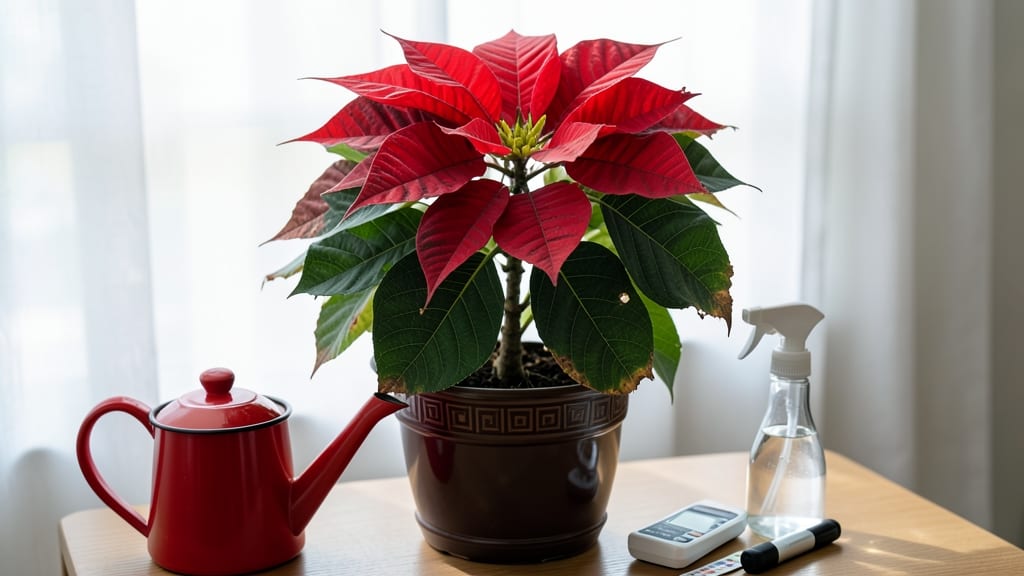
Brown leaf tips on your poinsettia don’t mean the plant is dying—it’s just sending you a care signal. 🌿 I’ve nursed back dozens of these holiday stars, and the fix is simpler than you’d think: most cases come down to water, air, or a little extra TLC.
The key is matching your poinsettia’s needs to your home environment, not fighting an invisible enemy.
Overwatering is the #1 culprit—those crispy edges scream "drain me!"—but underwatering and dry air play a role too. I learned this the hard way when my 2022 Christmas poinsettia lost half its leaves to a heat vent blowing directly on it.
The solution? A pebble tray with water, occasional misting, and keeping it away from vents or drafts. Your plant’s roots need moisture, not a swamp.
Once you adjust the basics, you’ll see fresh green within 1-2 weeks. The brown tips won’t magically vanish, but new growth will push out vibrant and healthy.
Prune the damaged edges with clean scissors to encourage fuller regrowth—just don’t cut into healthy tissue. This isn’t rocket science, but it does require consistency.
Prevention is the real game-changer: group your poinsettia with other houseplants to boost humidity, and check the soil with your finger before watering. If the top inch feels dry, it’s time; if it’s soggy, wait.
With these tweaks, your poinsettia will stay lush through the holidays and beyond—no fungus, no stress, just foolproof holiday cheer.
Root Causes Of Leaf Damage
Poinsettias are stunning holiday plants, but those unsightly brown leaf tips can turn your festive display into a botanical blunder. Let’s dig into the science behind why this happens—so you can stop the damage in its tracks.
Brown leaf tips often start as a cry for help from roots drowning in excess moisture. Poinsettias (Euphorbia pulcherrima) are native to Mexico’s dry highlands, where they thrive in well-draining soil and moderate watering.
When soil stays soggy, roots suffocate, cutting off water and nutrient flow to the leaves.
The science:
- Root rot (caused by Phytophthora or Pythium fungi) blocks water uptake, leading to marginal necrosis (browning at leaf edges).
- Salt buildup from tap water or fertilizers can also scorch tips by disrupting cellular function.
- Compacted soil or pots without drainage holes trap water, accelerating the problem.
Quick fix: Let the top 1–2 inches of soil dry out between waterings. Use a pot with drainage holes and a soil mix amended with perlite or orchid bark (50% potting soil, 50% inorganic matter).
Poinsettias hate hot, dry indoor air, especially near heaters or vents. Low humidity and high temperatures create a transpiration imbalance, where leaves lose water faster than roots can supply it.
The science:
- Stomata (tiny leaf pores) open to release water vapor, but in dry air, they over-extend, causing plasmolysis (cell membrane detachment from the cell wall).
- Brown tips form as osmotic pressure drops, and cells collapse at the edges first.
- Heater dryness (below 40% humidity) mimics desert conditions—too extreme for tropical poinsettias.
Quick fix:
- Mist leaves lightly 2–3 times a week (avoid wetting foliage if prone to fungal issues).
- Use a pebble tray with water or a humidifier near the plant.
- Keep temps between 65–75°F—avoid drafts or sudden heat spikes.
While poinsettias love bright, indirect light, direct sunlight (especially afternoon rays) can sunburn leaves, causing crispy, brown edges.
The science:
- UV radiation damages chlorophyll in leaf cells, leading to oxidative stress.
- Heat stress from windowsills or grow lights denatures proteins in leaf tissue, causing necrosis (cell death).
- Reflective surfaces (white walls, glass) amplify light intensity, worsening the effect.
Quick fix:
- Place your poinsettia 3–6 feet from a south- or east-facing window.
- Use sheer curtains to diffuse harsh light.
- If using grow lights, keep them 12–18 inches away and limit to 12 hours/day.
Poinsettias are light feeders, and over-fertilizing—especially with high-salt fertilizers—can burn roots and leaves.
The science:
- Excess salts (from tap water, synthetic fertilizers, or hard water) disrupt osmosis, preventing roots from absorbing water.
- Chlorosis (yellowing between veins) often precedes brown tips as cells starve.
- Flushing soil with distilled water can temporarily mask the issue, but root damage persists.
Quick fix:
- Fertilize lightly every 4–6 weeks with a balanced, water-soluble fertilizer (10-10-10 or 20-20-20, diluted to half strength).
- Flush soil monthly with distilled or rainwater to reduce salt buildup.
- Avoid liquid fertilizers if your water is hard—opt for slow-release granules instead.
While brown tips are usually environmental, fungal infections like leaf spot (Alternaria or Botrytis) or bacterial blight can also cause similar symptoms—especially in high-humidity or crowded conditions.
The science:
- Fungal spores thrive in wet foliage and poor air circulation, causing necrotic lesions that turn brown.
- Bacterial infections (e.g., Xanthomonas) create water-soaked spots that dry into crispy edges.
- Overhead watering spreads pathogens faster than roots can compensate.
Quick fix:
- Prune infected leaves with sterilized scissors (dip in 70% isopropyl alcohol).
- Improve airflow by spacing plants apart and avoiding overcrowding.
- Apply a fungicide (copper-based or neem oil spray) if spots spread rapidly.
Before blaming environmental factors, check for spider mites or scale insects, which sap nutrients from leaves, causing browning. Wipe leaves with soapy water (1 tsp mild soap per gallon) to confirm. If pests are present, treat with insecticidal soap or neem oil.
Fix Your Poinsettia’s Brown Leaf Tips
Brown leaf tips on your poinsettia don’t have to be a death sentence—here’s how to nurse them back to health and keep them vibrant. The right care depends on the root cause, so let’s tackle each issue with simple, actionable fixes. Prevention tips are included to stop future damage!
Fix: Adjust your watering routine and improve drainage.
- Let the Soil Dry Out
- Stick your finger 1 inch into the soil—if it’s damp, wait before watering again. Poinsettias hate soggy roots! 🌱
- Water only when the top inch feels dry (usually every 7–10 days in winter).
- Upgrade Your Pot
- If your poinsettia’s container lacks drainage holes, repot it into one with holes or add a layer of pebbles at the bottom.
- Use a well-draining potting mix (like a blend for tropical plants) to prevent waterlogging.
- Check for Root Rot
- Gently remove the plant from its pot and inspect the roots. Mushy, black roots? Trim them with sterilized scissors and repot in fresh soil.
- Let the roots air-dry for 1–2 hours before replanting to reduce fungal risk.
Prevention Tip: 🌡️ Water in the morning so excess moisture evaporates during the day. Avoid letting the plant sit in saucers of water!
Fix: Shield your poinsettia from temperature swings and chilly breezes.
- Move It to a Warmer Spot
- Keep your poinsettia in a consistent 60–75°F (15–24°C) environment. Avoid placing it near windows, doors, or AC vents—drafts cause stress.
- If your home gets cold at night, relocate it away from exterior walls.
- Protect from Frost
- If outdoors (e.g., in a patio pot), bring it inside before temperatures drop below 50°F (10°C). Poinsettias are tropical and cannot tolerate frost!
- Humidity Boost (If Needed)
- Brown tips in dry air? Place the pot on a pebble tray with water or use a humidifier nearby to keep moisture levels steady.
Prevention Tip: ✨ Group plants together—they release moisture, creating a mini humid microclimate!
Fix: Dial back the sunlight and shield delicate leaves.
- Find the Sweet Spot
- Poinsettias thrive in bright, indirect light (like an east-facing window). South or west windows? Move it 6 feet back or use a sheer curtain to filter harsh rays.
- Rotate the Pot Weekly
- Turn the plant quarter-turns so all sides get even light exposure. This prevents uneven browning from one-sided sun.
- Watch for Scorch Marks
- If leaves develop crispy, papery brown spots, it’s sunburn. Immediately move the plant to a shadier area and monitor for improvement in 3–5 days.
Prevention Tip: 🌿 Test with your hand—if the light feels hot on your skin, it’s too intense for your poinsettia!
Fix: Treat infections and pests before they spread.
- Identify the Problem
- Fungus? Look for fuzzy mold (like powdery mildew) or black spots on leaves. Pests? Check for sticky residue (aphids), webbing (spider mites), or tiny bugs (mealybugs).
- Clean the Leaves
- Wipe leaves with a damp cloth dipped in mild soapy water (1 tsp dish soap + 1 quart water) to remove pests or fungal spores. 🧼
- For stubborn pests, spray with neem oil solution (1 tsp neem oil + 1 quart water + a drop of dish soap).
- Prune Damaged Areas
- Cut off brown, crispy, or infested leaves with sterilized scissors to prevent spread. Dispose of clippings in the trash (not compost).
- Boost Airflow
- Space plants 2–3 inches apart to improve airflow, reducing humidity pockets where fungus thrives.
Prevention Tip: 💡 Quarantine new plants for a week before introducing them to your collection to avoid hitchhiking pests!
- Trim Back Severely Brown Tips with clean scissors to encourage new growth.
- Fertilize Lightly (every 4–6 weeks in spring/summer) with a balanced, water-soluble fertilizer (diluted to half strength).
- Mist Leaves Occasionally (in dry climates) to prevent further dehydration.
Remember: Poinsettias are resilient! With the right care, they’ll bounce back—and you’ll enjoy their bold red blooms for weeks. 🎄✨ If the damage is extensive, don’t panic—start fresh with a cutting (place in water until roots form, then repot). Happy gardening!
Frequently asked questions
Why do poinsettia leaves turn brown only at the tips?
Brown leaf tips are usually a sign of underwatering or low humidity. Poinsettias lose moisture faster than roots can supply it in dry air, causing cells at the leaf edges to dry out first. It can also happen if the soil stays too dry between waterings or if the plant sits near a heater or AC vent.
Can I save my poinsettia if the brown tips spread to the whole leaf?
Yes, but act fast! If the entire leaf turns brown, it’s likely dead tissue. Trim it off with clean scissors (don’t cut into healthy areas) and focus on adjusting care. The plant can regrow new leaves from healthy stems. Just ensure proper watering and humidity to prevent further damage.
Is it safe to use tap water on my poinsettia?
Tap water can cause brown tips if it’s hard or contains high levels of chlorine/fluoride. These chemicals build up in soil over time, burning roots and leaves. For best results, use filtered, distilled, or rainwater. If you must use tap water, let it sit out for 24 hours before watering to reduce chlorine.
How often should I fertilize a poinsettia with brown leaf tips?
If your poinsettia has brown tips, stop fertilizing immediately—excess salts worsen the problem. Once the plant recovers, fertilize lightly every 4–6 weeks in spring/summer with a balanced, water-soluble fertilizer (diluted to half strength). Avoid fertilizing in winter when growth slows.
Will pruning brown tips help my poinsettia grow better?
Yes! Pruning encourages new growth. Use clean scissors to trim only the brown, crispy edges (never healthy tissue). This redirects the plant’s energy to fresh leaves. After pruning, wipe the leaves with a damp cloth to remove dust and improve photosynthesis.