
Pests
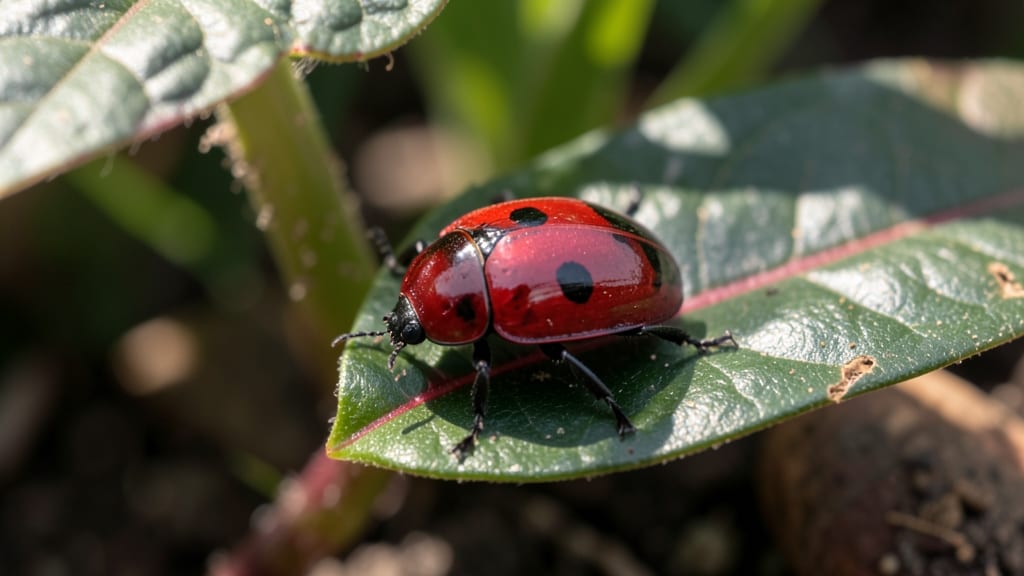
Those bright red beetles devouring your lilies aren’t just ugly—they’re a full-blown foliage emergency. 🌿 I’ve battled red leaf lily beetles three seasons running, and I’ve learned which organic methods actually work (and which just delay the inevitable).
The key isn’t just killing the beetles—it’s breaking their life cycle so they don’t return next year.
These pests target lilies, fritillaries, and even some daylilies, skeletonizing leaves within days. The adults are easy to spot—shiny red with black legs—but the real damage comes from their larvae, which burrow into bulbs.
Most store-bought sprays fail because beetles develop resistance fast. My go-to? A neem oil + kaolin clay combo applied at dusk when they’re most active.
You’ll see results within 5-7 days of consistent treatment: fewer beetles, new growth, and leaves that stay intact. The secret weapon? Diatomaceous earth around the base of plants—it’s messy but stops larvae from reaching the bulbs.
For heavy infestations, I’ve had to handpick beetles (yes, it’s tedious) but it’s the only way to guarantee they’re gone.
Prevention starts in fall: remove all plant debris and inspect bulbs before storing. If you’re in zones 5-8 (where these beetles thrive), this becomes an annual ritual—but trust me, your lilies will thank you. Here’s the step-by-step plan that’s saved my garden from looking like a beetle buffet.
Root Causes Behind Foliage Devastation
When vibrant Lilium leaves transform into skeletonized, red-speckled ruins, the culprit is often the red lily leaf beetle (Lilioceris lilii). This invasive pest thrives due to a mix of ecological, behavioral, and environmental factors.
Understanding these triggers helps gardeners disrupt its life cycle and reclaim their plants. Let’s break down the key reasons this beetle wreaks havoc on your foliage.
The red lily leaf beetle isn’t native to North America—it hitchhiked from Europe and Asia, arriving in the early 2000s. Without local predators (like birds, parasitic wasps, or fungi) to keep its populations in check, it reproduces exponentially.
A single female can lay up to 400 eggs in a season, and larvae devour leaves with relentless efficiency. Since native ecosystems lack the biological controls that once regulated it in its homeland, outbreaks spiral unchecked.
Why it matters: Without intervention, beetle populations can explode within one growing season, stripping entire gardens of their lily, fritillary, and tulip foliage.
This beetle has a voracious appetite for plants in the Liliaceae family, including:
- True lilies (Lilium spp.) – especially Lilium martagon (Martagon lily) and Lilium candidum (Madonna lily).
- Fritillaria (fritillaries, like the crown imperial).
- Tulipa (tulips).
- Nomocharis and Cardiocrinum (giant Himalayan lily).
Since these plants are widely cultivated for their showy blooms, beetles find abundant food sources year after year. Mature, healthy foliage is particularly attractive because it provides the nutrients and moisture larvae need to thrive.
Key insight: If your garden features even a few of these plants, you’re essentially serving up a buffet for beetles. Preventative measures are critical.
The red lily leaf beetle thrives in moderate to warm climates (USDA Zones 5–9), where winters are mild enough to allow multiple generations per year. Here’s how temperature plays a role:
| Season | Beetle Activity | Impact on Plants |
|---|---|---|
| Spring (50–70°F) | Adults emerge from overwintering sites (mulch, leaf litter, or garden structures). Females lay eggs on undersides of leaves. | New foliage is chewed into lace-like patterns. |
| Summer (70–85°F) | Larvae hatch, feeding voraciously for 2–3 weeks before pupating. Adults reappear by mid-summer for a second generation. | Defoliation can be complete if unchecked. |
| Fall (Cool but above freezing) | Adults seek shelter in garden debris, mulch, or bark. Some may overwinter as larvae in protected microclimates. | Plants may appear "recovered," but beetles are already planning next year’s attack. |
Pro tip: 🌡️ In warmer regions (Zones 8–9), beetles may produce three generations per year, making control even more urgent. Monitor plants weekly during peak activity (May–September).
Beetles are more likely to infest gardens where:
- Plants are densely packed – Less airflow and sunlight create ideal hiding spots for eggs and larvae.
- Debris accumulates – Leaf litter, old mulch, and plant refuse provide overwintering sites for adults.
- Soil is overly moist – While beetles need hydration, waterlogged conditions can stress plants, making them more vulnerable to defoliation.
Additionally, monoculture plantings (e.g., a bed filled only with lilies) offer beetles a feast without competition. Diversifying your garden with non-host plants (like lavender, rosemary, or marigolds) can disrupt their feeding patterns.
Actionable fix: 💡 Maintain 3–6 inches of clearance between plants to improve airflow and visibility. Remove garden debris year-round to starve overwintering beetles.
Unlike some pests that disperse naturally, the red lily leaf beetle hitches rides on contaminated plant material, tools, and even vehicles. Here’s how:
- Nursery sales – Infested plants (especially Lilium species) can introduce beetles to new areas.
- Gardening tools – Pruners, trowels, or wheelbarrows may transfer eggs or larvae between gardens.
- Compost and mulch – Overwintering adults hide in homemade compost or wood chips.
- Wildlife movement – Birds and small mammals can inadvertently spread beetles by nesting near infested plants.
Prevention tip: ✨ Quarantine new plants for 2 weeks before introducing them to your garden. Inspect foliage underneath for eggs (tiny orange clusters) or adults.
Practical Fixes for Beetle Damage
Now that you understand why these vibrant beetles wreak havoc on your plants, let’s tackle the problem head-on with effective, organic solutions tailored to the root causes. Whether you’re dealing with early infestations or a full-blown crisis, these methods will help you reclaim your garden without harsh chemicals.
Cause: Small infestations go unnoticed until damage is visible. Fix: Act fast to prevent spread.
- 👀 Scout regularly: Check leaves, stems, and soil for eggs (tiny orange clusters) or adults (shiny red with black spots). Focus on morning or evening when beetles are sluggish. - 🧽 Handpick adults: Drop them into soapy water (1 tbsp dish soap per gallon) to eliminate them instantly.
Wear gloves—these beetles can leave a messy red stain if crushed! - 🌿 Prune damaged foliage: Remove and compost away from your garden (not in yard waste bins where larvae might survive).
💡 Pro Tip: Use a flashlight at dusk to spot beetles hiding under leaves—they’re less active in direct sunlight.
Cause: Beetles multiply rapidly, requiring systemic or contact solutions. Fix: Use plant-safe sprays to disrupt their life cycle.
| Solution | How to Apply | Best For | Reapply Every |
|---|---|---|---|
| Neem oil spray | Mix 1 tbsp neem oil + 1 tsp mild soap in 1 quart water. Spray top and bottom of leaves. | All stages (adults, larvae, eggs) | 7–10 days |
| Insecticidal soap | Spray directly on beetles (avoid flowers to protect pollinators). | Adults and soft-bodied larvae | 3–5 days |
| Kaolin clay (Surround WP) | Apply as a protective film on leaves to deter feeding. | Prevention and early infestations | 7–14 days |
| Pyrethrin spray | Derived from chrysanthemums; kills on contact but degrades quickly. | Severe infestations (use at dusk) | 5–7 days |
⚠️ Warning: Always test sprays on a small leaf first—some plants (like ferns) may react poorly to oils.
Cause: Beetles thrive in dense foliage and lack natural predators in gardens. Fix: Outsmart them with ecosystem-based strategies.
- 🐞 Encourage predators:
- Ladybugs, lacewings, and parasitic wasps eat beetle eggs. Buy them online or attract them with dill, fennel, or marigolds.
- Ducks or chickens in the garden can graze on adults (but monitor for over-grazing).
- 🌱 Disrupt their habitat:
- Remove mulch near infected plants (larvae pupate in soil).
- Space plants widely to improve airflow—beetles love crowded, humid conditions.
- 🌡️ Heat or cold treatment:
- Freeze infested plants for 48 hours in a sealed bag (kills eggs/larvae).
- Bake soil in pots at 120°F (49°C) for 30 minutes to kill pupae (use a dehydrator or oven).
🎯 Pro Tip: Interplant lilies with garlic or rosemary—beetles avoid these strong scents.
Cause: Recurring infestations mean beetles return yearly. Fix: Break their cycle with persistent habits.
- 🗓️ Year-round monitoring:
- Check for overwintering eggs in leaf litter or mulch before spring.
- Solarize soil in fall (cover with clear plastic for 4–6 weeks to kill pupae).
- 🌱 Plant resistant varieties:
- Some daylilies (Hemerocallis) and true lilies (Lilium) are less appealing. Avoid fritillaries (Fritillaria)—they’re a favorite!
- 🚫 Quarantine new plants:
- Inspect every purchase for beetles or eggs. Isolate for 2 weeks before adding to your garden.
- 🌍 Community defense:
- Notify local garden clubs if infestations are widespread—they may organize group treatments.
Cause: Heavy infestation threatens plant survival. Fix: Aggressive, multi-step attacks to regain control.
- 🌿 Strip the garden: - Remove all infected plants (including roots) and bag them tightly for trash pickup.
- 💦 Flood the soil: - For potted plants, submerge pots in water for 24 hours to drown pupae.
- 🔄 Replace soil: - Use sterilized potting mix or sand in pots to break the beetle life cycle.
- 🛡️ Barrier methods: - Row covers (fine mesh) can block adults from laying eggs (remove during pollination season).
✨ Final Win: After treatment, boost plant health with compost tea or fish emulsion—stronger plants recover faster!
Remember: Patience is key—some methods take 2–3 weeks to show results. Combine prevention + action for the best defense!
Frequently asked questions
What do red leaf lily beetle eggs look like?
Look for tiny, bright orange clusters—about the size of a pinhead—laid on the undersides of leaves. These egg masses are often hidden in groups of 20-50, making them easy to miss if you don’t inspect carefully. Check both sides of foliage during early spring when adults first emerge.
Can I use neem oil on lilies if they’re in bloom?
Yes, but apply it early in the morning when pollinators are less active. Neem oil is generally safe for blooming plants, but avoid spraying directly on open flowers to protect bees. For extra caution, use a fine mist and cover nearby hives temporarily during application.
How long does it take for diatomaceous earth to work?
Diatomaceous earth kills beetles by dehydrating them, but results take 24-48 hours for direct contact. For best effectiveness, reapply after rain or watering since moisture washes it away. Sprinkle a thin layer around plant bases and on leaves where beetles congregate.
Will my fritillaries survive a severe infestation?
Fritillaries are particularly vulnerable—these beetles target them aggressively. In severe cases, you may need to remove all foliage and treat the soil to break the life cycle. Some gardeners successfully regrow plants from bulbs after complete eradication, but expect slower recovery.
Can I compost leaves damaged by these beetles?
No—composting won’t kill the eggs or larvae. Always bag and discard infested plant material in sealed trash bins. Even well-heated compost piles may not reach temperatures high enough to eliminate beetle life stages safely.