
Diseases
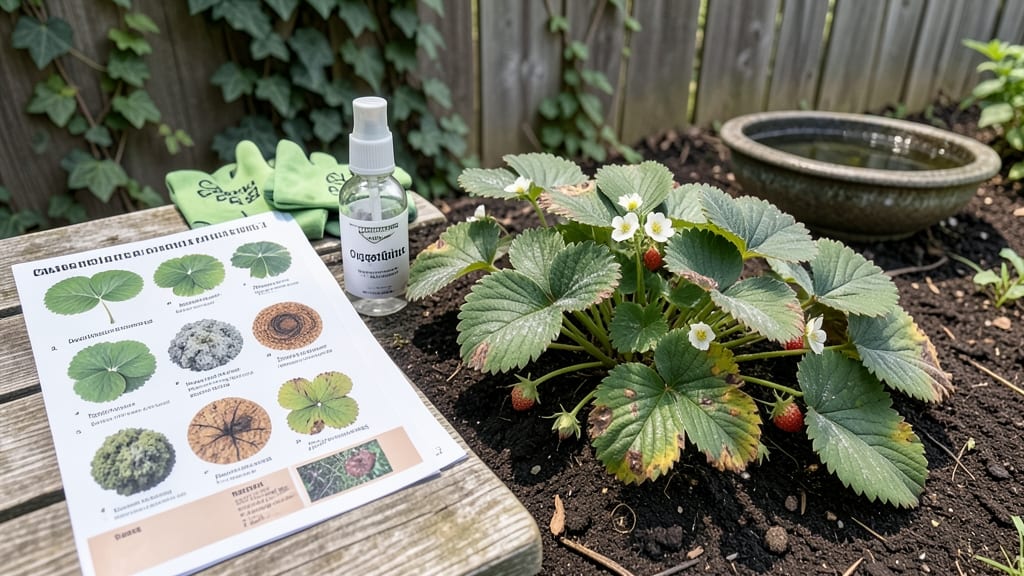
Strawberry leaf diseases turn vibrant green plants into sad, spotted messes faster than you can say "harvest time." 🌱 I've lost entire beds to fungal blights—until I learned to spot the warning signs early and act fast.
The key is knowing which disease you're dealing with, because each one needs a slightly different approach to save your berries. Most of these fungal problems start with too much moisture and poor airflow between plants. My biggest mistake? Crowding plants and ignoring the first few spots.
Once you recognize the patterns—like the powdery white coating of mildew or the jagged brown edges of angular leaf spot—you can isolate the issue and stop it from spreading to your whole patch.
With the right treatment, you'll see new growth within 2-3 weeks, and your plants will bounce back stronger than ever. The secret is acting quickly and keeping your strawberries healthy year-round with proper spacing and sanitation. This isn't just about saving plants—it's about protecting your entire season's harvest.
Let's get those leaves looking fresh again.
Underlying Causes Of Leaf Issues
Strawberry leaf diseases rarely appear without reason—fungal infections thrive when the right conditions align. Understanding the root causes helps you prevent outbreaks before they start. Below, we break down the key triggers behind strawberry leaf diseases, from environmental factors to cultural mistakes.
🌡️ High Humidity And Poor Airflow
Fungal spores need moisture to germinate, and strawberry leaves are especially vulnerable when humidity stays above 75% for prolonged periods. Poor airflow—common in dense plantings or shaded beds—traps moisture on leaves, creating the perfect breeding ground for pathogens like Colletotrichum (anthracnose) or Botrytis cinerea (gray mold).
- Why it matters: Warm, damp conditions weaken leaf cuticles, making them easier for fungal hyphae to penetrate.
- Actionable fix:
- Space plants 12–18 inches apart to improve airflow.
- Use drip irrigation (avoid overhead watering) to keep foliage dry.
- Prune lower leaves to reduce humidity near the soil.
🍄 Fungal Spore Overload
Fungal spores are everywhere—in soil, mulch, and even on tools—but they only cause disease when they find a susceptible host. Strawberries are particularly prone to Phytophthora (root rot) or Ramularia (leaf spot) if:
- Infected plant debris lingers from last season.
- New plants are introduced without quarantine.
- Spores hitchhike on contaminated pruners or shoes.
Pro tip: 💡 Sterilize tools with 70% rubbing alcohol between uses, and remove all plant waste after harvest to starve spores of fuel.
🌱 Stressed Or Weakened Plants
Healthy strawberries resist diseases better. Stressors like nutrient deficiencies, overwatering, or physical damage (e.g., from hail or pests) compromise their defenses. For example:
- Nitrogen deficiency: Yellowing leaves signal weak growth, making plants more attractive to Diplocarpon (strawberry leaf scorch).
- Root rot: Overly wet soil disrupts oxygen flow, inviting Phytophthora to invade roots and spread to leaves.
- Insect damage: Spider mites or aphids create wounds where fungi like Mycosphaerella can enter.
Actionable fix:
Stressor
Solution
Nutrient deficiency
Test soil pH (ideal: 5.8–6.2) and amend with compost or balanced fertilizer (10-10-10).
Overwatering
Ensure soil drains within 24 hours; raise beds if clay soil is present.
Pest damage
Apply neem oil or introduce ladybugs to control aphids before fungi take hold.
🌦️ Extreme Weather Shifts
Sudden changes—like hot, dry days followed by heavy rain—disrupt strawberry leaves’ protective waxy coating. This leaves them vulnerable to:
- Botrytis (gray mold): Thrives in cool (60–70°F), wet conditions post-rain.
- Powdery mildew: Favors warm (75–85°F), humid nights after dry spells.
Preventative tip: 🌡️ Mulch with straw to stabilize soil temperature and reduce temperature swings near leaves.
By tackling these root causes—humidity, spores, stress, and weather—you’ll disrupt the cycle that fuels strawberry leaf diseases. The key? Proactive care beats reactive treatments every time.
Fixing Fungal Foes on Strawberry Leaves
Strawberry leaf diseases can feel like a losing battle, but with the right approach, you can turn the tide and keep your plants thriving. Below, we’ve mapped out targeted fixes for each common fungal issue, along with preventive strategies to stop future outbreaks.
Think of this as your strawberry plant’s emergency response plan—quick, actionable, and designed to work.
Cause: Xanthomonas fragariae thrives in wet, humid conditions, creating V-shaped brown lesions on leaves.
How to Fix It: 🔥 Remove Infected Leaves Immediately
- Snip off yellowing or spotted leaves with clean, sharp scissors (sterilize with rubbing alcohol).
- Do not compost them—dispose of them in a sealed bag to prevent spread.
🍳 Apply Copper-Based Fungicide
- Use a fixed copper fungicide (like Copper Sulfate 5-10-100) every 7–10 days during wet seasons.
- Mix 1 tbsp per gallon of water and spray early in the morning to avoid fungal growth overnight.
👨🍳 Boost Airflow and Light
- Space plants 12–18 inches apart to reduce humidity.
- Prune surrounding weeds to improve airflow.
- Avoid overhead watering—use drip irrigation or water at the base.
💡 Prevention Tip: > Rotate crops—don’t plant strawberries in the same spot for 3+ years to break the disease cycle.
Cause: Botrytis cinerea loves moist, shaded leaves, causing gray fuzzy patches and rotting fruit.
How to Fix It: ⏰ Thin Canopy for Sunlight
- Remove overlapping leaves to allow direct sunlight (UV light inhibits spores).
- Stake plants to keep foliage upright.
🔪 Surgical Leaf Removal
- Cut out only the gray mold-infected areas—don’t tear leaves.
- Burn or trash infected debris (don’t compost).
🥘 Baking Soda Spray (Early Stage)
- Mix 1 tsp baking soda + 1 tbsp horticultural oil + 1 gallon water.
- Spray every 7–10 days in early morning (avoid direct sun to prevent leaf burn).
🎯 Prevention Tip: > Water in the morning so leaves dry by night—Botrytis thrives in damp darkness.
Cause: Sphaerotheca macularis creates white, powdery coatings that block photosynthesis.
How to Fix It: 🌡️ Neem Oil or Potassium Soap Spray
- Neem oil (2 tbsp per gallon) or potassium soap (1 tbsp per gallon)—spray both sides of leaves.
- Reapply every 5–7 days until new growth appears.
🔥 Physical Removal
- Gently brush off mildew with a soft cloth (dampen it first).
- Avoid water pressure—it can spread spores.
💡 Prevention Tip: > Plant resistant varieties like ‘Seascape’ or ‘Albion’—they tolerate mildew better.
Cause: Diplocarpon earliana causes brown, scorched edges due to stress + moisture.
How to Fix It: 💧 Deep Watering Schedule
- Water deeply 2–3 times per week (early morning) instead of daily light sprinkles.
- Mulch with straw (2–3 inches) to retain moisture.
🍳 Fungicide Rotation
- Alternate between copper fungicide and myclobutanil (Immunox) every 2 weeks.
👨🍳 Adjust pH and Fertilizer
- Test soil—ideal pH is 5.8–6.2.
- Reduce nitrogen (too much = weak leaves).
🎯 Prevention Tip: > Harvest promptly—overripe fruit attracts pests that spread the disease.
| Step | Action |
|---|---|
| Sanitation | Clean tools with rubbing alcohol after each use. |
| Resistant Varieties | Choose disease-resistant strawberries (e.g., ‘Jewel’, ‘Chandler’). |
| Crop Rotation | Avoid planting strawberries in the same bed for 3+ years. |
| Monitor Weather | Cover plants if rain is forecasted for >48 hours. |
| Beneficial Fungi | Apply Trichoderma harzianum (a natural soil fungus) to outcompete pathogens. |
Final Pro Tip: 🌱 Healthy plants fight disease better—ensure balanced fertilization, proper spacing, and regular pruning to keep your strawberries resilient!
Frequently asked questions
How can I tell if my strawberry leaves have a fungal disease vs. just sunburn or nutrient deficiency?
Fungal diseases typically show distinct patterns like powdery white coatings (powdery mildew), brown spots with yellow halos (angular leaf spot), or gray fuzzy patches (Botrytis). Sunburn usually appears as uniform brown patches on leaf edges, while nutrient deficiencies cause uniform yellowing (nitrogen) or purple stems (phosphorus). Fungal spots often have ragged edges and may appear on both leaf surfaces.
Is it safe to use baking soda for all strawberry leaf diseases?
Baking soda works best for early-stage powdery mildew and Botrytis (gray mold). Mix 1 tsp baking soda + 1 tbsp horticultural oil + 1 gallon water and spray in the morning. However, it won't stop bacterial diseases like angular leaf spot—those need copper fungicides. Always test on a small leaf first to avoid leaf burn.
How often should I prune infected leaves to prevent disease spread?
Prune immediately when you spot symptoms—don't wait! Remove only infected leaves (never tear them) and dispose of them in a sealed bag. For severe outbreaks, prune every 3–5 days during wet seasons. Always sterilize your pruners with 70% rubbing alcohol between cuts to prevent cross-contamination.
Can I still harvest fruit from plants with leaf diseases?
It depends on the disease. For leaf-only diseases like powdery mildew or angular leaf spot, fruit is usually safe to eat. But if you see gray mold (Botrytis) on leaves or fruit, remove all infected berries immediately—the fungus spreads to fruit. Always wash berries thoroughly before eating. Diseased leaves should be pruned to prevent further spread.
Why do some strawberry varieties get diseases more often than others?
Disease-resistant varieties like 'Seascape' or 'Albion' have genetic traits that make their leaves less appealing to fungal spores. Susceptible varieties often lack natural wax coatings or have thin leaf structures that fungi can penetrate easily. Always check a variety's disease resistance rating before planting—it's the first line of defense!