
Pests and Diseases
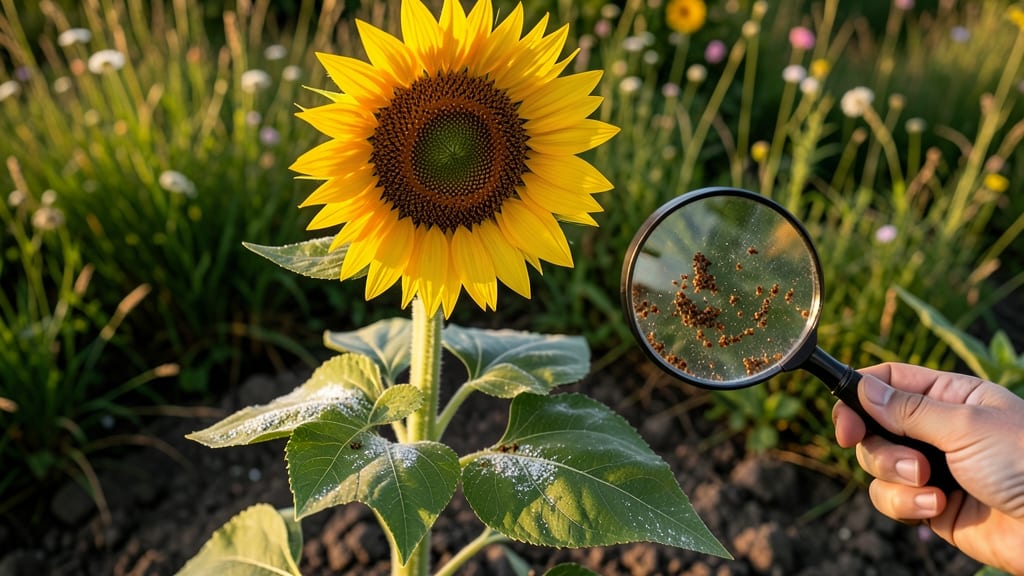
Sunflower leaf problems can turn your towering beauties into sad, spotted messes—unless you act fast. 🌻 I’ve battled everything from powdery mildew to beetle holes, and this neem oil and baking soda blend stops the damage within days.
The key is catching issues early, before they spread to your entire garden. Yellowing leaves or black spots? That’s usually fungal infections or pests like sunflower beetles munching away. Baking soda disrupts fungal growth, while neem oil smothers pests and prevents reinfestation.
Both are non-toxic and work within 24–48 hours for early-stage problems. By midday after treatment, you’ll see fresh, vibrant growth pushing through. The blend even prevents future outbreaks if applied preventatively every 10–14 days during humid seasons.
No more wilting stems or ragged edges—just bold, healthy sunflowers reaching for the sky. Works for all sunflower varieties, from dwarf to giant. Here’s how to mix and apply it—no fancy tools needed.
Root Causes Of Leaf Issues
Sunflower leaves are tough, but they’re not invincible. When problems strike—whether it’s discoloration, spots, or holes—it’s usually because of one (or more) of these five key culprits.
Understanding the why behind these issues helps you tackle them faster with the right fixes, like that neem oil and baking soda blend we’ll cover later.
Sunflowers thrive in full sun (6–8 hours daily) and well-draining soil, but push them outside those conditions, and their leaves scream for help. Here’s how:
- Extreme Heat or Cold - Why it happens: Sunflowers are hardy but not drought-proof.
When temps soar above 90°F (32°C) or drop below 50°F (10°C), leaves wilting, yellowing, or developing crispy edges (a condition called heat scorch). - Scientific breakdown: High heat disrupts chlorophyll production, causing oxidative stress in cells.
Cold snaps (especially below 40°F/4°C) slow nutrient uptake, leading to chlorosis (yellowing between veins). - Actionable fix: Mulch with straw or wood chips to regulate soil temps. Provide light shade during heatwaves (use shade cloth) and protect young plants with row covers in frost-prone areas.
- Poor Watering Habits - Why it happens: Sunflowers need 1–2 inches of water weekly, but overwatering (soggy soil) or underwatering (dry, cracked soil) both trigger leaf problems. - Overwatering: Leads to fungal infections (like Phytophthora) and root rot, causing yellow, mushy leaves. - Underwatering: Causes leaf curl, browning edges, and premature wilting. - Scientific breakdown: Roots suffocate in waterlogged soil, blocking oxygen uptake (anaerobic conditions).
Drought stress triggers abscisic acid (ABA) production, a plant hormone that signals stomatal closure—trapping heat and toxins inside leaves. - Actionable fix: Water deeply at the base (not overhead) and check soil moisture 2 inches down before watering.
Use drip irrigation to avoid fungal splash.
Fungi love damp, warm conditions—and sunflower leaves are a buffet. These three common pathogens turn lush greens into sad, spotted messes:
| Fungus | Symptoms | Why It Spreads |
|---|---|---|
| Powdery Mildew | White, powdery patches (later turns brown) | Thrives in humid (70–90% RH) + warm (60–80°F/15–27°C) conditions. Spores spread via wind/rain. |
| Rust | Orange-brown pustules on undersides | Needs high humidity + alternating wet/dry cycles. Overcrowded plants accelerate spread. |
| Alternaria Leaf Spot | Dark brown/black spots with yellow halos | Spreads via water splashes or infected seeds. Worse in hot, humid summers. |
- Scientific deep dive:
- Fungi release enzymes (like cellulases and pectinases) that break down leaf cell walls, creating lesions.
- Powdery mildew forms a mycelial mat that blocks sunlight, starving leaves of energy.
- Rust spores rust-colored urediniospores that germinate when free moisture is present for 4+ hours.
- Actionable fix: Prevent fungal spores with:
- Neem oil spray (disrupts fungal membranes).
- Baking soda mix (1 tsp baking soda + 1 quart water + few drops of soap; spray every 7–10 days).
- Improve airflow by spacing plants 18–24 inches apart.
Sunflower leaves aren’t just food—they’re real estate for pests. These three troublemakers chew, suck, or burrow, leaving behind holes, stippling, or sticky residue:
- Aphids 🐜
- Why it happens: These sap-sucking insects cluster on new growth, injecting toxic saliva that causes curling, yellowing, and stunted growth.
- Science: Aphids transmit viruses (like Cucumber Mosaic Virus) and excrete honeydew, which fosters sooty mold (a black fungal film).
- Fix: Blast off with water spray or use soapy water (1 tsp mild soap per quart). Ladybugs are natural predators—invite them with dill or fennel nearby.
- Sunflower Moth (Homoeosoma electellum) Larvae 🐛
- Why it happens: Larvae tunnel into stems and leaves, causing irregular holes, wilting, or dead patches.
- Science: The moth’s larvae secrete digestive enzymes that liquefy plant tissue, creating silken tunnels for shelter.
- Fix: Handpick larvae (they’re greenish-brown with dark stripes) and destroy eggs (tiny white dots on leaf undersides). Row covers prevent adult moths from laying eggs.
- Japanese Beetles 🐞
- Why it happens: Adults skeletonize leaves (eat everything but veins), while grubs devour roots.
- Science: Their mouthparts act like tiny scissors, shredding mesophyll cells (leaf tissue).
- Fix: Milky spore powder (natural bacteria that targets grubs) or handpick beetles into soapy water.
Sunflowers are heavy feeders, and when soil lacks key nutrients, leaves scream for help with color-coded warnings:
| Deficiency | Leaf Symptoms | Why It Happens |
|---|---|---|
| Nitrogen (N) | Pale yellow leaves (older first) | N is crucial for chlorophyll. Poor soil or over-farming depletes it. |
| Magnesium (Mg) | Yellow patches between veins (interveinal chlorosis) | Mg is a chlorophyll center—deficiency blocks photosynthesis. Common in alkaline soils. |
| Potassium (K) | Brown scorch marks on leaf edges | K regulates water balance and disease resistance. Overwatering leaches it. |
| Iron (Fe) | Young leaves yellow entirely (veins stay green) | Fe is immobile in plants—new growth gets cut off first. Happens in calcareous (high-pH) soil. |
- Actionable fix:
- Test soil pH (ideal: 6.0–7.0). For high pH, add chelated iron or sulfur.
- Side-dress with compost or 5-10-10 fertilizer (N-P-K) mid-season.
- Mulch with leaf mold to slowly release nutrients.
Even well-meaning gardeners can harm sunflower leaves with over-zealous treatments:
- Herbicide Drift 🚫
- Why it happens: Wind can carry glyphosate or 2,4-D from lawns, burning leaves into bleached, crispy patches.
- Fix: Buffer zones (plant sunflowers 20+ feet from treated areas).
- Salt Burn 🧂
- Why it happens: Overuse of fertilizers (especially synthetic salts) or hard water causes brown, curled edges.
- Fix: Flush soil with water and use organic fertilizers (compost tea, fish emulsion).
- Poor Water Quality 💦
- Why it happens: Chlorine or fluoride in tap water can oxidize leaf tissue, causing yellowing or browning.
- Fix: Use rainwater or filtered water for irrigation.
Quick fixes for healthy sunflower leaves
Sunflower leaves are the lifeblood of your plants—when they’re under attack, your entire harvest can suffer. But don’t panic! With the right approach, you can restore vitality and prevent future damage.
Below, we’ve mapped out practical, step-by-step solutions for the most common issues, from fungal infections to pest invasions. Plus, we’ll share prevention tips to keep your sunflowers thriving season after season.
If your sunflower leaves are spotted, discolored, or covered in fuzzy growth, fungi like powdery mildew, downy mildew, or rust are likely to blame. These issues thrive in humid, poorly ventilated conditions, but they’re treatable!
🔥 How to Treat Fungal Leaf Issues
- Prune Infected Leaves Immediately
- Use sterilized scissors or pruning shears (wipe with rubbing alcohol between cuts).
- Remove only the worst-affected leaves—don’t over-prune, as this stresses the plant.
- Dispose of infected foliage in a sealed trash bag (not your compost pile).
- Apply a Neem Oil & Baking Soda Spray (The Powerhouse Combo!)
- Mix: 1 tbsp baking soda, 1 tbsp neem oil, 1 tsp dish soap (mild, like Castile), and 1 gallon of water.
- Spray thoroughly on both sides of leaves, focusing on undersides (where fungi love to hide).
- Reapply every 7–10 days or after rain.
- Improve Air Circulation
- Space plants 18–24 inches apart to reduce humidity buildup.
- Avoid overhead watering—use a soaker hose or drip irrigation instead.
- Remove weeds around the base to prevent moisture traps.
💡 Prevention Tips for Fungal Issues
- Water in the morning so leaves dry quickly.
- Rotate crops—don’t plant sunflowers in the same spot yearly.
- Use mulch (straw or wood chips) to keep soil dry and cool.
Yellowing, sticky leaves, tiny webs, or chewed edges? Pests are likely feasting on your sunflowers. The good news? Natural remedies work fast—no harsh chemicals needed!
🍳 How to Banish Leaf-Eating Pests
- Blast Off Aphids & Soft-Bodied Bugs - Spray with soapy water: Mix 1 tsp mild liquid soap (like Dr. Bronner’s) in 1 quart of water.
Directly spray pests—they’ll drop off within minutes. - Repeat every 2–3 days until gone.
- Drown Spider Mites with Oil Sprays
- Mix: 1 tbsp neem oil + 1 tsp dish soap + 1 quart of water.
- Spray early in the morning (avoid hot sun—oil can burn leaves).
- Wipe leaves gently with a damp cloth if mites are severe.
- Introduce Beneficial Insects
- Ladybugs and lacewings devour aphids—buy them online or attract them with dill or fennel nearby.
- Release them at dusk when they’re most active.
🔥 Prevention: Keep Pests Away for Good
- Interplant with pest-repelling herbs like basil, marigolds, or garlic.
- Inspect new plants before bringing them home (quarantine for a week if possible).
- Avoid over-fertilizing with nitrogen—pests love soft, lush growth.
If leaves are yellowing, curling, or wilting without obvious pests or fungi, your sunflowers might be struggling with environmental factors or nutrient imbalances.
👨🍳 How to Revive Stressed Sunflowers
- Check the Soil pH & Nutrients - Test your soil (a simple kit from a garden center works).
Sunflowers prefer pH 6.0–7.5. - Amend soil with: - Compost (for organic matter) - Balanced fertilizer (10-10-10) if leaves are pale green (nitrogen deficiency). - Epsom salt (1 tbsp per gallon of water) if leaves are yellow between veins (magnesium deficiency).
- Adjust Watering Habits
- Drought stress? Water deeply 1–2 times per week (not daily shallow watering).
- Overwatering? Let soil dry between waterings—sunflowers hate soggy roots.
- Protect from Extreme Heat or Cold
- Shade cloth (30–50%) can help in scorching heat.
- Row covers (lightweight fabric) protect young plants from frost.
✨ Prevention for Environmental Resilience
- Choose heat-tolerant varieties (like ‘Moulin Rouge’ or ‘Russian Giant’).
- Mulch heavily to regulate soil temperature.
- Monitor weather forecasts—cover plants if a hard frost is expected.
- Rotate treatments—don’t rely on just one method (e.g., alternate neem oil with soapy water).
- Harvest early if pests/diseases are spreading—smaller flowers are easier to save.
- Keep a garden journal to track what works (and what doesn’t) for your climate.
With these targeted fixes, your sunflower leaves will bounce back faster than you think! 🌻 Whether it’s fungus, pests, or environmental stress, acting quickly is key—so grab your spray bottle and get to work. Your sunflowers will thank you with bold, healthy blooms all season long.
Frequently asked questions
Why are my sunflower leaves turning yellow between the veins?
This is likely a magnesium deficiency, often called interveinal chlorosis. Sunflowers need magnesium for chlorophyll production, and when soil lacks it (especially in alkaline conditions), older leaves show yellow patches first. Test your soil pH—ideal range is 6.0–7.0. Add Epsom salt (1 tbsp/gallon of water) as a foliar spray or work it into the soil.
What do those white, powdery spots on my sunflower leaves mean?
Those are almost certainly powdery mildew, a fungal disease that thrives in humid conditions. The white coating blocks sunlight, weakening your plants. Start with a neem oil and baking soda spray (1 tbsp each + 1 tsp soap per gallon) and apply every 7–10 days. Space plants 18–24 inches apart to improve airflow and prevent future outbreaks.
How do I get rid of tiny holes in sunflower leaves?
Those holes are probably from sunflower moth larvae or Japanese beetles. For larvae, handpick them (they’re greenish-brown with dark stripes) and destroy eggs (tiny white dots on leaf undersides). For beetles, use milky spore powder or handpick them into soapy water. Prevent future damage by covering young plants with row fabric until they’re established.
Can I still save my sunflowers if the leaves are completely chewed?
Yes, but act fast! Severely damaged leaves won’t recover, but healthy stems can still produce flowers. Prune the worst-affected foliage (sterilize your tools first) and focus on protecting new growth. Use soapy water sprays for pests or neem oil for fungal issues. If the damage is on the lower stems, the plant may redirect energy to upper leaves—keep it well-watered and fertilized.
Why are my sunflower leaves curling at the edges?
Edge curling often signals underwatering or drought stress, but it can also mean overwatering or potassium deficiency. Check the soil 2 inches down—if it’s dry, water deeply at the base. If soggy, let it dry out and improve drainage. For potassium issues, use a balanced fertilizer (5-10-10) or compost tea. Mulch with straw to retain moisture and regulate soil temperature.