
Plants
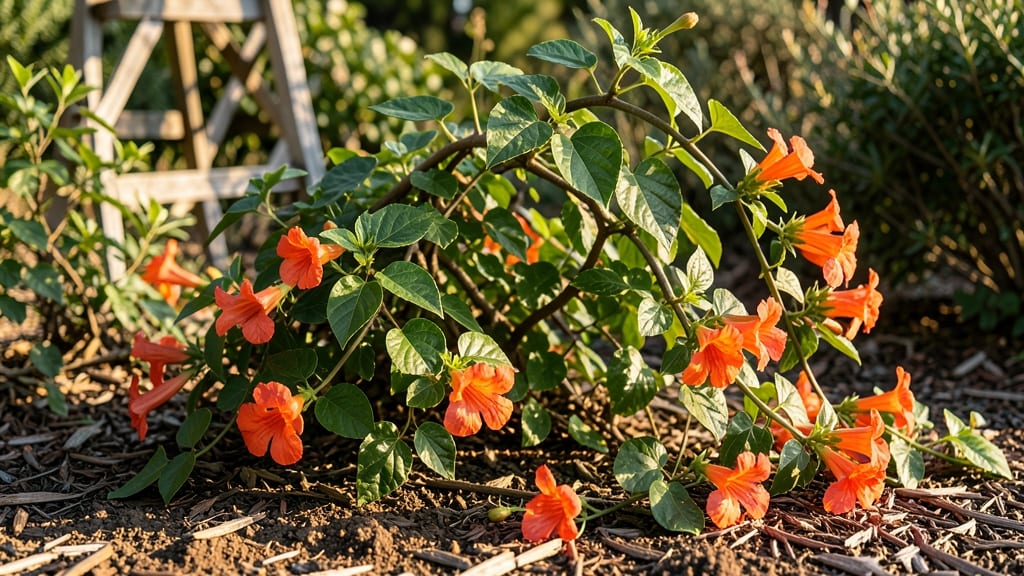
Accurate trumpet vine leaf identification saves you from toxic lookalikes that could ruin your garden. 🌿 The key is those heart-shaped leaves with pointed tips and smooth edges—nothing like the fuzzy or lobed leaves of poisonous mimics.
One wrong plant can mean years of regret (I learned that the hard way with a vine that took over my fence). Start by checking the leaf veins: trumpet vine has visible, wavy side veins that create a net pattern.
Healthy leaves are deep green with a glossy top and pale underside. If yours look dull, spotted, or yellowing, that’s a sign of stress—not a bad plant. Compare side by side with a reference photo to spot differences.
You’ll instantly recognize the bright orange-red flowers trumpet vine produces in summer, but the leaves are how you confirm it early. If your vine has white flowers or hairy stems, it’s a lookalike—time to dig it out.
The right ID means no surprises when those fiery blooms appear next season. This works for both Campsis radicans and its non-toxic cousin, Campsis grandiflora. For tricky cases, snap a photo and compare it to a trusted source like your local extension office.
Confidence in your ID means confident gardening!
Underlying Causes Of Leaf Confusion
Identifying trumpet vine leaves can be tricky, especially when they’re mistaken for toxic lookalikes. The confusion often stems from a mix of natural plant behavior, environmental factors, and human misidentification.
Below, we break down the key reasons why trumpet vine leaves—and those of its doppelgängers—can be so hard to distinguish at first glance.
Trumpet vine (Campsis radicans) exhibits subtle but critical variations in leaf shape, size, and color due to genetics and growth stages. These differences can make identification challenging, even for experienced gardeners.
- Genetic Diversity: Some trumpet vine cultivars, like Campsis grandiflora (Chinese trumpet vine), have broader, more rounded leaves compared to the classic Campsis radicans. These variations can blur the lines between "safe" and "toxic" lookalikes in the Bignoniaceae family.
- Seasonal Changes: Young leaves often appear darker green and more tender, while mature leaves develop a glossier finish. In autumn, leaves may turn yellow or brown, mimicking the discoloration of poisonous plants like Catalpa or Crescentia.
- Light Exposure: Trumpet vines grown in full sun tend to have smaller, thicker leaves, while those in partial shade may develop larger, paler foliage. This adaptability can make them resemble unrelated vines.
Pro Tip: 💡 Always check the leaf arrangement—trumpet vine leaves grow in opposite pairs (two leaves per node), while many toxic lookalikes have alternate or whorled patterns.
Several plants mimic trumpet vine leaves so closely that even experts can be fooled. These similarities arise from evolutionary adaptations, such as:
- Convergent Evolution: Plants like Crescentia cujete (calabash tree) and Tecoma stans (yellow trumpet bush) evolved similar leaf shapes to thrive in overlapping climates. Their leaves are often lance-shaped with pointed tips, just like trumpet vine.
- Compound vs. Simple Leaves:
Trumpet Vine Toxic Lookalikes Simple leaves (single, undivided blade) Catalpa (compound, palmate leaves)
Wisteria (compound, feathery foliage) - Venation Patterns: Trumpet vine leaves have prominent, curved veins that radiate from the central stem. Toxic plants like Bignonia capreolata (cross vine) share this trait, making them nearly identical until flowers or fruit appear.
Warning: ⚠️ Catalpa and Wisteria leaves may resemble trumpet vine at a glance, but they belong to entirely different families (Bignoniaceae vs. Bignoniaceae vs. Fabaceae) and have very different toxicity levels.
Even with clear visual clues, misidentification happens due to:
- Over-Reliance on Flowers: Many gardeners assume a plant is trumpet vine if it has orange or red trumpet-shaped blooms. However, Tecoma stans and Bignonia capreolata produce similar flowers but are not edible or safe for pets.
- Ignoring Growth Habits: Trumpet vine is a vigorous climber with twining stems, while toxic lookalikes like Crescentia grow as shrubs or small trees. Skipping this step leads to costly mistakes.
- Digital Misinformation: Online databases and apps sometimes mislabel plants due to overlapping descriptions. Always cross-reference with multiple sources and consider consulting a local botanist.
Actionable Fix: 🎯 Before assuming a plant is trumpet vine, examine these three features:
- Leaf arrangement (opposite vs. alternate).
- Stem structure (twining vs. woody).
- Presence of milky sap (a red flag for toxic plants like Crescentia).
By understanding these underlying causes—whether biological, environmental, or human—you’ll be better equipped to distinguish trumpet vine from its dangerous doubles with confidence.
Quick Fixes for Leaf Confusion
Mistaking trumpet vine leaves for toxic lookalikes—or vice versa—can lead to costly gardening errors or even health risks if ingested by pets or children. The good news? With a few targeted steps, you can correctly identify, treat, and prevent these mix-ups.
Below, we break down the most common causes of confusion and provide actionable solutions, tailored to your garden’s needs.
Trumpet vine leaves are broad, glossy, and lance-shaped, while milkweed leaves are narrower, milky-sap-producing, and often grow in whorls. If you’ve accidentally planted or touched milkweed (which is not toxic but can cause skin irritation), here’s how to resolve it:
🍳 Step 1: Verify the Plant - 🔍 Examine leaf shape: Trumpet vine leaves are 3–8 inches long, with a smooth, leathery texture.
Milkweed leaves are thinner, hairy, or waxy and may have a distinctive milky sap. - 🌸 Check the flowers: Trumpet vine blooms are bright orange or red, trumpet-shaped.
Milkweed flowers are smaller, clustered, and often pink or white. - 📸 Take a photo: Compare your plant to a trumpet vine leaf guide for clarity.
👨🍳 Step 2: Remove the Wrong Plant
- ⏰ Best time to dig: Early spring or fall, when the soil is moist but not frozen.
- 🔪 Dig carefully: Use a shovel to fully extract the roots of milkweed (or any misidentified plant) to prevent regrowth.
Trumpet vine roots are deep and woody—wear gloves if handling milkweed sap. - 🗑️ Dispose properly: Seal milkweed in a plastic bag before tossing to avoid spreading seeds.
💡 Prevention Tip
Plant trumpet vine in containers or raised beds if you’re concerned about spread. Milkweed is a monarch butterfly host plant, so if you want it in your garden, place it at least 10 feet away from your trumpet vine.
If your trumpet vine leaves are yellowing, spotted, or wilting, the issue might be aphids, powdery mildew, or bacterial leaf spot. Here’s how to diagnose and treat:
🔥 Step 1: Identify the Problem
| Symptom | Likely Cause | Quick Test |
|---|---|---|
| Yellow patches, sticky residue | Aphids or scale insects | Shake leaves over white paper—tiny bugs? |
| White powdery coating | Powdery mildew | Rub fingers over leaves—powdery residue? |
| Dark spots, leaf drop | Bacterial leaf spot | Check undersides for water-soaked marks |
🍳 Step 2: Treat the Issue
- 🐜 For pests (aphids/scale):
- 💦 Spray with soapy water: Mix 1 tsp mild dish soap in 1 quart of water. Spray directly on infested areas every 3–4 days.
- 🐞 Introduce ladybugs: These natural predators eat aphids.
Buy them online or attract them with neighborhood-friendly plants. - 🌡️ For powdery mildew: - 🍄 Apply neem oil: Mix 1 tbsp neem oil + 1 tsp baking soda + 1 quart water.
Spray both sides of leaves at dusk to avoid burning. - ✂️ Prune affected foliage: Remove heavily infected leaves and sterilize pruners with rubbing alcohol between cuts. - 🔪 For bacterial leaf spot: - 💧 Reduce watering: Water at the base of the plant (not overhead) to prevent spread. - 🌱 Replace soil: If the disease persists, remove the top 2 inches of soil and replace with fresh, sterilized potting mix.
🎯 Prevention Tip
Improve air circulation by spacing plants 3–5 feet apart. Avoid overhead watering, and mulch with straw to keep leaves dry. For bacterial issues, rotate crops if growing trumpet vine in containers annually.
If your trumpet vine leaves are small, pale, or stems are stretching too much, it’s likely due to overwatering, compacted soil, or lack of nutrients. Fix it with these adjustments:
🔥 Step 1: Check the Soil
- 💧 Test moisture: Stick your finger 2 inches into the soil. If it’s soggy, cut back on watering. Trumpet vines prefer well-draining soil.
- 🌱 Amend the soil: Mix in compost or perlite to improve drainage.
For containers, use a 50/50 blend of potting soil and coarse sand.
🍳 Step 2: Fertilize Properly - 📊 Use a balanced fertilizer: Apply a 10-10-10 or 20-20-20 formula in early spring and mid-summer.
Avoid high-nitrogen fertilizers, which promote leafy growth over flowers. - ☀️ Prune for sunlight: If stems are leggy, trim back overgrowth to encourage bushier growth. Ensure the vine gets at least 6 hours of sunlight daily.
💡 Prevention Tip
Mulch around the base with wood chips or pine straw to retain moisture without suffocating roots. For containers, drill drainage holes if not already present.
Pro Tip: Keep a plant journal to track watering, fertilizing, and pest issues. This helps you spot patterns and adjust care routines quickly!
Frequently asked questions
How can I quickly tell if a vine is trumpet vine just by looking at the leaves?
Check for opposite leaf arrangement (two leaves per node) and smooth, heart-shaped leaves with pointed tips. Trumpet vine leaves are 3-8 inches long with visible, wavy side veins creating a net pattern. If you see hairy stems or alternate leaves, it's likely a lookalike.
What should I do if my trumpet vine leaves are turning yellow?
Yellowing leaves usually mean overwatering or nutrient deficiency. First, check soil moisture—trumpet vines prefer well-draining soil. If the soil is soggy, reduce watering. For pale yellow leaves, apply a balanced fertilizer (10-10-10) in spring and summer. Dark yellow with brown edges suggests burn from too much sun.
Are trumpet vine leaves toxic to pets?
No, trumpet vine (Campsis radicans) is non-toxic to pets. However, some lookalikes like Crescentia or Tecoma stans can be harmful. Always confirm your plant's identity before letting pets near it. If you suspect ingestion of a toxic plant, contact your vet or ASPCA Poison Control immediately.
Why do some trumpet vine leaves look different from others in my garden?
Leaf variations are normal due to genetics, light exposure, or age. Young leaves are darker and smaller, while mature leaves develop a glossy finish. Vines in full sun have smaller, thicker leaves, while shaded vines grow larger, paler foliage. This natural diversity doesn't mean your plant is unhealthy—it's just adapting!
How do I distinguish trumpet vine from milkweed, which has similar flowers?
Milkweed leaves are narrower, hairy, and produce milky sap when cut, while trumpet vine leaves are smooth, glossy, and lance-shaped. Also, trumpet vine has opposite leaves (two per node), while milkweed leaves grow in whorls. Check the stems—milkweed has a milky latex that trumpet vine lacks.