
Size
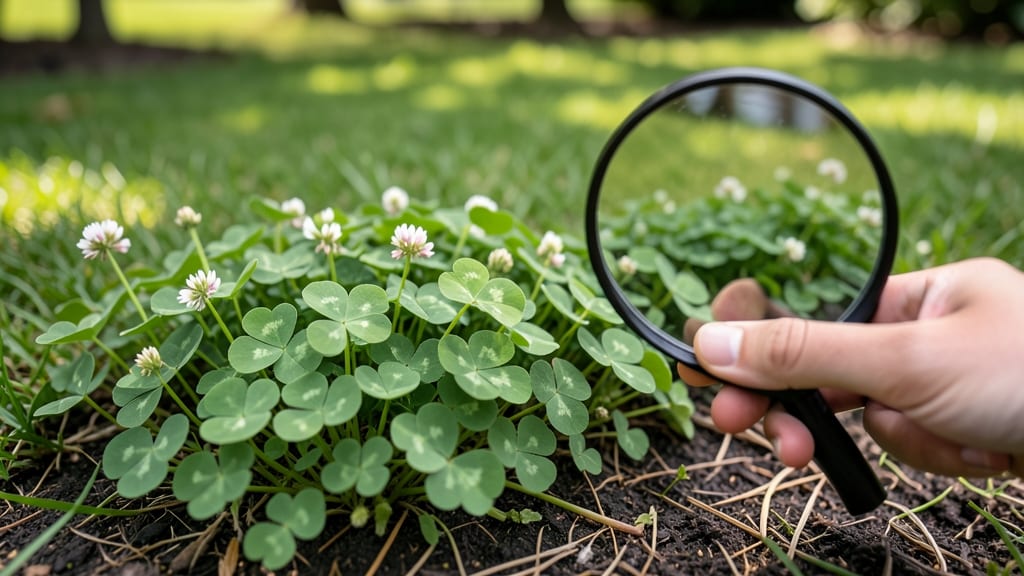
Four-leaf clovers grow naturally in temperate climates, thriving in moist, well-drained soil with partial shade. They’re most common in grassy fields, meadows, and lawns across North America, Europe, and parts of Asia, often appearing alongside three-leaf varieties.
Four-leaf clovers prefer cooler regions where temperatures stay between 40°F and 75°F—think of them as the underdogs of the plant world, thriving where other flowers might struggle. 🌿 These lucky charms often pop up in overgrown lawns or along forest edges, where their three-leaf cousins (true shamrocks) dominate.
The key is patience: they bloom in spring and early summer, so late April through June is prime hunting season. I’ve spotted them most frequently in damp but well-aerated patches, like the edges of walking trails or neglected garden corners where sunlight filters through trees.
What’s fascinating is how their rarity works—they’re actually a genetic mutation of the common three-leaf variety, meaning you’ll find them scattered randomly in the same fields.
This makes them harder to predict than, say, dandelions, but knowing their preferred microclimates (moist but not soggy, shaded but not dark) gives you a real advantage when searching.
Pro tip: look for clover patches first, then scan carefully—your eyes will adjust to spotting that extra leaf once you know what to look for.
💡 In This Article
- Climate and Soil Conditions for Four-Leaf Clover Growth
- Best Locations to Hunt for Lucky Four-Leaf Clovers
Climate and soil conditions for four-leaf clover growth
Four-leaf clovers thrive in what botanists call "mesic" environments—areas with moderate moisture levels that aren't waterlogged. The ideal soil pH range is between 6.0 and 7.0, slightly acidic to neutral, which allows their roots to absorb essential nutrients like nitrogen without competition from more aggressive plants.
Unlike drought-tolerant species, these clovers need consistent moisture but hate soggy conditions—think of them as the Goldilocks of plants, preferring "just right" dampness.
The temperature sweet spot for their growth is 50°F to 75°F, making them perfect for spring and early summer in temperate zones. They go dormant in extreme heat or cold, which is why you rarely find them in tropical regions or high-altitude meadows above 5,000 feet.
The partial shade requirement comes from their natural habitat under tree canopies or along forest edges, where they receive 30-50% sunlight—enough for photosynthesis but protected from intense midday rays that could dry out their delicate leaves.
What makes four-leaf clovers different from their three-leaf cousins is their genetic sensitivity to these conditions. The extra leaf develops from a mutation during cell division, which requires stable environmental factors.
In my experience, the most reliable spots are where soil stays consistently moist but well-drained—like the edges of walking paths or beneath overhanging branches where morning sun dries dew quickly but afternoon shade prevents evaporation.
Soil aeration is equally critical. Four-leaf clovers prefer loose, sandy loam with good organic matter content (think 20-30% organic material by volume). Compacted clay soils strangle their roots, while pure sand lacks the nutrients they need.
This is why you'll find them thriving in old lawns that have been lightly disturbed or in meadows with diverse plant life—areas where the soil structure remains porous and nutrient-rich.
Seasonal timing matters too. The plants establish roots in early spring but don't produce visible four-leaf mutations until temperatures stabilize between 60°F and 70°F.
This is why late May through early July is prime hunting season—the period when both environmental conditions and plant energy levels align perfectly for mutations to appear. 🌱
One fascinating detail is how these clovers respond to human activity. Lightly disturbed soil—like that created by foot traffic or mowing—actually increases their chances of appearing.
The disturbance exposes fresh soil surfaces where seeds can germinate without competition from established grasses, while the partial shade from nearby vegetation creates their ideal microclimate.
For those trying to cultivate them, remember: patience is key. It can take 6-8 weeks from seed germination to visible leaf development, and the four-leaf mutation occurs randomly in about 1 in 10,000 plants under perfect conditions.
That's why wild hunting remains the most reliable method—nature does the heavy lifting of creating these lucky charms.