
Pests and Diseases
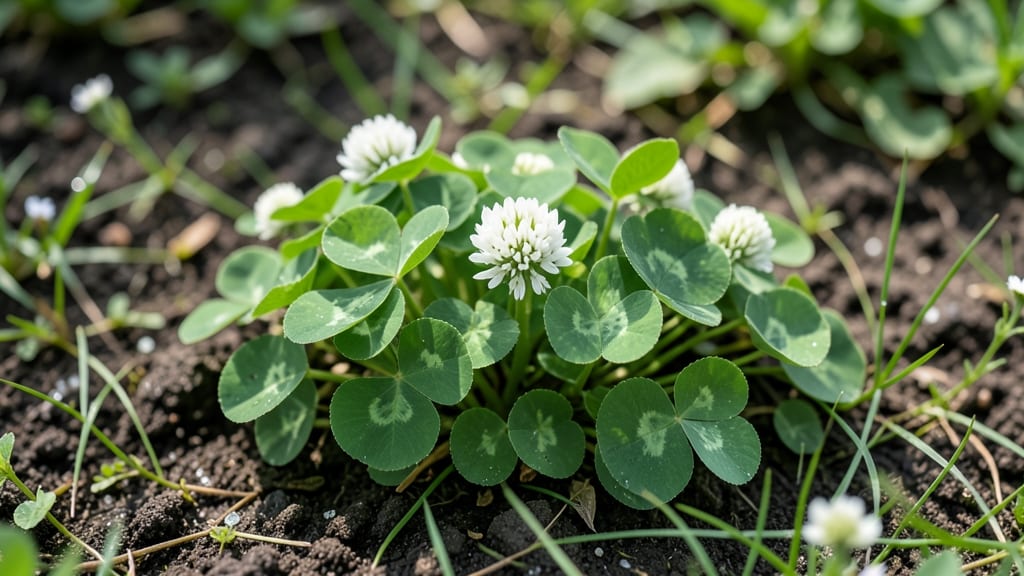
Four-leaf clovers are rare because they occur naturally in only about 1 in 10,000 three-leaf clovers, with each extra leaf representing a genetic mutation in the Trifolium repens plant.
This rarity stems from how clover plants develop—each leaf represents a separate growing point during cell division. 🌱 When a fourth leaf appears, it's the result of an unusual genetic anomaly that disrupts the normal three-leaf pattern.
Most clovers remain three-leafed because their DNA follows a stable growth pattern, while four-leaf variations require precise conditions during germination. Botanists estimate that only about 1 in 5,000 clovers will develop a fourth leaf, making them nature's true lottery tickets.
The mutation isn't random—it's tied to specific environmental factors like soil composition, temperature fluctuations during growth, and even sunlight exposure. Some gardeners swear by planting clovers in nitrogen-rich soil or during early spring when conditions are most favorable for genetic quirks to emerge.
While you won't turn every clover into a four-leaf wonder, these techniques can slightly improve your chances of spotting one in your lawn.
💡 In This Article
- The Genetics Behind Four-Leaf Clover Mutations
- How to Increase Your Odds of Finding a Four-Leaf Clover
The genetics behind four-leaf clover mutations
The four-leaf clover's rarity begins at the cellular level during the plant's development. Each clover leaf grows from a separate meristem—an embryonic tissue cluster—where cells rapidly divide. Normally, Trifolium repens (white clover) produces three meristems, resulting in three leaves.
A fourth leaf appears only when an extra meristem forms due to a genetic mutation in the plant's growth regulators, specifically hormones like auxin that control cell division patterns. This mutation occurs in about 1 in 10,000 plants, making four-leaf clovers statistically rarer than winning lottery jackpots in many jurisdictions.
What makes this mutation so precise? Botanists trace it to a disruption in the plant's homeobox genes—sequences that act like biological blueprints for growth patterns. When these genes misfire during early development, they can trigger additional meristems to form.
Interestingly, the fourth leaf often appears smaller or differently shaped, as it develops under less optimal conditions than its three siblings. 🌱 For comparison, five-leaf clovers are even rarer, occurring at rates of 1 in 10 million, because they require two separate mutations in the same plant—a biological equivalent of hitting two lottery numbers simultaneously.
Environmental factors play a surprising role in triggering these mutations. Research shows that clovers grown in nitrogen-rich soils or exposed to temperature fluctuations during germination have slightly higher mutation rates. The plant's response to stress—whether from drought, nutrient deficiencies, or even physical damage—can also prompt genetic variations.
This explains why gardeners often find four-leaf clovers in lawns that experience seasonal changes or have been recently disturbed, as the plant's survival mechanisms kick into overdrive.
Here's where it gets fascinating: the fourth leaf isn't always identical in appearance. Some botanists classify different types based on leaf shape and position. The most common is the "heart" leaf, where the fourth leaf grows upward, creating a distinctive shape.
Others may have the fourth leaf positioned differently or even fused to another leaf. These variations occur because the extra meristem doesn't always follow the same growth pattern as the primary three leaves. 🌿
The genetic stability of clovers makes these mutations particularly rare. Unlike animals that can reproduce sexually and introduce new genetic combinations, clovers primarily reproduce asexually through runners (stolons).
This means each plant is essentially a clone of its parent, with mutations only appearing when rare genetic errors occur during cell division. The three-leaf pattern is so deeply ingrained in Trifolium repens that it requires a significant disruption to produce a four-leaf variation.
To put this into perspective, if you were to examine 100,000 clover plants, you'd likely find only about 10 with four leaves. This statistical rarity is why four-leaf clovers have become symbols of luck—nature's way of making something extraordinary feel almost magical.
The same genetic principles apply to other rare plant mutations, like four-leaf roses or five-petal flowers, though those occur at even lower frequencies due to more complex growth patterns.