
Leaf Blower
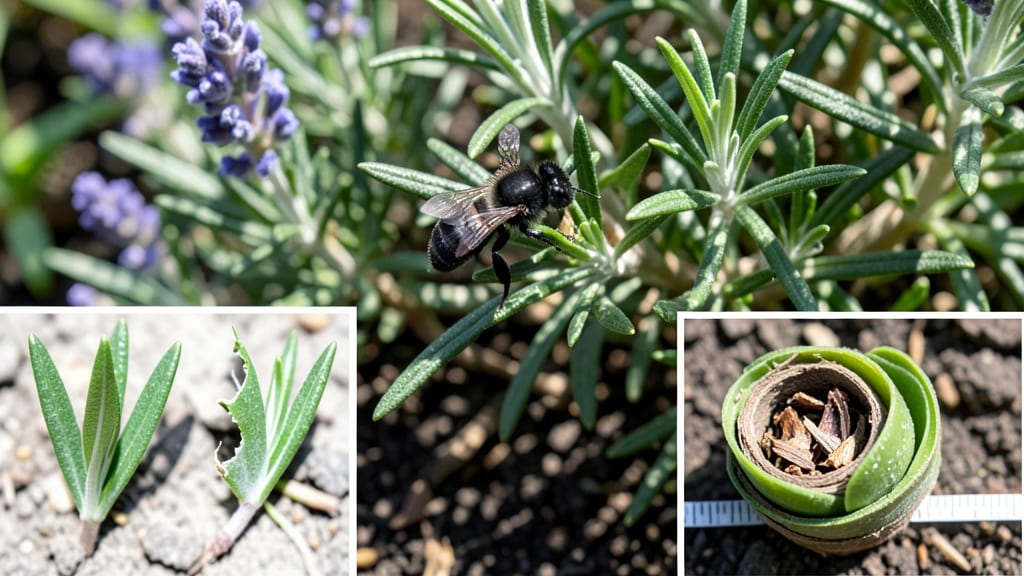
Leaf cutter bees cut leaves to create protective nests for their offspring by precisely chewing circular pieces, which they use as roofing material. Inside their underground burrows, they store pollen and nectar to feed their developing larvae, ensuring survival in their solitary lifestyle.
These bees are nature's master builders, transforming simple leaves into waterproof chambers that shield their young from predators and harsh weather. 🌿 The circular cuts they make are remarkably precise—each piece fits perfectly like a puzzle—thanks to their strong mandibles and specialized enzymes that prevent the leaves from curling.
What's fascinating is how they select leaves: thicker, more flexible varieties like roses or fruit trees work best, while thin or brittle leaves get rejected. This behavior isn't just instinct; it's an evolutionary adaptation that maximizes protection while minimizing energy expenditure.
Beyond nest construction, their leaf-cutting serves another critical purpose: creating a moisture barrier. The chewed leaf pieces form a natural seal that keeps rain and debris out of the nesting chamber. This dual-function design—protection plus food storage—demonstrates how leaf cutter bees have perfected their survival strategy over millions of years.
Their work benefits gardens too, as these pollinators play a crucial role in plant reproduction while keeping pests in check.
💡 In This Article
- The Science Behind Leaf Cutter Bee Nest Construction
- How to Support Leaf Cutter Bees in Your Garden
The science behind leaf cutter bee nest construction
Leaf cutter bees use their specialized mandibles to make precise, half-moon-shaped cuts in leaves, creating pieces that function like roof shingles for their nests. The key lies in their salivary enzymes, which prevent the leaf edges from curling as they chew—allowing the pieces to lay flat and interlock tightly.
Studies show these bees prefer leaves with a thickness between 0.1 and 0.3 millimeters, as thinner leaves tear too easily while thicker ones require excessive energy to cut. 🔥 The circular cuts (typically 1/4 to 1/2 inch wide) are remarkably uniform, with deviations rarely exceeding 1-2 millimeters—a precision that rivals human craftsmanship.
The biological purpose extends beyond construction. Once inside their 1-6 inch deep burrows, female bees line the chambers with pollen and nectar, creating a nutrient-rich environment for their larvae. The leaf pieces serve as both insulation and a moisture barrier, preventing fungal growth that could harm developing offspring.
This dual-function design mirrors how termites use saliva to harden mud in their nests—showing how insects have evolved parallel solutions to similar environmental challenges. The bees' ability to select leaves with optimal moisture content (neither too dry nor saturated) further demonstrates their adaptive nesting strategies.
What makes this behavior particularly fascinating is its evolutionary trade-off: while cutting leaves provides superior protection, it also exposes the bees to predators like spiders and birds. To mitigate this risk, leaf cutter bees often work at night or in dense foliage where they're less visible.
Their solitary lifestyle means each female must build and provision her own nest independently, requiring 3-5 days of continuous work per chamber. This precision and effort highlight why these bees are among nature's most efficient architects—balancing resource investment with survival probability.
Leaf selection isn't random either. Research shows these bees favor plants like roses, raspberries, and fruit trees because their leaves provide the right balance of flexibility and durability.
The bees' mandibles can exert up to 500 times their body weight in force—enough to cut through leaf veins without damaging the surrounding tissue.
This mechanical advantage, combined with their enzymatic saliva, allows them to harvest leaves from plants without causing permanent damage, making them valuable pollinators that don't harm the very plants they rely on for nesting materials.
The pollen storage system is equally sophisticated. Female bees collect pollen on specialized hairs called scopae, then pack it into the nest chambers with precise layering—often alternating pollen with nectar to create a balanced food source.
This method ensures larvae receive both protein (from pollen) and energy (from nectar) in optimal proportions. The entire process reflects millions of years of refinement, where each behavioral trait—from leaf cutting to pollen storage—serves a specific survival function in their solitary ecosystem. 💫
What most people overlook is how this behavior benefits gardens. By cutting leaves, these bees create micro-environments that reduce plant stress from overgrowth while their pollination activities boost fruit and seed production.
The circular leaf cuts left behind are actually a sign of a healthy ecosystem—proof that these tiny architects are hard at work maintaining the delicate balance of nature's systems.