
Plants
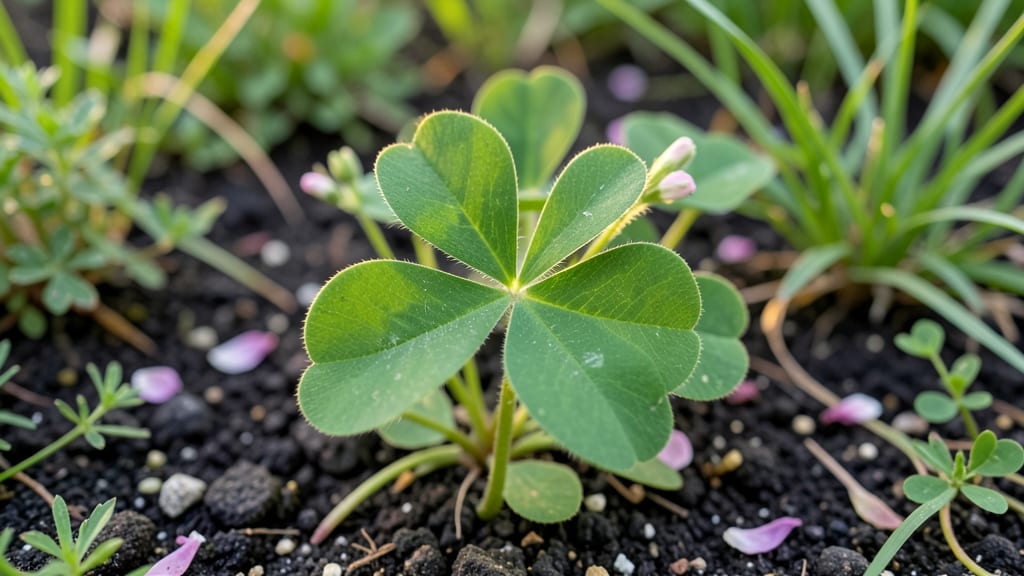
3 Leaf Plant Identification can feel like solving a puzzle—especially when some are edible and others are dangerous. 🌿 I’ve spent years sorting through backyard greens, and the key is really in the details: leaf shape, edges, and how they’re arranged. A quick glance can tell you whether you’re looking at clover, cannabis, or poison ivy, but you’ve got to know what to look for.
The biggest mistake? Assuming all three-leaf plants are the same. Clover has rounded leaves with white markings, cannabis leaves are jagged and grow in clusters, and poison ivy has smooth edges with a single vine.
Grab a magnifying glass or use a free plant ID app—it’s the fastest way to confirm what you’re dealing with before touching anything. I keep a small notebook in my gardening bag just for this purpose.
Once you master these basics, you’ll spot the differences in seconds. That means no more accidental poison ivy rashes or confusing cannabis for edible greens. You’ll also learn which plants thrive in your garden and which to keep out.
The confidence comes from practice, but the first few identifications stick with you forever.
For tricky cases, I rely on a field guide and the iNaturalist app to double-check. Whether you’re clearing a yard or planting a new garden bed, this skill saves time—and headaches. Start with these common varieties, and soon you’ll be identifying plants like a pro.
Understanding Leaf Patterns
Plants with three distinct leaves per stem can be fascinating, but their appearance isn’t always accidental—it’s often the result of natural growth processes, environmental factors, or even human intervention. If you’re curious about why some plants develop this specific leaf structure, here’s a breakdown of the most common causes:
Some plants are hardwired to grow in threes due to their genetic makeup. This is especially true for species in the Fabaceae (legume) family, like clover, or certain Araceae (arum) plants. These families evolved with trifoliate (three-leaf) structures as part of their reproductive or survival strategies.
- Why it happens: The plant’s DNA encodes a specific growth pattern where the stem produces three leaves at each node (the point where leaves or branches emerge).
This is a stable trait passed down through generations. - Actionable tip: If you’re identifying a plant with three leaves, check its family traits. Many legumes (e.g., sweet peas, some beans) and tropical plants (e.g., peace lilies, philodendrons) follow this pattern naturally.
Hormones like auxins and cytokinins regulate leaf development. If a plant experiences stress or disruption in its hormonal balance—such as from pruning, disease, or chemical exposure—it may produce abnormal leaf counts, including trifoliate growth where it wouldn’t normally occur.
- Why it happens: - Pruning too aggressively can trigger compensatory growth, leading to clustered leaves. - Fungal or bacterial infections (e.g., leaf curl viruses) can alter cell division, resulting in extra leaves or fused leaflets. - Overuse of growth regulators (like synthetic auxins in fertilizers) may force the plant to produce more leaflets than usual. - Actionable tip: Monitor your plant’s health.
If you notice sudden trifoliate growth on a plant that typically has single or compound leaves, check for pests, disease, or recent stress factors.
Extreme conditions—whether too much heat, cold, drought, or poor soil—can push a plant into survival mode, altering its growth patterns. This is common in monocots (single-leaf plants) or simple-leaf plants that suddenly develop three leaves as a stress response.
- Why it happens: - Drought or poor drainage forces the plant to prioritize water retention, sometimes resulting in thicker or clustered leaves. - Temperature shocks (e.g., frost damage or sudden heatwaves) can disrupt cell division, leading to malformed leaves. - Nutrient deficiencies (especially nitrogen or magnesium) may cause leaves to split or grow in unusual patterns. - Actionable tip: Adjust care routines if you suspect stress.
Improve soil quality, water consistently, and provide shade or shelter if needed. If the plant recovers, the trifoliate leaves may revert to normal.
Grafting (attaching a plant’s stem to another rootstock) or propagating from cuttings can sometimes lead to chimera-like growth, where the new plant exhibits traits from both parent plants. This might result in unexpected leaf patterns, including three leaves where there should be fewer.
- Why it happens: - Incompatible grafts may cause the scion (top plant) to produce leaves influenced by the rootstock’s genetics. - Layering or cutting propagation can sometimes trigger mutations, especially if the cutting was taken from a stressed or diseased part of the plant. - Actionable tip: If you’re propagating plants, use healthy, disease-free cuttings from consistent stock.
Avoid grafting unrelated species unless you’re prepared for possible anomalies.
Herbicides, pesticides, or even household chemicals (like bleach or cleaning sprays) can disrupt a plant’s cellular structure, leading to abnormal leaf growth. This is more common in broadleaf plants (like weeds or ornamental flowers) that react unpredictably to treatments.
- Why it happens: - Systemic herbicides (absorbed into the plant’s vascular system) can cause leaf malformations, including trifoliate growth. - Fungicides or insecticides with high concentrations of copper or sulfur may burn leaf tissue, prompting regrowth with extra leaflets. - Actionable tip: Always follow label instructions for chemicals.
If you suspect exposure, rinse the plant gently with water and monitor for recovery. Avoid treating plants during flowering or fruiting stages.
Nature (or plant breeders) sometimes throws a curveball with spontaneous mutations or hybrid vigor. A plant might suddenly produce three leaves instead of one or five due to a genetic quirk—this is more common in ornamental plants or those bred for novelty.
- Why it happens: - Chromosomal abnormalities during cell division can lead to extra leaflets. - Cross-pollination between different varieties may produce offspring with mixed traits, including leaf structure. - Actionable tip: If you’re growing from seed, collect seeds from stable, non-hybrid plants to avoid surprises.
Embrace mutations in ornamental plants—they can create unique varieties!
Not all three-leaf plants are the same! While some follow a natural pattern, others may be reacting to stress, chemicals, or genetic glitches. Observe your plant’s overall health, growing conditions, and family traits to narrow down the cause.
If the trifoliate growth is persistent and unwanted, adjusting care or isolating the plant may help restore normalcy. 🌿
Quick fixes for leaf confusion
Identifying plants by their leaves can feel like solving a puzzle—especially when you’re staring at a trio of unfamiliar foliage! 🌿 But don’t stress. With the right approach, you can turn leafy mysteries into confident matches.
Below are practical solutions tailored to common challenges in 3-leaf plant identification, plus prevention tips
Cause: Many plants share similar leaf shapes (e.g., trifoliate leaves in clover vs. poison ivy), making quick ID tricky. Fix:
- 📏 Measure leaf size and spacing: Note the length of each leaflet and the distance between them. Poison ivy’s leaflets are typically 1–5 inches long, while clover’s are smaller and rounder.
- 🌱 Check the stem: Poison ivy has a hairless, smooth stem, while clover stems are often fuzzy or branched.
- 📸 Snap a photo: Use a plant ID app like PlantNet or iNaturalist to cross-reference your findings.
💡 Pro Tip: If the plant has white berries, it’s likely poison ivy—avoid touching it!
Cause: Overwatering, pests, or disease can distort leaves, making identification harder. Fix:
- 💧 Assess watering habits: Yellowing or drooping leaves? You might be overwatering. Let the soil dry 1–2 inches deep between waterings.
- 🐜 Inspect for pests: Look for aphids, spider mites, or chewed edges. Treat with neem oil or insecticidal soap.
- 🌱 Focus on healthy growth: If leaves are damaged, examine undamaged parts or nearby plants for clues.
🌡️ Prevention: Keep plants in bright, indirect light and avoid crowded pots to reduce stress.
Cause: Some plants (like trifoliate plants) only reveal their true identity through flowers, berries, or seeds—but what if they’re not in season? Fix:
- 📅 Track seasonal changes: Many plants bloom in spring or summer. Keep a journal of growth patterns.
- 🌱 Compare leaf arrangements: Alternate leaves (like in shamrock plants) vs. whorled leaves (like toxicodendron) can be a game-changer.
- 🔬 Check the root system: If potted, gently remove the plant to see if roots resemble known varieties (e.g., thick, fibrous roots in mint vs. tuberous roots in some vines).
✨ Hack: Search for the plant’s common name (e.g., "three-leaf plant") in gardening forums—often, others have faced the same ID struggle!
Cause: Some 3-leaf plants (like poison ivy) are dangerous, while others (like alfalfa) are safe. Fix:
- 🚨 Memorize the rhyme: "Leaves of three, let it be!" (Poison ivy/oak/sumac rule.)
- 📱 Use a toxicity database: Check the North American Poisonous Plants Database for visual matches.
- 👨👩👧👦 Keep kids/pets away: If unsure, assume it’s toxic until confirmed safe.
🎯 Safety First: Wear gloves and long sleeves when handling unknown plants, especially outdoors.
With these strategies, you’ll go from leaf-lost to leaf-literate in no time. Happy identifying! 🌱
Frequently asked questions
What are the most common plants with three leaves?
Three-leaf plants include clover (round leaves with white markings), cannabis (jagged, serrated edges), and poison ivy (smooth edges with a single vine). Other examples are alfalfa (larger, elongated leaves) and some philodendron varieties. Always check leaf shape and arrangement for accurate ID.
How do I tell poison ivy apart from clover?
Poison ivy has smooth-edged leaflets arranged in groups of three along a single vine, while clover has rounded leaflets with white markings and fuzzy stems. If the plant has white berries, it’s poison ivy—avoid touching it! Use gloves when handling unknown plants.
Can I use a phone app to identify a 3-leaf plant?
Yes! Apps like PlantNet, iNaturalist, or PictureThis let you upload photos for instant ID. Take clear images of the leaves, stem, and any flowers/berries. For tricky cases, include a reference object (like a coin) to show scale.
Why does my houseplant suddenly have three leaves instead of one?
This could be due to stress (overwatering, pests, or poor light) or a genetic quirk. Check for yellowing leaves or pests first. If the plant is otherwise healthy, it might just be a natural variation—especially in tropical plants like philodendrons.
Are all 3-leaf plants toxic?
No! While poison ivy and poison oak are dangerous, many are safe—like clover, alfalfa, or cannabis. The key is leaf shape and context: smooth edges + red berries = toxic; round leaves with white spots = edible. When in doubt, assume it’s toxic until confirmed otherwise.