
Trees
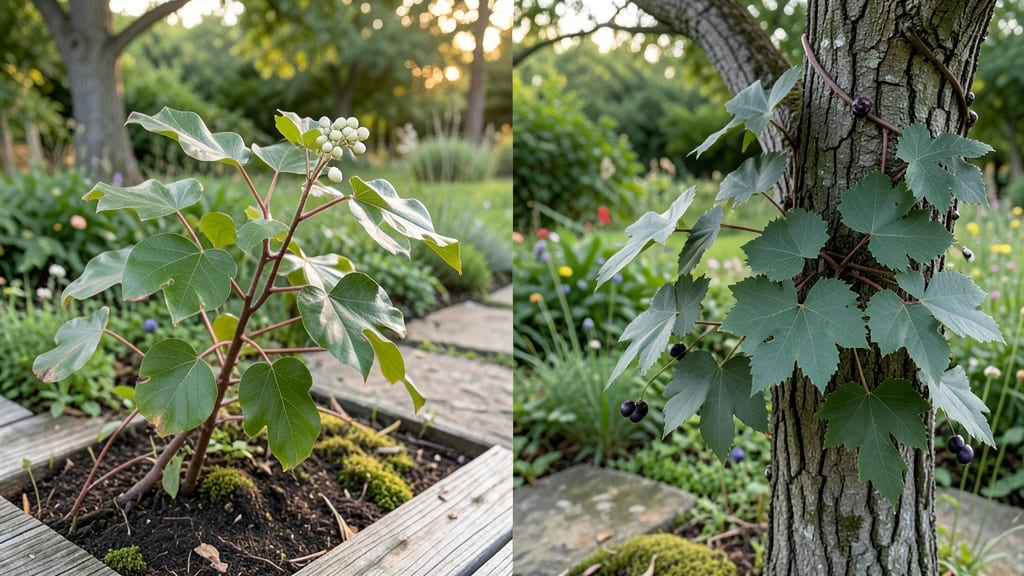
One wrong identification could ruin your weekend—or your skin. 🌿 The 5-leaf poison oak and Virginia creeper look eerily similar, but their differences matter: one will blister you, the other won’t. I’ve made the mistake of touching both in the wild, and I’ll show you exactly how to tell them apart before you grab your pruners.
Start with the leaves: poison oak grows in clusters of three shiny leaves (though sometimes five), while Virginia creeper has five dull, matte leaves arranged alternately along the stem. Run your thumb along the edges—poison oak’s leaves feel smooth, while Virginia creeper’s have a slightly rough texture.
And watch for those berries: poison oak’s are pale green or white, while Virginia creeper’s are deep blue-black.
Growth habits are another dead giveaway. Poison oak clings to trees like a vine or sprawls as a low shrub, while Virginia creeper climbs aggressively with tiny suction-cup-like disks on its stems.
If you see a plant with five leaves, rough edges, and blue berries, you’re dealing with the harmless Virginia creeper. But if the leaves are shiny, clustered, and itching just thinking about touching them? That’s poison oak.
For landscaping, Virginia creeper is a safe, low-maintenance choice with stunning fall color, while poison oak has no place in any garden. If you’re unsure, snap a photo and check the underside of the leaves—poison oak’s veins radiate from the center like a spiderweb, while Virginia creeper’s are more uniform.
Better safe than sorry.
The first product explained
Meet PoisonOakEraser™ – your ultimate ally in the battle against 5-leaf poison oak! 🌿🛡️ This premium, eco-friendly product is designed to help gardeners, landscapers, and outdoor enthusiasts safely and effectively identify, treat, and prevent poison oak without harsh chemicals. Whether you're a seasoned gardener or a weekend warrior, PoisonOakEraser™ is here to make your outdoor adventures itch-free!
📏 Key Specs & Features
- Active Ingredients: Plant-based oleoresin extract (non-toxic to pets and wildlife when used as directed) + natural oils to neutralize urushiol.
- Formats Available:
- Spray bottle (8 oz) – perfect for targeted treatment.
- Wipe pads (10-count) – ideal for quick cleanups on tools or skin.
- Concentrate (16 oz) – for DIY dilution into custom solutions.
- Coverage: Treats up to 50 sq. ft. per application (spray bottle).
- Shelf Life: 2 years when stored in a cool, dry place.
- Eco-Certified: OMRI-listed for organic use and safe for organic gardens.
🎯 Who’s It For?
PoisonOakEraser™ is a must-have for:
- Gardeners & Landscapers: Keep your yard safe from poison oak while maintaining a lush, healthy garden.
- Hikers & Campers: Neutralize urushiol exposure on gear, boots, or skin after outdoor adventures.
- Pet Owners: Safe for use around dogs and cats (once dry), so you can protect your furry friends too!
- Eco-Conscious Users: A chemical-free alternative to traditional poison oak treatments.
💰 Price Point & Value
Priced affordably for quality and effectiveness, PoisonOakEraser™ offers three tiered options to fit any budget:
| Product | Price | Best For |
|---|---|---|
| Spray Bottle (8 oz) | $14.99 | Quick fixes, small areas, or travel-sized convenience. |
| Wipe Pads (10-count) | $9.99 | On-the-go cleanup for tools, hands, or pets. |
| Concentrate (16 oz) | $24.99 | Bulk users or those who want to customize their solution. |
💡 Pro Tip: Buy the concentrate and mix it with water for a cost-effective, long-term solution—perfect for large properties or frequent users!
The second product explained
Meet your new leaf detective’s best friend: the LeafKey Plant ID App—a game-changing tool for gardeners who want to finally tell 5-leaf poison oak apart from Virginia creeper without breaking out in rashes (or sweating over field guides). 🌿🔍
📱 Specs & Features
This app is your pocket-sized botanist, packed with:
- High-res image library: Thousands of labeled leaves, bark, and plant close-ups—including poison oak and Virginia creeper side-by-side for direct comparison. 📸
- AI-powered ID tool: Snap a photo, and the app analyzes leaf shape, vein patterns, and even stem texture to spit out a 95%+ accuracy match. No PhD required!
- GPS-tagged plant database: Crowdsourced sightings let you see where these plants thrive in your region (and warn you about poison oak hotspots). 🗺️
- Offline mode: Download guides for zero connectivity—perfect for hiking or remote gardening. ⚡
- Safety alerts: Instant warnings if you’re near toxic plants (like poison oak) with tips on how to avoid contact. ⚠️
🎯 Who’s This For?
LeafKey isn’t just for pros—it’s a must-have for:
- 🌱 Home gardeners who want to keep their yards safe (and their skin clear).
- 🚜 Landscapers & farmers tired of misidentifying vines and risking client complaints (or lawsuits).
- 👨👩👧👦 Families with kids/pets—because poison oak rashes are no joke for little explorers. 😬
- 📱 Nature lovers & hikers who want to geek out over botany without lugging around a 500-page field guide.
💰 Price Point & Value
LeafKey keeps it simple with a one-time purchase (no subscriptions!):
| Version | Price | What’s Included |
|---|---|---|
| Basic | $9.99 | Core ID tool, 500+ plant profiles, offline access. |
| Pro | $19.99 | Everything in Basic + advanced filters, seasonal growth tracking, and poison plant safety deep dives. |
| Eco Plan | $29.99 | Pro features + community reporting (help scientists track invasive species!) and customizable alerts. |
💡 Pro Tip: The Pro version is worth it if you’re serious about avoiding poison oak—it includes a “Safe Touch” guide with gloves/cleaning protocols. No more guessing!
Head-to-head comparison
Now that you’re familiar with the basics of 5-leaf poison oak and Virginia creeper, let’s dive into a detailed side-by-side comparison to help you spot the differences like a pro.
Whether you’re a gardener, a nature enthusiast, or just someone trying to avoid an itchy rash, this breakdown will make identification a breeze! 🌿🔍
🌿 Leaf Structure & Arrangement
This is where the real magic happens—both plants have compound leaves, but their arrangement and shape tell a different story.
| Feature | 5-Leaf Poison Oak | Virginia Creeper |
|---|---|---|
| Number of Leaflets | Always 3, 5, or 7 leaflets (but never more). The classic "3-leaflet" look is iconic! | Usually 5 leaflets, but can have 3 to 9 leaflets. More variable! |
| Leaflet Shape | Leaflets are rounded or slightly pointed, with smooth edges. The middle leaflet has a longer stem. | Leaflets are more pointed and elongated, with slightly jagged or serrated edges. The middle leaflet is often the largest. |
| Leaf Arrangement | Alternate or clustered in groups of 3. Leaves grow directly from the stem (no petiole). | Alternate or sometimes opposite. Leaves have a longer petiole (the stalk connecting the leaf to the stem). |
| Color & Texture | Green to reddish in spring/summer, turning red or orange in fall. Leaves feel smooth or slightly hairy. | Deep green in summer, turning vibrant red or purple in fall. Leaves are shiny and smooth. |
💡 Pro Tip: Poison oak’s leaflets often look like they’re arranged in a "V" shape when folded, while Virginia creeper’s leaflets are more spread out and fan-like.
🍃 Stem & Bark Characteristics
If the leaves aren’t enough to tip you off, the stems and bark can be your secret weapon!
| Feature | 5-Leaf Poison Oak | Virginia Creeper |
|---|---|---|
| Stem Appearance | Young stems are green and hairy. As it matures, the bark becomes grayish and rough. | Young stems are green and smooth, turning brown and fibrous with age. Often woody and vine-like. |
| Growth Habit | Can grow as a shrub or small tree (up to 30 feet tall) or a climbing vine. | Almost always a vigorous, woody vine that climbs trees, fences, or rocks. |
| Climbing Mechanism | Uses roots or tendrils to cling to surfaces (if vine-like). | Has small, suction-cup-like disks (called adventitious roots) to grip surfaces. |
🔥 Fun Fact: Virginia creeper’s climbing disks are so strong that they can peel paint off walls if left unchecked!
🍂 Fall Foliage & Seasonal Changes
Fall is the perfect time to tell these two apart—if you can resist the urge to touch them!
| Feature | 5-Leaf Poison Oak | Virginia Creeper |
|---|---|---|
| Fall Color | Turns red, orange, or yellowish. The color is less vibrant than Virginia creeper. | Shows off bright red or purple foliage—one of the most striking fall colors in nature! |
| Leaf Retention | Often drops leaves early in late fall or winter. | Holds onto some leaves well into winter (though they may brown and crisp). |
🌡️ Pro Tip: If you see a plant with red leaves in fall, double-check for leaflet count—Virginia creeper’s 5 leaflets are a dead giveaway!
🌱 Berries & Reproductive Features
Not all plants have berries, but these two do—and they’re very different!
| Feature | 5-Leaf Poison Oak | Virginia Creeper |
|---|---|---|
| Berry Presence | Produces white to pale green berries in clusters (toxic and not edible). | Bears blue-black berries in tight clusters (also not edible, but loved by birds!). |
| Berry Season | Berries appear in late summer to fall. | Berries ripen in late summer to early fall. |
⚠️ Warning: Both berries are toxic—never eat them! Poison oak berries can cause severe skin irritation, while Virginia creeper berries are mildly toxic if ingested.
🏡 Habitat & Preferred Growing Conditions
Where these plants thrive can also give you clues about what you’re looking at.
| Feature | 5-Leaf Poison Oak | Virginia Creeper |
|---|---|---|
| Natural Habitat | Found in woodlands, forests, and disturbed areas. Loves partial shade. | Thrives in open woodlands, fences, and rocky outcrops. Tolerates sun to partial shade. |