
Plants
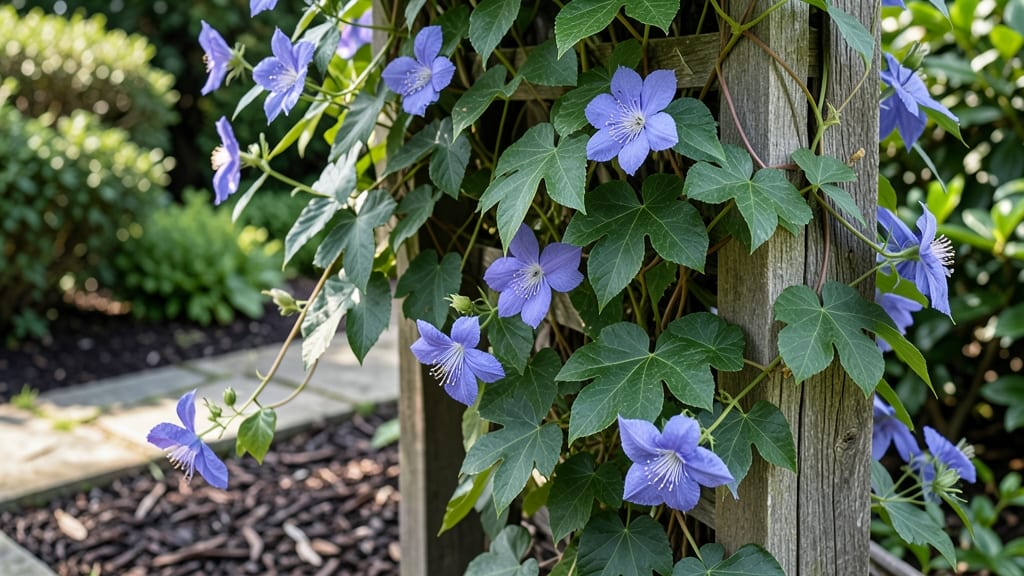
The 5-lobed leaf vine transforms shady corners into lush vertical gardens. 🌿 I’ve watched mine climb trellises in partial shade, its deep green leaves unfurling like nature’s own stained glass—even when sunlight is scarce.
This isn’t just another vine; it’s a year-round performer that thrives where others fail, with flowers that bloom from spring to frost. You’ll need a sturdy trellis, well-draining soil, and patience—this vine grows 3-5 feet per year once established.
Water consistently but avoid soggy roots, and watch for powdery mildew if humidity spikes. Prune leggy growth in early spring to encourage bushier foliage and more dramatic displays. By midsummer, you’ll have a wall of glossy leaves and clusters of trumpet-shaped blooms, attracting hummingbirds while adding texture to your garden.
The best part? It keeps its foliage through winter, offering structure when most plants fade. Perfect for fences, arbors, or even container training. Here’s how to make it thrive in your space—shade or no shade.
What Triggers Leaf Shape Shifts
If your 5-lobed leaf vine (likely a Parthenocissus tricuspidata or similar shade-loving climber) is producing leaves that don’t match its signature five-lobed glory, don’t panic—it’s usually a response to its environment.
Understanding the why behind these changes helps you adjust care to restore that dramatic, lobed foliage you love. Let’s break down the science behind the shifts.
The most straightforward reason for irregular leaf shapes is genetics. While many vines are bred or selected for their classic five-lobed pattern, slight variations can appear naturally due to:
- Seed-source differences: Vines grown from seed (rather than cuttings) may inherit subtle genetic quirks, leading to leaves with fewer or more lobes, or even serrated edges. Think of it like a family trait—some branches might just be the "cousins" of the main plant.
- Hybrid influences: If your vine is a hybrid (e.g., Parthenocissus crossed with other species), its leaves might blend traits, resulting in occasional three-lobed or deeply divided leaves.
- Juvenile vs. mature phases: Young vines often start with simpler, three-lobed leaves before developing the full five-lobed structure as they mature. This is normal and temporary!
Actionable fix: If you love consistency, opt for cloned cuttings from a trusted nursery to ensure true-to-type lobed leaves. For seed-grown plants, embrace the variability as part of the vine’s charm!
Your vine’s light exposure is a major player in leaf morphology. These shade-lovers thrive in partial to full shade, but push them too far outside their comfort zone, and the leaves will rebel:
- Too much sun: Direct afternoon sun can cause heat stress, leading to smaller, thicker leaves with fewer or fused lobes. The vine essentially "shrinks" its leaf surface to reduce water loss—a survival tactic.
- Inconsistent light: Dappled shade (like under a tree canopy) is ideal, but erratic light (e.g., moving from deep shade to bright spots) can confuse the vine, resulting in patchy lobing or even lobeless leaves.
- Artificial light gaps: If your vine is growing near a window or under grow lights, the spectral quality of light (lack of red/blue wavelengths) can disrupt chlorophyll production, altering leaf shape.
Actionable fix:
- 🔍 Assess your vine’s light: If leaves are small or lobeless in sunnier spots, move it to morning sun + afternoon shade.
- 🌿 Use sheer curtains: If indoors, diffuse harsh light with a light-filtering fabric to mimic natural shade.
- 🌳 Create a shade layer: Plant taller, shade-tolerant species (like ferns or hostas) nearby to buffer direct sun.
Water and nutrients are the building blocks of leaf development. When these are off, your vine’s lobed dreams can turn into a botanical mystery:
| Issue | Leaf Reaction | Why It Happens |
|---|---|---|
| Overwatering | Yellowing, lobeless, or swollen leaves | Excess moisture drowns roots, starving the vine of oxygen. Without proper nutrient uptake, leaves simplify or develop abnormally. |
| Underwatering | Small, crispy, or deeply lobed (but brittle) leaves | The vine conserves water by reducing leaf surface area, sometimes exaggerating lobes or causing them to curl. |
| Nitrogen deficiency | Pale, small leaves with fewer lobes | Nitrogen is critical for leaf expansion. Without it, the vine prioritizes survival over decorative lobing. |
| Potassium/magnesium excess | Dark green but irregularly shaped leaves | Too much of these minerals can disrupt cell division, leading to uneven growth patterns. |
Actionable fix:
- 💦 Check soil moisture: Stick your finger 2 inches deep—water when dry but not soggy. Use a well-draining potting mix (add perlite or orchid bark).
- 🌱 Fertilize wisely: Use a balanced, slow-release fertilizer (10-10-10) in spring, or a foliar spray with micronutrients for a boost.
- 🧪 Test your soil: A simple DIY soil test kit can reveal deficiencies before leaves start misbehaving.
Temperature swings can send your vine into leaf shape overdrive, especially if it’s not acclimated to your climate. Here’s how:
- Cold snaps: If your vine is tender (not fully cold-hardy), sudden drops below 20°F (-7°C) can cause cellular damage, leading to deformed or lobeless regrowth in spring.
- Heatwaves: Temperatures above 90°F (32°C) for extended periods can halt growth, resulting in stunted, under-lobed leaves as the vine waits for cooler conditions.
- Seasonal transitions: Some vines naturally produce simpler leaves in spring (as they emerge) before developing full lobing in summer. This is normal but can be mistaken for a problem!
Actionable fix:
- 🌡️ Protect from extremes: In winter, use burlap wraps or frost cloth for young vines. In summer, provide afternoon shade with a shade sail.
- 🌿 Mulch like a pro: Apply 3–4 inches of mulch (wood chips or straw) to regulate soil temperature and retain moisture.
- ⏳ Patience for spring: If new growth looks "off," wait 4–6 weeks—warmer temps often trigger the classic lobed pattern.
While less common, pests and diseases can physically alter leaf development by:
- Sap-sucking insects (e.g., aphids, spider mites): These pests inject toxins or damage phloem tissue, causing leaves to develop abnormally—often with puckered or lobeless edges.
- Fungal infections (e.g., powdery mildew): Fungi can
Revive Your Climbing Vine
If your 5-lobed leaf vine (likely a Parthenocissus quinquefolia or similar) is struggling, don’t panic—most issues have simple fixes. Below, we’ll tackle common problems with clear, actionable steps.
Whether it’s yellowing leaves, slow growth, or pest troubles, these solutions will help your vine bounce back to its lush, green glory. 🌿✨
Yellowing or wilting leaves are often a sign of overwatering, underwatering, or nutrient deficiencies. Here’s how to diagnose and treat the issue:
💧 Overwatering or Poor Drainage
- Cause: Soggy soil cuts off oxygen roots need, leading to yellowing or blackened leaves.
- Fix:
- Let the top 1–2 inches of soil dry out between waterings.
- Improve drainage by mixing compost or perlite into heavy soil.
- Ensure containers have drainage holes (if potted).
- Prevention:
- Water deeply but less frequently—once a week is usually enough unless it’s extremely hot.
- Use a moisture meter to check soil dampness before watering.
🌞 Underwatering or Heat Stress
- Cause: Crispy, brown edges or drooping leaves signal thirst or heat exhaustion.
- Fix:
- Water thoroughly at the base (avoid wetting leaves to prevent fungal issues).
- Mulch around the base to retain moisture.
- Provide afternoon shade in hot climates.
- Prevention:
- Group plants together to create a microclimate with higher humidity.
- Water early in the morning to reduce evaporation.
🍃 Nutrient Deficiency (Yellow Leaves with Green Veins)
- Cause: Lack of nitrogen or iron leads to pale or yellow leaves.
- Fix:
- Fertilize with a balanced, slow-release fertilizer (10-10-10) in spring and summer.
- For iron deficiency (common in alkaline soils), use a chelated iron supplement.
- Prevention:
- Test soil annually and amend with compost or organic matter.
- Avoid over-fertilizing—too much salt can burn roots.
Pests and diseases can quickly drain your vine’s vitality. Act fast with these targeted fixes:
🐜 Spider Mites or Aphids
- Cause: Tiny webs or sticky residue on leaves indicate these sap-sucking pests.
- Fix:
- Blast off pests with a strong stream of water (do this in the morning).
- Spray with neem oil or insecticidal soap (follow label instructions).
- Introduce beneficial insects like ladybugs or lacewings.
- Prevention:
- Inspect new plants before bringing them indoors or into the garden.
- Keep the area around the vine free of debris where pests hide.
🍄 Powdery Mildew or Leaf Spot
- Cause: White powdery patches or brown spots on leaves reduce photosynthesis.
- Fix:
- Prune and remove infected leaves immediately.
- Apply a fungicide like copper spray or baking soda solution (1 tsp baking soda + 1 quart water + a drop of dish soap).
- Improve airflow by spacing plants properly or trimming nearby foliage.
- Prevention:
- Water at the base (not overhead) to keep leaves dry.
- Space vines 3–6 feet apart to allow air circulation.
🐜 Scale Insects or Mealybugs
- Cause: Sticky residue (honeydew) and white cottony masses signal these stubborn pests.
- Fix:
- Scrape off visible pests with a soft brush or cotton swab dipped in rubbing alcohol.
- Apply horticultural oil or insecticidal soap.
- For severe infestations, use systemic insecticides like imidacloprid (follow safety guidelines).
- Prevention:
- Quarantine new plants for 2 weeks to spot pests early.
- Encourage natural predators like parasitic wasps.
If your vine is growing slowly or looks leggy, it may need a growth boost. Try these tricks:
🌞 Provide the Right Light
- Cause: Too much shade slows growth; too much sun can scorch leaves.
- Fix:
- Place in partial shade (4–6 hours of dappled sunlight daily).
- If indoors, rotate the plant weekly for even light exposure.
- Prevention:
- Avoid deep shade (like under dense trees) or harsh afternoon sun.
🌱 Fertilize Smartly
- Cause: Poor soil or lack of nutrients stunts growth.
- Fix:
- Use a balanced fertilizer (e.g., 5-5-5) in early spring.
- For potted vines, feed every 4–6 weeks during growing season.
- Add compost or worm castings to enrich soil naturally.
- Prevention:
- Avoid over-fertilizing—more isn’t better!
🪴 Prune for Health and Shape
- Cause: Overgrown or tangled vines can look messy and grow slowly.
- Fix:
- Prune in early spring before new growth starts.
- Cut back leggy stems by 1/3 to encourage bushier growth.
- Remove dead or crossing branches to improve airflow.
- Prevention:
- Train young vines with a trellis or support structure early.
- 🌡️ Monitor Temperature: Most 5-lobed leaf vines thrive in USDA zones 3–9. Protect from frost with mulch or burlap wraps.
- 🎯 Choose the Right Support: Use a strong trellis, arbor, or fence—these vines can get heavy!
- 🌧️ Winter Care: Reduce watering in winter but keep soil slightly moist.
- 🔄 Divide Overcrowded Plants: Every 3–5 years, divide clumps to rejuvenate growth.
With these fixes, your 5-lobed leaf vine should perk up in no time. Remember, consistency is key—whether it’s watering, pruning, or pest control. Happy gardening! 🌟
Frequently asked questions
What are the most common types of vines with 5-lobed leaves?
The most popular varieties include Parthenocissus quinquefolia (Virginia creeper), Coccinia grandis (ivy gourd), and Passiflora species like passionflower. Virginia creeper is the classic choice for its brilliant fall colors, while passionflower vines offer fragrant blooms and edible fruit. Always verify your specific vine type before planting.
How do I know if my vine needs more shade or sunlight?
Check the leaf color and growth pattern: too much sun causes yellowing, crispy edges, or small leaves, while too little light results in pale, leggy growth. For most 5-lobed vines, morning sun + afternoon shade is ideal. If indoors, place near an east-facing window for gentle light.
Can I grow a 5-lobed leaf vine in a container?
Choose a container with drainage holes and use well-draining potting mix. Most varieties grow well in containers as long as they’re at least 12 inches deep and repotted every 2-3 years. Prune regularly to control size, and fertilize monthly during growing season for best results.
Why are my vine's leaves developing fewer lobes than expected?
This usually happens due to genetics (seed-grown plants vary), light stress (too much sun or inconsistent light), or nutrient deficiencies (especially nitrogen). Check your growing conditions and consider using a balanced fertilizer if needed. Young plants often start with simpler leaves before developing full lobing.
How do I prune my vine for maximum lobed leaf production?
Prune in early spring before new growth begins. Cut back leggy stems by 1/3 to encourage bushier growth with more pronounced lobes. Remove any dead or crossing branches to improve airflow. Avoid heavy pruning in fall as it reduces winter hardiness.