
Pests and Diseases
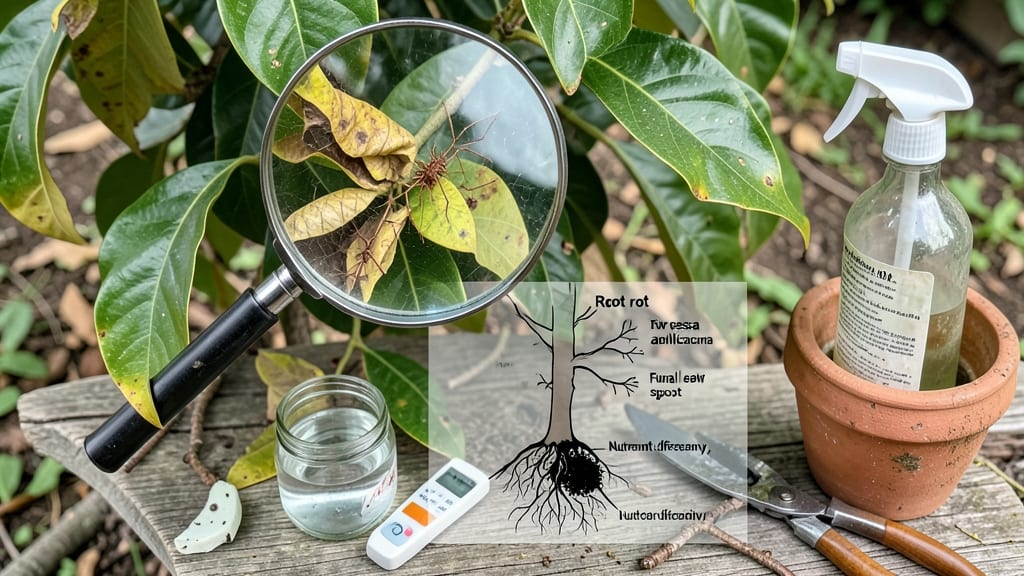
Those avocado leaf problems with brown edges and spots?
Your plant is signaling distress—and you can reverse it in 3 days with the right moves. 🌿 I’ve seen this exact issue turn into a full recovery with a targeted fix, and I’ll show you how to diagnose the root cause (fungus? pests? overwatering?) and stop it fast.
The culprits are usually overwatering, fungal infections like anthracnose, or pests like spider mites hiding on the undersides of leaves. Avocados hate soggy roots but also dry air, so balancing moisture and airflow is key. Most people overreact—this isn’t a death sentence if you act now.
You’ll start with a quick inspection (yes, flip those leaves!) and a targeted solution—whether that’s neem oil for pests, pruning for airflow, or adjusting your watering schedule. By day three, you’ll see fresh growth pushing out, and those brown spots will fade. The secret? Acting before the problem spreads.
Works for houseplants, container trees, and even outdoor avocados. Let’s get those leaves looking vibrant again—no guesswork, just results. Here’s your step-by-step plan.
Root Causes of Leaf Trouble
Avocado leaves are tough, but they’re not invincible—especially when environmental stress, pests, or diseases creep in. Understanding why your avocado’s leaves develop brown edges, spots, or other issues is the first step to fixing them fast.
Let’s break down the real culprits behind common avocado leaf problems, backed by science and actionable insights.
Avocados are drought-tolerant, but their leaves hate inconsistency. Overwatering or underwatering both trigger stress responses, leading to brown edges, wilting, or yellowing.
- Overwatering 🌧️: - Why it happens: Avocado roots need aeration to breathe. Soggy soil cuts off oxygen, causing root rot (a fungal infection like Phytophthora).
The plant signals distress by dropping leaves or developing brown, crispy edges (a sign of nutrient uptake failure). - Science alert: Roots release ethylene gas under waterlogged conditions, accelerating leaf senescence (aging). - Actionable fix: Let the top 2–3 inches of soil dry out between waterings.
Use a moisture meter or stick your finger in—if it’s damp, wait.
- Underwatering 🏜️: - Why it happens: Avocados store water in their trunks, but severe drought forces leaves to transpire faster than roots can supply water.
This causes marginal scorching (brown, dry edges) and leaf drop. - Science alert: Cells lose turgor pressure (internal water pressure), leading to plasmolysis—when cell membranes shrink away from walls, causing irreversible damage. - Actionable fix: Water deeply once a week (more in summer) and mulch to retain moisture.
If leaves are already crispy, trim damaged foliage to redirect energy to healthy growth.
Avocados thrive in partial shade, but too much direct sun (especially in hot climates) acts like a leaf sunburn, causing brown patches or bleached spots.
- Why it happens:
- UV radiation breaks down chlorophyll, leading to necrotic (dead) tissue on leaf edges or tips.
- Transpiration overload: Leaves lose water faster than roots can replace it, causing oxidative stress (cell damage from free radicals).
- High-temperature alert: Above 90°F (32°C), avocado leaves may develop bronzing (a coppery-brown hue) due to protein denaturation in cells.
- Actionable fix:
- Move potted avocados to dappled shade (e.g., under 30% shade cloth).
- For outdoor trees, prune lower branches to improve air circulation and reduce heat buildup.
- Mist leaves in extreme heat to create a temporary cooling layer (but avoid soggy soil).
Pests like mites, aphids, and scale insects suck sap from leaves, leaving behind stippled brown spots, curling, or sticky honeydew (a sign of sooty mold).
- Spider Mites 🕷️:
- Why it happens: These tiny arachnids pierce cells to feed, causing chlorotic (yellow) speckling that turns brown as tissue dies. They thrive in dry, hot conditions.
- Science alert: Their saliva contains toxins that disrupt photosynthesis, leading to premature leaf drop.
- Aphids & Scale 🐜: - Why it happens: These insects cluster on undersides of leaves, injecting toxins that cause yellowing, curling, and brown patches.
Their honeydew attracts sooty mold, which blocks sunlight and suffocates leaves. - Science alert: Heavy infestations trigger systemic stress, weakening the plant’s immune response.
- Actionable fix:
- Blast pests off with a strong spray of water (disrupts their life cycle).
- Use neem oil (1 tsp per liter of water) or insecticidal soap (repeat every 5–7 days).
- Introduce predatory insects like ladybugs or lacewings for natural control.
Fungi and bacteria love warm, humid conditions—perfect for avocado leaf problems like anthracnose, leaf spot, or bacterial blight.
- Anthracnose 🍄:
- Why it happens: The fungus Colletotrichum infects through wounded leaves, causing dark brown, sunken spots with yellow halos. It spreads via splashing water or tools.
- Science alert: The fungus produces enzymes that break down cell walls, leading to rapid tissue collapse.
- Bacterial Leaf Spot 🦠:
- Why it happens: Bacteria like Pseudomonas enter through leaf pores or cuts, causing water-soaked brown spots that enlarge and merge. Humidity >75% accelerates spread.
- Science alert: Bacteria clog stomata (leaf pores), blocking gas exchange and causing leaf yellowing.
- Actionable fix:
- Remove infected leaves immediately (sterilize pruners with rubbing alcohol).
- Apply copper fungicide (for bacterial issues) or baking soda spray (1 tsp baking soda + 1 quart water + a drop of soap) for fungal control.
- Space plants for airflow and water at the base (not overhead) to keep leaves dry.
Avocado leaves scream for help when they’re starved of key nutrients, often showing brown edges, yellowing, or stunted growth.
| Symptom | Likely Deficiency | Why It Happens | Quick Fix |
|---|---|---|---|
| Brown edges | Potassium (K) | K regulates water balance—low levels cause marginal scorching. | Add potassium sulfate or banana peel tea. |
| Yellow between veins | Magnesium (Mg) | Mg is central to chlorophyll—deficiency = interveinal chlorosis. | Use Epsom salt (1 tbsp per gallon of water). |
| Pale green leaves | Nitrogen (N) | N is the building block of proteins—deficiency slows growth. | Apply balanced fertilizer (10-10-10). |
| Small, dark leaves | Iron (Fe) | Fe helps oxygen transport—deficiency causes bronzing in young leaves. | Use chelated iron or spray with iron sulfate. |
- Pro tip: Test your soil with a DIY kit (or send to a lab) to pinpoint exact deficiencies. Avocados prefer slightly acidic soil (pH 6.0–7.0)—adjust with lime (to raise pH) or sulfur (to lower it).
Beyond water and pests, wind, salt, and pollution can wreak havoc on avocado leaves.
- Windburn 🌪️:
- Why it happens: Strong winds desiccate leaves (dry them out), causing brown, papery edges—especially in young or tender leaves.
- Fix: Plant in a windbreak or stake young trees to prevent flopping.
- Salt Burn 🧂:
- Why it happens: Over-fertilizing with synthetic salts (like too much nitrogen) or using brackish water builds up sodium chloride in soil, leading to brown, crispy leaf tips.
- Fix: Flush soil with distilled water and use organic fertilizers (compost, worm castings).
- Air Pollution 🚗:
- Why it happens: Ozone, sulfur dioxide, or vehicle fumes damage leaf cuticles, causing stippling or bronzing.
- Fix: Move potted avocados indoors during smog alerts or use activated charcoal filters near outdoor plants.
Too much synthetic fertilizer (especially high
Quick Fixes for Common Avocado Leaf Issues
Avocado trees are stunning, but when their leaves start showing brown edges, spots, or other distress signals, it’s time to act fast. The good news? Most issues can be resolved with simple, targeted solutions—often within days.
Below, we’ve mapped out practical fixes for the most common avocado leaf problems, along with prevention tips to keep your tree thriving.
Cause: Overwatering, underwatering, or nutrient deficiencies (like potassium or magnesium). Solution:
- 💧 Adjust watering habits: Avocados love moisture but hate soggy roots. Water deeply 2-3 times per week (more in extreme heat) and ensure the soil drains well. Stick your finger 2 inches into the soil—if it’s dry, water; if it’s damp, wait.
- 🍃 Boost nutrients: Apply a balanced fertilizer (like 6-6-6) in early spring and a potassium-rich supplement (like banana peel tea or Epsom salt) every 4-6 weeks. For magnesium deficiency, use Epsom salt (1 tbsp per gallon of water) every 2 months.
- ✂️ Prune damaged leaves: Snip off severely browned edges to redirect energy to healthy growth.
💡 Prevention Tip: Mulch around the base with wood chips or straw to retain moisture and regulate soil temperature. Avoid over-mulching, which can suffocate roots.
Cause: Fungal infections (like anthracnose or leaf spot) from excess moisture or poor airflow. Solution:
- 🧼 Clean up debris: Remove fallen leaves and fruit from the base of the tree to eliminate fungal spores. Sterilize pruners with rubbing alcohol after each cut.
- 🌧️ Improve airflow: Thin out dense foliage and space trees 10-15 feet apart to reduce humidity buildup.
- 💊 Apply fungicide: Use a copper-based fungicide (like Bordeaux mixture) or neem oil spray (1 tsp neem oil + 1 tsp mild soap per quart of water) every 7-10 days until new growth appears.
- 🌞 Avoid overhead watering: Water at the base of the tree in the morning to let leaves dry quickly.
💡 Prevention Tip: Plant avocados in full sun (6+ hours daily) and avoid watering late in the evening. Drip irrigation systems help keep foliage dry.
Cause: Tiny pests sucking sap, causing yellowing, stippling, or sticky residue ("honeydew"). Solution:
- 🔍 Inspect leaves daily: Check the undersides of leaves for webs (spider mites), white cottony masses (mealybugs), or hard bumps (scale).
- 💦 Blast off pests: Spray leaves with a strong stream of water to dislodge mites and soft-bodied insects.
- 🌿 Natural remedies:
- Neem oil spray (1 tbsp per gallon of water) – repeat weekly for 2-3 weeks.
- Insecticidal soap (mix 2 tbsp soap + 1 quart water) – spray directly on pests.
- Release beneficial insects like ladybugs or lacewings to prey on mites.
- 🪴 Quarantine severely infested trees until treated to prevent spread.
💡 Prevention Tip: Encourage predatory insects by planting marigolds or dill nearby. Wrap the trunk with aluminum foil (for 2 feet) to trap crawling pests like scale.
Cause: Sudden exposure to intense sun (common after moving trees or pruning). Solution:
- 🌳 Provide shade: Use a light shade cloth (30-50%) for 1-2 weeks to acclimate the tree. Avoid full shade, as avocados need sunlight.
- 💧 Increase watering: Water daily for the first week to help leaves recover.
- 🍃 Trim affected leaves: Severely damaged leaves won’t recover—prune them to encourage new growth.
- 🌱 Gradually introduce sun: After 2 weeks, expose the tree to morning sun first, then full sun over 10-14 days.
💡 Prevention Tip: If moving an avocado tree, harden it off by placing it in partial shade for 3-5 days before full sun exposure.
- 🌿 Monitor soil pH: Avocados prefer slightly acidic soil (pH 6.0-7.0). Test with a kit and amend with sulfur (to lower pH) or lime (to raise pH) as needed. - 🍎 Avoid chemical sprays: Fungicides and pesticides can harm beneficial insects.
Opt for organic solutions first. - 📅 Keep a care journal: Track watering, fertilizing, and pest treatments to spot patterns.
⏳ Expected Recovery Time:
- Mild issues (brown edges, sunburn): 3-7 days with proper care.
- Fungal spots/pests: 1-2 weeks with consistent treatment.
- Severe cases: May take 4-6 weeks for new leaves to grow in.
With these fixes, your avocado tree should bounce back—and stay healthy for years to come! 🌳💚
Frequently asked questions about avocado leaf problems
Why are my avocado leaves turning brown at the edges first?
Brown edges usually mean overwatering or nutrient deficiencies. Avocado roots need oxygen—soggy soil cuts off airflow, causing root rot and nutrient uptake failure. Check soil moisture: if the top 2 inches stay damp, you're overdoing it. For potassium deficiency (common culprit), try banana peel tea or Epsom salt for magnesium.
What do those tiny yellow dots on my avocado leaves mean?
Those stippled yellow dots are classic spider mite damage! These pests thrive in dry, hot conditions and suck sap, leaving behind brown speckles as leaves die. Check leaf undersides for webs. Blast them off with water, then apply neem oil spray (1 tsp per liter) weekly for 2 weeks. Increase humidity with a pebble tray to deter them.
Can I save my avocado tree if the leaves are completely brown and crispy?
Not always—but prune the severely damaged leaves immediately to redirect energy to healthy growth. If the problem is underwatering, water deeply once a week and mulch to retain moisture. For fungal issues, remove all infected leaves and apply copper fungicide. New leaves should emerge in 4-6 weeks if the roots are still healthy.
How do I tell if my avocado's brown spots are from fungus or sunburn?
Fungal spots (like anthracnose) appear as dark brown, sunken patches with yellow halos, often on lower leaves. Sunburn shows as bleached or crispy patches on upper leaves exposed to harsh afternoon sun. For fungus, improve airflow and use neem oil. For sunburn, move the tree to dappled shade for 2 weeks and avoid overhead watering in the evening.
Is it safe to use chemical pesticides on my avocado tree?
Chemical pesticides can harm beneficial insects that protect your tree. Start with organic solutions: neem oil, insecticidal soap, or horticultural oil. For stubborn fungal issues, use copper-based fungicides (like Bordeaux mixture) sparingly. Always test on a small leaf first and avoid spraying when bees are active.